Luogo di culto · Kyoto
Yoshimine-dera Temple
善峯寺
Fotografia


Orari di apertura
| Lunedì | 08:30 – 17:00 |
|---|---|
| Martedì | 08:30 – 17:00 |
| Mercoledì | 08:30 – 17:00 |
| Giovedì | 08:30 – 17:00 |
| Venerdì | 08:30 – 17:00 |
| Sabato | 08:00 – 17:00 |
| Domenica | 08:00 – 17:00 |
Analizzato dagli orari di apertura di OpenStreetMap il 2026-08-26.
- Oggi
- Aperto oggi, 08:30 – 17:00
- Durata della visita
- 30 min
- Accessibilità
- Non registrato
- Prezzo
- Non registrato
- Posizione
- Alto · Sito del patrimonio
- Rango
- Classifica 100 di 10,060
Informazioni su Yoshimine-dera Temple
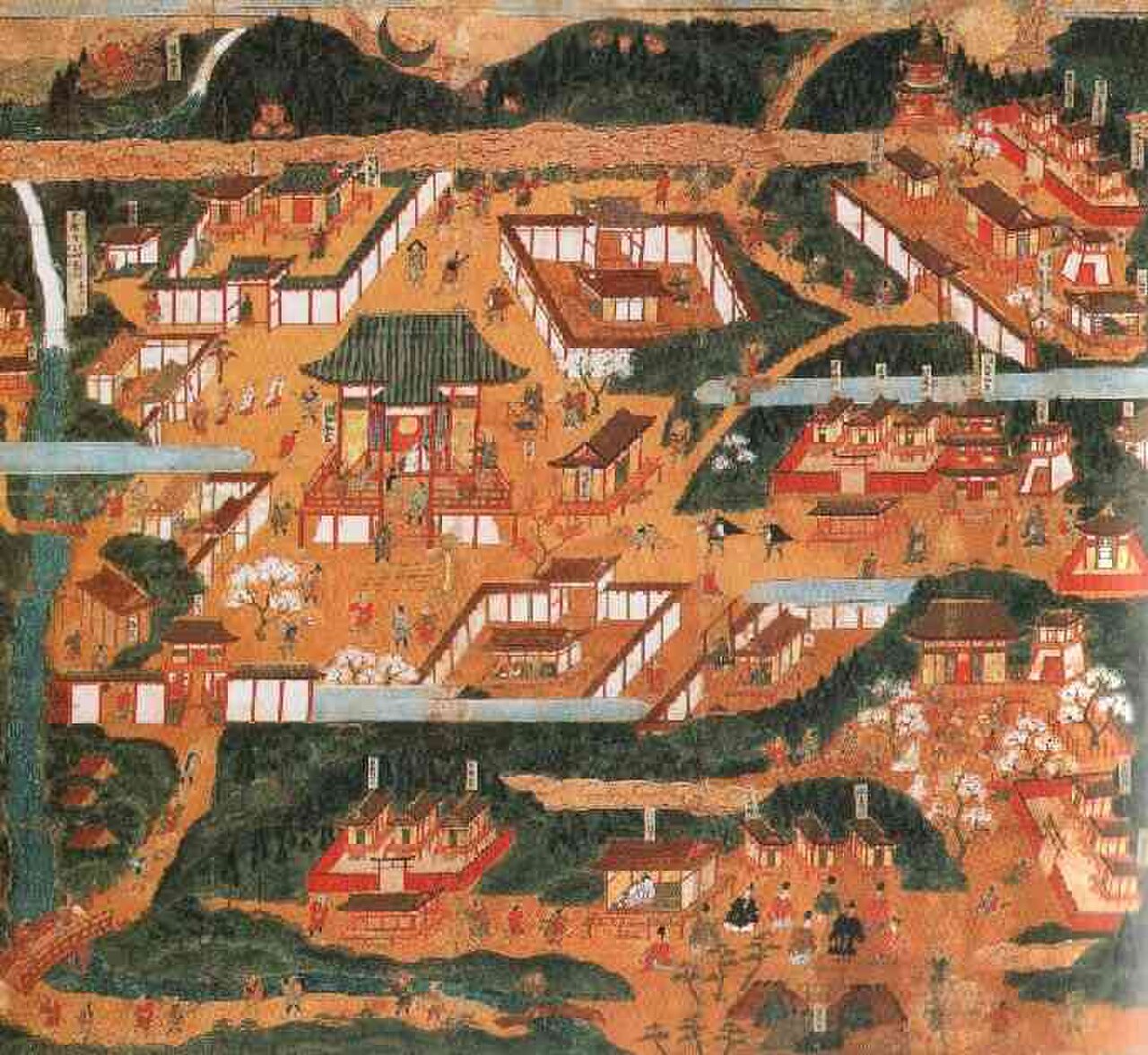
Yoshimine-dera Temple, known locally as 善峯寺, is a Buddhist temple situated in Kyoto, Japan. The temple belongs to the Tendai sect of Japanese Buddhism and occupies a mountainside location in the western outskirts of the city. Its elevated position provides views over the surrounding landscape. The temple has historical significance as an established religious site with traditional Japanese temple architecture. Visitors encounter a working religious institution rather than a purely tourist-oriented destination. The temple grounds encompass multiple structures and natural features integrated into the hillside terrain.
Controllato 2026-08-28
Cosa c'è dentro
The temple complex contains traditional religious buildings characteristic of Japanese Buddhist architecture. Visitors will find main halls, subsidiary structures, and religious statuary. The hillside setting incorporates natural elements including trees and vegetation that form part of the temple environment. Stone pathways and staircases connect different levels of the complex. Religious artifacts and decorative elements are present within the buildings. The integration of built structures with the natural mountainside terrain creates a distinctive atmosphere. Specific interior details and current exhibition contents are not recorded in available sources.
Controllato 2026-08-28

.jpg)
Quanto tempo dedicare
A visit to Yoshimine-dera Temple requires time for navigating the hillside terrain and exploring the dispersed structures. Visitors should allocate sufficient duration for ascending and descending the slopes between different areas of the complex. The physical layout demands more time than flat-ground temples. Photography, contemplation, and rest periods extend typical stays. Most visitors will spend at least one hour, with thorough exploration requiring additional time. Personal pace and physical condition significantly affect duration. The temple's working religious status means visitors may also observe or participate in devotional activities.
Controllato 2026-08-28


Stagione e folla
Visitors should verify current opening times through official channels before planning their trip. Seasonal variations in daylight and weather conditions affect the mountain location differently than central Kyoto. Morning visits may offer quieter conditions and favorable light for viewing the landscape. Afternoon fog or reduced visibility can occur at elevation. Autumn foliage and spring vegetation periods bring particular scenic qualities to the hillside setting. Winter conditions may affect accessibility and comfort. Summer visits require preparation for heat and humidity during ascent. Check the operator's own site for the travel date before relying on a schedule or fare.
Controllato 2026-08-28
Biglietti
Visitors should confirm current admission requirements and any applicable fees through official temple communications or verified tourism resources. Some Japanese temples operate with donation-based entry, while others maintain fixed admission fees. Additional charges may apply for special access or ceremonies. Cash remains the standard payment method at many religious institutions in Japan. Group rates, if available, require advance inquiry. Annual passes or combination tickets with nearby attractions are not documented in available sources. Budget flexibility is advisable. Check the operator's own site for the travel date before relying on a schedule or fare.
Controllato 2026-08-28


Come arrivare
Yoshimine-dera Temple occupies a western mountain location requiring transit from central Kyoto. Public transportation options include bus routes serving the general area, followed by walking ascent to the temple entrance. Private vehicle access involves mountain roads with limited parking. The final approach to the temple typically requires climbing on foot. Visitors should research current bus schedules and route numbers as these change periodically. Taxis can reduce walking distance but cannot eliminate the hillside approach entirely. Physical readiness for inclined walking is essential. Winter or wet conditions may complicate access.
Controllato 2026-08-28

A cosa prestare attenzione
The hillside terrain presents physical challenges including steep slopes, uneven surfaces, and variable weather conditions at elevation. Proper footwear with grip is essential. Visitors should carry water and basic supplies as mountain facilities may be limited. Wildlife encounters are possible in the natural setting. Religious etiquette applies throughout the working temple: moderate volume, respectful behavior near worshippers, and appropriate dress covering shoulders and knees. Photography restrictions may apply in certain buildings or during ceremonies. Weather can change rapidly; rain creates slippery conditions on stone surfaces. Mobile phone coverage may be inconsistent.
Controllato 2026-08-28


Fotografia
The elevated position and natural surroundings offer landscape photography opportunities. Traditional architecture against mountain backdrop provides compositional possibilities. Natural lighting varies significantly with season and time of day. Morning and late afternoon typically yield favorable conditions. Tripod use may be restricted or impractical on slopes and stairs. Interior photography likely faces limitations in religious buildings. Respect for worshippers takes priority over image capture. The working temple environment requires discretion in equipment and behavior. Weather conditions including mist and seasonal foliage dramatically alter visual character. Visitors should verify current policies regarding commercial or posed photography.
Controllato 2026-08-28
Domande comuni
Is Yoshimine-dera Temple accessible for visitors with mobility limitations?
The hillside location with steep slopes and staircases presents significant accessibility challenges. Visitors with mobility limitations should carefully evaluate their capabilities and consider contacting the temple directly for current conditions.
Are English-language materials or guides available at the temple?
Availability of English-language materials is not recorded in available sources. Visitors should not assume English support and may benefit from advance research or translation applications.
Can I participate in religious ceremonies or meditation sessions?
Opportunities for visitor participation in religious activities are not documented in available sources. The temple functions as a working religious institution; visitors should observe respectfully and inquire directly about any participation possibilities.
Is there food available at or near the temple?
On-site dining facilities are not recorded in available sources. Visitors should plan to carry provisions, particularly given the physical demands of the hillside location and return transit time to central Kyoto.
How does Yoshimine-dera compare to more famous Kyoto temples?
Yoshimine-dera offers a mountainside setting with fewer crowds than central Kyoto attractions. The trade-off involves more difficult access and fewer visitor amenities. Preferences depend on individual priorities regarding scenery, convenience, and atmosphere.
Are there accommodations near the temple for overnight stays?
Nearby lodging options are not recorded in available sources. Most visitors stay in central Kyoto and make day trips. Temple lodgings (shukubo) are not documented for this site; direct inquiry would be necessary.
Dov'è
Caricamento della mappa interattiva…
Impossibile caricare la mappa interattiva.
Nelle vicinanze
Inseriscilo in un piano
Collegamenti esterni
Ultimo aggiornamento:
Fonte: Contributori di OpenStreetMap, Wikidata ·