Lieu de culte · Градска општина Стари град, Belgrade
St. Michael's Cathedral
Саборни храм Светог архангела Михаила
Photographie


- Aujourd'hui
- Horaires non renseignés
- Durée de la visite
- 20 min
- Accessibilité
- Non renseigné
- Prix
- Non renseigné
- Classement
- Incontournable · Site patrimonial
- Rang
- Rang 38 sur 1,739
À propos de St. Michael's Cathedral
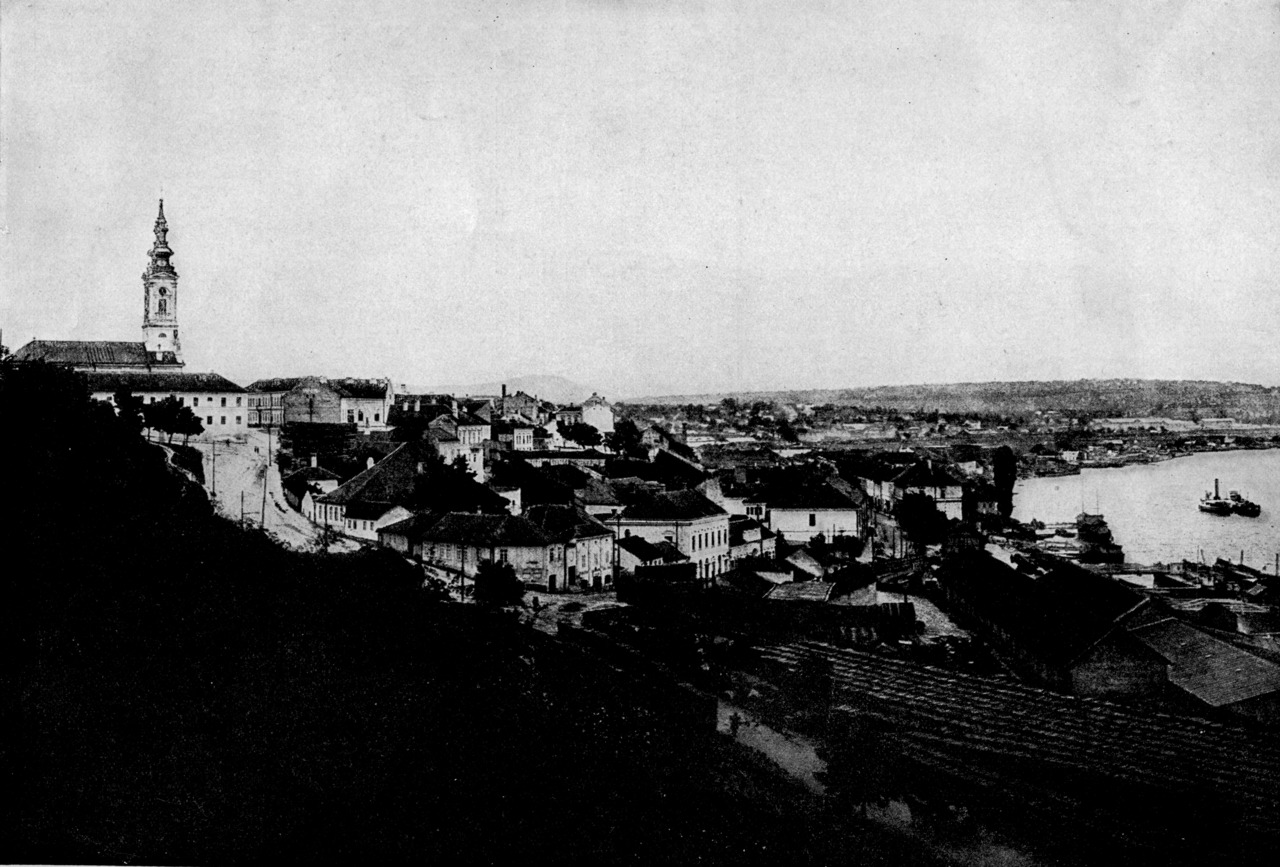
St. Michael's Cathedral is the seat of the Serbian Orthodox Metropolitanate of Belgrade, built between 1837 and 1845 on the site of an earlier church destroyed in the Ottoman era. Ground was consecrated on 15 July 1837 and the building was completed on 8 November 1845, making it one of the few structures in central Belgrade that survives from the first half of the nineteenth century — the city was rebuilt heavily after both world wars and again through the twentieth century, which makes this cathedral's age unusual rather than typical for its neighborhood.
Its architect is recorded as Franz Jancke or Friedrich Adam Querfeld, with authorship debated for a long time; the workmen who carried out the construction came from Pančevo, across the Danube in what was then Habsburg territory. The style mixes Neoclassicism with late Baroque detailing, a combination typical of churches built for Serbia's Orthodox community under both Ottoman tolerance and Central European craftsmanship in the decades before full independence. In 1979 it was designated a Heritage Site of Exceptional Importance.
Vérifié le 2026-08-23 · Source
Qu'y a-t-il à l'intérieur
The plan is a single nave with a semi-circular apse on the east side and a narthex on the west side, topped by a bell tower. The iconostasis is gold-plated and was carved by the sculptor Dimitrije Petrović; the painter Dimitrije Avramović worked on the interior from 1841 to 1845, producing eighteen large wall compositions and close to fifty icons, making the painted program essentially contemporary with the building itself rather than a later addition.
The cathedral's treasury holds gold liturgical objects from the eighteenth and nineteenth centuries, priests' vestments, crosses and individual icons. It also houses relics of Serbian saints, including those of Emperor Stefan Uroš V, part of the relics of Lazar of Serbia, and the relics of Despot Stefan Štiljanović.
St. Michael's is the burial place of two rulers of the Obrenović dynasty, Prince Miloš Obrenović and Prince Mihailo Obrenović, and of two of the most significant figures in modern Serbian culture: Vuk Karadžić, the language reformer whose phonetic orthography still governs written Serbian, and Dositej Obradović, the writer and first Serbian minister of education. Two Serbian patriarchs, Vikentije II and Gavrilo V, are buried here as well.
Vérifié le 2026-08-23 · Source


Combien de temps passer
Fifteen to twenty minutes is enough for the interior itself — a single nave with no side chapels to add distance. Visitors who want to locate the individual tombs of Karadžić, Obradović and the two Obrenović princes, or study Avramović's wall compositions in sequence, should allow closer to thirty minutes.
The cathedral sits directly opposite the Princess Ljubica's Residence and a short walk from the Belgrade Fortress, so it combines easily with either without needing a dedicated outing.
Vérifié le 2026-08-23

.jpg)
Saison et foule
Weekday mornings are the quietest time, before the flow of visitors moving between the fortress and Skadarlija picks up. As the metropolitan cathedral, it holds regular liturgies, and Sunday morning services draw the fullest congregation of the week, which is worth experiencing but is not the moment for close study of the iconostasis or the tombs.
The nave is narrow and the windows modest in size, so the interior reads dim on overcast days; a bright morning gives the gilded iconostasis noticeably more presence than gray winter light does.
Vérifié le 2026-08-23
Billets
Entry is free, in keeping with every working Orthodox church in Belgrade. There is no ticket booth and no combined pass; a donation box near the entrance supports the building's upkeep.
Whether the treasury's relic and vestment collection is open for general viewing, or requires a separate arrangement, is not published on the sources this page uses and is not reproduced here.
Vérifié le 2026-08-23


Y arriver
The cathedral stands on Kneza Sime Markovića, at the edge of Belgrade's old town, roughly a five-minute walk from Republic Square down Knez Mihailova and then a short turn toward the fortress. It sits directly across the street from the Princess Ljubica's Residence and a few minutes from the entrance to Kalemegdan Park and Belgrade Fortress.
Belgrade has no metro; any tram or bus stopping near Republic Square or Studentski Trg leaves a short walk to the cathedral. Given the distances involved, walking from the city centre is simpler than transferring onto public transport for this stretch.
Vérifié le 2026-08-23
À quoi faut-il faire attention
As an active cathedral, St. Michael's expects shoulders and knees covered and hats removed by men; women commonly cover their heads, though this is customary rather than strictly enforced at the door. Photography and casual movement around the nave are best avoided during a liturgy, and access to parts of the church can be restricted while a service is underway.
Because it holds the tombs of two Obrenović princes alongside Vuk Karadžić and Dositej Obradović, the cathedral draws a steady mix of worshippers and visitors paying respects to these figures; moving quietly near the tomb markers is expected regardless of a visitor's own reason for being there. There is no queue to plan around — the building is small enough that crowding rarely becomes an issue outside of major feast-day services.
Vérifié le 2026-08-23


Photographie
Photography without flash is generally tolerated when no service is in progress; flash washes out the gilded iconostasis and is best avoided in any case. The narrow nave limits how much of Avramović's wall compositions can be framed at once, so a wide lens or a few steps back toward the narthex helps more than it would in a larger church.
Outside, the cathedral's pale façade and bell tower photograph well from across the street at the Princess Ljubica's Residence, which gives enough distance to take in the whole west front without traffic in the frame.
Vérifié le 2026-08-23
Questions courantes
When was St. Michael's Cathedral built?
Construction began with the consecration of the foundations on 15 July 1837 and the building was completed on 8 November 1845.
Who is buried in St. Michael's Cathedral?
Prince Miloš Obrenović, Prince Mihailo Obrenović, the language reformer Vuk Karadžić, the writer Dositej Obradović, and Serbian Patriarchs Vikentije II and Gavrilo V.
What style is St. Michael's Cathedral built in?
Neoclassicism with late Baroque elements, built by construction workers from Pančevo to a design credited to Franz Jancke or Friedrich Adam Querfeld, an attribution that was long disputed.
What relics does St. Michael's Cathedral hold?
Relics of Serbian saints including Emperor Stefan Uroš V, part of the relics of Lazar of Serbia, and the relics of Despot Stefan Štiljanović.
Is St. Michael's Cathedral free to enter?
Yes. There is no admission fee; a donation box near the entrance supports upkeep.
How old is St. Michael's Cathedral compared to the rest of central Belgrade?
It is one of the few surviving buildings from the first half of the 19th century in the city centre, which was heavily rebuilt through the 20th century; the cathedral was designated a Heritage Site of Exceptional Importance in 1979.
Où c'est
Chargement de la carte interactive…
La carte interactive n'a pas pu être chargée.
À proximité
Insérez-le dans un plan
Liens externes
Dernière mise à jour:
Source: Contributeurs OpenStreetMap, Wikidata ·