Historisches Denkmal · Rom
Porticus Octaviae
Portico d'Ottavia
Foto

- Heute
- Öffnungszeiten nicht erfasst
- Besuchsdauer
- 45 Min
- Barrierefreiheit
- Nicht erfasst
- Preis
- Nicht erfasst
- Einordnung
- Muss man gesehen haben
- Rang
- Rang 51 von 6,547
Über Porticus Octaviae
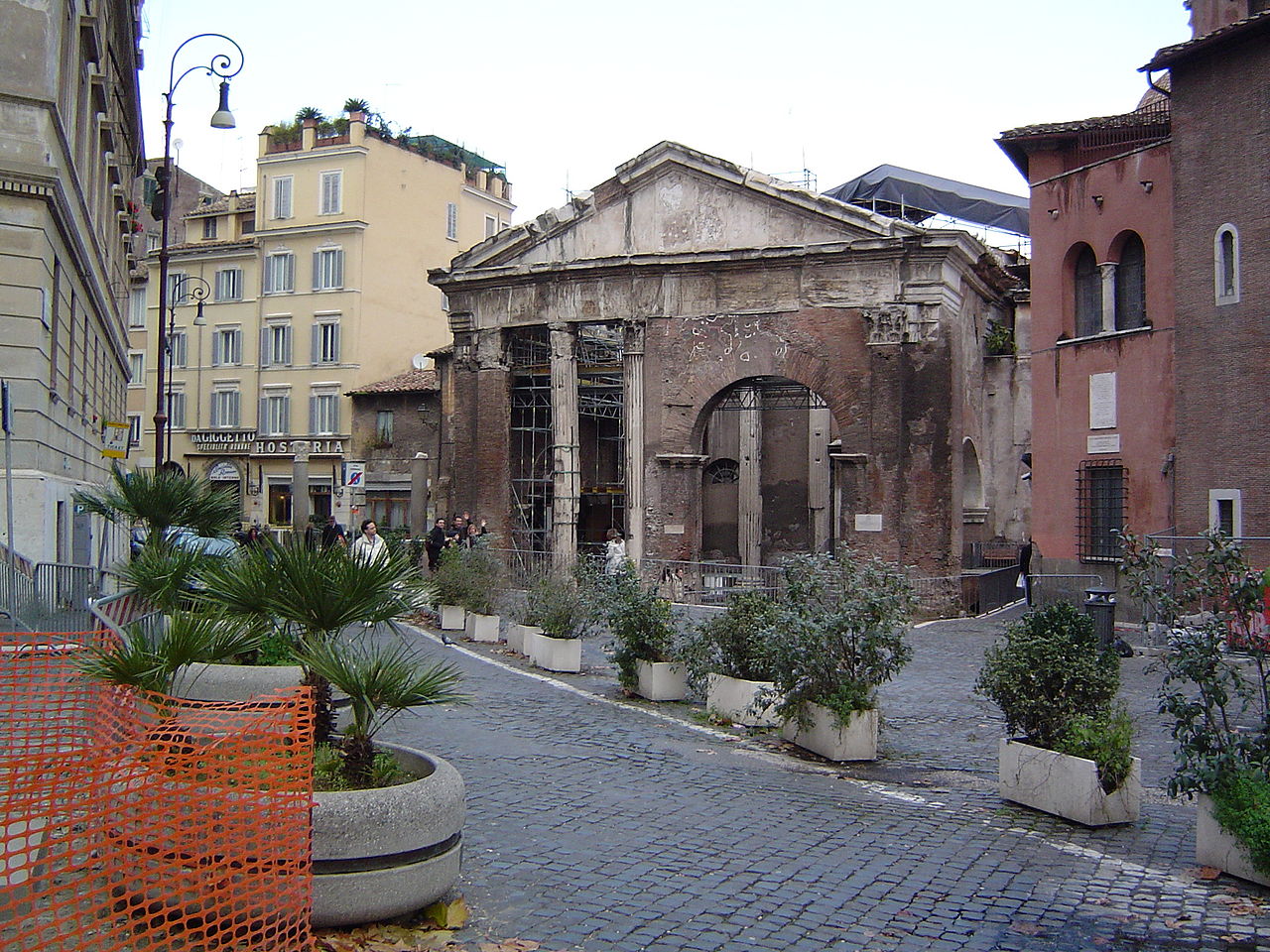
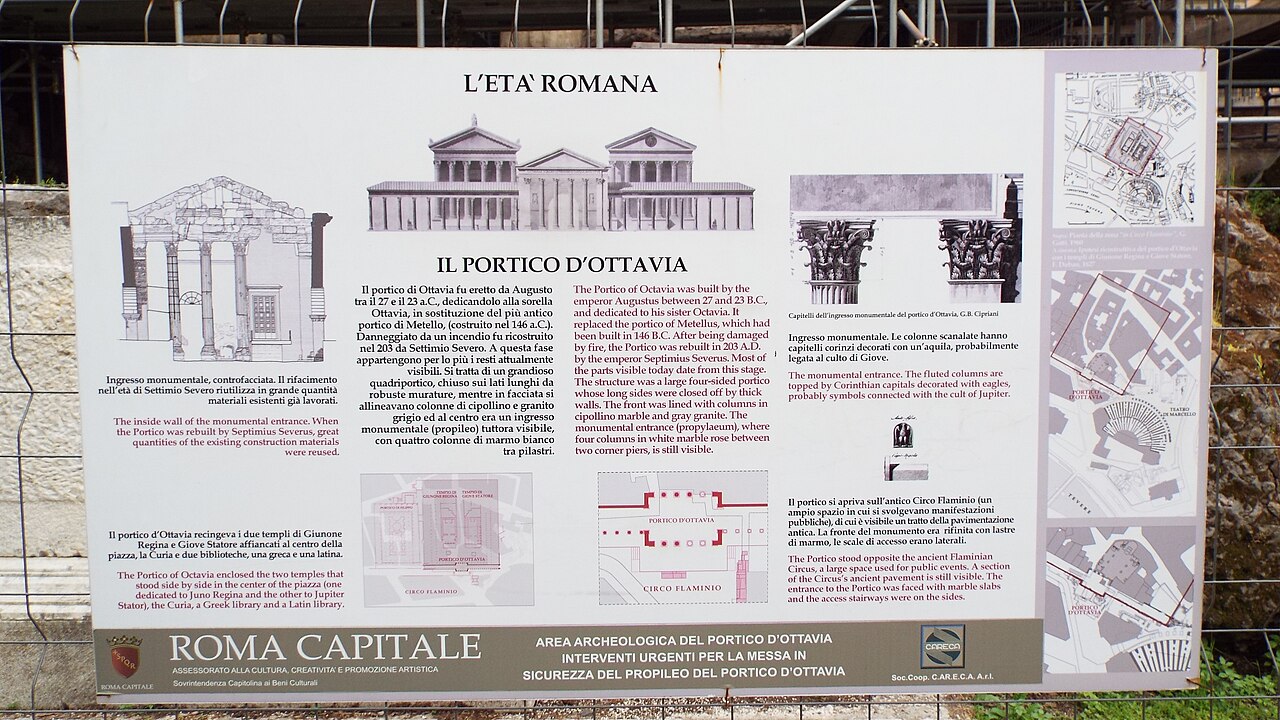
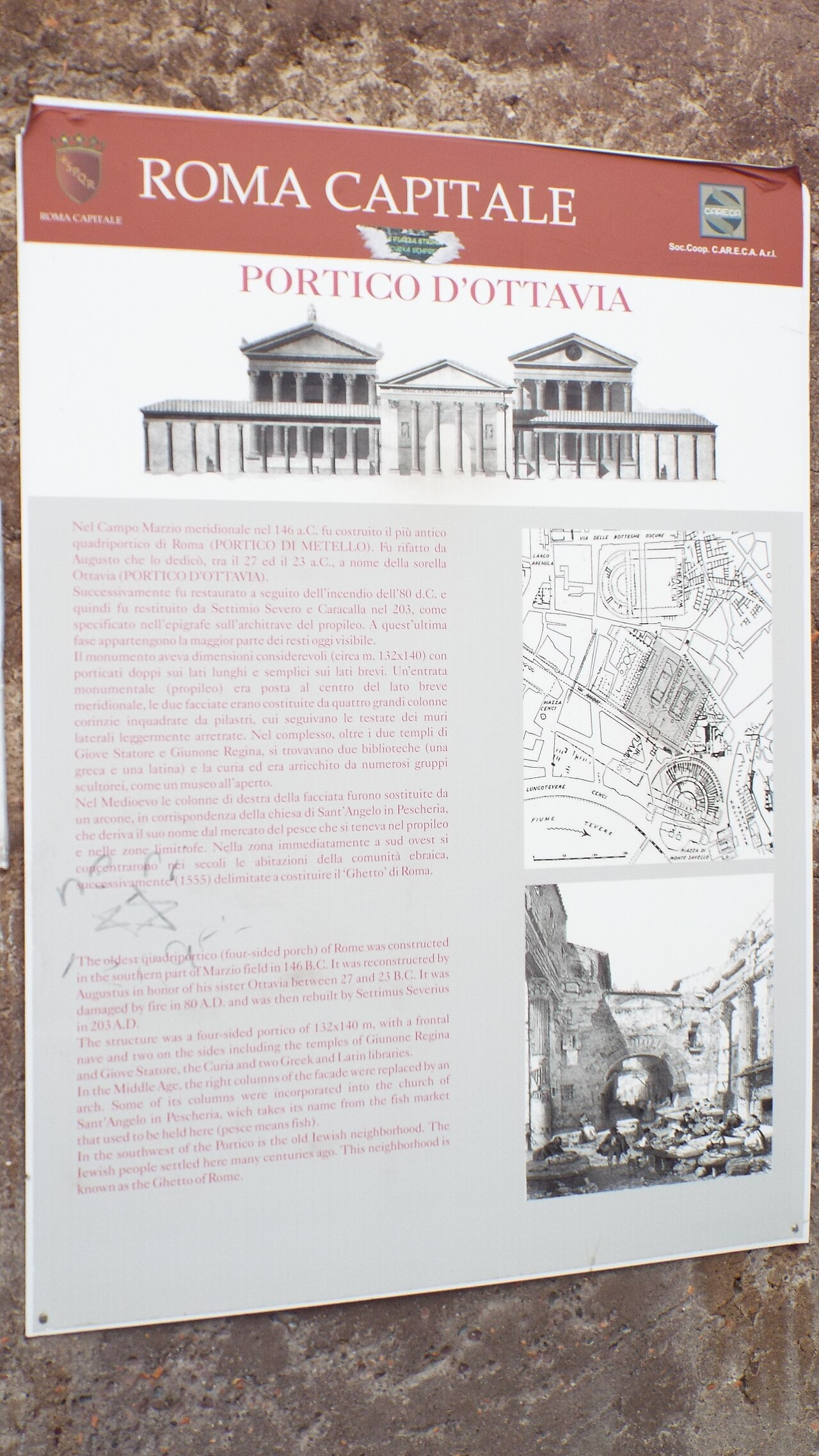
The Porticus Octaviae, known locally as Portico d'Ottavia, is an ancient Roman portico in the heart of Rome's Jewish Ghetto. Originally constructed by Quintus Caecilius Metellus Macedonicus in 146 BC and later rebuilt by Augustus in the name of his sister Octavia around 23 BC, this monumental complex once enclosed temples, a library, and a curia. Today, substantial fragments of the colonnaded structure survive, incorporated into later medieval and Renaissance fabric, bearing witness to Rome's layered architectural history and continuous urban evolution over two millennia.
Geprüft 2026-08-26
Was ist drin?
The surviving remains of the Porticus Octaviae consist principally of portions of the original colonnade and entablature, integrated into the surrounding urban matrix of the Sant'Angelo district. The structure does not function as an enclosed museum with curated interior spaces. Visitors encounter the ancient fabric in situ, as part of the streetscape. The adjacent area contains the Church of Sant'Angelo in Pescheria, built into and around the ancient remains, demonstrating the characteristic Roman pattern of medieval and early modern reuse of classical structures.
Geprüft 2026-08-26
Empfohlene Besuchsdauer
A visit to the Porticus Octaviae requires modest time commitment, typically fifteen to thirty minutes for observation and contextual appreciation. The site is best experienced as part of a broader walking itinerary through the Jewish Ghetto and adjacent Campo de' Fiori or Pantheon districts. Many visitors incorporate the portico into half-day explorations of central Rome's archaeological layers. The unstructured nature of the visit permits flexible duration according to individual interest in architectural detail and historical contemplation. Porticus Octaviae also earns time in a rome itinerary because Exact unique production name match within the declared city scope. Its value becomes clearer when the stop is compared with the surrounding streets and the other ranked places nearby.
Geprüft 2026-08-26

Jahreszeit und Menschenmassen
The Porticus Octaviae is situated in an open urban setting accessible at all hours, though optimal visiting conditions occur during daylight when architectural details remain visible. The surrounding district maintains active commercial and residential functions throughout the week. Seasonal considerations for Rome apply: summer months bring intense heat and crowds, while winter offers cooler temperatures with reduced visitor density. Operator-confirmed hours or prices are Not recorded pending review. Visitors should verify any access restrictions through official municipal or cultural heritage channels before planning.
Geprüft 2026-08-26
Tickets
Access to the exterior remains of the Porticus Octaviae does not require admission payment, as the structure constitutes part of the public urban fabric. No ticketing infrastructure is present at the site itself. Visitors should anticipate standard expenses associated with central Rome: transportation, meals, and potential guided tour fees if engaging professional interpretation services. Operator-confirmed hours or prices are Not recorded pending review. Any future changes to access arrangements would be communicated through Rome's official tourism or cultural heritage administration platforms.
Geprüft 2026-08-26

Ankommen
The Porticus Octaviae occupies a central location in Rome's historic core, accessible via multiple public transportation options. The nearest Metro station is Colosseo on Line B, requiring approximately fifteen minutes' walk northwest. Numerous bus routes serve the surrounding Corso Vittorio Emanuele II and Lungotevere thoroughfares. The site lies within comfortable walking distance of major landmarks including the Pantheon, Piazza Navona, and the Capitoline Hill. Pedestrian navigation through the dense medieval street pattern of the Ghetto demands attention to signage and mapping applications.
Geprüft 2026-08-26
Worauf Sie achten sollten
The Porticus Octaviae's integration into active urban infrastructure presents standard city-center considerations. Traffic in surrounding streets requires vigilance, particularly motorized scooters prevalent in Roman circulation patterns. The ancient remains themselves exhibit uneven surfaces and height variations; appropriate footwear supports safe exploration. The adjacent fish market historically referenced in the toponomy no longer operates, though commercial activity continues. Visitors should respect the residential character of the Ghetto, maintaining appropriate noise levels and photographic discretion near private entrances and windows.
Geprüft 2026-08-26

Fotografie
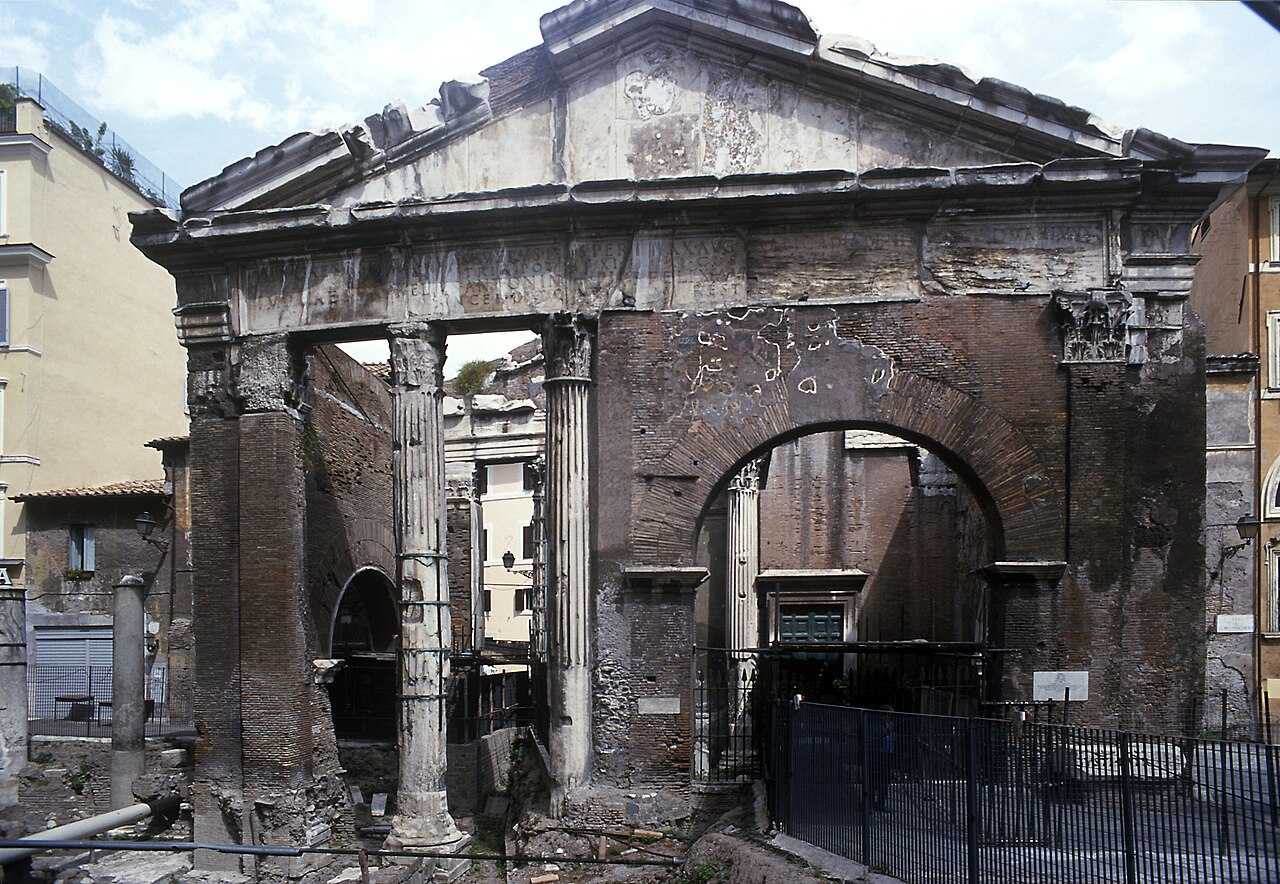
Photographic documentation of the Porticus Octaviae faces no restrictions for personal, non-commercial purposes. The structure's partial preservation and urban embedding offer distinctive compositional opportunities, particularly the contrast between ancient travertine and brickwork against later architectural accretions. Optimal natural lighting occurs during morning hours when eastern illumination strikes the principal surviving elevation. Evening artificial lighting from street lamps and adjacent establishments creates alternative atmospheric conditions. Tripod deployment in narrow thoroughfares may impede pedestrian flow and warrants situational awareness. A flexible visit lets travellers connect Porticus Octaviae with the rest of the day without treating one room, viewpoint or photograph as the whole experience. The useful pace depends on personal interest and conditions on arrival.
Geprüft 2026-08-26
Häufige Fragen
Is the Porticus Octaviae the same as the Theatre of Marcellus for Porticus Octaviae in Rome?
No. These are distinct ancient structures located in proximity within the Sant'Angelo district. The Theatre of Marcellus lies to the immediate southeast, while the Porticus Octaviae stands to its northwest. Both were projects associated with Augustus and his family, contributing to occasional confusion.
Can one enter the interior of the Porticus Octaviae for Porticus Octaviae in Rome?
The Porticus Octaviae does not offer enclosed interior spaces for visitor entry. The surviving remains constitute structural fragments integrated into the urban fabric, experienced from the surrounding streets and piazza spaces.
Are guided tours available specifically for this monument for Porticus Octaviae in Rome?
Dedicated guided tours exclusively focused on the Porticus Octaviae are not commonly advertised. The monument typically features within broader itineraries of Jewish Ghetto, ancient Rome, or architectural history walks offered by various tour operators.
What is the historical significance of the name Portico d'Ottavia for Porticus Octaviae in Rome?
The designation reflects Augustus's rebuilding and rededication of the original Metellan portico in honor of his sister Octavia, embodying the imperial family's public munificence and the Augustan program of urban renewal in Rome.
Is the surrounding Jewish Ghetto area safe for visitors for Porticus Octaviae in Rome?
The Sant'Angelo district and Jewish Ghetto constitute established, active neighborhoods with regular pedestrian presence. Standard urban precautions regarding personal belongings and situational awareness apply as throughout central Rome.
Are there restroom facilities at the Porticus Octaviae site for Porticus Octaviae in Rome?
No dedicated restroom facilities exist at the monument itself. Visitors may find public conveniences in nearby establishments, including cafes, restaurants, or municipal facilities, subject to patronage requirements or applicable fees.
Wo es ist
Interaktive Karte wird geladen…
Die interaktive Karte konnte nicht geladen werden.
In der Nähe
Passen Sie es in einen Plan ein
Externe Links
Zuletzt aktualisiert:
Quelle: OpenStreetMap-Mitwirkende, Wikidata ·