史跡 · Landstraße, ウィーン
Wittgenstein House
Haus Wittgenstein
写真

- 今日
- 営業時間の記録なし
- 訪問期間
- 30分
- アクセシビリティ
- 未登録
- 価格
- 未登録
- 評価
- 必見 · 遺産
- ランク
- 5,640 の 55 をランク付け
Wittgenstein Houseについて
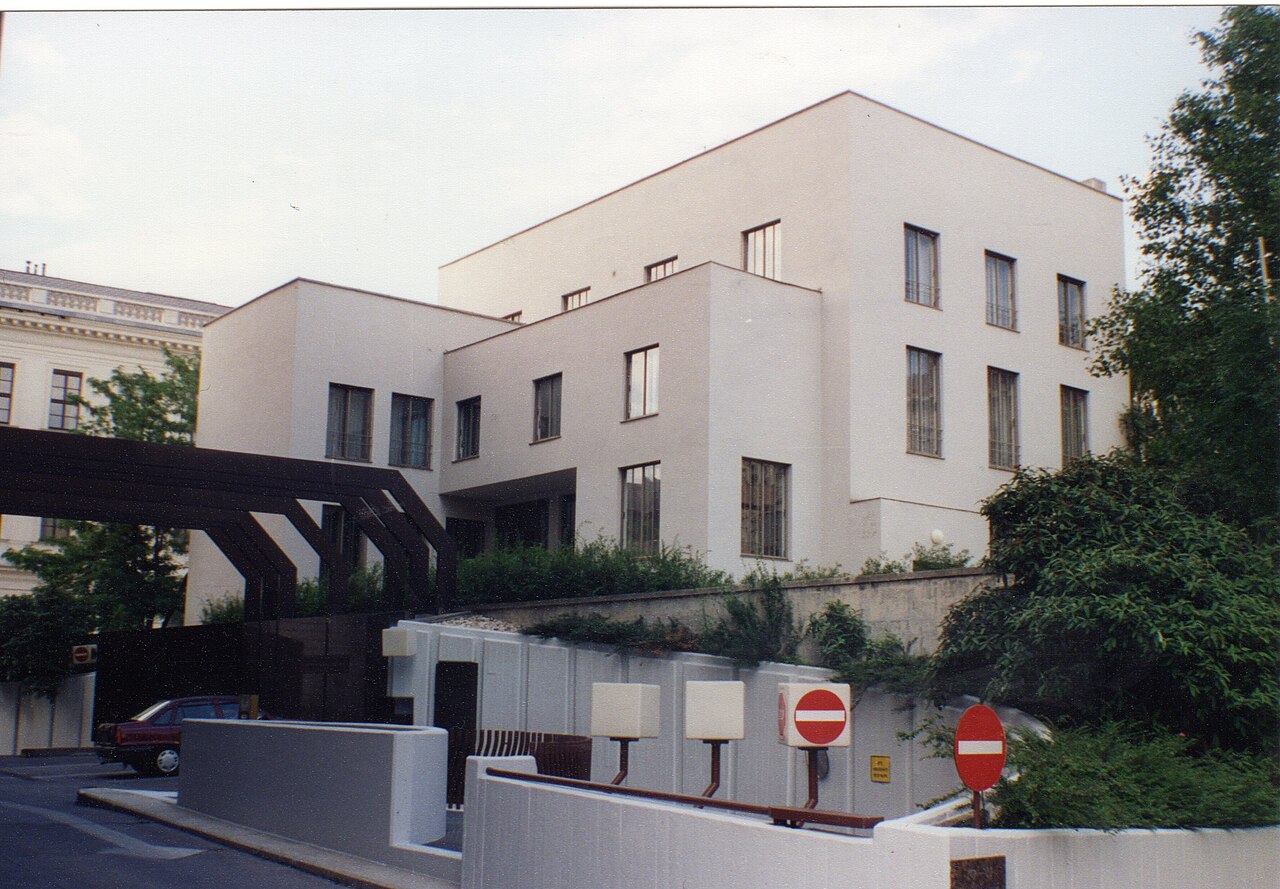
Haus Wittgenstein — also called the Stonborough House — is a modernist house at Kundmanngasse 19 in Vienna's 3rd district, built in 1926-1928 for Margaret Stonborough-Wittgenstein, sister of the philosopher Ludwig Wittgenstein. The commission was drawn up by the architect Paul Engelmann, a former student of Adolf Loos, and Wittgenstein himself joined the design partway through and took over much of the detailing.
The result is a flat-roofed, unornamented volume of plain rendered walls and precise proportions, with none of the decorative vocabulary Vienna's residential architecture still carried in the 1920s. Wittgenstein is recorded as having had a ceiling in the completed building raised by several centimetres after construction because the proportion read wrong to him, and he personally designed the door and window fittings, the radiators and the layout of the steel window frames to a precision more associated with engineering drawing than domestic architecture.
The house today is a protected monument and is used as the seat of the Bulgarian Cultural Institute in Vienna, which is why it is sometimes signposted under that name rather than as a private residence.
2026-08-24 を確認しました · ソース
中には何が入っているのか
The interior preserves Wittgenstein's exact detailing: the unmoulded door and window handles he designed himself, radiators set flush rather than as freestanding fixtures, and rooms proportioned to his own calculations rather than to a standard grid. The rooms now serve as the Bulgarian Cultural Institute's offices, library and exhibition and event spaces, so the layout is read today partly through its current institutional use and partly through the surviving original fabric — it was never furnished as a house-museum and has no fixed period-room display.
2026-08-24 を確認しました · ソース


見学時間の目安
A visit built around a scheduled Bulgarian Cultural Institute event or exhibition runs to whatever that event's own length is; looking at the exterior and the parts of the ground floor open during institute opening hours takes roughly twenty to thirty minutes for a visitor with an interest in the architecture and detailing. Reading the house alongside its street context — comparing its flat, unadorned planes to the more decorated townhouses of Kundmanngasse on either side of it — adds a further ten minutes for a visitor who wants the contrast rather than just the building itself.
2026-08-24 を確認しました · ソース


季節と混雑状況
The house is not run as a museum with standing public hours — access follows the Bulgarian Cultural Institute's own office hours and published events, and the guide does not record a fixed weekly visiting window here because none is published as such; a visit should be planned around a listed institute exhibition, lecture or open day rather than a walk-in expectation. The exterior, by contrast, is visible from the public street at any time of day or year, and does not depend on the institute's calendar at all.
2026-08-24 を確認しました · ソース
チケット
There is no standing admission fee, because the building is not ticketed as an attraction — access runs through the Bulgarian Cultural Institute's own programme, and a specific event held there may or may not carry its own charge, which this guide does not record because it varies by event rather than by the building. A visitor who only wants to see the exterior pays nothing and needs no arrangement at all, since it stands on an open public street.
2026-08-24 を確認しました · ソース


行き方
Kundmanngasse sits in Landstraße, the 3rd district, a residential street a few minutes' walk from the Rochusgasse stop on tram line O and from the U3's Rochusgasse station, roughly ten minutes on foot from the Ringstrasse. There is no dedicated visitor entrance or forecourt — the building reads from the street like the private houses around it. Vienna's Stadtpark and the Wien River promenade sit within easy walking distance, so the house is often combined with a longer walk through Landstraße rather than visited as an isolated stop.
2026-08-24 を確認しました · ソース


気をつけるべきこと
The house sits on a residential street among occupied private homes, so a visit is a quiet look at a working institute building rather than a stop with visitor infrastructure — there is no shop, no queue and no dedicated welcome desk outside institute hours. Because it is the Bulgarian Cultural Institute's working premises, turning up outside a published event and expecting entry will usually mean the building is closed to visitors that day.
2026-08-24 を確認しました · ソース


写真
The exterior's flat planes and steel-framed windows photograph best in flat, even light rather than strong sun, since the building's interest is in its proportion and the absence of ornament rather than in surface texture or shadow play. It is a residential street with neighbours living opposite, so photography from the pavement should stay brief and should not include the private houses flanking it as incidental subjects.
2026-08-24 を確認しました · ソース
よくある質問
Is Haus Wittgenstein open to the public for Wittgenstein House in Vienna?
Public access status is not recorded. Visitors must seek current information from official sources.
Is Haus Wittgenstein a museum?
No. It is the working seat of the Bulgarian Cultural Institute in Vienna, and it was never converted into a house-museum with fixed period rooms or standing public hours.
Who actually designed the house, Loos's student or Wittgenstein?
Paul Engelmann, a former student of Adolf Loos, drew up the original commission, and Ludwig Wittgenstein joined partway through and took over much of the detailing, down to the door handles and window fittings.
Why is the house also called Stonborough House?
Margaret Stonborough-Wittgenstein, Ludwig Wittgenstein's sister, was the client who commissioned it as her Vienna residence.
Can visitors walk in on any weekday?
No standing walk-in hours are published; access follows the Bulgarian Cultural Institute's own office hours and scheduled exhibitions or events.
What makes the house architecturally significant?
Its total absence of period ornament, in a Vienna still building decorated facades in the 1920s, and Wittgenstein's own exacting detailing of fittings and proportions, including reportedly having a finished ceiling raised because its height read wrong to him.
どこにありますか
インタラクティブマップを読み込んでいます…
インタラクティブマップを読み込めませんでした。
近くの
計画に組み込む
外部リンク
最終更新日:
情報源: OpenStreetMap コントリビューター, Wikidata ·