
_Insegna_dell%27arte_dei_Calafati_d%27Arsenale_-_Correr_Museum.jpg)


5 min walk
Museo Storico Navale
- Must see
- Museum
Language · 1 published
Historic monument · Venice
Arsenale di Venezia
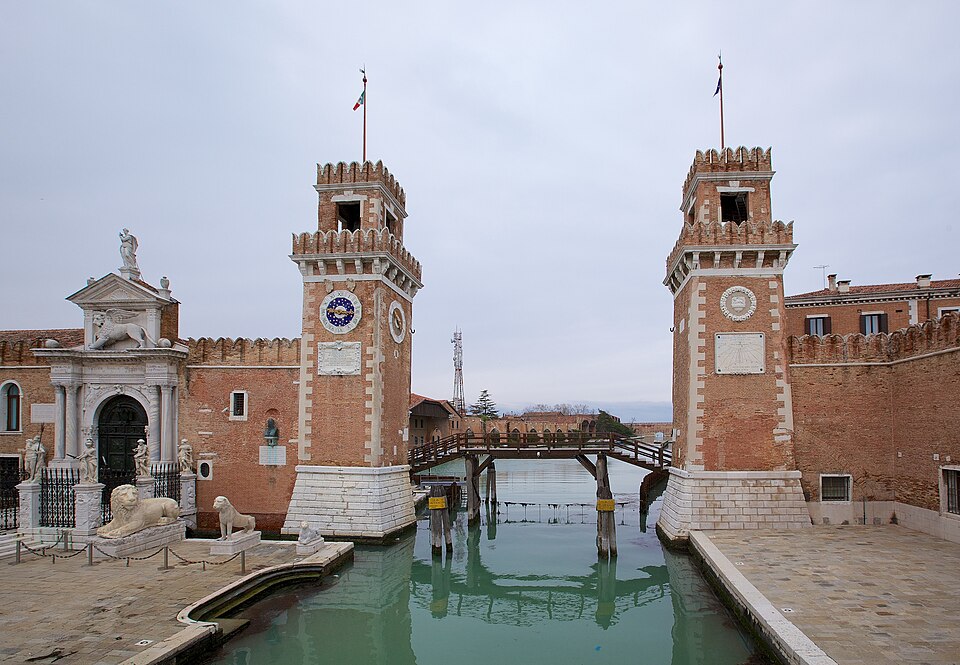
The Venetian Arsenal is a vast former shipyard complex in Venice's Castello district. Established in the twelfth century, it became one of Europe's largest industrial centres before the modern era, producing merchant and naval vessels using innovative assembly-line techniques. The complex is enclosed by high crenellated walls with distinctive towers. Its historical significance extends beyond maritime production to encompass urban planning and military architecture. The site remains partially active with Italian Navy facilities, while portions host cultural events including the Venice Biennale art exhibition. Venetian Arsenal also earns time in a venice itinerary because A primary visitor landmark supported by all three required source families and matched exactly to the production city pool. Its value becomes clearer when the stop is compared with the surrounding streets and the other ranked places nearby.
Checked 2026-08-26
The Arsenal comprises multiple docks, basins, and historic foundries within its fortified perimeter. Notable surviving structures include the original medieval shipyard buildings, Renaissance-era expansions, and the impressive gateway Porta Magna adorned with classical sculptures. The interior contains working docks, warehouses, and administrative buildings from various construction phases. Public access is restricted to certain areas, with the Navy maintaining operational control of portions. During the Venice Biennale, temporary exhibition spaces occupy selected buildings, permitting visitor entry to otherwise inaccessible sections of this historically layered complex.
Checked 2026-08-26

Visitor duration varies substantially depending on access arrangements. Standard exterior viewing of walls and towers requires approximately thirty to sixty minutes for circumnavigation. Biennale-period access permits several hours of exhibition exploration within permitted zones. Independent interior visits are not generally available; organised tours or special events provide the primary means of extended engagement. Visitors should allocate flexible scheduling, as security protocols and naval operations may affect available routes. The substantial perimeter rewards extended walking examination of architectural evolution across eight centuries of continuous use and modification.
Checked 2026-08-26

Operator-confirmed hours are Not recorded pending review. The Arsenal's accessibility fluctuates significantly throughout the year. The Venice Biennale transforms portions into exhibition venues during alternating years, typically May through November, though specific dates require verification. Naval operational requirements impose unpredictable restrictions. Exterior wall viewing remains possible at any time as public thoroughfares border the complex. Weather considerations apply: summer humidity and acqua alta flooding episodes may affect comfortable exploration. Winter offers reduced tourist density but coincides with more frequent high-water events. Advance planning is essential given access variability.
Checked 2026-08-26
Operator-confirmed prices are Not recorded pending review. Standard exterior access along surrounding streets incurs no charge. Biennale exhibition entry requires separate ticketing through the official Biennale organisation, with pricing structures varying by exhibition component and visitor category. Special guided tours, when available, may involve additional fees through authorised providers. Naval-controlled areas are not commercially ticketed. Visitors should consult current official sources for any applicable charges, as institutional arrangements change periodically. The complex's dual military-cultural function complicates straightforward pricing structures compared to conventional heritage attractions.
Checked 2026-08-26

The Arsenal occupies eastern Castello, accessible via vaporetto waterbus to Arsenale stop on Line 1 or 4.1/4.2, or by walking from San Marco through expanding Venetian streets. The entrance lies near the Biennale gardens. Signage directs visitors along Fondamenta dell'Arsenale. Water taxi services can approach closer but at substantially higher cost. Walking from Rialto or railway station requires twenty to forty minutes through characteristic Venetian passages. The location sits apart from densest tourist flows, permitting relatively uncrowded approach routes through residential neighbourhoods with authentic daily Venetian life.
Checked 2026-08-26

Active naval installations impose security restrictions; photography and behaviour protocols apply near operational zones. High walls limit visibility into much of the interior. Acqua alta flooding may affect surrounding streets unpredictably. The perimeter extends considerably; comfortable footwear is essential for comprehensive examination. Limited shade along wall walkways intensifies summer exposure. Some Biennale installations close between exhibition cycles without clear public notification. The area contains fewer amenities than central Venice; provisions should be secured beforehand. Respect boundaries marked for military use. Evening lighting is minimal along certain stretches; navigation requires attention.
Checked 2026-08-26
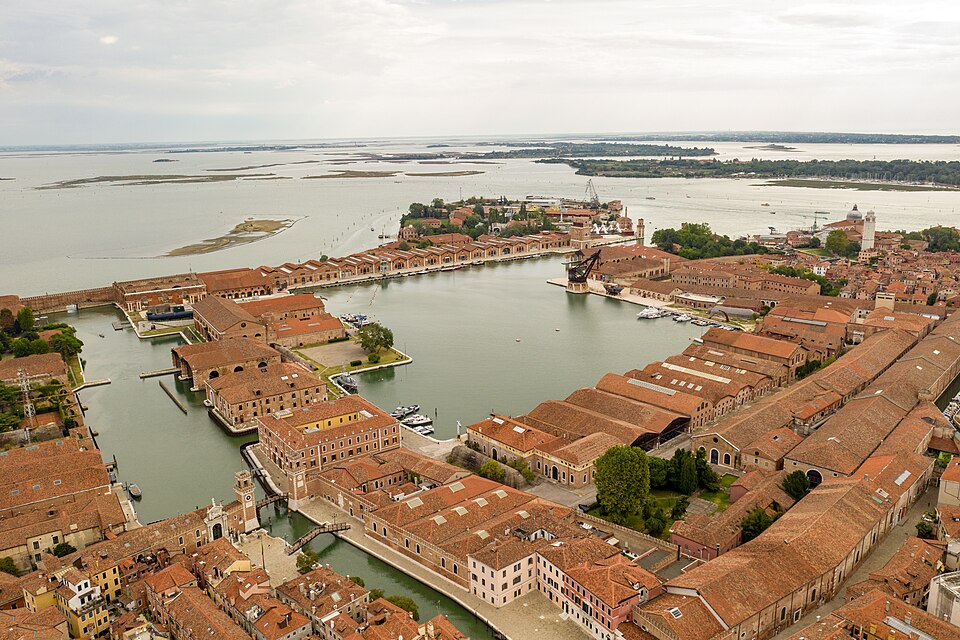
Exterior architectural photography of walls, towers, and Porta Magna is generally permissible from public thoroughfares. The distinctive crenellated skyline and water-facing facades offer compelling compositions, particularly morning and late afternoon light. Interior photography restrictions apply unpredictably due to naval security requirements; permission should be sought where boundaries are unclear. Biennale installations carry individual artist stipulations. Tripod use in narrow streets may obstruct passage and attract intervention. Drone operation is prohibited throughout Venice. The maritime-industrial aesthetic contrasts markedly with canonical Venetian imagery, offering distinctive visual documentation for patient photographers working within constraints.
Checked 2026-08-26
No. The Arsenal remains partially under Italian Navy control, and independent public access to the interior is not generally available. Entry is typically restricted to special events, organised tours, or during Venice Biennale exhibitions in permitted zones.
The Arsenal was among medieval and early modern Europe's largest industrial complexes, pioneering shipbuilding at scale using proto-industrial methods. Its output sustained Venetian maritime power and commercial dominance for centuries.
Yes. Venice and its Lagoon are inscribed on the UNESCO World Heritage List, and the Arsenal contributes to this outstanding universal value as a component of the historic urban fabric.
During Biennale periods, portions of the Arsenal transform into temporary exhibition venues, permitting public entry to otherwise restricted buildings. Access remains limited to designated areas, not the entire complex.
Operator-confirmed availability of guided tours is Not recorded pending review. Occasional organised access may occur through institutional arrangements, but regular commercial tour provision is not established.
Vaporetto waterbuses stop at Arsenale on Lines 1 and 4.1/4.2. Walking from central Venice through Castello is feasible, with the journey from San Marco taking approximately fifteen to twenty minutes.
Loading the interactive map…
The interactive map could not be loaded.
Last updated:
Source: OpenStreetMap contributors, Wikidata ·