
1 min a piedi · Fatih
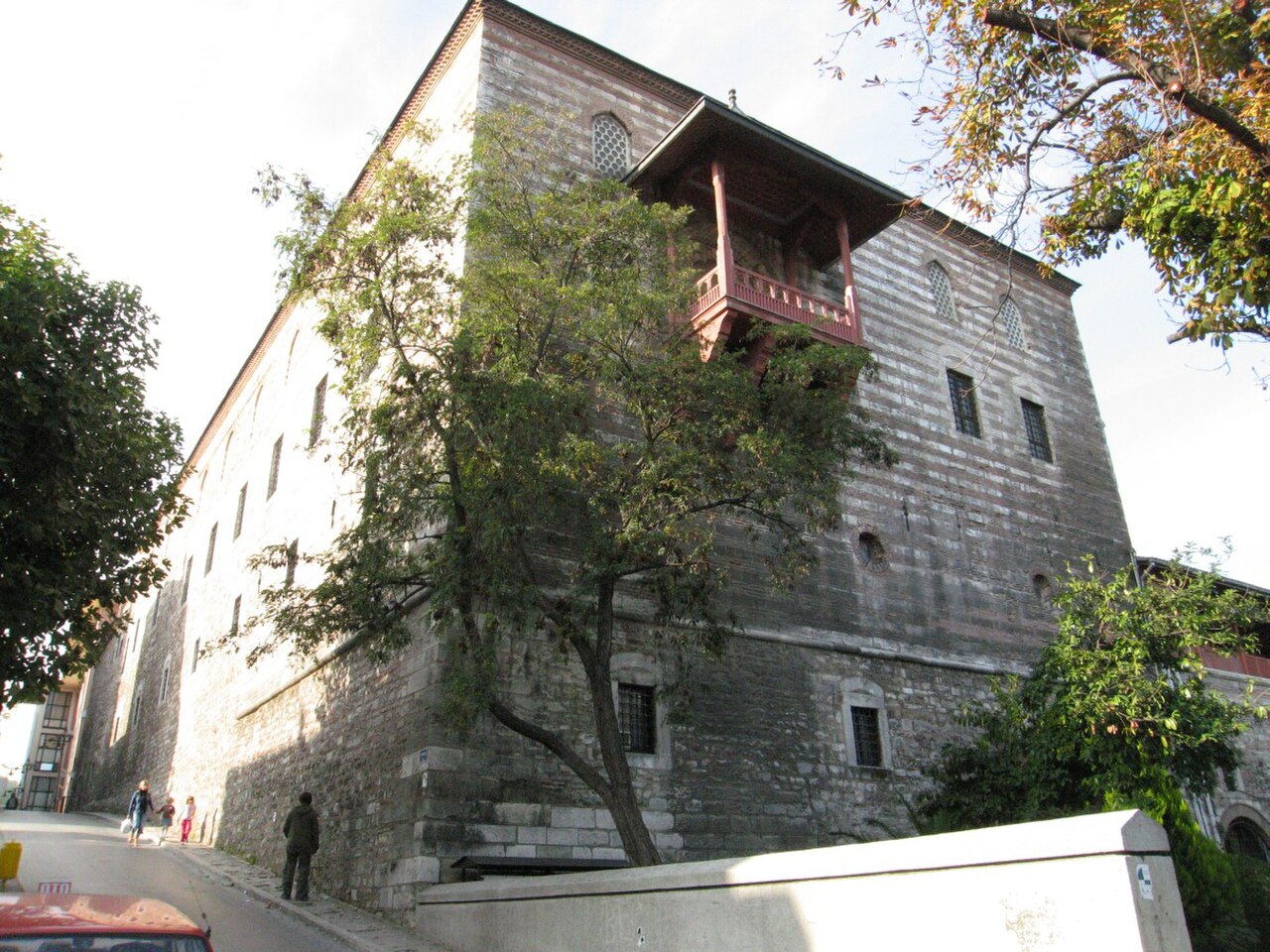
Palazzo di Ibrahim Pascià
- Da non perdere
- Monumento storico
Lingua · 11 pubblicate
Museo · Fatih, Istanbul
Ayasofya Tarih ve Deneyim Müzesi

| Lunedì | 09:00 – 19:00 |
|---|---|
| Martedì | 09:00 – 19:00 |
| Mercoledì | 09:00 – 19:00 |
| Giovedì | 09:00 – 19:00 |
| Venerdì | 09:00 – 19:00 |
| Sabato | 09:00 – 19:00 |
| Domenica | 09:00 – 19:00 |
Controllato 2026-08-24 · Fonte
Questo luogo è un Museo. È stato fondato nel 1910. È stato costruito in stile Primo movimento architettonico nazionale. È stato progettato da Vedat Tek.
The Hagia Sophia History and Experience Museum is a museum about Hagia Sophia, and it is not Hagia Sophia. That sentence saves more visits than any other in this guide. It stands across Sultanahmet Square in the restored Defter-i Hakanî Nezareti, the Ottoman land registry and cadastre building, and it opened in 2024 under the operator DEM.
What it does is tell the seventeen-hundred-year story of the building opposite — cathedral, mosque, museum, mosque again — through an audio-visual production spread over several floors, supported by an exhibition of artefacts. It exists because Hagia Sophia itself, being a working mosque, cannot carry interpretation panels and cannot stage a chronology. This building does that job next door, and the honest way to use it is as the explanation you take with you before or after you walk across the square.
Controllato 2026-08-24 · Fonte
The museum is organised as a descent through time, floor by floor. The third floor takes the Roman period, the second floor the Ottoman, and the first floor holds the artefacts, arranged in four sections that follow the building's four lives: the Cathedral, the Mosque, the Museum, and the Mosque again. On the ground floor, frameless windows look down into a cistern of the Eastern Roman period beneath the building itself.
Close to three hundred artefacts are shown, a great many of them displayed publicly for the first time. Around and between them runs the immersive part: an expansive audio-visual sequence of projected rooms rather than a corridor of vitrines, which is the format the operator has chosen and the reason the place is called an experience museum rather than a collection.
The host building deserves attention in its own right. A restored late-Ottoman ministry is not the neutral white box this kind of production usually occupies.
Controllato 2026-08-24 · Fonte
Seventy-five minutes. The operator does not publish a figure, so this one is built from the two halves of the visit: the audio-visual sequence, which runs at its own pace and cannot be hurried, and the artefact floor, which can.
That makes it substantially longer than most single-subject museums in Sultanahmet, and it is the reason it does not slot neatly between two other sights. Give it its own block rather than the gap before lunch. If you are travelling with someone who is finished with dark rooms after twenty minutes, plan where they will wait.
Controllato 2026-08-24
Seven days a week, 09:00 to 19:00, per the operator's own visitor-rules page. There is no closed day, no published midday break and no published last-admission time — and no summer and winter split either, which is unusual in Istanbul and genuinely convenient.
The long evening close is the opening this gives you. Sultanahmet Square is at its worst in the middle of the day, when the tour groups queue for Hagia Sophia and the Blue Mosque, and this museum's 19:00 close means the last two hours of the day are a real option after those queues have gone. The 09:00 opening works equally well for the same reason. The middle of the afternoon is the one stretch to avoid, and that is a judgement about the square rather than about the museum.
Controllato 2026-08-24 · Fonte
The operator's own page gives 675 TL for a single ticket. DEM's booking channel also offers a combined ticket covering the Hagia Sophia visiting area together with this museum, but the price of that combination could not be read on an operator page and so is not quoted here — check it at the point of purchase rather than trusting a third-party figure.
There is no published timed-entry requirement, but for a production with a fixed-pace audio-visual component, arriving early in the day rather than at a peak hour is the practical way to avoid waiting for a room to clear.
Controllato 2026-08-24 · Fonte
Sultanahmet on the T1 tram is the stop, and the museum is on the square itself, between Hagia Sophia and the Sultan Ahmed Mosque — a walk of a couple of minutes from the tram in either direction.
The building is the giveaway rather than the signage: look for a substantial late-Ottoman ministry façade facing the square, not for a modern museum entrance. Most visitors have walked past it repeatedly without registering what it is. If you are already doing Sultanahmet on foot, no separate journey is needed at all, which is the strongest practical argument for including it.
Controllato 2026-08-24 · Fonte
The confusion is the main hazard, and it runs in both directions. Buying a ticket here does not get you into Hagia Sophia, and buying a Hagia Sophia ticket is not the same as buying this. If you want both, look specifically for the combined ticket in DEM's own booking channel and confirm what it covers before paying.
Second, this is a produced experience, not a gallery you wander. The projected sections run on their own timing, so you move at the pace of the production rather than your own; visitors who prefer to linger over objects should know the artefact floor is the part that rewards them.
Third, the building is a restored historic ministry, which means stairs and period circulation rather than a purpose-built modern layout. Anyone with limited mobility should confirm accessibility with the operator before booking, since nothing on the visitor-rules page settles it.
Controllato 2026-08-24 · Fonte
The projection rooms are the hardest photographic environment in Sultanahmet: dark, high-contrast, and full of moving image. A phone will produce motion-smeared frames of somebody else's video, which is a poor souvenir. Watch instead, and save the camera for the parts that hold still.
The parts that hold still are worth it. The frameless windows over the Eastern Roman cistern on the ground floor give a genuinely unusual shot — a lit void under a floor — and need a steady hand rather than a flash. The restored interior of the Defter-i Hakanî building, its staircases and its window openings onto the square, is the other reward, and late in the day the light coming off Sultanahmet Square through those windows is the best of it.
Controllato 2026-08-24
No. It is a museum about Hagia Sophia, standing across Sultanahmet Square in the restored Defter-i Hakanî building, the former Ottoman land registry. It opened in 2024. A ticket here does not admit you to Hagia Sophia itself, which is a working mosque a short walk away.
Seven days a week, 09:00 to 19:00, according to the operator's own visitor-rules page. There is no closed day, no published midday break, no published last-admission time and no summer or winter variation.
The operator's own page gives 675 TL for a single ticket. A combined ticket covering the Hagia Sophia visiting area together with the museum exists in DEM's booking channel, but its price could not be confirmed on an operator page and is therefore not quoted here.
A floor-by-floor chronology: the Roman period on the third floor, the Ottoman period on the second, and on the first floor artefacts grouped into four sections following the building's four lives — Cathedral, Mosque, Museum, Mosque again. On the ground floor, frameless windows look into an Eastern Roman cistern. Close to three hundred artefacts are shown, many for the first time.
Around seventy-five minutes. The operator publishes no figure; this reflects the two parts of the visit — the audio-visual sequence, which runs at its own pace, and the artefact floor, which you can move through as quickly or slowly as you like.
On Sultanahmet Square between Hagia Sophia and the Sultan Ahmed Mosque, in the former Defter-i Hakanî Nezareti building. Sultanahmet station on the T1 tram is a couple of minutes away. Look for a late-Ottoman ministry façade rather than a modern museum entrance.
Caricamento della mappa interattiva…
Impossibile caricare la mappa interattiva.
Ultimo aggiornamento:
Fonte: Contributori di OpenStreetMap, Wikidata ·