


2 min walk
St Patrick's Cathedral
- Must see
- Place of worship
Language · 1 published
Historic monument · Dublin
| Monday | 09:30 – 17:00 |
|---|---|
| Tuesday | Closed |
| Wednesday | 09:30 – 17:00 |
| Thursday | 09:30 – 17:00 |
| Friday | 09:30 – 17:00 |
| Saturday | 10:00 – 17:00 |
| Sunday | Closed |
Closed to visitors between 13:00 – 14:00
Parsed from OpenStreetMap opening hours on 2026-08-26.
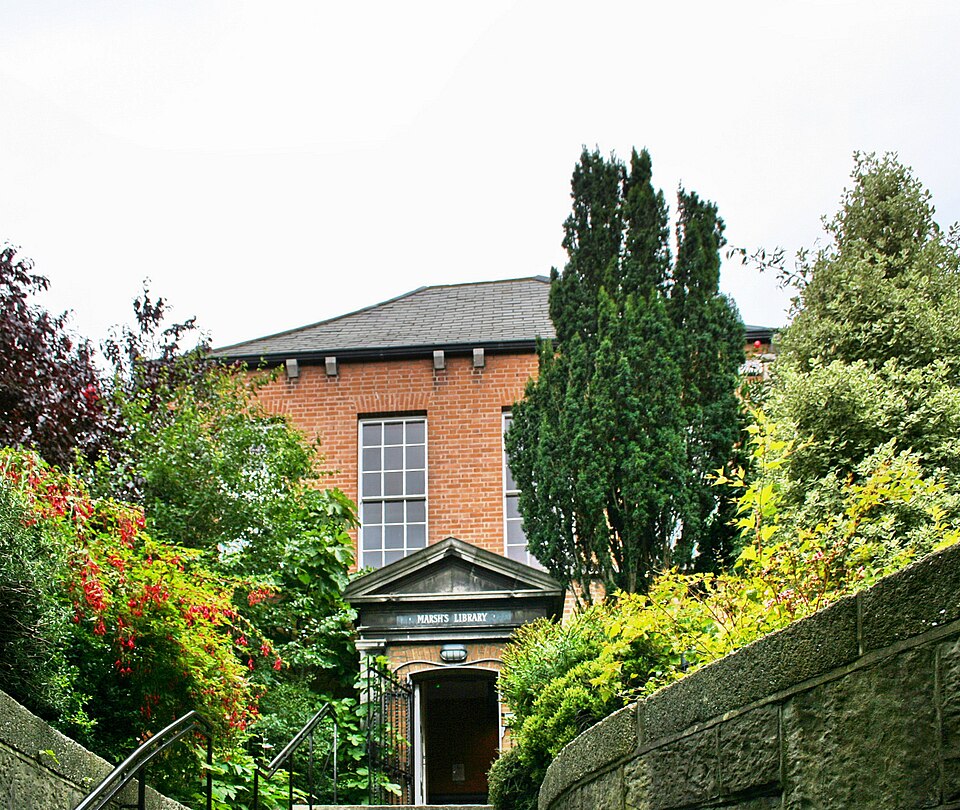
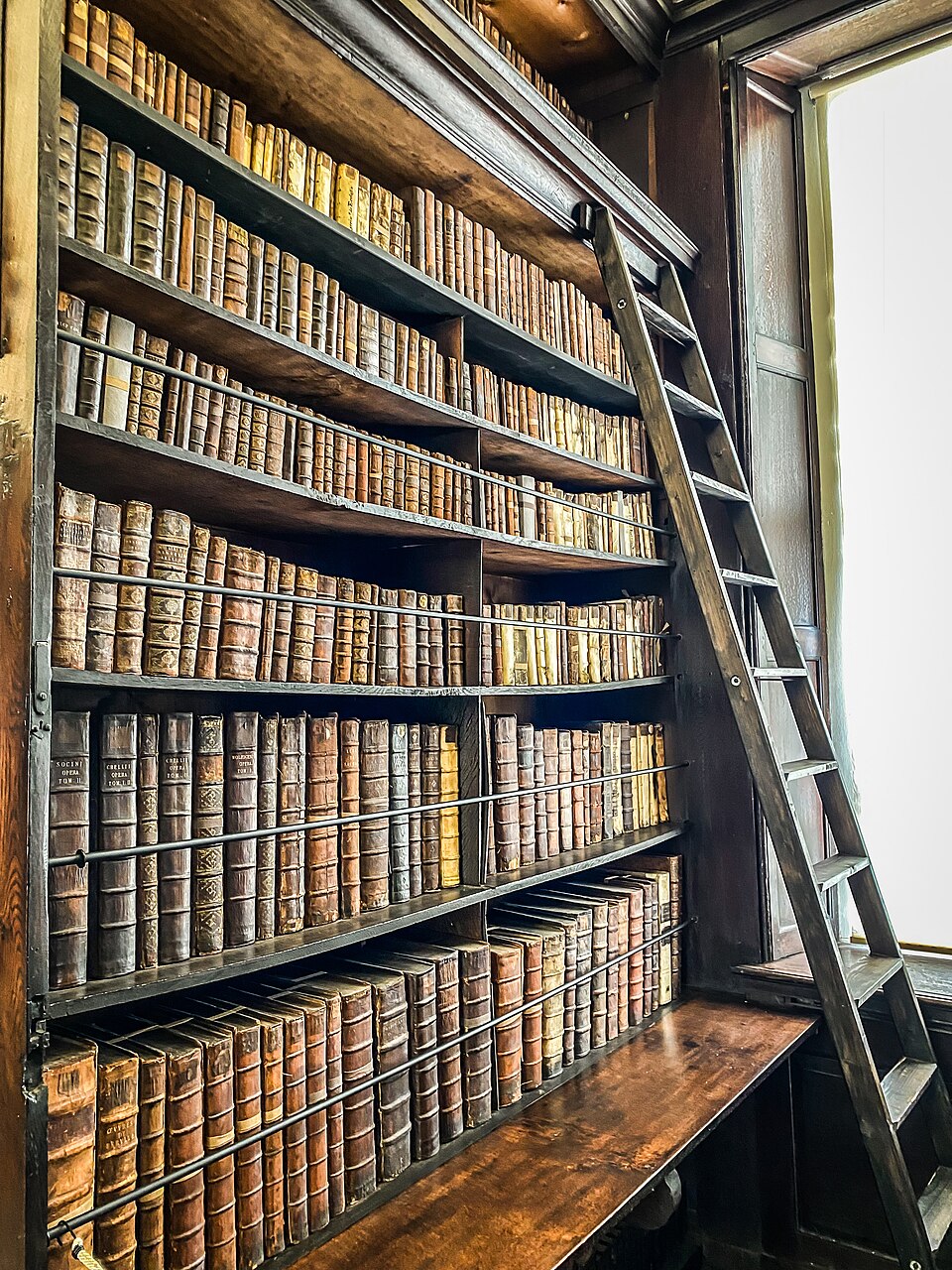
Marsh's Library is a historic library in Dublin, Ireland, founded by Archbishop Narcissus Marsh in 1707. It was the first public library in Ireland and remains an independent institution. The building on St Patrick's Close, beside St Patrick's Cathedral, houses its original collections in largely unchanged surroundings. The library preserves its early eighteenth-century character, with dark oak bookcases, cages where readers were once confined with valuable books, and a scholarly atmosphere that distinguishes it from modern library facilities. It continues to function as a working research library while admitting visitors.
Checked 2026-08-26
The library contains approximately 25,000 books and 300 manuscripts, with collections particularly strong in sixteenth, seventeenth, and eighteenth-century material. Notable holdings include works on theology, medicine, law, science, and Hebrew and Greek texts. The interior retains its original oak shelving, reading alcoves, and cage-like enclosures. Visitors can examine the historic reading room with its tall bookcases and ladder access. The building's architecture and fittings survive substantially intact from the early 1700s, offering a rare glimpse into Enlightenment-era scholarly infrastructure and the physical environment of early modern intellectual life.
Checked 2026-08-26

A typical visitor spends approximately forty-five minutes to one hour at Marsh's Library. This duration allows sufficient time to view the main reading room, examine the historic shelving and cages, and appreciate the architectural character of the building. Researchers requiring consultation of specific materials may need longer. The compact nature of the visitor-accessible areas means the experience is concentrated rather than sprawling. Visitors interested in bibliographic history, historic interiors, or Dublin's intellectual heritage may find the time extends naturally through careful observation of details in the fittings and atmosphere.
Checked 2026-08-26
Operator-confirmed hours are Not recorded pending review. Visitors should consult the library's official communication channels before planning attendance. The library's status as a working research collection with public access suggests operational patterns may differ from conventional tourist attractions. Seasonal variations, academic schedules, and special events may affect accessibility. Advance verification is particularly advisable for visitors travelling specifically to experience this site, as independent research institutions often maintain schedules that reflect their primary scholarly mission rather than standard commercial tourism hours. Weather and day of week may influence practical planning.
Checked 2026-08-26
Operator-confirmed prices are Not recorded pending review. The library's independent status and mixed function as research institution and visitor attraction suggest admission policies may differ from publicly funded museums. Visitors should consult official sources for current information regarding entry fees, concessions, or donation-based access. Some historic Irish libraries operate with voluntary contribution systems or differentiated pricing for researchers and casual visitors. Verification directly with Marsh's Library is recommended before budgeting, as policies may have changed since any third-party publication. Group rates or educational access may require advance arrangement.
Checked 2026-08-26

Marsh's Library occupies St Patrick's Close in Dublin 8, adjacent to St Patrick's Cathedral in the historic Liberties area. The location is south of the River Liffey central crossing points. Dublin Bus services operate in the surrounding area, with multiple routes serving the St Patrick's Cathedral vicinity. The site is accessible on foot from central Dublin landmarks, though the exact walking distance depends on origin point. The narrow historic street configuration around the cathedral close affects vehicle access. Visitors using public transport should identify the nearest bus stops through current operator information, as route details change.
Checked 2026-08-26

The historic building contains original eighteenth-century fabric vulnerable to environmental change and physical wear. Visitors should observe any handling restrictions, photography prohibitions in specific areas, and guidance regarding bags or coats. The compact interior spaces and narrow aisles between bookcases create circulation constraints during busier periods. The library's primary function as a research collection means silence protocols may apply more strictly than in conventional museums. Access to upper levels or specific shelving may be restricted for preservation reasons. Visitors should respect the scholarly environment and any researchers working during their visit.
Checked 2026-08-26

Photography policies at Marsh's Library are not specified in available sources and should be confirmed directly with staff upon arrival or through advance enquiry. Historic libraries frequently restrict flash photography, tripods, and commercial imaging to protect sensitive materials and maintain atmosphere. The distinctive interior with dark oak shelving and cage enclosures presents obvious photographic interest, but institutional priorities favouring preservation and research access may limit visitor photography. Visitors should not assume unrestricted photography rights. Any permitted photography should be conducted without disturbance to other visitors or researchers working in the reading spaces.
Checked 2026-08-26
No. Marsh's Library is an independent institution founded by Archbishop Narcissus Marsh in 1707, operating outside state museum structures.
The library functions primarily as a research collection with reference access. Lending policies are not recorded in available sources.
Tour availability is not recorded in available sources. Visitors should contact the library directly regarding guided or self-guided access options.
Accessibility provisions for the historic building are not recorded in available sources. The eighteenth-century structure presents inherent physical constraints.
On-site catering or retail facilities are not recorded in available sources.
The collections focus on early printed books and manuscripts rather than genealogical records. Suitability for family history research is not recorded.
Loading the interactive map…
The interactive map could not be loaded.
Last updated:
Source: OpenStreetMap contributors, Wikidata ·