


2 min walk
Palais am Festungsgraben
- High · Heritage site
- Historic monument
Language · 1 published
Historic monument · Berlin
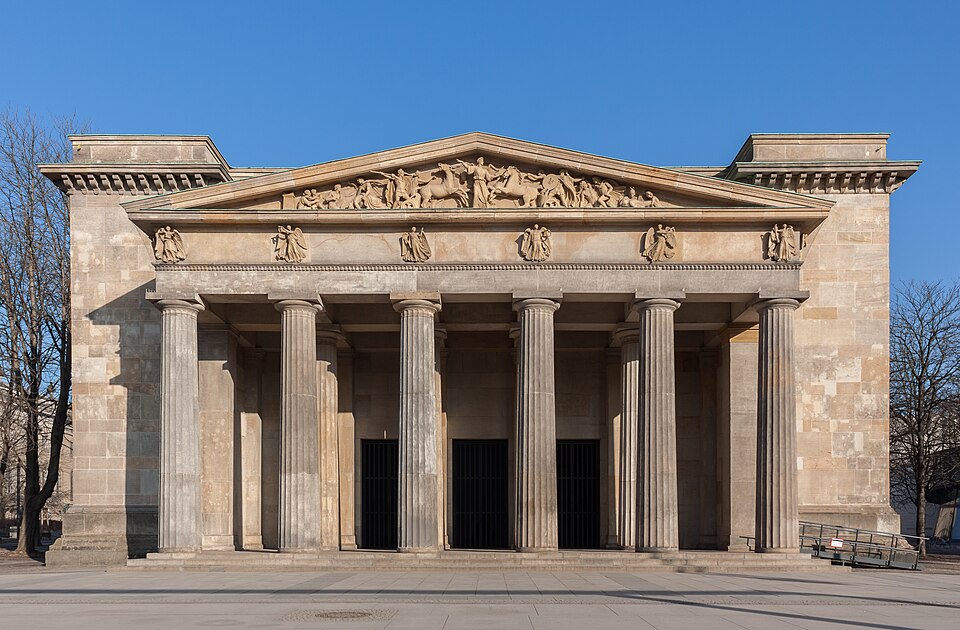
Neue Wache is a former royal guardhouse in Berlin, Germany. Located on Unter den Linden boulevard, it was originally built as a guardhouse for the troops of the Crown Prince of Prussia. The building has served various memorial purposes throughout German history. Today it functions as the Central Memorial of the Federal Republic of Germany for the Victims of War and Tyranny. The neoclassical structure was designed by architect Karl Friedrich Schinkel and completed in 1818, representing an important example of Prussian architectural heritage.
Checked 2026-08-26
The interior contains a single sculptural installation by Käthe Kollwitz titled Mother with her Dead Son. This enlarged bronze casting depicts a mother cradling her deceased child. The sculpture is positioned beneath an oculus in the building's roof, exposing it to natural elements including rain and snow. The stripped-down interior creates a contemplative atmosphere focused entirely on this memorial artwork. The space contains no other exhibitions, displays, or informational panels. Visitors encounter only the sculpture, the bare stone walls, and the open skylight above, emphasizing themes of loss and mourning.
Checked 2026-08-26
A visit to Neue Wache requires minimal time due to its compact single-room interior. Most visitors spend approximately ten to fifteen minutes inside the memorial space. There are no multiple rooms, galleries, or extended pathways to traverse. The experience consists of entering, viewing the sculpture, and absorbing the atmosphere of the chamber. Visitors seeking deeper reflection may choose to remain longer. The brevity of the visit makes it suitable for inclusion within broader itineraries exploring Unter den Linden and the surrounding Museum Island area without requiring dedicated half-day scheduling.
Checked 2026-08-26
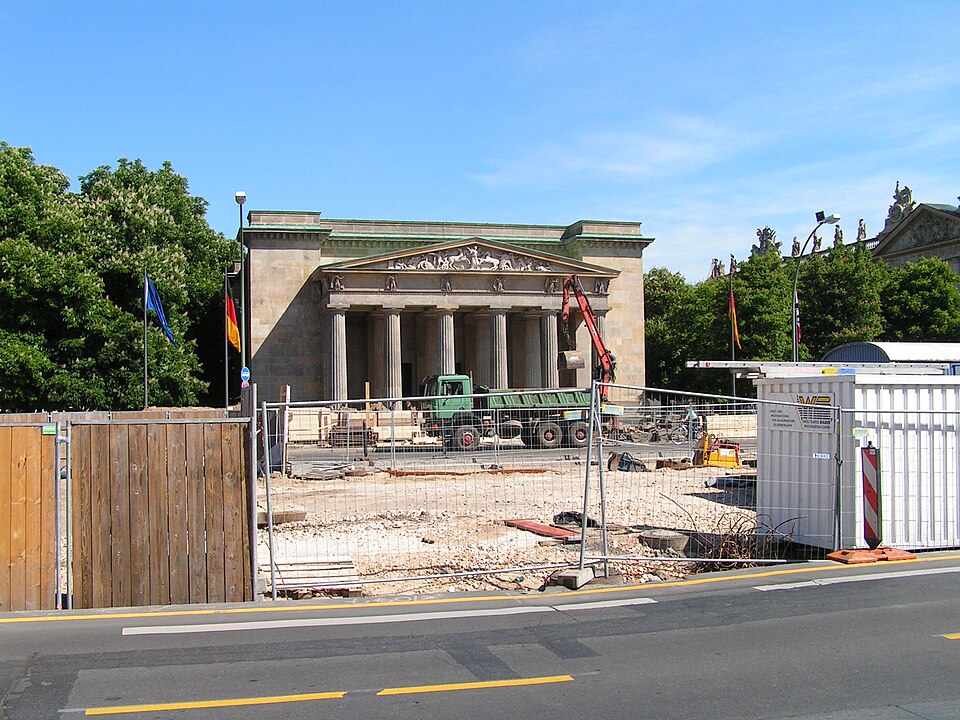
Operator-confirmed hours are Not recorded pending review. Visitors should consult official sources before planning their visit. The memorial's outdoor location on a major thoroughfare means the exterior can be viewed at any time. The interior accessibility depends on current operational decisions by managing authorities. Seasonal considerations for Berlin include heavier tourist presence during summer months and potentially inclement winter conditions. The skylight design means interior weather conditions vary with the season, which some visitors may find adds atmospheric resonance to the memorial experience while others may prefer drier conditions.
Checked 2026-08-26
Operator-confirmed prices are Not recorded pending review. The memorial has historically been accessible without admission charge, though current policies should be verified through official channels. No advance booking system is referenced in available sources. Visitors should not assume free entry without confirmation. Group arrangements or special access requirements would need direct inquiry with memorial administration. Budget planning for the surrounding area should account for other paid attractions nearby, including museums on Museum Island. The brevity of a Neue Wache visit means minimal time investment regardless of admission policy.
Checked 2026-08-26
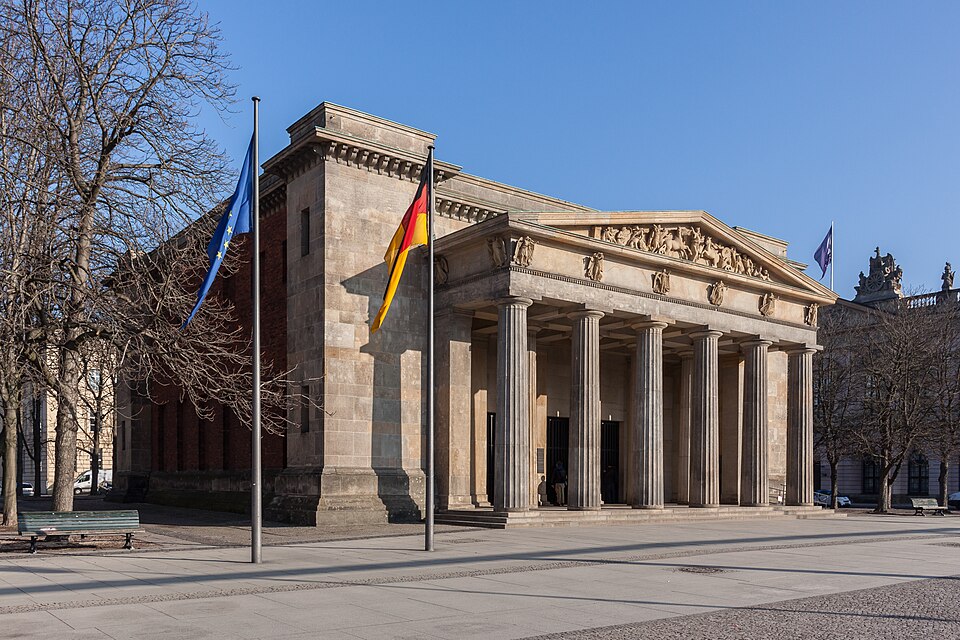
Neue Wache occupies a prominent position on Unter den Linden in Berlin's central Mitte district. The location is accessible via multiple public transportation options serving the city center. Nearby stations include Brandenburger Tor and Friedrichstraße, connecting to U-Bahn, S-Bahn, and regional train services. Bus lines traverse the boulevard. The memorial sits within walking distance of numerous other landmarks including the Brandenburg Gate, Reichstag building, and Museum Island. Central location makes it reachable on foot from many accommodation areas in Mitte. Cyclists can utilize Berlin's extensive bike infrastructure.
Checked 2026-08-26
The memorial's solemn purpose demands respectful conduct. Visitors should recognize this as an active commemoration site rather than a conventional tourist attraction. The open oculus exposes the interior to weather; appropriate clothing may be advisable during inclement conditions. The single sculpture and sparse design may disappoint those seeking extensive exhibitions or historical documentation. Photography policies should be observed with sensitivity to the memorial function. The compact space can become crowded quickly due to its small footprint. Visitors with mobility considerations should note entry accessibility conditions at the classical building entrance.
Checked 2026-08-26
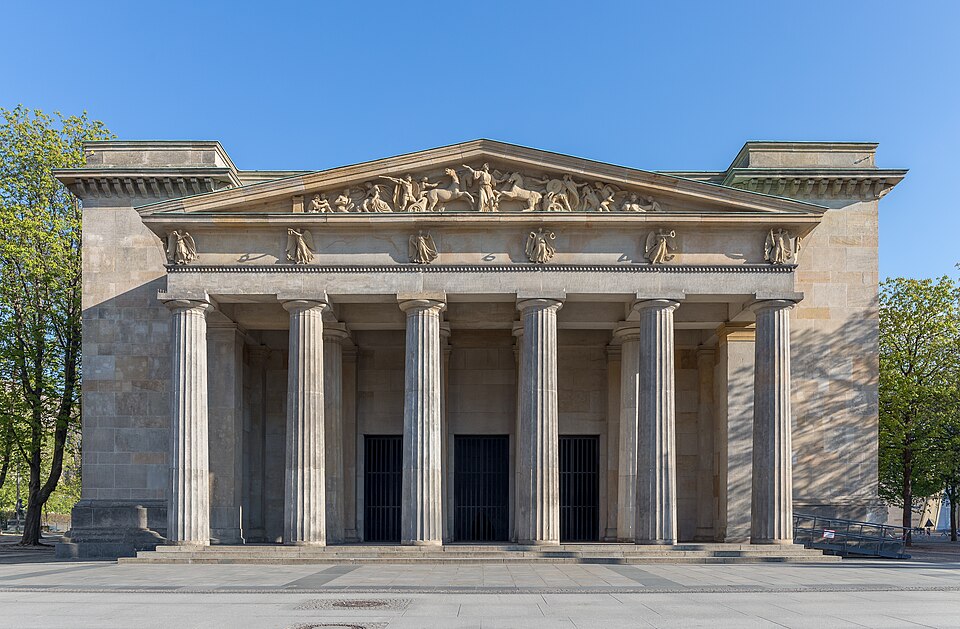
Photography conditions inside Neue Wache present specific considerations. The oculus creates variable natural lighting depending on time of day and weather conditions, affecting image capture. The stark interior offers limited compositional variety beyond the central sculpture. Visitors should exercise judgment regarding the appropriateness of extensive photographic activity within a memorial space dedicated to victims of war and tyranny. Tripod use would likely be impractical given spatial constraints and memorial dignity. Flash photography may be disruptive and should be avoided. Exterior architectural photography of the Schinkel facade is unrestricted from public thoroughfares.
Checked 2026-08-26
No. Neue Wache functions as a memorial rather than a museum. It contains no exhibitions, historical displays, or interpretive materials. The interior presents only Käthe Kollwitz's sculptural work within an empty chamber.
Mother with her Dead Son by Käthe Kollwitz depicts maternal grief and loss. The work commemorates victims of war and tyranny. The artist's own wartime bereavement informed its creation.
No. The sculpture is located within the enclosed interior chamber. Only the building's neoclassical exterior is visible from Unter den Linden without entering.
Not recorded. The memorial interior is described as stripped-down and minimal. Visitors should anticipate standing during their visit unless confirmed otherwise.
Not recorded. The memorial's single-room format and absence of exhibitions suggests self-directed visitation. Formal tour programming is not indicated in available sources.
Not recorded. The historic building's classical entrance may present accessibility considerations. Direct inquiry with memorial administration is advisable for current access provisions.
Loading the interactive map…
The interactive map could not be loaded.
Last updated:
Source: OpenStreetMap contributors, Wikidata ·