Site naturel · Hietzing, Vienna
Lainzer Tiergarten
Photographie


- Aujourd'hui
- Horaires non renseignés
- Durée de la visite
- 1 h 30 min
- Accessibilité
- Non renseigné
- Prix
- Non renseigné
- Classement
- Incontournable
- Rang
- Rang 78 sur 5,640
Qu'est-ce que c'est
The Lainzer Tiergarten is a walled former imperial hunting ground on Vienna's southwestern edge, covering roughly 2,450 hectares of the Vienna Woods and now run as a nature reserve and public park.
The Habsburgs enclosed the ground with a stone wall in the 1780s to keep game inside and poachers out, and the wall — over twenty kilometres of it — still rings the whole reserve today. Franz Joseph opened it to the public in 1919.
Wild boar, red deer, fallow deer and mouflon still range freely inside the walls, which makes it one of the few places in a European capital where large wild game can be seen without a zoo enclosure.
Since 2005 the reserve has also formed the core of the Vienna Woods UNESCO Biosphere Reserve, recognising the area as a working example of woodland conservation alongside a large city rather than a wilderness sealed off from it.
Vérifié le 2026-08-24 · Source
Qu'y a-t-il à l'intérieur
Marked walking trails cross beech and oak forest, meadow and wetland inside the walls, with several lookout points built for spotting deer and boar without disturbing them.
The Hermesvilla, a villa built in the 1880s by Emperor Franz Joseph as a gift for Empress Elisabeth, stands inside the reserve and is run today as a branch of the Wien Museum, with period rooms and changing exhibitions. A handful of guarded gates — including the Nikolaitor, Hermesvilla-Tor and Laaber Tor — control entry around the perimeter.
The forest itself is largely beech, mixed with oak and hornbeam on the drier slopes, with wetland meadows in the reserve's flatter sections that flood seasonally and are managed specifically as habitat for amphibians and wading birds.
Vérifié le 2026-08-24 · Source


Combien de temps passer
A short loop from one of the main gates to a nearby lookout and back runs one to two hours; walking as far as the Hermesvilla and back, or crossing between two gates, takes half a day.
The reserve is large enough that a single visit rarely covers more than one section of it.
Vérifié le 2026-08-24 · Source


Saison et foule
Deer and boar are most visible at dawn and dusk, when they feed at the forest edges rather than resting deeper in cover; a midday visit in summer heat sees far less wildlife.
Autumn brings the rutting call of the red deer stags and turns the beech forest colour, making it the most popular season alongside spring, when wildflowers cover the meadows.
Summer weekends draw the largest crowds of walkers and families, which pushes the more cautious animals further from the main trails during the busiest daylight hours.
Vérifié le 2026-08-24 · Source
Billets
Entry to the reserve itself is free; the gates open on a seasonal schedule set by the city's forestry department, typically shorter in winter and closed on some winter weekdays, and the current schedule is published on the city's own site rather than fixed year-round.
The Hermesvilla charges a separate museum admission and keeps its own opening days, distinct from the reserve's gate hours.
Vérifié le 2026-08-24 · Source

.jpeg)
Y arriver
Tram 60 and bus 60B reach the Hermesvilla-Tor gate from Hietzing, which is also served by the U4 line; the Nikolaitor gate is reached by bus 55B.
There is no vehicle access inside the walls beyond a few service roads, so a visit is on foot from whichever gate is used.
Choosing a gate matters more here than at a single-entrance sight, since the reserve is large enough that entering at the wrong end of it can mean an hour's extra walking to reach the Hermesvilla or a favoured lookout.
Vérifié le 2026-08-24 · Source


À quoi faut-il faire attention
The gates keep seasonal hours and can close earlier than expected in winter, so checking the current schedule before setting out matters more here than at most Vienna sights.
Wild boar are genuinely wild and can be defensive, especially sows with young; keeping a distance and not offering food is the same rule as any wildlife reserve. Dogs must be kept on a lead throughout.
Cycling and jogging are limited to specific marked routes rather than allowed on every trail, since much of the reserve is managed first as animal habitat and only second as recreation space.
Vérifié le 2026-08-24 · Source
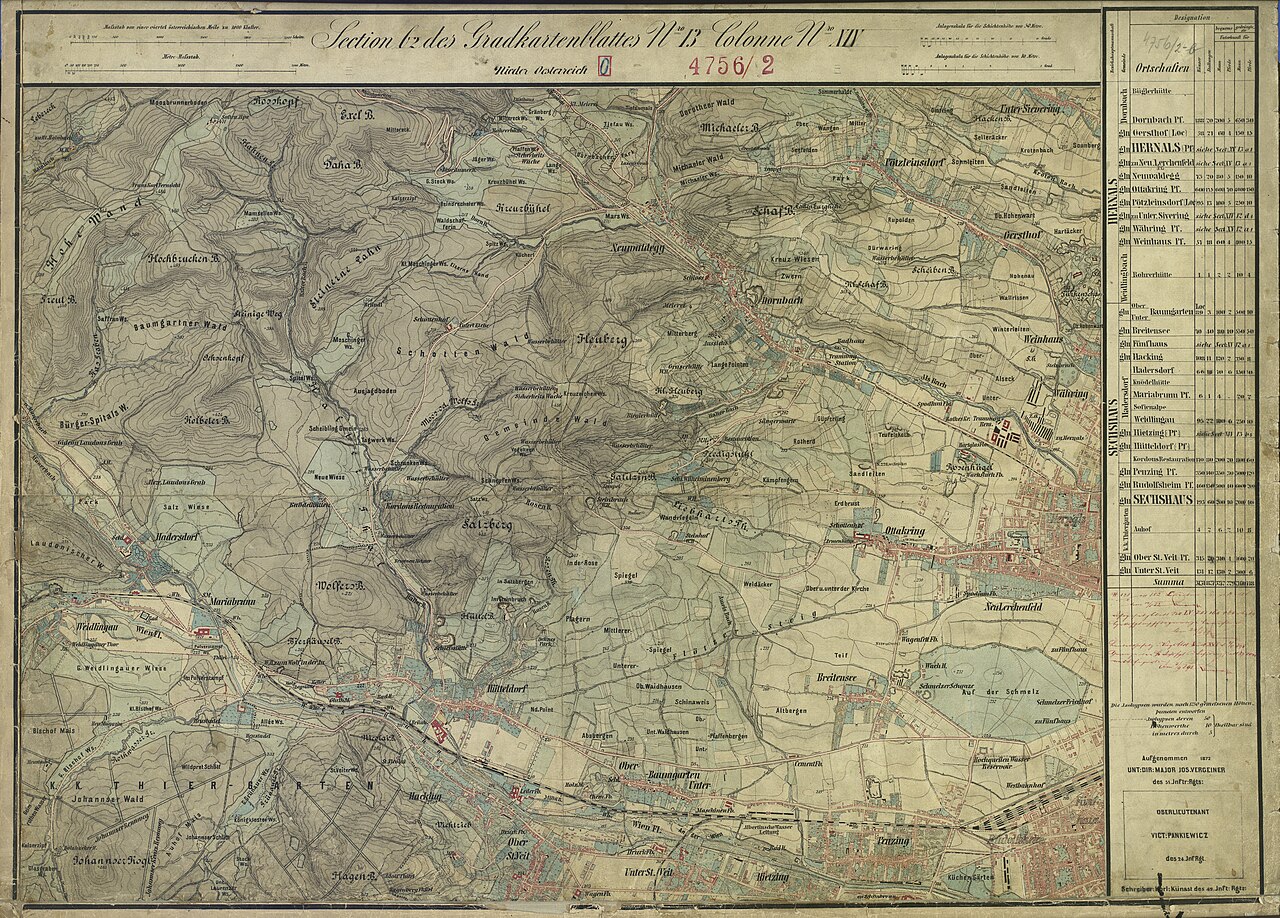

Photographie
A long lens helps for the deer and boar, which keep their distance from trails rather than approaching visitors; the designated lookout points give the clearest sightlines over meadow edges where animals feed.
The Hermesvilla's exterior, in its clearing surrounded by forest, is the reserve's most photographed building.
Vérifié le 2026-08-24 · Source
Questions courantes
Is the Lainzer Tiergarten open all year?
The reserve's gates run on a seasonal schedule set by the city's forestry department, typically shorter in winter; check the current hours on the city's site before visiting.
Is entry free?
Yes, entry to the reserve is free. The Hermesvilla inside it charges its own separate museum admission.
What animals can be seen there?
Wild boar, red deer, fallow deer and mouflon range freely inside the walled reserve, most visible at dawn and dusk.
What is the Hermesvilla?
A villa built in the 1880s for Empress Elisabeth as a gift from Franz Joseph, now run as a Wien Museum branch with period rooms and changing exhibitions.
How do I get there without a car?
Tram 60 or bus 60B reach the Hermesvilla-Tor gate from Hietzing on the U4 line; bus 55B reaches the Nikolaitor gate.
Are dogs allowed?
Yes, but only on a lead throughout the reserve, given the free-ranging wild animals inside the walls.
Où c'est
Chargement de la carte interactive…
La carte interactive n'a pas pu être chargée.
À proximité
Insérez-le dans un plan
Liens externes
Dernière mise à jour:
Source: Contributeurs OpenStreetMap, Wikidata ·