Monumento histórico · Salihli, Manisa
gymnasium
Fotografía

- hoy
- Horario no registrado
- Duración de la visita
- 45 min
- Accesibilidad
- No registrado
- Precio
- No registrado
- Posición
- Notable
- Rango
- Rango 360 de 519
Acerca de gymnasium
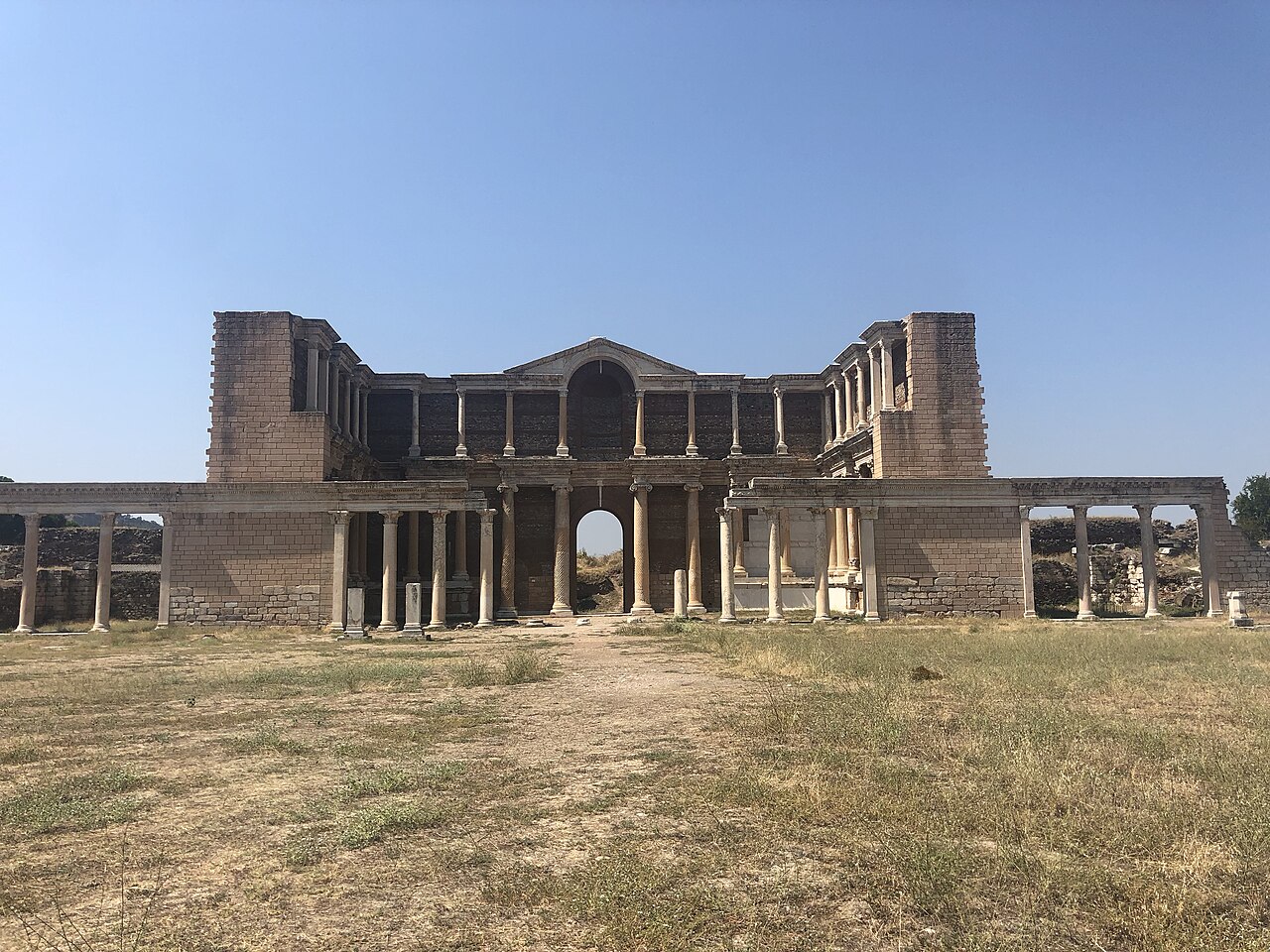
At Sardes, the Gymnasium is a Roman Imperial bath-and-exercise complex rather than an isolated ruin. Its eastern palaestra, western bath halls and connecting Marble Court form a legible architectural sequence within the archaeological area near Sart. Dating to the 2nd–3rd centuries CE, the complex shows how exercise, bathing and monumental public architecture were combined. The Late Roman Sardes Synagogue stands immediately beside it, creating an unusually concentrated view of different civic and religious traditions. The Gymnasium is therefore best understood as one connected public complex within the wider ancient city.
Comprobado 2026-09-02 · Fuente
¿Qué hay dentro?
Start at the square palaestra on the eastern side, where a surrounding colonnade defines the space used for sporting activities. Move west towards the vaulted halls, which made up the bath section and create a more enclosed architectural counterpoint to the open court. Between them stands the two-storey, colonnaded Marble Court, the principal visual connector between exercise and bathing areas. Look at the complex as a connected plan rather than a collection of detached walls. Then continue to the adjacent Sardes Synagogue, whose position makes the relationship between the monuments especially clear. This sequence gives the visit a logical architectural rhythm.
Comprobado 2026-09-02 · Fuente
Cuánto tiempo dedicar
Allow roughly 30–45 minutes for the Gymnasium itself. That gives enough time to read the square palaestra, follow the transition into the vaulted bath halls and examine the Marble Court from several viewpoints. Reserve additional time for the Sardes Synagogue immediately beside the complex, since it is a separate monument with its own historical character. The Gymnasium sits in a larger open-air archaeological landscape, so walking between structures is part of the experience rather than a simple approach to one building. Add substantially more time if you plan to continue across the wider Sardes ruins and Temple of Artemis.
Comprobado 2026-09-02 · Fuente


Temporada y multitudes
The Gymnasium belongs to an open-air archaeological visit, so the season changes the practical feel of the experience. In warmer weather, an early start is more comfortable on exposed paths and leaves time for the surrounding Sardes remains. In cooler months, plan the route with daylight in mind because the archaeological landscape is extensive. The palaestra, bath halls and Marble Court are best approached as one sequence, while the neighbouring synagogue can be added without a separate transfer. A morning visit also gives the colonnades and masonry stronger relief as changing light moves across the exposed remains. No operating schedule is recorded here.
Comprobado 2026-09-02 · Fuente
Entradas
No admission price is recorded for the Gymnasium in this guide. Treat the building as a component of the Sardes archaeological area, alongside the Synagogue and other remains, rather than as a separately ticketed urban attraction. The complex is near Sart in Salihli district, and reaching it involves an outdoor archaeological visit across the ancient site. The available material supports the place’s inclusion within Sardes, but it does not provide a reliable Gymnasium-specific tariff or a confirmed ticket condition. This section therefore avoids assigning a price to the complex.
Comprobado 2026-09-02 · Fuente
Llegar allí
From Salihli, follow the Salihli–Sart road through Sart. Approaching from Salihli, the Sardes ruins lie on the right side of the asphalt road and the Temple of Artemis on the left. From İzmir, use the İzmir–Turgutlu–Ahmetli–Sart route; from that direction, the ancient city is on the left and the Temple of Artemis on the right. These road-side relationships are useful arrival landmarks when the Gymnasium is your target. The building belongs to the Sardes ruins landscape near Sart, not to Salihli’s urban centre, so plan the visit as a site excursion.
Comprobado 2026-09-02 · Fuente


Que tener en cuenta
Expect an open-air archaeological setting, with walking between the palaestra, bath halls, Marble Court and nearby synagogue rather than a fully enclosed museum sequence. Exposed remains make sun and heat more noticeable in summer, so comfortable walking footwear and protection from the sun are sensible. The synagogue stands immediately beside the Bath-Gymnasium complex, but visiting both increases the time spent on foot. The wider Sardes landscape also includes separated remains, so allow room in your route for outdoor pauses. The complex is a restored archaeological presentation, not an intact functioning bathhouse or gymnasium.
Comprobado 2026-09-02 · Fuente
Fotografía
Photograph the Gymnasium as a relationship between spaces. From the palaestra, frame the square court and surrounding columns so its sporting role is apparent. Turn towards the vaulted bath halls to contrast the open colonnaded court with the more enclosed western section. The Marble Court suits a centred vertical composition because its two-storey colonnade visually joins the complex. A wider frame can include the Sardes Synagogue immediately beside the Bath-Gymnasium remains. Morning light can bring out masonry relief and shadows across the exposed architecture. Detail photographs of columns and vaults can complement the wider structural views.
Comprobado 2026-09-02 · Fuente
Preguntas comunes
When was the Sardes Gymnasium built?
The Gymnasium belongs to the Roman Imperial period and is dated to the 2nd–3rd centuries CE.
What was the palaestra used for?
The square, column-surrounded palaestra formed the eastern half of the complex and was used for sporting activities.
What were the vaulted halls used for?
The vaulted halls on the western side formed the bath section of the complex.
What is the Marble Court?
The Marble Court is the two-storey, colonnaded space connecting the palaestra and bath sections.
What stands next to the Gymnasium?
The Sardes Synagogue stands immediately beside the Bath-Gymnasium complex and dates from the Late Roman period, around the 3rd–6th centuries CE.
What happened to the complex after antiquity?
The Gymnasium-bath complex was restored during the 20th century and is now presented as part of the Sardes archaeological area.
donde esta
Cargando el mapa interactivo…
No se ha podido cargar el mapa interactivo.
cerca
Encajarlo en un plan
Enlaces externos
No registrado Ninguna fuente verificada lo ha registrado aún.Última actualización:
Fuente: Colaboradores de OpenStreetMap ·