
3 min a pie · Hietzing
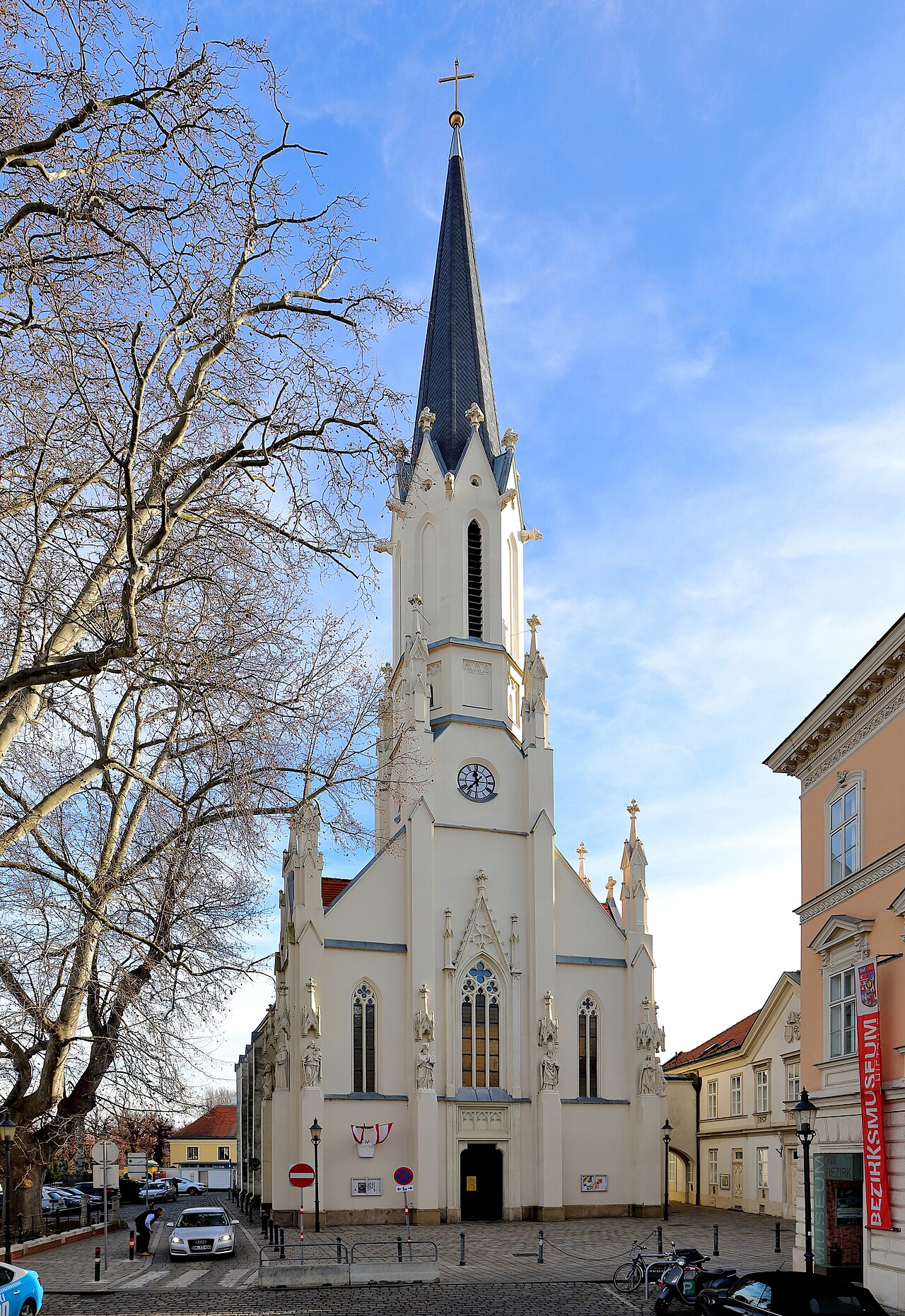
Hietzinger Pfarrkirche
- Alto · Sitio patrimonial
- Lugar de culto
Idioma · 11 publicado
Monumento histórico · Hietzing, Viena

Leer desde las etiquetas de acceso de OpenStreetMap; todo lo que no aparece en la lista no tiene ninguna etiqueta registrada.
Establezca el tipo de grupo en familia en el planificador y la ventana del día se contraerá a aproximadamente tres cuartos de un día en solitario.
Este lugar es un Atracción turística. Abrió en 1882. Fue diseñado por Ignaz Gridl.
The Palm House (Palmenhaus) is a Victorian-era iron-and-glass glasshouse inside the Schönbrunn palace grounds, built in 1882 by Franz Xaver Segenschmid for Emperor Franz Joseph I. At roughly 113 metres long, it was the largest glasshouse of its kind in continental Europe when it opened, replacing an earlier and smaller palm house that had stood on the same grounds since the mid-18th century.
This is a separately ticketed glasshouse standing within the wider estate, not the palace building itself, which carries its own guide; the two share an address but not an entrance, a ticket, or a visit length.
The building sits toward the western edge of the Schönbrunn gardens, away from the palace's main courtyard, so it is a deliberate stop on a garden walk rather than something a visitor passes on the way from the gate to the palace door.
Comprobado 2026-08-24 · Fuente
Three connected pavilions hold three different climates under one glass roof: a temperate centre pavilion, a Mediterranean wing and a tropical wing, each planted to match its own climate zone rather than mixed together.
The palm and cycad collection includes specimens dating back over a century, alongside banana plants, orchids and other tropical species that would not survive Vienna's outdoor winter without the glasshouse's heating. Iron trusses and slender glazing bars, typical of the period's greenhouse engineering and influenced by the same techniques used at London's Crystal Palace a few decades earlier, are as much the attraction as the plants they enclose.
A butterfly house occupies a separate section of the estate nearby and is a distinct, separately run attraction rather than part of the Palm House itself, a distinction worth keeping straight when two glass structures sit within a short walk of each other on the same grounds.
Comprobado 2026-08-24 · Fuente
Thirty to forty-five minutes covers all three pavilions at an unhurried pace; the tropical wing in particular rewards slowing down, since the humidity and heat make it a noticeably different experience from the temperate centre section either side of it, and rushing through misses that contrast entirely.
Comprobado 2026-08-24 · Fuente
The glasshouse is worth visiting in any season precisely because its climate does not follow Vienna's: it is a warm, humid stop on a cold winter day and a comfortable one in summer, when the outdoor gardens can be more appealing than the heated interior. Morning visits avoid the condensation build-up on the glass that can affect both viewing and photography later in the day once crowds and body heat raise the humidity further.
Comprobado 2026-08-24 · Fuente
Entry is ticketed separately from the palace and from the wider grounds; current admission prices are not recorded here and should be checked on schoenbrunn.at before a visit, since this project only records a price figure it can source directly from the operator rather than from a travel-listing site that may show an outdated number.
Comprobado 2026-08-24 · Fuente
The Palm House stands within the Schönbrunn grounds, reached through the same palace gates as the main building; the U4 underground line's Schönbrunn or Hietzing stations both serve the estate, with the glasshouse a further walk into the gardens from either gate, well past the main palace courtyard.
Comprobado 2026-08-24 · Fuente
The Palm House has its own ticket booth separate from the palace's, so arriving with only a palace ticket does not automatically grant entry here — check whether a combined pass is being used before joining the wrong queue at the wrong booth.
The tropical pavilion runs noticeably hot and humid year-round; a visitor dressed for a Vienna winter will want to remove layers once inside rather than carry a heavy coat through the tropical wing.
The nearby butterfly house is a different, separately ticketed attraction, and a Palm House ticket does not cover it — the two are easy to conflate on a map but are booked, staffed and priced independently of each other.
Comprobado 2026-08-24 · Fuente
The ironwork ribs against the glass roof, shot from below looking up through the palm fronds, is the interior's signature image; the exterior, photographed from the garden with its long symmetrical glass front lit by low sun, is the other standard shot most visitors come away with. Condensation on the glass in the tropical wing can fog a lens quickly, so a cloth for wiping it down is worth carrying.
Comprobado 2026-08-24 · Fuente
In 1882, by Franz Xaver Segenschmid for Emperor Franz Joseph I, replacing an earlier and smaller palm house on the same site.
Not automatically — the Palm House has its own ticket booth and admission; whether a particular combination pass covers it should be checked on schoenbrunn.at.
About 113 metres long, made up of three connected pavilions; it was the largest glasshouse of its kind in continental Europe when it opened.
Three: a temperate centre pavilion, a Mediterranean wing and a tropical wing.
It is the glasshouse standing within the Schönbrunn grounds, ticketed and entered separately from the palace itself.
Yes — the heated, humid interior is a deliberate contrast to Vienna's cold, and mornings avoid the condensation that builds up later in the day.
Cargando el mapa interactivo…
No se ha podido cargar el mapa interactivo.
Última actualización:
Fuente: Colaboradores de OpenStreetMap, Wikidata ·