Monumento histórico · Innere Stadt, Viena
Maria Theresa Monument
Maria-Theresien-Denkmal
Fotografía

Horario de apertura
| lunes | 00:00 – 23:59 |
|---|---|
| martes | 00:00 – 23:59 |
| miércoles | 00:00 – 23:59 |
| jueves | 00:00 – 23:59 |
| viernes | 00:00 – 23:59 |
| sábado | 00:00 – 23:59 |
| domingo | 00:00 – 23:59 |
Analizado del horario de apertura de OpenStreetMap el 2026-08-25.
Acceso e instalaciones
- Acceso sin pasos · Disponible
Leer desde las etiquetas de acceso de OpenStreetMap; todo lo que no aparece en la lista no tiene ninguna etiqueta registrada.
Establezca el tipo de grupo en familia en el planificador y la ventana del día se contraerá a aproximadamente tres cuartos de un día en solitario.
- hoy
- Abierto hoy, 00:00 – 23:59
- Duración de la visita
- 15 min
- Accesibilidad
- Sin escalones
- Precio
- No registrado
- Posición
- Imprescindible · Sitio patrimonial
- Rango
- Rango 49 de 5,640
Acerca de Maria Theresa Monument
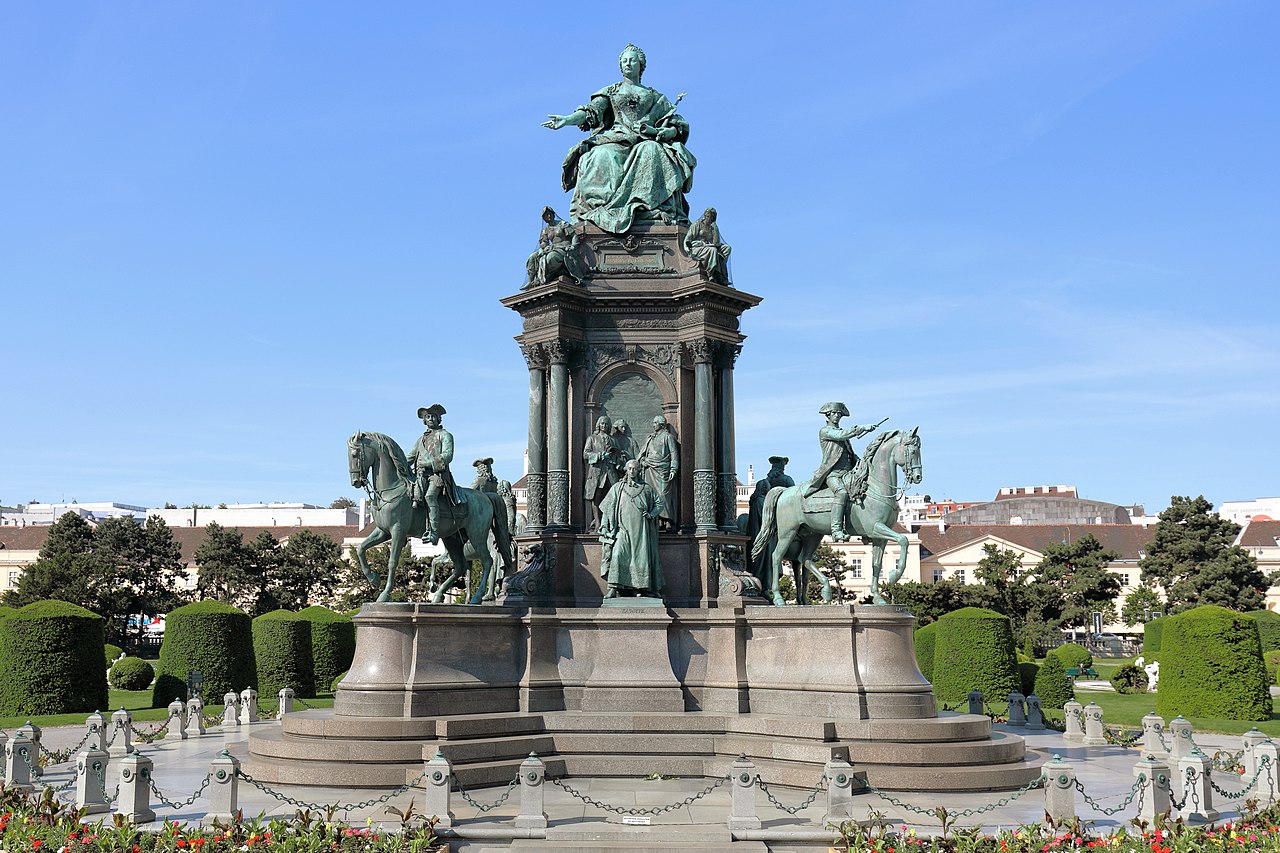
The Maria Theresa Monument is a large bronze-and-marble monument to the Habsburg empress, standing at the centre of Maria-Theresien-Platz on Vienna's Ringstrasse, exactly between the Kunsthistorisches Museum (Museum of Art History) and the Naturhistorisches Museum (Museum of Natural History), the twin museum buildings the square was laid out to face each other across. It was unveiled in 1888, sculpted by Caspar von Zumbusch after a design competition held decades earlier, and stands roughly twenty metres tall including its pedestal — one of the largest single monuments on the Ringstrasse, and deliberately positioned as the centrepiece of the whole Ringstrasse museum quarter around it, with Maria-Theresien-Platz laid out symmetrically to frame it.
The square and its museums were part of the same nineteenth-century Ringstrasse building programme that produced the Kunsthistorisches and Naturhistorisches museums either side of it, so the monument's placement is not an afterthought but the point the twin buildings were designed to face.
Comprobado 2026-08-20 · Fuente
¿Qué hay dentro?
There is no interior — it is an outdoor sculptural monument, not a building. Maria Theresa sits enthroned at the top, holding the Pragmatic Sanction, the legal document that secured her succession, and is shown in the robes of the Order of the Starry Cross rather than in military dress.
Around the base, bronze equestrian statues depict four of her generals — Laudon, Daun, Khevenhüller and Traun — while niches and reliefs lower down carry figures representing her ministers, advisors and the era's arts and sciences, so the monument reads as a summary of her reign rather than a single portrait. Allegorical figures representing justice, wisdom, strength and mercy sit at the four corners of the base, tying the military and civilian groupings together under a single reading of the reign as a whole.
Comprobado 2026-08-20 · Fuente
Cuánto tiempo dedicar
Ten to fifteen minutes to walk around the base and read the figures, longer if combined with the two museums it stands between, each of which is a half-day visit on its own. A visitor who reads every figure and inscription rather than glancing at the whole from a distance can easily spend half an hour circling the base alone, since the four sides carry different groupings that do not repeat.
Comprobado 2026-08-20 · Fuente
Temporada y multitudes
Any time — it is outdoors, unticketed and always visible, at its best photographically in the low light of early morning or early evening when the square is quieter and the bronze catches direct light. Winter visits find the square nearly empty compared with the summer museum crowds, at the cost of shorter daylight for photographing the monument at its best angle.
Comprobado 2026-08-20 · Fuente
Entradas
Free; there is no fee and no gate around the monument or the square it stands in. The two museums flanking it charge separate admission, and neither ticket is required to see or photograph the monument itself from the square.
Comprobado 2026-08-20 · Fuente
Llegar allí
On the Ringstrasse at Maria-Theresien-Platz, a two-minute walk from the MuseumsQuartier or from Volkstheater and Museumsquartier U-Bahn stations (U2, U3), directly between the two museum buildings. The square also sits on the tram lines running along the Ring, so a visitor arriving from the Hofburg or the Parliament building can step off directly at its edge.
Comprobado 2026-08-20 · Fuente
Que tener en cuenta
The square is a through-route between the MuseumsQuartier and the Ring, so it carries heavy foot traffic and tour groups most of the day rather than being a quiet standalone stop. The monument itself needs no separate visit if the plan already includes either museum, since it stands directly on the path between their entrances. Because the square is fully open and outdoors, it also sees occasional markets and public events set up around its edges, which can crowd the sightlines to the monument's base at short notice on those dates.
Comprobado 2026-08-20 · Fuente
Fotografía
A straight-on shot from the square's central path, with one of the museum domes framing the background, is the standard image; early morning avoids both the crowd and the harsh midday shadow that falls across the figures at the base. A wide lens is needed to take in the full twenty-metre height from close range, and stepping back to one of the museum entrances gives enough distance to fit the whole monument without one.
Evening floodlighting, when it runs, changes the character of the shot entirely, throwing the bronze figures into sharper relief than daylight does; whether the floodlighting operates on a fixed nightly schedule or only for specific events is not confirmed on the sources this guide draws from. A tripod is rarely necessary given how open and well-lit the square stays into the early evening, even when the museums themselves have closed for the day.
Comprobado 2026-08-20 · Fuente
Preguntas comunes
Is the Maria Theresa Monument free to see?
Yes, it stands outdoors in a public square with no ticket or gate.
Who is shown at the base?
Four of Maria Theresa's generals — Laudon, Daun, Khevenhüller and Traun — on horseback, with her ministers and advisors in reliefs and niches below her.
What is she holding?
The Pragmatic Sanction, the document that secured her succession to the Habsburg throne.
How tall is it?
Roughly twenty metres including the pedestal, one of the largest monuments on the Ringstrasse.
Which museums does it stand between?
The Kunsthistorisches Museum and the Naturhistorisches Museum, facing each other across the square.
Does visiting it need a ticket?
No, only the two museums it stands between are ticketed; the monument and the square are free.
donde esta
Cargando el mapa interactivo…
No se ha podido cargar el mapa interactivo.
cerca
Encajarlo en un plan
Enlaces externos
Última actualización:
Fuente: Colaboradores de OpenStreetMap, Wikidata ·