Museum · Marrakesh
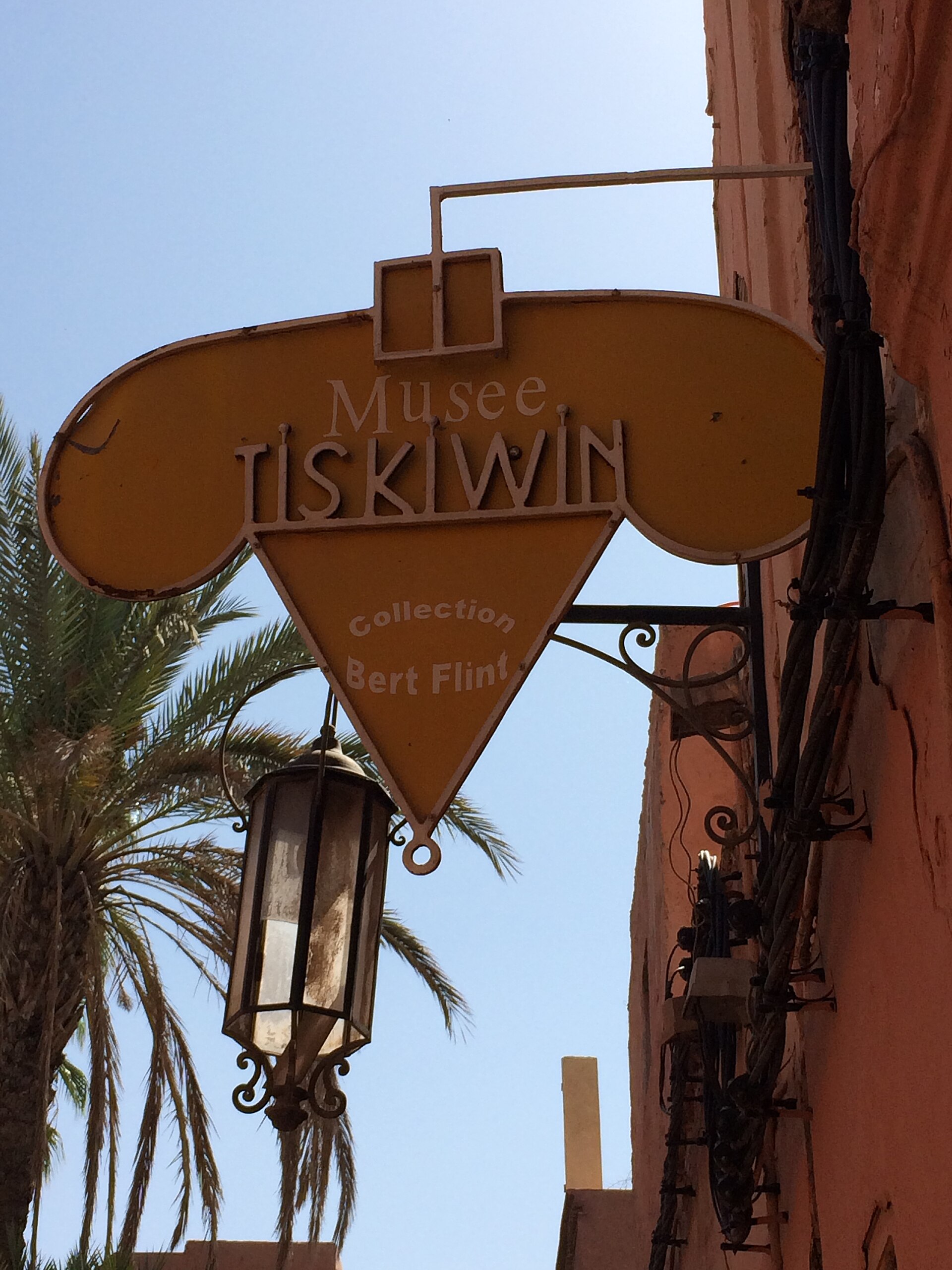
Musée Tiskiwin
Foto

- Heute
- Öffnungszeiten nicht erfasst
- Besuchsdauer
- 1 Std 30 Min
- Barrierefreiheit
- Nicht erfasst
- Preis
- Nicht erfasst
- Einordnung
- Muss man gesehen haben
- Rang
- Rang 20 von 286
Über Musée Tiskiwin
Maison Tiskiwin is a museum in Marrakesh dedicated to Moroccan and Saharan arts and crafts. It occupies a traditional riad-style house in the medina, presenting ethnographic collections assembled by Dutch anthropologist Bert Flint. The institution documents cultural connections between Morocco and the broader Sahel region through textile arts, jewelry, and domestic objects. Its medina location places it among the historic landmarks of the old city, offering visitors insight into trans-Saharan trade routes and their material legacy. The museum represents a private initiative rather than state-run heritage infrastructure.
Geprüft 2026-08-26
Was ist drin?
The collection emphasizes Berber and Tuareg material culture, including carpets, tent hangings, leather goods, and metalwork. Displays trace regional craftsmanship across Morocco, Mali, and Niger. Traditional domestic interiors are reconstructed to demonstrate living contexts. Musical instruments, ceremonial objects, and utilitarian items illustrate daily life and ritual practice. The riad architecture itself contributes to the experience, with central courtyard, tiled fountains, and carved woodwork framing the exhibitions. Interpretation relies substantially on visual presentation rather than extensive labeling, requiring visitors to engage directly with objects. The arrangement follows thematic and geographic logic rather than strict chronology.
Geprüft 2026-08-26
Empfohlene Besuchsdauer
Visitor reports suggest allowing approximately one to two hours for a complete visit, depending on individual engagement with detailed craftsmanship. The compact scale of the traditional house limits extended circulation, though attentive examination of textile patterns and construction techniques rewards slower pacing. Those with specialized interest in ethnographic collections or fiber arts may prefer longer stays. Casual visitors typically integrate the museum into broader medina exploration rather than dedicating exclusive half-day blocks. Combination with nearby landmarks optimizes itinerary efficiency. Self-guided progression without audio components permits flexible duration adjustment according to personal schedule constraints and energy levels.
Geprüft 2026-08-26
Jahreszeit und Menschenmassen
Operator-confirmed hours are Not recorded pending review. Visitors should verify current opening schedules through direct contact before planning, as medina institutions frequently modify access without broad notification. Morning visits may offer cooler temperatures during warmer months, though seasonal variation in Marrakesh is significant. Ramadan and religious observances potentially affect accessibility. The interior courtyard provides some temperature moderation, though summer conditions remain challenging. Advance confirmation prevents disappointment from unannounced closures for private events, restoration, or staffing limitations common to small private museums. No specific last-entry time can be confirmed from available sources.
Geprüft 2026-08-26
Tickets
Operator-confirmed prices are Not recorded pending review. Admission structures for private medina museums vary considerably, with some employing fixed rates and others negotiating informally. Potential visitors should carry sufficient cash in Moroccan dirhams, as card acceptance is unreliable in traditional quarter establishments. Combined tickets with affiliated cultural sites may exist but cannot be verified. Student, resident, or group reductions sometimes apply at discretion. Budget planning should accommodate uncertainty until direct price confirmation is obtained. No advance booking system is documented, suggesting walk-up payment remains standard practice for this category of heritage attraction.
Geprüft 2026-08-26


Ankommen
Maison Tiskiwin occupies a position within the Marrakesh medina, accessible primarily on foot through narrow pedestrian lanes. Motor vehicle access terminates at perimeter points; final approach requires walking. The museum lies sufficiently central that most medina accommodations permit arrival without extended navigation. Signage may be intermittent; landmark-based wayfinding using the central Jemaa el-Fnaa square as reference point assists orientation. Licensed guides familiar with medina topography can facilitate location, though independent discovery is feasible with adequate preparation. No dedicated parking exists. Visitors with mobility limitations should anticipate uneven surfaces and steps characteristic of historic quarter infrastructure.
Geprüft 2026-08-26
Worauf Sie achten sollten
Medina navigation presents inherent complexity for unfamiliar visitors; narrow passages, dead ends, and active commercial activity demand sustained attention. Persistent unofficial guides may offer unsolicited assistance with expectation of payment. Object handling within museum spaces should respect displayed collections. Climate conditions in enclosed traditional buildings fluctuate less extremely than exterior but remain warm seasonally. Personal belongings security warrants vigilance in crowded quarter conditions. No specific hazards are documented for this institution, though general urban precautions apply. Language barriers may complicate spontaneous inquiry; basic French or Arabic assists substantially beyond English-only capability in this operational context.
Geprüft 2026-08-26
Fotografie
Photography policies are Not recorded pending review. Visitors should request explicit permission before capturing images, as ethnographic collections sometimes restrict documentation due to cultural sensitivity or reproduction concerns. Flash photography potentially damages light-sensitive organic materials including textiles and dyes. Where permitted, natural courtyard lighting may prove more effective than artificial flash for quality results. Tripod use is likely impractical given spatial constraints. Respect for fellow visitors and ongoing conservation priorities should govern image-making behavior. Commercial or publication-oriented photography almost certainly requires advance arrangement and possible fee settlement with institutional administration rather than casual visitor privilege.
Geprüft 2026-08-26
Häufige Fragen
Is Maison Tiskiwin a government museum for Maison Tiskiwin in Marrakesh?
No. It represents a private initiative founded around personal ethnographic collections, distinct from Morocco's state heritage network.
What languages are used for exhibition information for Maison Tiskiwin in Marrakesh?
Specific labeling languages are Not recorded pending review. Visual presentation appears emphasized over extensive textual interpretation.
Are guided tours available for Maison Tiskiwin in Marrakesh?
Scheduled guided services are Not recorded pending review. Self-directed visitation appears standard based on available operational descriptions.
Is the museum accessible for wheelchair users for Maison Tiskiwin in Marrakesh?
Historic riad architecture with steps and uneven surfaces presents significant accessibility challenges; specific accommodations are Not recorded pending review.
Can items from the collection be purchased for Maison Tiskiwin in Marrakesh?
No retail function is documented. The institution operates as exhibition space rather than commercial gallery or craft outlet.
How does this museum differ from the Marrakesh Museum for Maison Tiskiwin in Marrakesh?
Maison Tiskiwin specializes in Saharan and trans-Saharan ethnographic materials within traditional domestic architecture, whereas the Marrakesh Museum occupies a former palace with broader artistic scope.
Wo es ist
Interaktive Karte wird geladen…
Die interaktive Karte konnte nicht geladen werden.
In der Nähe
Passen Sie es in einen Plan ein
Externe Links
Nicht erfasst Dazu liegt noch keine verifizierte Quelle vor.Zuletzt aktualisiert:
Quelle: OpenStreetMap-Mitwirkende ·