Museum · Florenz
Santa Reparata, Florence
Cripta di Santa Reparata

- Heute
- Öffnungszeiten nicht erfasst
- Besuchsdauer
- 1 Std 30 Min
- Barrierefreiheit
- Nicht erfasst
- Preis
- Nicht erfasst
- Einordnung
- Muss man gesehen haben · Kulturerbe
- Rang
- Rang 68 von 3,075
Über Santa Reparata, Florence
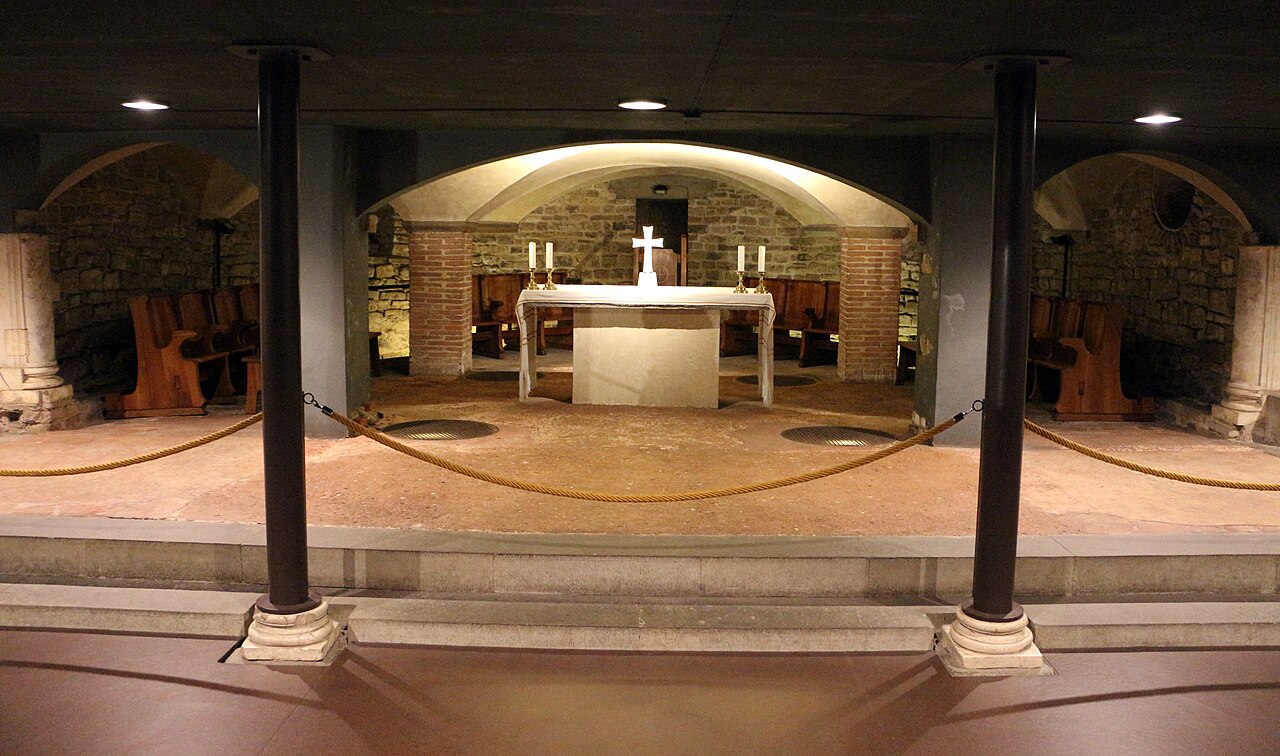
Santa Reparata is the archaeological crypt beneath Florence Cathedral, preserving remains of the earlier basilica that stood on this site before the Duomo's construction. The Cripta di Santa Reparata reveals foundational structures of medieval worship in Florence, with visible stratigraphy spanning from Roman through early Christian and Romanesque periods. This subterranean space offers visitors direct contact with the cathedral's deepest historical layers, predating Brunelleschi's dome by several centuries. The site constitutes an essential but often overlooked component of the cathedral complex's architectural narrative.
Geprüft 2026-08-28
Was ist drin?
The crypt exposes foundational walls, mosaic fragments, and tomb slabs from successive building phases. Archaeological investigations revealed structural elements of the earlier basilica, including column bases and floor levels at varying elevations. Notable findings include traces of Roman paving and medieval burial markers integrated into successive floor constructions. The stratified remains demonstrate how this sacred site was repeatedly rebuilt and elevated over centuries. Displayed materials illustrate the transition from early Christian basilica to the monumental Renaissance project that ultimately superseded it entirely. Santa Reparata also earns time in a florence itinerary because its setting and role differ from the surrounding ranked stops. Compare the place with the nearby streets before deciding how it fits the day.
Geprüft 2026-08-28
Empfohlene Besuchsdauer
A thorough examination of the crypt's exposed archaeology typically requires between thirty and forty-five minutes. The compact subterranean space contains concentrated information demanding careful visual attention to distinguish between construction phases. Visitors with strong archaeological interest may extend their stay to study stratigraphic relationships and identify specific masonry techniques. The experience complements rather than duplicates cathedral visits, rewarding those who appreciate reading spatial history through material evidence. Budget additional time for reading interpretive panels and contemplating the chronological depth compressed within this confined volume.
Geprüft 2026-08-28
Jahreszeit und Menschenmassen
Visitors should verify current accessibility directly with cathedral complex authorities before planning, as crypt admission typically depends upon cathedral museum ticketing arrangements that may vary seasonally. The enclosed underground environment maintains relatively stable temperature and humidity regardless of external conditions, eliminating weather-dependent comfort considerations. Morning visits potentially offer quieter conditions for contemplative examination of archaeological details. Confirmation of specific daily operating schedules remains essential, as integration with broader complex access protocols may restrict independent visiting opportunities. Check the operator's own site for the travel date before relying on a schedule or fare.
Geprüft 2026-08-28
Tickets
The crypt's access generally forms part of consolidated cathedral complex admission rather than standalone ticketing, though specific bundled arrangements require direct verification. Visitors should consult official Opera del Duomo channels for current fee structures and inclusive options covering baptistery, museum, and climb components. Potential free-entry provisions for designated categories remain unconfirmed without authoritative source consultation. Advance reservation possibilities and temporal restrictions on crypt-specific entry similarly necessitate direct operator inquiry rather than assumption based on standard Italian monument practices. Check the operator's own site for the travel date before relying on a schedule or fare.
Geprüft 2026-08-28
Ankommen
The crypt lies physically beneath Florence Cathedral in the Piazza del Duomo, central to pedestrian-priority historic fabric. Walking from Santa Maria Novella railway station requires approximately fifteen minutes through dense medieval street network. Multiple bus routes serve surrounding thoroughfares, though final approach necessarily proceeds on foot through restricted traffic zones. The cathedral dome dominates skyline orientation throughout central Florence, providing reliable visual landmarking. Underground parking exists at peripheral locations with walking completion. The piazza's concentration of monuments generates persistent pedestrian congestion requiring navigational patience.
Geprüft 2026-08-28
Worauf Sie achten sollten
The subterranean environment presents uneven ancient flooring and restricted vertical clearance in passages between archaeological zones, demanding attentive foot placement and posture awareness. Dim atmospheric lighting, while appropriate to preservation needs, complicates detailed visual examination and stair navigation. The confined space accommodates limited visitor numbers simultaneously; patience may prove necessary during peak cathedral complex attendance periods. Humidity levels exceed surface conditions significantly. Those with mobility limitations, claustrophobic tendencies, or balance concerns should evaluate suitability carefully, as historic preservation priorities preclude modern accessibility modifications throughout much of the archaeological area.
Geprüft 2026-08-28
Fotografie
Photography policies within the crypt remain unconfirmed by authoritative sources and should be verified on-site or through cathedral complex official communications. The challenging lighting conditions—low illumination protecting sensitive archaeological materials—would in any case complicate satisfactory image capture without specialized equipment. Flash photography, if technically permitted, risks being socially discouraged given confined spatial context and potential material sensitivity. Visitors prioritizing photographic documentation should prepare for high-ISO requirements or accept interpretive limitations. Respect for ongoing archaeological preservation and fellow visitors' contemplative experience should guide any image-making decisions regardless of explicit regulatory status.
Geprüft 2026-08-28
Häufige Fragen
Is Santa Reparata the same as Florence Cathedral?
No. Santa Reparata is the archaeological crypt beneath the cathedral, preserving remains of the earlier basilica that preceded the current Duomo structure.
How old are the remains visible in the crypt?
The exposed archaeology spans multiple phases from Roman through early Christian and medieval periods, though specific dating of individual elements requires specialist archaeological assessment.
Can I visit the crypt without seeing the rest of the cathedral complex?
Access arrangements remain unconfirmed; the crypt typically integrates with broader cathedral complex admission, though standalone visiting possibilities require direct operator verification.
Is the crypt accessible for wheelchair users?
The subterranean environment with uneven ancient surfaces and restricted passages presents significant accessibility challenges; suitability for mobility-impaired visitors requires individual assessment and advance operator consultation.
Are guided tours available for Santa Reparata specifically?
Specific guided tour availability for the crypt alone is Not recorded; visitors should inquire with cathedral complex authorities regarding interpretive services and educational programming.
What should I wear when visiting the crypt?
Comfortable footwear with secure grip is strongly advised given uneven ancient flooring surfaces and stair descents; the underground environment maintains cooler temperatures than surface levels regardless of season.
Wo es ist
Interaktive Karte wird geladen…
Die interaktive Karte konnte nicht geladen werden.
In der Nähe
Passen Sie es in einen Plan ein
Externe Links
Zuletzt aktualisiert:
Quelle: OpenStreetMap-Mitwirkende, Wikidata ·