Historisches Denkmal · Berlin
Großsiedlung Siemensstadt
Foto

- Heute
- Öffnungszeiten nicht erfasst
- Besuchsdauer
- 45 Min
- Barrierefreiheit
- Nicht erfasst
- Preis
- Nicht erfasst
- Einordnung
- Muss man gesehen haben · Kulturerbe
- Rang
- Rang 88 von 18,023
Über Großsiedlung Siemensstadt
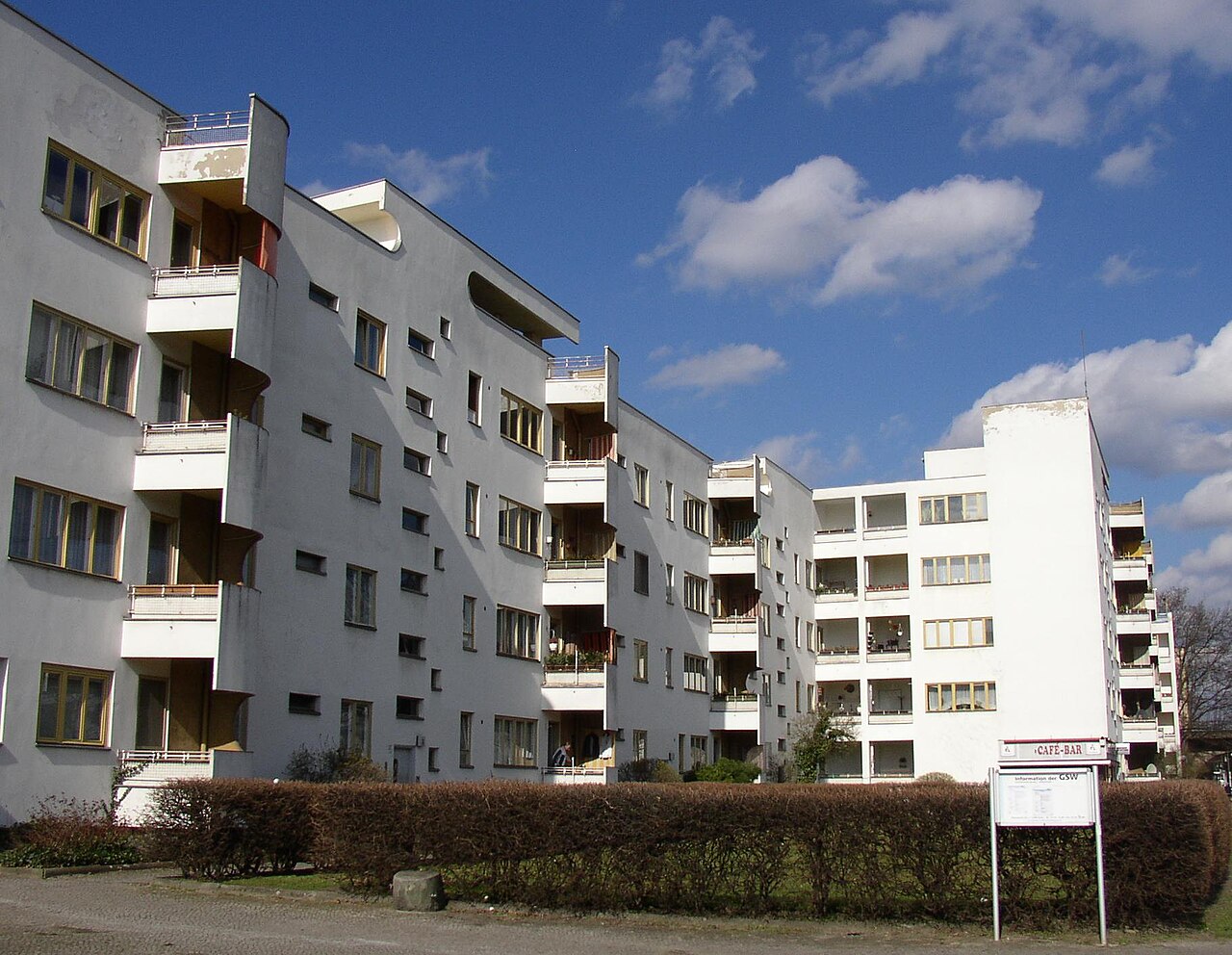
Großsiedlung Siemensstadt is a modernist housing estate in Berlin's Spandau district. Constructed between 1929 and 1931, it was designed by prominent architects of the Weimar-era Neues Bauen movement, including Hans Scharoun, Walter Gropius, Otto Bartning, Fred Forbát, Hugo Häring, and Paul Rudolf Henning. The estate comprises approximately 1,370 residential units built to accommodate workers of the nearby Siemens factories. In 2008, it was inscribed as part of the Berlin Modernism Housing Estates UNESCO World Heritage Site, recognized for its innovative urban planning and architectural significance.
Geprüft 2026-08-28
Was ist drin?
The estate features distinctive modernist architecture with varied building typologies including row houses, multi-story blocks, and terraced structures. Notable architectural elements include Hans Scharoun's characteristic dynamic forms, Gropius's functionalist designs, and the estate's integrated green spaces. The settlement was planned with social infrastructure including shops, laundry facilities, and communal spaces. The buildings demonstrate experimental construction methods and materials of the period. The layout emphasizes access to light, air, and garden spaces, reflecting reformist housing ideals. Original architectural features remain visible throughout the residential complex. Großsiedlung Siemensstadt also earns time in a berlin itinerary because its setting and role differ from the surrounding ranked stops. Compare the place with the nearby streets before deciding how it fits the day.
Geprüft 2026-08-28
Empfohlene Besuchsdauer
A thorough exploration of Großsiedlung Siemensstadt requires approximately two to three hours for visitors interested in architectural heritage. The estate covers a substantial area bounded by the Jungfernheideweg and Goebelstraße corridors. Walking the perimeter and interior streets allows observation of the diverse architectural contributions from the six participating architects. Photography and detailed examination of individual buildings extends visiting time. The site functions as an active residential neighborhood, so respectful observation from public thoroughfares is appropriate. No guided tour infrastructure is evident from available sources.
Geprüft 2026-08-28
Jahreszeit und Menschenmassen
The estate may be visited year-round as an open residential neighborhood accessible via public streets. Daylight hours provide optimal conditions for architectural observation and photography. Seasonal variations affect vegetation and lighting conditions for viewing the building exteriors and landscaped areas. Weather-appropriate clothing is advisable for extended walking exploration. Visitors should note that this is a functioning residential area, and appropriate quiet hours should be observed. No seasonal closures or special event schedules are documented in available sources. Check the operator's own site for the travel date before relying on a schedule or fare.
Geprüft 2026-08-28
Tickets
No admission fee is required to visit Großsiedlung Siemensstadt as it remains an active residential neighborhood with public street access. The architectural heritage may be observed from public thoroughfares without ticket purchase. No visitor center, museum facility, or organized tour operation with associated costs is indicated in available sources. Any commercial tour services operating in the area would be independent third-party providers. Visitors should exercise standard caution regarding unofficial guided offerings and verify any claims independently through authoritative sources.
Geprüft 2026-08-28
Ankommen
The estate is accessible via Berlin's public transportation network. The U-Bahn line U7 serves stations at Siemensdamm and Halemweg, both within walking distance of the settlement's boundaries. Bus lines also serve the surrounding area. The location in Berlin-Spandau requires transit from central Berlin districts. Cyclists may reach the site via Berlin's extensive bike lane network. Private vehicle access is possible though parking availability in the residential area is uncertain. Exact walking routes from transit stops to notable architectural features are not documented in available sources.
Geprüft 2026-08-28
Worauf Sie achten sollten
Visitors must respect that Großsiedlung Siemensstadt is an active residential community, not a tourist facility. Privacy of residents should be maintained; building interiors, private courtyards, and garden areas are not accessible to the public. Photography of people and private spaces requires discretion and consent. Street access is public but prolonged loitering or intrusive observation is inappropriate. The area's UNESCO status does not confer visitor infrastructure. Standard urban safety precautions apply. Some building exteriors may show age-related wear. Construction or renovation activity may limit access to certain viewpoints.
Geprüft 2026-08-28
Fotografie
Architectural photography is feasible from public streets and pathways throughout the estate. The varied modernist designs offer substantial subject matter for documentation. Best results are obtained during daylight with consideration of sun position relative to building orientations. Wide-angle lenses accommodate the low-rise horizontal emphasis of many structures. Drone operation would require compliance with German aviation regulations and respect for residential privacy. Tripod use on public thoroughfares should not obstruct pedestrian or vehicle traffic. Interior photography is not permissible without resident permission. No commercial photography restrictions are documented.
Geprüft 2026-08-28
Häufige Fragen
Is there an entrance fee to visit Großsiedlung Siemensstadt?
No entrance fee is required. The estate is an active residential neighborhood with public street access.
Can I enter the buildings or apartments?
No. The buildings are private residences. Only public streets and exterior viewpoints are accessible to visitors.
Is there a visitor center or guided tours?
Not recorded. No visitor center or official tour operation is documented in available sources.
What is the best way to reach the site using public transport?
U-Bahn line U7 to Siemensdamm or Halemweg stations, with walking access to the estate boundaries.
Why is this housing estate significant enough for UNESCO recognition?
It exemplifies Weimar-era modernist housing reform, innovative urban planning, and collaborative design by leading architects of the Neues Bauen movement.
Are there specific buildings I should prioritize seeing?
The estate features contributions from six architects including Scharoun and Gropius, but specific prioritization guidance is Not recorded pending review.
Wo es ist
Interaktive Karte wird geladen…
Die interaktive Karte konnte nicht geladen werden.
In der Nähe
Passen Sie es in einen Plan ein
Externe Links
Zuletzt aktualisiert:
Quelle: OpenStreetMap-Mitwirkende, Wikidata ·