

.jpg)


2 min walk
West Potomac Park
- Notable · Heritage site
- Nature site
Language · 1 published
Nature site · Washington
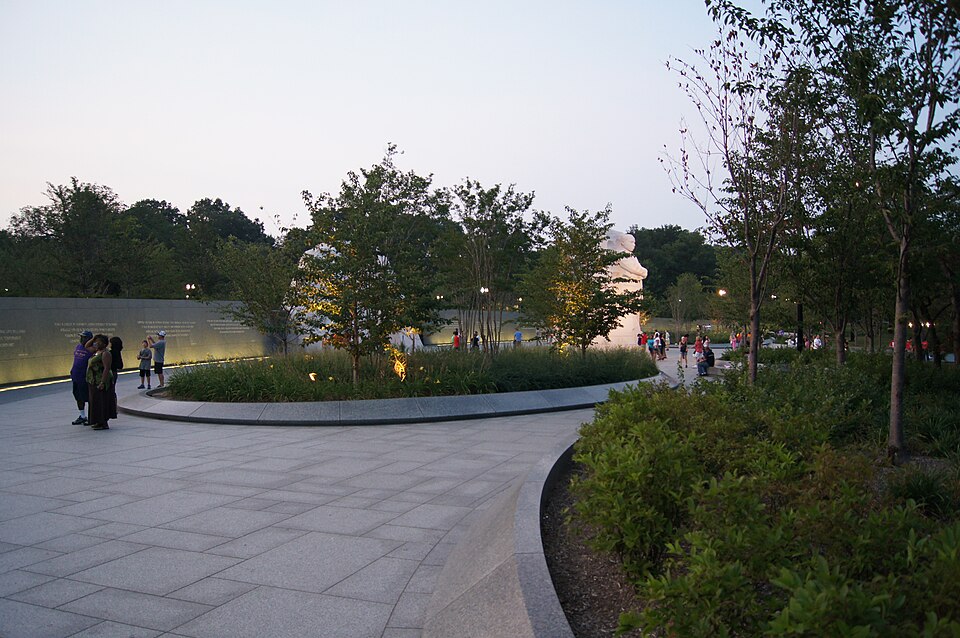
The Martin Luther King, Jr. Memorial is a national memorial honoring the civil rights leader, situated on the Tidal Basin in Washington, D.C. It features a large granite statue of Dr. King emerging from a stone of hope, with an inscription wall displaying excerpts from his speeches and writings. The memorial was dedicated in 2011 and is part of the National Mall and Memorial Parks. It stands as a permanent tribute to his vision of equality, justice, and love. Visitors come to reflect on his legacy and the ongoing struggle for civil rights in America.
Checked 2026-08-26
The memorial's central feature is the Stone of Hope, a thirty-foot granite statue of Martin Luther King, Jr. carved by Lei Yixin. Two additional granite pieces, the Mountain of Despair, frame the entrance. An inscription wall curves around the plaza, bearing fourteen quotations from King's sermons, speeches, and writings. The memorial occupies four acres of landscaped grounds with cherry trees and other plantings. The design draws from King's I Have a Dream speech imagery. Visitors can walk the entire plaza, read the inscriptions, and contemplate the memorial's message of peace and social change.
Checked 2026-08-26

Most visitors spend approximately thirty minutes to one hour at the Martin Luther King, Jr. Memorial. This allows time to approach through the Mountain of Despair entrance, observe the Stone of Hope statue from multiple angles, and read selected quotations on the inscription wall. Those deeply engaged with the texts or seeking quiet reflection may stay longer. The memorial is typically visited in combination with nearby Tidal Basin attractions, including the Jefferson Memorial and Franklin Delano Roosevelt Memorial. Budget additional time for walking between sites, particularly during peak cherry blossom season when paths become crowded.
Checked 2026-08-26
The memorial is open to the public year-round. Operator-confirmed hours are Not recorded pending review. Visitors should verify current operating times before planning their trip. Early morning and evening visits offer quieter experiences and attractive lighting for viewing the granite statue. The Tidal Basin location makes this memorial exceptionally popular during the National Cherry Blossom Festival in late March to early April, when crowds peak. Summer brings heat and humidity to Washington, D.C. Winter visits can be cold but provide solitude. Nighttime illumination creates a distinctly contemplative atmosphere for evening visitors.
Checked 2026-08-26

Admission to the Martin Luther King, Jr. Memorial is free of charge as it is a national memorial. Operator-confirmed prices are Not recorded pending review. No tickets are required for entry. Visitors should be aware that commercial tour operators may charge for guided experiences that include this site, but direct access costs nothing. The National Park Service manages the memorial. Special events or programs occasionally occur at the site. Visitors seeking official information should consult the National Park Service website or visitor centers rather than third-party sources that may present outdated or inaccurate fee information.
Checked 2026-08-26
The memorial is located on the Tidal Basin, southwest of the National Mall. The nearest Washington Metro stations are Smithsonian and L'Enfant Plaza, each requiring a walk of approximately fifteen to twenty minutes. During peak seasons, walking may be faster than driving due to traffic congestion. Bicycle rentals and shared scooters offer alternative options. Limited street parking exists nearby, with additional parking at the Tidal Basin paddle boat lot when available. The memorial is accessible via the paved paths connecting the Mall's memorial circuit. Water taxi service from Alexandria, Virginia, stops at the Tidal Basin seasonally.
Checked 2026-08-26
The memorial plaza contains no shade structures, making sun exposure a consideration during summer visits. Visitors should carry water and sun protection. The granite surfaces become slippery when wet. Crowds concentrate at the Stone of Hope statue for photographs, creating congestion at popular times. The Tidal Basin paths flood during exceptionally high tides or heavy rainfall events. Winter ice can make walkways hazardous. The memorial is an active site of commemoration; visitors should maintain respectful behavior appropriate to a place honoring a civil rights martyr. Commercial activity and political demonstrations occasionally occur in the surrounding area.
Checked 2026-08-26

Photography for personal use is permitted throughout the Martin Luther King, Jr. Memorial. The Stone of Hope statue presents dramatic photographic opportunities, particularly when captured from the plaza approach with the Mountain of Despair framing the composition. Morning light illuminates the statue's face directly. Evening illumination creates striking contrasts against dark skies. The inscription wall offers text detail shots. Tripods may attract security attention; visitors should be prepared to explain their use. Commercial photography and filming require permits from the National Park Service. Drone operation is prohibited. Visitors should remain mindful of others seeking contemplative space while photographing.
Checked 2026-08-26
The memorial is typically illuminated after dark and accessible during evening hours, though visitors should verify current operating times with official sources as conditions may change.
National Park Service rangers occasionally provide interpretive programs. Commercial tour companies include the memorial in various Washington, D.C. itineraries. Self-guided exploration is the standard visitor experience.
The memorial plaza and paths are designed to be accessible, with paved surfaces throughout. Visitors with specific accessibility concerns should consult the National Park Service for current conditions.
No specific restrictions are recorded. Visitors should exercise judgment appropriate to a national memorial, disposing of waste properly and avoiding consumption near the central statue and inscription wall.
No permanent restroom facilities are located directly at the memorial site. Visitors should plan accordingly, with nearest facilities likely at neighboring memorials or along the National Mall.
The low-elevation location makes surrounding paths vulnerable to flooding during high tides and heavy rainfall. Visitors should check conditions and be prepared for possible water on walkways.
Loading the interactive map…
The interactive map could not be loaded.
Last updated:
Source: OpenStreetMap contributors, Wikidata ·