


1 min walk
Old City Hall
- High · Heritage site
- Historic monument
Language · 1 published
Historic monument · Boston
Kings Chapel Burying Ground
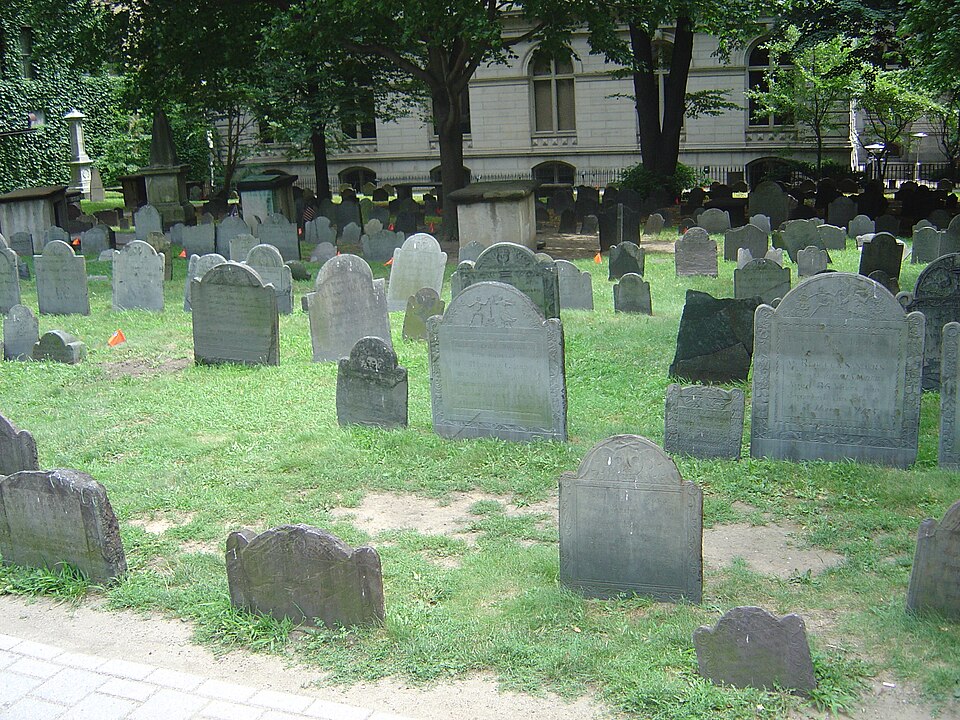
King's Chapel Burying Ground is Boston's oldest cemetery, established in 1630. It sits beside King's Chapel on Tremont Street along the Freedom Trail. The burying ground served as Boston's sole cemetery for three decades before additional burial grounds opened. Many prominent early Massachusetts colonists rest here. The site reflects Puritan burial practices, with simple markers and no ornate church structures within the ground itself. It remains an active historic site managed for public visitation. King's Chapel Burying Ground also earns time in a boston itinerary because Boston's oldest cemetery, next to King's Chapel; exact identity match. Its value becomes clearer when the stop is compared with the surrounding streets and the other ranked places nearby.
Checked 2026-08-26
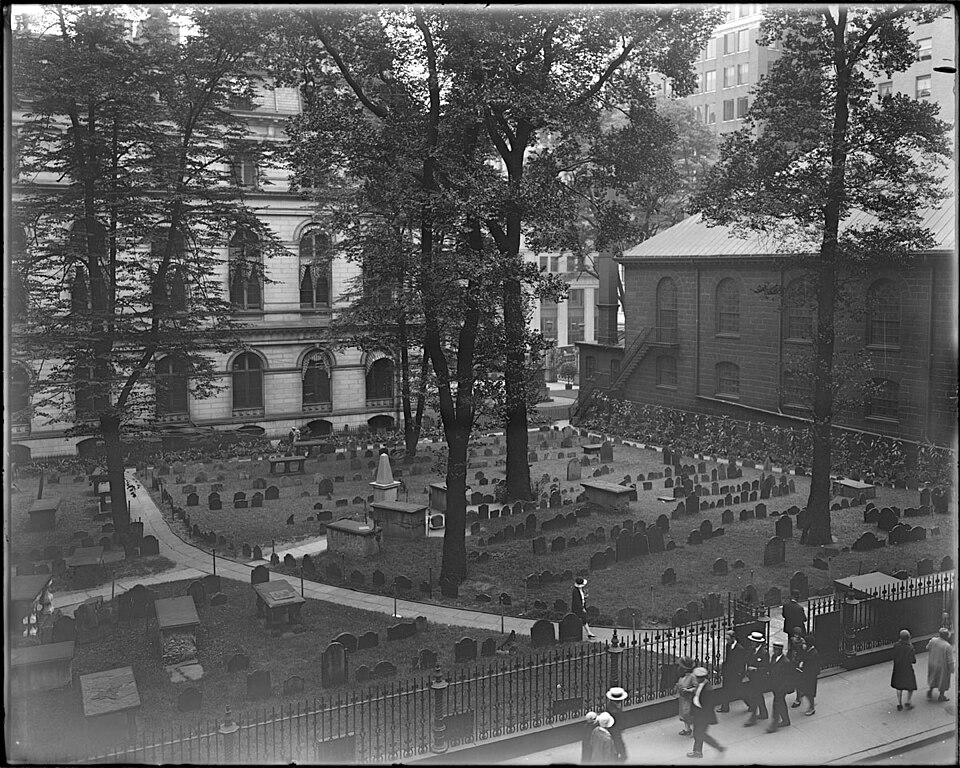
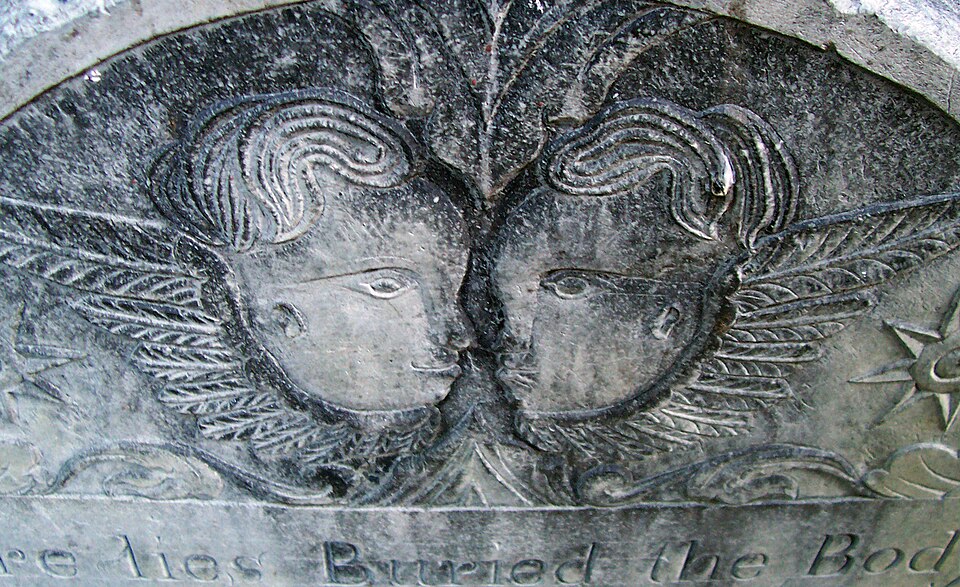
The burying ground contains historic grave markers and tombs from the 17th and 18th centuries. Notable burials include Massachusetts Bay Colony Governor John Winthrop, first Puritan minister John Cotton, and Mary Chilton, believed to be the first woman to step off the Mayflower. The grave markers display evolving styles from simple slate stones to more elaborate carvings. The site lacks the chapel building itself, which stands separately. The compact grounds contain densely arranged stones with weathered inscriptions visible upon close inspection.
Checked 2026-08-26

Visitors typically spend 15 to 30 minutes exploring the burying ground. The compact size allows for efficient viewing of the historic markers. Those with strong interest in colonial history, genealogy, or gravestone art may linger longer to read inscriptions and locate specific notable burials. The adjacent King's Chapel may extend a combined visit. Freedom Trail walkers often pause briefly before continuing to nearby historic sites. Personal pacing depends entirely on individual interest in the historical figures and period burial practices represented.
Checked 2026-08-26
Operator-confirmed hours are Not recorded pending review. The burying ground is an outdoor site without controlled entry gates in standard operation, suggesting daytime accessibility aligns with reasonable visiting hours. Boston's climate produces cold winters with potential snow and warm, humid summers. Spring and fall offer moderate temperatures favorable for outdoor historic site visitation. Morning light improves legibility of weathered gravestone inscriptions. Visitors should verify current access conditions through official channels before planning, as maintenance schedules or special events may affect availability without advance public notice.
Checked 2026-08-26
Operator-confirmed prices are Not recorded pending review. The burying ground operates as a public historic site without evident ticket barriers for basic ground access. Freedom Trail sites commonly maintain free or donation-based entry policies. Visitors should carry modest cash for potential donation requests or associated guided tour offerings. Any organized programming, special access, or combined ticketing with King's Chapel interior would require separate verification. Current economic conditions may influence voluntary contribution suggestions. Direct confirmation with site management remains advisable before visiting with specific budget expectations.
Checked 2026-08-26
The burying ground occupies Tremont Street at the corner of School Street in downtown Boston, immediately accessible from Park Street subway station serving the Green and Red lines. Multiple bus routes serve the surrounding Government Center and Downtown Crossing areas. The site stands prominently on the Freedom Trail, marked by the distinctive red line or painted path guiding pedestrians through Boston's historic core. Walking from the Massachusetts State House, Boston Common, or Faneuil Hall Marketplace involves brief, straightforward routes through dense commercial and government districts with clear signage.
Checked 2026-08-26
The burying ground contains uneven ground surfaces, worn stone pathways, and trip hazards from historic marker bases and settling earth. Weather conditions create slippery surfaces on stone walkways. The compact space fills quickly with tour groups, especially during peak visitor seasons, constraining movement and quiet contemplation. Some grave markers are fragile; touching or leaning on stones risks damage to irreplaceable historic material. Sun glare and shadow patterns from surrounding buildings affect visibility of inscriptions. Visitors should maintain respectful conduct appropriate to cemetery settings regardless of urban location and tourist designation.
Checked 2026-08-26

Photography appears permitted for personal documentary purposes throughout the outdoor burying ground. The dense arrangement of historic markers offers compositions emphasizing texture, weathering, and colonial craftsmanship. Morning and late afternoon light enhance three-dimensional carving details on slate and stone surfaces. Overhead midday sun flattens relief work and intensifies contrast. Surrounding modern buildings intrude on some angles, requiring careful framing for period-appropriate atmosphere. Tripod use may attract attention or restriction as a professional activity. Flash photography offers minimal benefit outdoors and may disturb other visitors in the confined space.
Checked 2026-08-26
No. The burying ground is the adjacent cemetery established in 1630, while King's Chapel is the church building constructed later. They share a name and location but are distinct entities.
No. The historic burial sites are not accessible for entry. Visitors walk among the above-ground markers and monuments only.
Not recorded pending review. The site lies on the Freedom Trail, which offers various guided and self-guided options. Specific burial ground programming requires direct verification.
Not recorded pending review. The historic ground contains uneven surfaces, worn paths, and obstacles that may present difficulties. Visitors should assess current conditions personally.
Not recorded pending review. The compact burying ground lacks visible permanent structures. Nearby commercial and public buildings in downtown Boston likely provide alternatives.
The burying ground contains many early colonists. Genealogical research potential exists, but specific record accessibility and on-site assistance are not recorded pending review.
Loading the interactive map…
The interactive map could not be loaded.
Last updated:
Source: OpenStreetMap contributors, Wikidata ·