


6 min walk
Holyrood Distillery
- Must see
- Historic monument
Language · 1 published
Viewpoint · Edinburgh
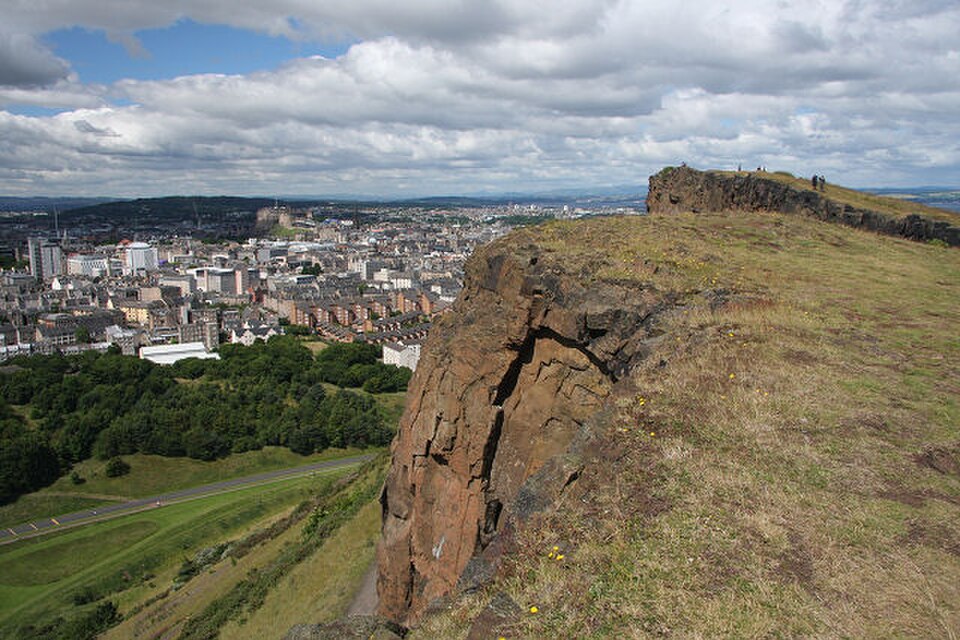
Salisbury Crags is a dramatic cliff formation of hard basalt rock rising above Edinburgh's city centre, forming part of Arthur's Seat and the broader Holyrood Park landscape. This geological ridge offers striking vertical faces and sloping scree paths, created by ancient volcanic activity and subsequent glacial shaping. The Crags represent one of Edinburgh's most distinctive natural landmarks, visible from numerous vantage points across the Scottish capital. The site holds historical significance for geological study, with notable research conducted here during the Scottish Enlightenment period.
Checked 2026-08-26
The Crags themselves contain exposed rock faces, rough walking paths, and steep grassy slopes. Visitors will find no built structures, visitor centres, or commercial facilities within the immediate cliff area. The surrounding Holyrood Park contains additional volcanic features including Arthur's Seat summit, Piper's Walk, and St Margaret's Loch. Wildlife includes various bird species nesting on cliff ledges. The Radical Road, a historic path running along the base of the Crags, provides access though its condition varies. Natural vegetation covers much of the slope, with gorse and scrub common on lower sections.
Checked 2026-08-26
A complete traverse of Salisbury Crags requires approximately one to two hours depending on chosen route and walking pace. The Radical Road path along the base offers a relatively level walk of roughly forty-five minutes one way. Ascending to the Crags' upper ridge demands additional time and physical effort, with steep sections requiring careful footing. Combined visits incorporating Arthur's Seat summit typically extend to three or four hours total. Weather conditions significantly affect progress, with wet or windy days slowing movement considerably on exposed surfaces.
Checked 2026-08-26
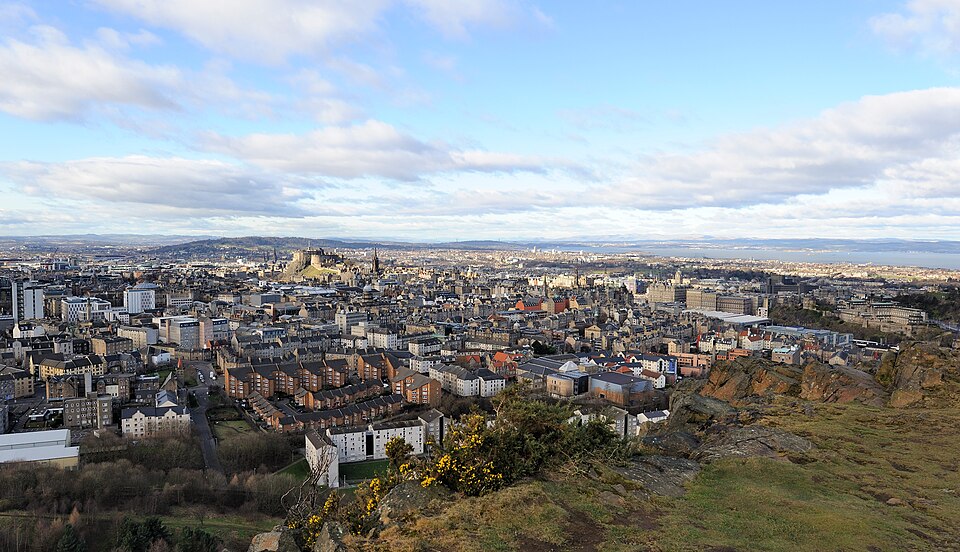
Operator-confirmed hours are Not recorded pending review. The Crags form part of Holyrood Park, which traditionally permits access during daylight hours throughout the year. Edinburgh's latitude produces significant seasonal variation, with extended summer evenings and early winter darkness. Summer months generally offer more favourable conditions for walking and visibility, though crowds increase substantially. Spring and autumn provide moderate temperatures with reduced visitor numbers. Winter visits demand appropriate equipment and awareness of rapidly changing conditions on exposed high ground. Early morning and late afternoon typically offer optimal lighting for observation.
Checked 2026-08-26
Operator-confirmed prices are Not recorded pending review. Access to Salisbury Crags and Holyrood Park appears to remain free of charge based on standard practice for Scottish public parks. No ticket barriers, payment stations, or entry control points exist at common access routes. Visitors should verify current arrangements through official Edinburgh city resources before travelling. Any organised commercial activities or special events may involve separate charges administered by third parties. Standard visitor expenses relate to transport, refreshments, and equipment rather than site admission. Salisbury Crags also earns time in a edinburgh itinerary because Exact production identity node/12546411046 is assigned through pois.city_place_id; stored production names and coordinates were copied without approximation. The POI replaces a lower-value mechanical entry in the visitor-priority ranking. Its value becomes clearer when the stop is compared with the surrounding streets and the other ranked places nearby.
Checked 2026-08-26
The Crags sit immediately east of Edinburgh's Old Town, accessible on foot from the Royal Mile and Holyrood Palace within fifteen minutes. Multiple Lothian Bus routes serve nearby streets including Holyrood Road and Regent Road. Edinburgh Waverley railway station lies approximately twenty minutes' walk southwest. Limited car parking exists near Holyrood Park's entrances, with spaces filling quickly during peak periods. The park's size means several approach routes exist, with differing gradients and surfaces. Cyclists may use designated paths though steep sections require dismounting.
Checked 2026-08-26
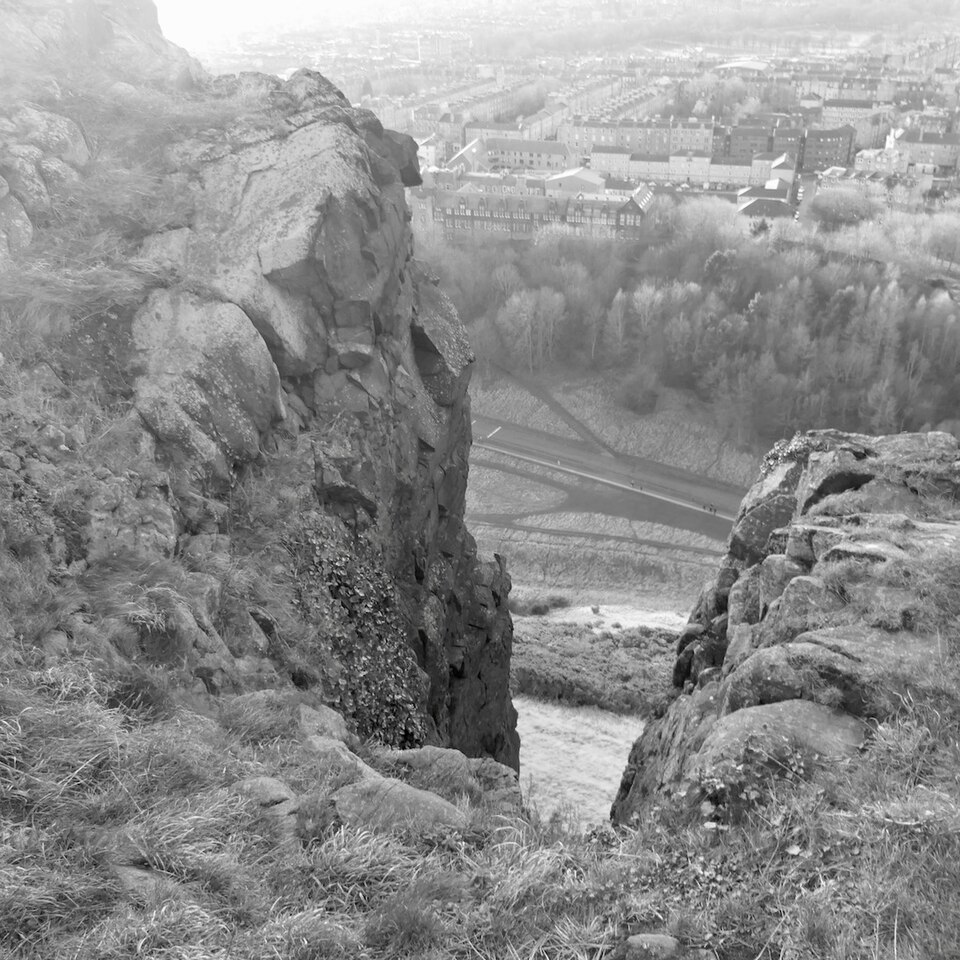
Steep drops and unstable rocky edges present significant fall hazards, particularly along unprotected upper sections. Weather changes occur rapidly with fog, rain, and strong winds common even during apparently calm conditions. Paths become slippery when wet with loose scree underfoot. Mobile telephone coverage varies across the site. No emergency call points or ranger stations operate within the immediate Crags area. Visitors should carry appropriate footwear, waterproof clothing, and basic navigation equipment. Solo walking on exposed sections during adverse conditions requires careful judgement. Informing others of intended routes represents prudent practice.
Checked 2026-08-26
The Crags offer exceptional panoramic views across Edinburgh's skyline, Firth of Forth, and surrounding Lothian landscape. Sunrise and sunset positions shift dramatically with seasons, affecting optimal shooting locations. The vertical rock faces provide strong textural subjects against sky backgrounds. Wide-angle lenses accommodate expansive city vistas from upper viewpoints. Midday summer light proves harsh for landscape work; overcast conditions often yield superior results for detail and colour saturation. Tripod use on exposed ridges requires secure footing against wind gusts. Drone operation likely faces restrictions within city airspace and park regulations.
Checked 2026-08-26
The lower paths and Radical Road accommodate families with appropriate supervision. Upper sections with steep drops demand careful assessment of individual children's capabilities and behaviour.
Dogs appear generally permitted within Holyrood Park. Owners must maintain control near cliff edges and comply with any seasonal livestock restrictions on adjacent agricultural land.
The Radical Road's operational status is Not recorded pending review. Path conditions and access arrangements may change following safety assessments or maintenance requirements.
Winter access remains physically possible though demands additional preparation. Shorter daylight hours, ice, and strong winds increase difficulty significantly compared to summer conditions.
No operator-confirmed guided tour availability is Not recorded pending review. Self-guided exploration represents the standard visiting mode, with occasional commercial walking tours potentially including the Crags in broader itineraries.
The steep, uneven terrain of Salisbury Crags presents substantial barriers to wheelchair users. Some surrounding Holyrood Park areas offer more level surfaced paths with limited views of the Crags from below.
Loading the interactive map…
The interactive map could not be loaded.
Last updated:
Source: OpenStreetMap contributors ·