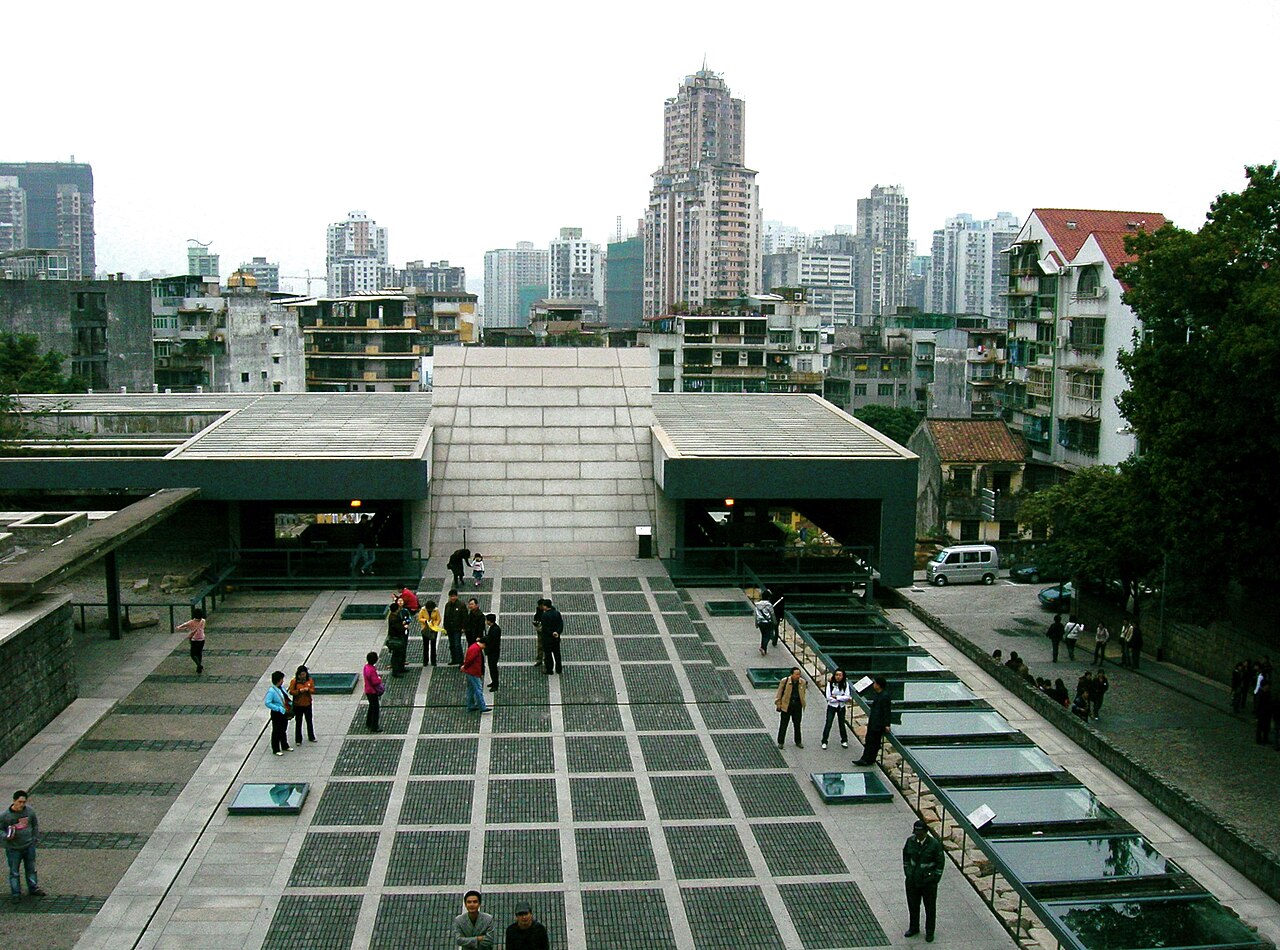
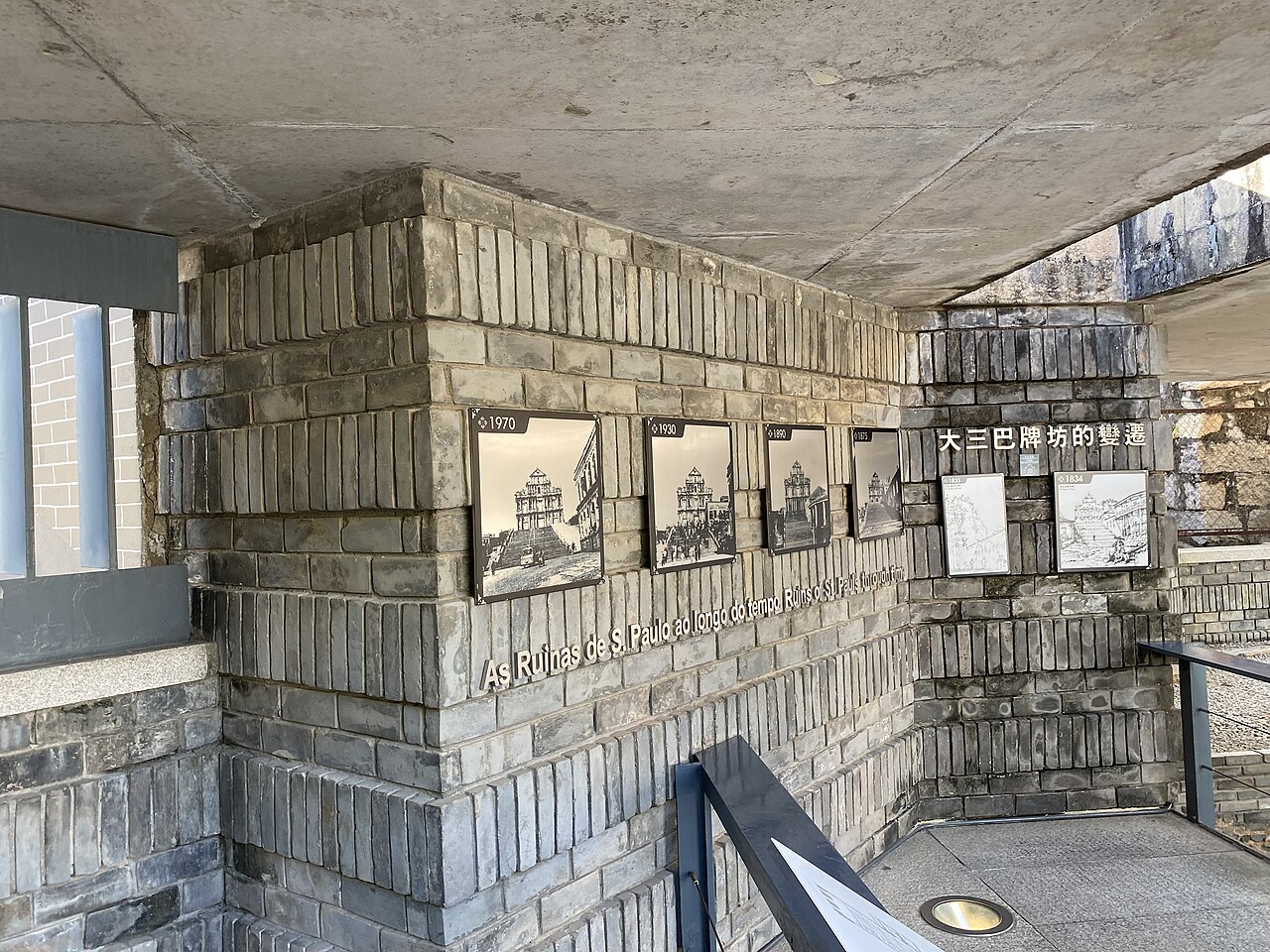
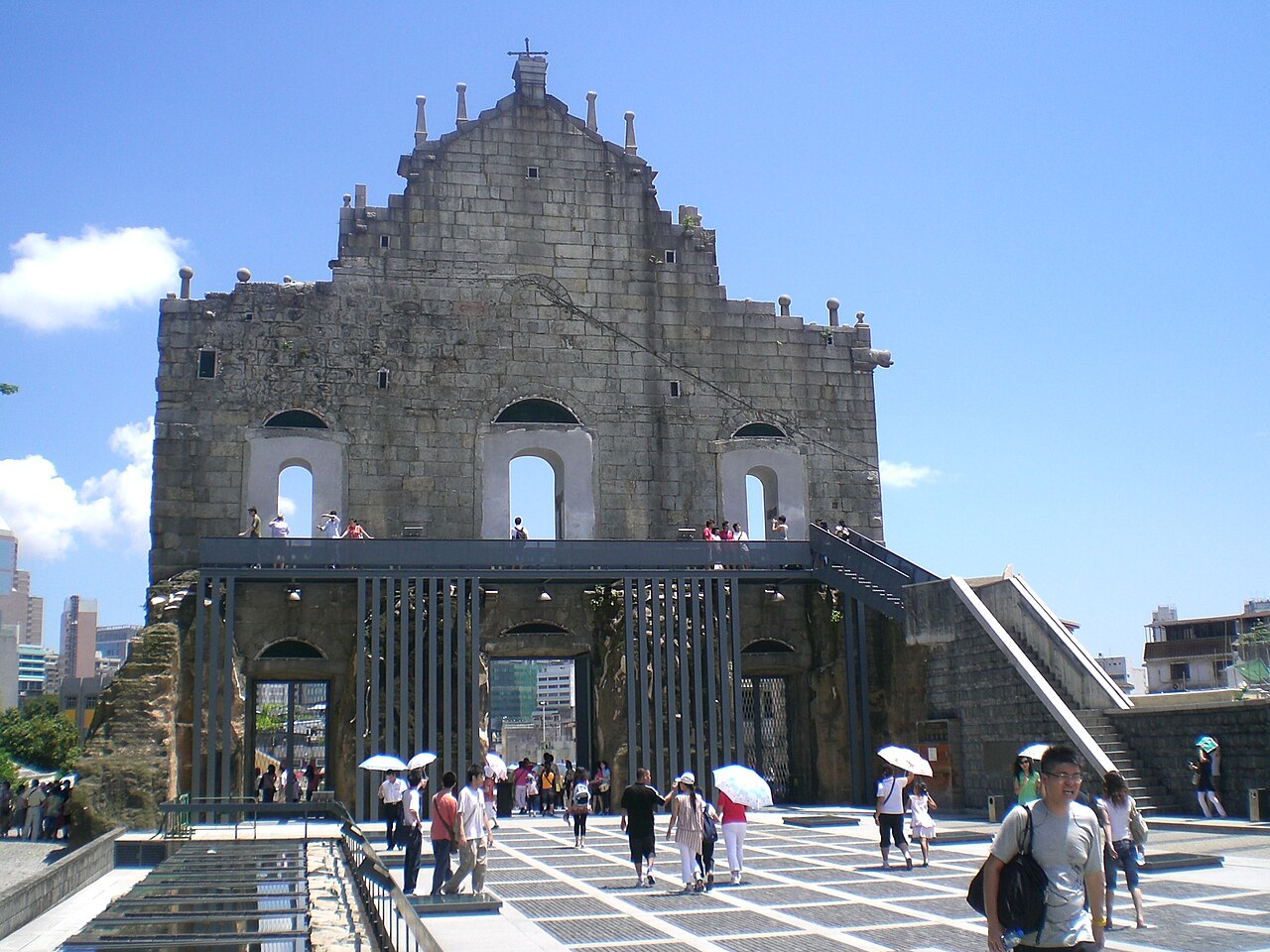
The Museum of Sacred Art and Crypt occupies the lower level of the Ruins of St. Paul's, Macau's most iconic landmark. The complex preserves religious artefacts recovered from the former Church of Mater Dei and the College of St. Paul, which were destroyed by fire in 1835. The crypt contains remnants of the original Jesuit foundation, including stone carvings and architectural fragments. The museum and crypt form an integral part of the UNESCO World Heritage-listed Historic Centre of Macau, representing the territory's role as a centre of Catholic missionary activity in East Asia during the sixteenth and seventeenth centuries.
The museum displays sacred paintings, sculptures, and liturgical objects that survived the church's destruction or were subsequently collected. Visitors encounter polychrome wooden statues of saints, oil paintings with religious themes, and ornate silver vessels used in Catholic worship. The crypt preserves the archaeological remains of the church's foundations, where visitors can observe original stone walls and burial sites. The collection illustrates the synthesis of European Baroque artistic traditions with Asian craftsmanship, reflecting Macau's position as a cultural crossroads where Jesuit missionaries adapted Western religious art for Chinese and Japanese contexts.
Most visitors allocate approximately thirty to forty-five minutes for the museum and crypt, though individual pacing varies considerably. The compact exhibition space permits efficient viewing, with the crypt requiring only brief descent and circumnavigation. Those with specialised interest in Jesuit history, sacred art, or Macau's cultural heritage may extend their visit through careful examination of individual artefacts and architectural details. The site naturally combines with the Ruins of St. Paul's facade above, which demands additional time for appreciation and photography. Many visitors integrate this attraction into broader exploration of the surrounding historic quarter.
Operator-confirmed hours are Not recorded pending review. Visitors should consult official tourism sources or on-site notices for current opening times before planning their visit. The museum and crypt occupy interior spaces that offer respite from Macau's summer heat and seasonal rainfall, making them viable options regardless of weather conditions. The surrounding Ruins of St. Paul's attract substantial crowds during peak tourist periods, particularly weekends and public holidays, which may affect queue times for museum entry. Early morning or late afternoon visits to the broader complex may offer relatively quieter conditions for contemplative appreciation.
Operator-confirmed prices are Not recorded pending review. Visitors should verify current admission policies through official channels prior to arrival. Many heritage attractions within the Historic Centre of Macau operate with free admission as part of public cultural provision, though this cannot be assumed without confirmation. The museum's location within a major tourist precinct means that visitors typically access it during broader exploration of the area, without separate travel expenditure beyond reaching the historic centre. Any changes to admission policy would likely reflect government cultural funding decisions rather than commercial operation.
The museum sits at the base of the Ruins of St. Paul's on Rua de São Paulo in Macau's historic core. The site lies within pedestrianised zones accessible from multiple directions through the dense street network of the former Portuguese city. Public buses serve stops on surrounding thoroughfares, with walking required through characterful lanes and stairways. Taxis and ride-hailing services can approach nearby points, though final access remains on foot. The location integrates naturally with walking tours of the UNESCO district, positioned near Senado Square, the Cathedral, and other heritage attractions in compact proximity.
The crypt environment involves descending to subterranean levels with limited natural illumination, requiring care with footing on potentially uneven historical surfaces. Humidity levels in underground spaces may affect comfort or photographic equipment. The museum's modest dimensions can become congested when tour groups converge, testing patience and sightlines. Visitors should respect the sacred character of displayed objects and burial remains through quiet demeanour and appropriate conduct. The surrounding steps to the Ruins facade above present separate physical demands. Security considerations apply to bags and personal belongings in crowded tourist environments with limited staff visibility.
2026-08-26 kontrol edildi
Fotoğraf
· No machine-readable author provided. Mo707 assumed (based on copyright claims). ·
CC BY-SA 3.0
Photography policies within the museum and crypt are not explicitly documented in available sources, suggesting visitors should observe on-site signage or seek staff guidance upon entry. Flash photography may be restricted to protect sensitive artworks and maintain atmospheric conditions in the crypt. The exterior Ruins of St. Paul's above offers unrestricted photographic opportunities, with the museum entrance itself forming part of many visitors' visual documentation. Low-light conditions in the crypt challenge camera equipment without flash, potentially producing blurred images. Respect for fellow visitors and the site's religious heritage should inform all photographic behaviour, avoiding intrusive positioning or prolonged equipment setup.
2026-08-26 kontrol edildi
Sık sorulan sorular
Is the Museum of Sacred Art and Crypt the same as the Ruins of St. Paul's for Museum of Sacred Art and Crypt in Macau?
The museum and crypt occupy the lower level beneath the famous stone facade, forming part of the same historical complex but representing distinct interior spaces separate from the ruins above.
Do I need to book tickets in advance for Museum of Sacred Art and Crypt in Macau?
Advance booking requirements are not recorded; visitors should check current policies through official Macau tourism channels before their visit.
Is the crypt accessible for visitors with mobility difficulties for Museum of Sacred Art and Crypt in Macau?
The crypt involves descent to subterranean levels, which may present challenges; specific accessibility provisions are not recorded and should be confirmed with operators.
Are guided tours available at the museum for Museum of Sacred Art and Crypt in Macau?
Guided tour availability is not recorded in available sources; visitors may encounter group tours in the broader Ruins complex but should not assume dedicated museum interpretation.
Can I visit the museum without seeing the Ruins facade for Museum of Sacred Art and Crypt in Macau?
The museum entrance sits at the base of the Ruins, making separate access impractical; most visitors experience both elements as an integrated destination.
How does this museum relate to Macau's Jesuit history for Museum of Sacred Art and Crypt in Macau?
The collection derives from the former College of St. Paul and Church of Mater Dei, central to Jesuit missionary efforts in China, Japan, and Southeast Asia from the sixteenth century.
Kaynak:
OpenStreetMap katkıda bulunanları, Wikidata
·
Çerez tercihleri
İzin gereken bölgelerde, siz seçim yapmadan önce zorunlu olmayan hiçbir şey ayarlanmaz. Reddetmeniz durumunda reklamlar yine görünür ancak kişiselleştirilmemiş olur ve analitik tamamen kapatılır.





.jpg)
.jpg)
.jpg)

