
1 min a pé · Paris 5e Arrondissement
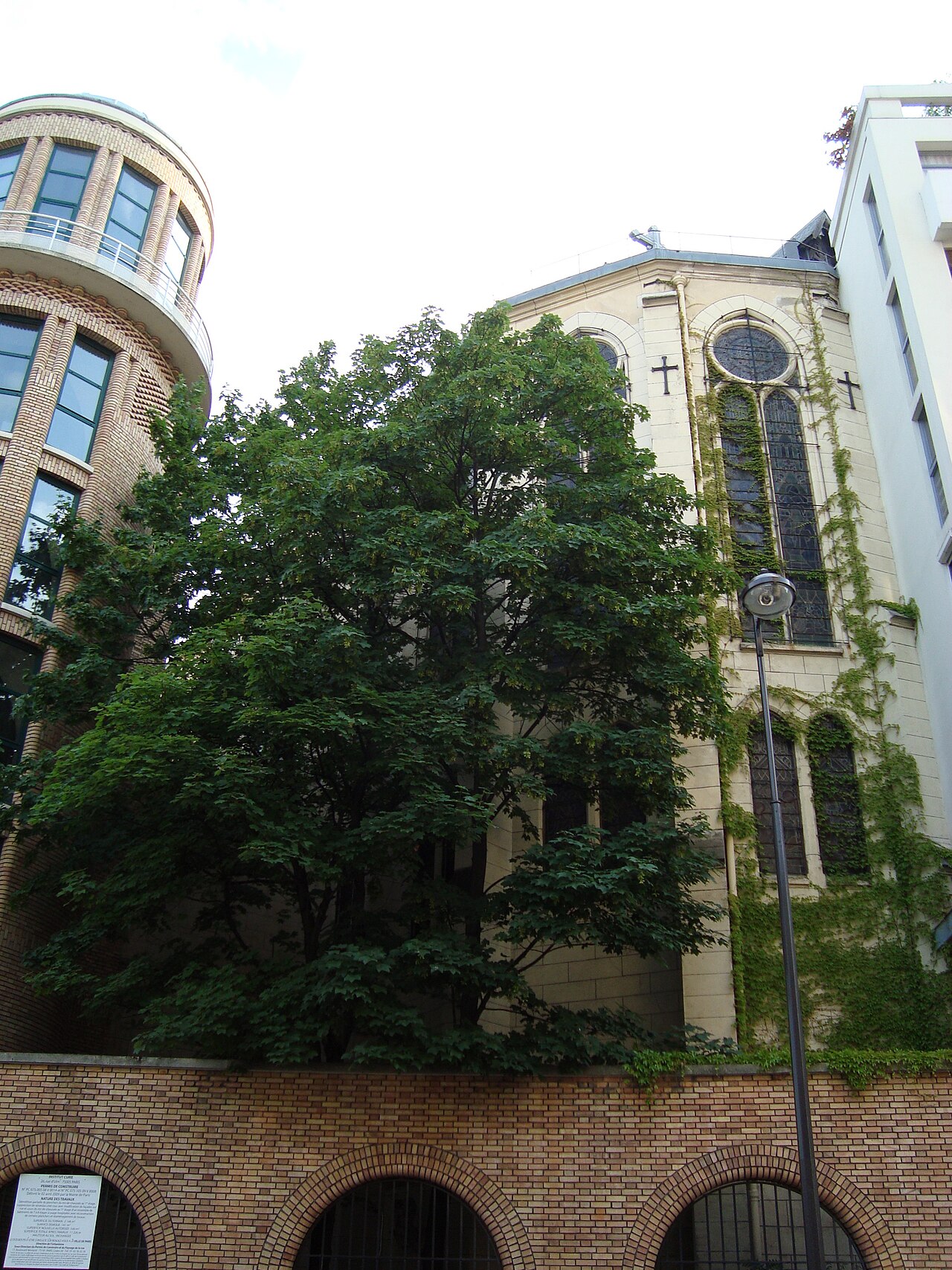
Catedral de Nossa Senhora do Líbano de Paris
- Alto
- Local de culto
Idioma · 11 publicado
Museu · Paris 5e Arrondissement, Paris
Musée Curie
Fechado hoje, Domingo. Em seguida, abra Quarta-feira às 13:00 – o planejador não fará uma parada aqui em Domingo.
Planeje em torno disso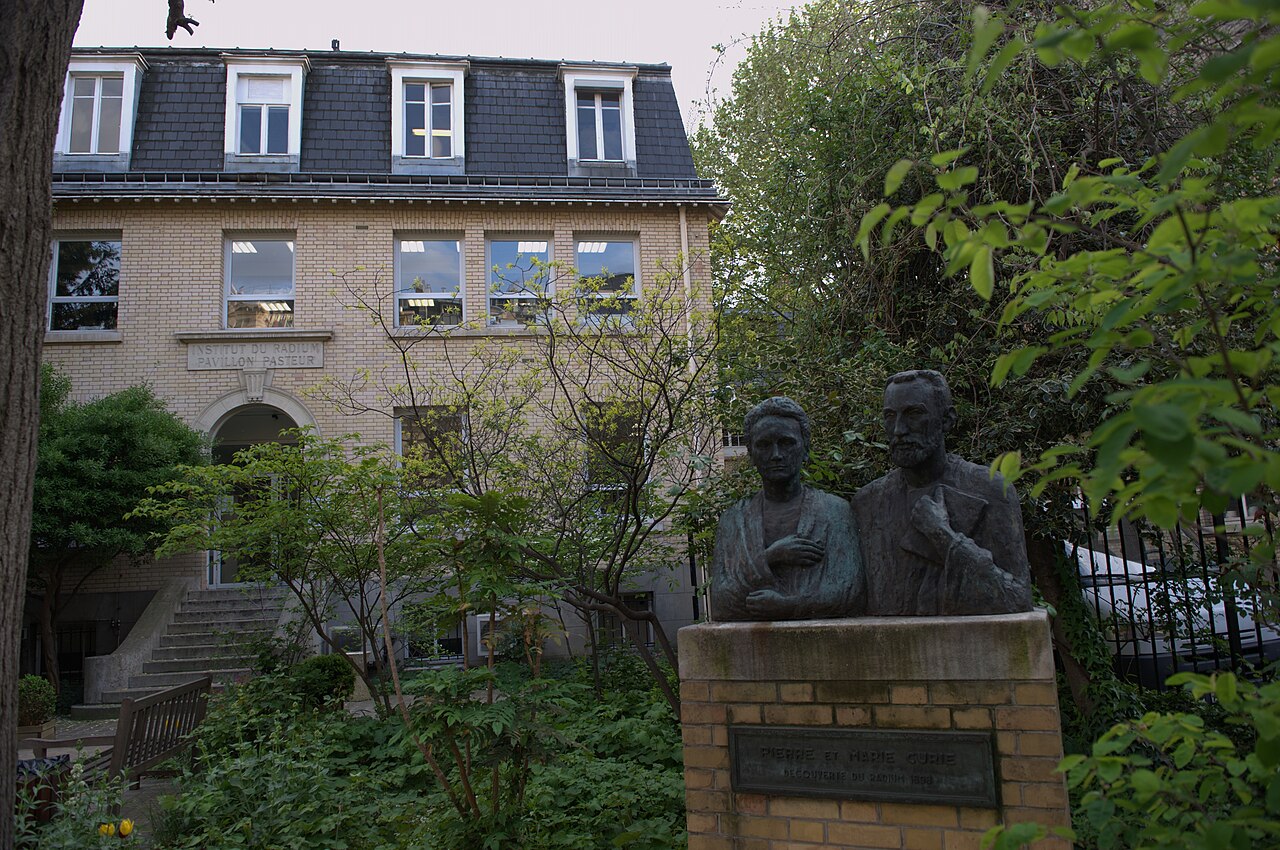
| Segunda-feira | Fechado |
|---|---|
| Terça-feira | Fechado |
| Quarta-feira | 13:00 – 17:00 |
| Quinta-feira | 13:00 – 17:00 |
| Sexta-feira | 13:00 – 17:00 |
| Sábado | 13:00 – 17:00 |
| Domingo | Fechado |
Analisado a partir do horário de funcionamento do OpenStreetMap em 2026-09-09.
Este local é um Museu. Foi fundado em 1995.
Musée Curie is a museum in Paris dedicated to the history of radioactivity and the scientific work of Marie Curie, Pierre Curie, and their daughter Irène Joliot-Curie. It occupies premises on the ground floor of the Curie Pavilion of the Institut Curie, the research centre founded by Marie Curie. The museum preserves the office and laboratory where Marie Curie conducted her later research. It is operated by the Institut Curie, which continues the family's scientific legacy in cancer research and treatment.
Verificado em 2026-08-28
The museum contains Marie Curie's personal chemistry laboratory, preserved from her working years. Her office and experimental equipment remain on display. Visitors can view documents, photographs, and instruments related to the Curie family's scientific discoveries. The collection includes items associated with the Nobel Prizes awarded to Marie Curie in Physics and Chemistry, and to Irène and Frédéric Joliot-Curie in Chemistry. The museum presents the history of radium and polonium discovery. Archives and scientific instruments illustrate the development of early radioactivity research methods and their medical applications.
Verificado em 2026-08-28
Most visitors spend approximately one hour exploring the compact museum spaces. The exhibition area is relatively small, consisting mainly of the preserved laboratory and office with associated display materials. Visitors with strong interest in the history of science or Marie Curie's biography may wish to spend additional time examining documents and instruments in detail. The museum does not offer extensive interactive elements or large galleries. A brief visit suffices for casual tourists, while researchers and dedicated history enthusiasts might allocate ninety minutes for thorough examination of the collections and reading of explanatory materials.
Verificado em 2026-08-28
Visitors should consult the official website at musee.curie.fr for current opening times before planning a visit. The museum is located in a working research institution, which may affect accessibility. Seasonal variations in Paris tourism may influence crowding at nearby attractions in the Latin Quarter. The museum's indoor setting makes it suitable for any weather conditions. Visitors should verify whether advance booking or reservation is required, as policies at institutional museums in France vary and may change without extensive public notice. Check the operator's own site for the travel date before relying on a schedule or fare.
Verificado em 2026-08-28
The museum has historically offered free admission, though voluntary donations may be requested. Visitors should verify current ticketing policy through the official website before visiting. Some Paris museums participate in national free-admission schemes on specific days, but individual museum policies differ. Group visits may require advance arrangement. The museum's connection to a major research foundation rather than a commercial operation suggests accessible pricing. Visitors should confirm whether any special exhibitions or events carry separate charges not covered by general admission. Check the operator's own site for the travel date before relying on a schedule or fare.
Verificado em 2026-08-28
The museum is located in the 5th arrondissement of Paris, within the Latin Quarter near the Panthéon. The nearest Paris Métro stations include Cardinal Lemoine and Place Monge on Line 7, and Maubert-Mutualité on Line 10. Several bus routes serve the surrounding area. The museum is within walking distance of other notable sites including the Panthéon, the Jardin des Plantes, and the Sorbonne. Visitors should consult current transport maps for precise routing. The address places it on the rue Pierre-et-Marie-Curie, named for the scientists commemorated by the museum.
Verificado em 2026-08-28
The museum operates within an active medical research institution, so visitors must respect institutional protocols and restricted areas. Photography policies may be restricted in certain spaces; visitors should observe posted signs. The preserved laboratory contains authentic historical materials requiring careful preservation. The museum's compact size means limited capacity at peak times. Some exhibits concern radioactivity and its health effects, which may disturb sensitive visitors. The scientific content assumes some background knowledge; younger children may find the museum less engaging than interactive alternatives. Accessibility features should be confirmed in advance for visitors with mobility requirements.
Verificado em 2026-08-28
Photography policies at the Musée Curie are not explicitly detailed in available sources. Visitors should assume restrictions may apply in the preserved laboratory and office spaces containing sensitive historical materials. Flash photography is commonly prohibited in museums to protect artefacts from light damage. Visitors should observe all posted signage and staff instructions regarding cameras and mobile devices. When photography is permitted, it typically excludes commercial use without prior authorisation. The museum's institutional setting may impose additional restrictions not found in larger public museums. Visitors seeking to photograph specific items should inquire at the entrance.
Verificado em 2026-08-28
The museum has historically offered free admission, but visitors should verify current policy on the official website. Check the operator's own site for the travel date before relying on a schedule or fare.
Visitors must consult musee.curie.fr for current opening times before visiting.
Most visitors spend approximately one hour. Those with strong interest in scientific history may prefer ninety minutes for detailed examination.
The museum's scientific content and preserved laboratory setting may engage older children interested in science. Younger children may find limited interactive elements compared to other Paris museums.
Accessibility features should be confirmed in advance by contacting the museum directly, as the premises are within a historic research building.
Guided tour availability is Not recorded. Visitors should inquire through the official website or contact the museum directly for current educational programming.
A carregar o mapa interativo…
Não foi possível carregar o mapa interativo.


Última atualização:
Fonte: Colaboradores do OpenStreetMap, Wikidata ·