宗教施設 · Üsküdar, イスタンブール
Şemsi Pasha Mosque
Şemsi Paşa Camii


- 今日
- 営業時間の記録なし
- 訪問期間
- 25分
- アクセシビリティ
- 未登録
- 価格
- 未登録
- 評価
- 必見
- ランク
- 8,133 の 109 をランク付け
Şemsi Pasha Mosqueについて
Şemsi Pasha Mosque is a small complex by Mimar Sinan on the Üsküdar waterfront, built for Şemsi Ahmed Pasha, a man with an unusually grand pedigree: he descended from the Candaroğulları dynasty and, through his mother Şahnisa Sultan, was a great-grandson of Mehmed the Conqueror.
His career was provincial and long. He was beylerbey of Damascus from 1552 to 1555, of Anatolia from 1562 to 1564 and of Rumelia from 1564 to 1569, joined Suleiman the Magnificent at the siege of Szigetvár in 1566, and ended as hunting companion to Murad III.
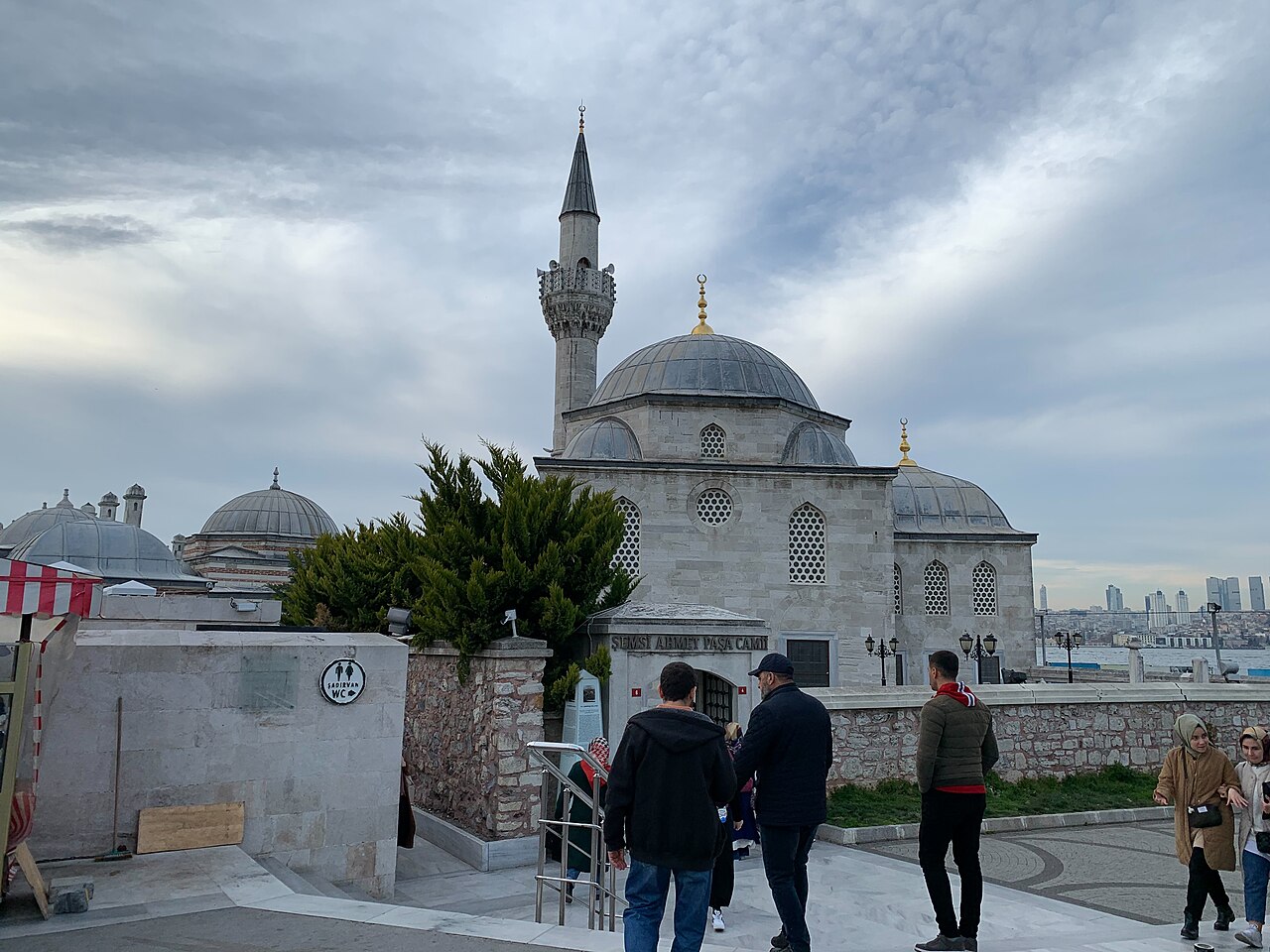
He died on 5 March 1580, and the complex he commissioned was broken ground on that same year and finished in 1581 — the inscription over the mosque portal records completion in 1580. He did not see it finished. What Sinan built is a mosque, a mausoleum, an L-shaped madrasa and a courtyard, set directly on the water behind a seawall.
2026-08-24 を確認しました · ソース
中には何が入っているのか
The prayer hall is a square room under a single dome about 8.2 metres across, carried on an octagonal drum with four squinches and arched windows. Nine casement windows with coloured glass light it, the mihrab is marble with a muqarnas hood, and the minbar is a modern wooden replacement. The minaret has a single balcony.
The detail people remember is the tomb. Şemsi Pasha's mausoleum is not a separate building in the courtyard but is joined to the mosque itself, divided from the prayer hall only by a grille — reachable from outside, yet opening into the interior through a grilled archway. The founder is, in effect, inside his own mosque.
The madrasa is L-shaped, twelve domed cells and a classroom behind an arcade of nineteen columns. The seawall that closes the courtyard on the Bosphorus side is pierced with grille windows, so the water is present from inside the enclosure.
2026-08-24 を確認しました · ソース


見学時間の目安
Twenty-five minutes, and the split is unusual: the building itself takes a few minutes, and the courtyard takes the rest. A single-domed square room with nine windows does not need long, and the tomb grille is a thirty-second observation once you know to look for it.
What holds people is the enclosure — a small walled courtyard opening straight onto the Bosphorus, with the water visible through the seawall grilles and ferries crossing behind. That is a sitting-down place rather than a walking-around place, and the twenty-five minutes recorded here allows for actually sitting.
Cut it to ten if you are only ticking off a Sinan building. Nobody who does that will understand why the complex is famous.
2026-08-24 を確認しました

季節と混雑状況
No visiting hours are published. This is a working mosque under the Diyanet, whose directory entry for it is a historical description with no hours field, and the Üsküdar mufti's office publishes which mosques hold Friday prayer rather than when any of them may be visited. Nothing is recorded here because nothing exists to record.
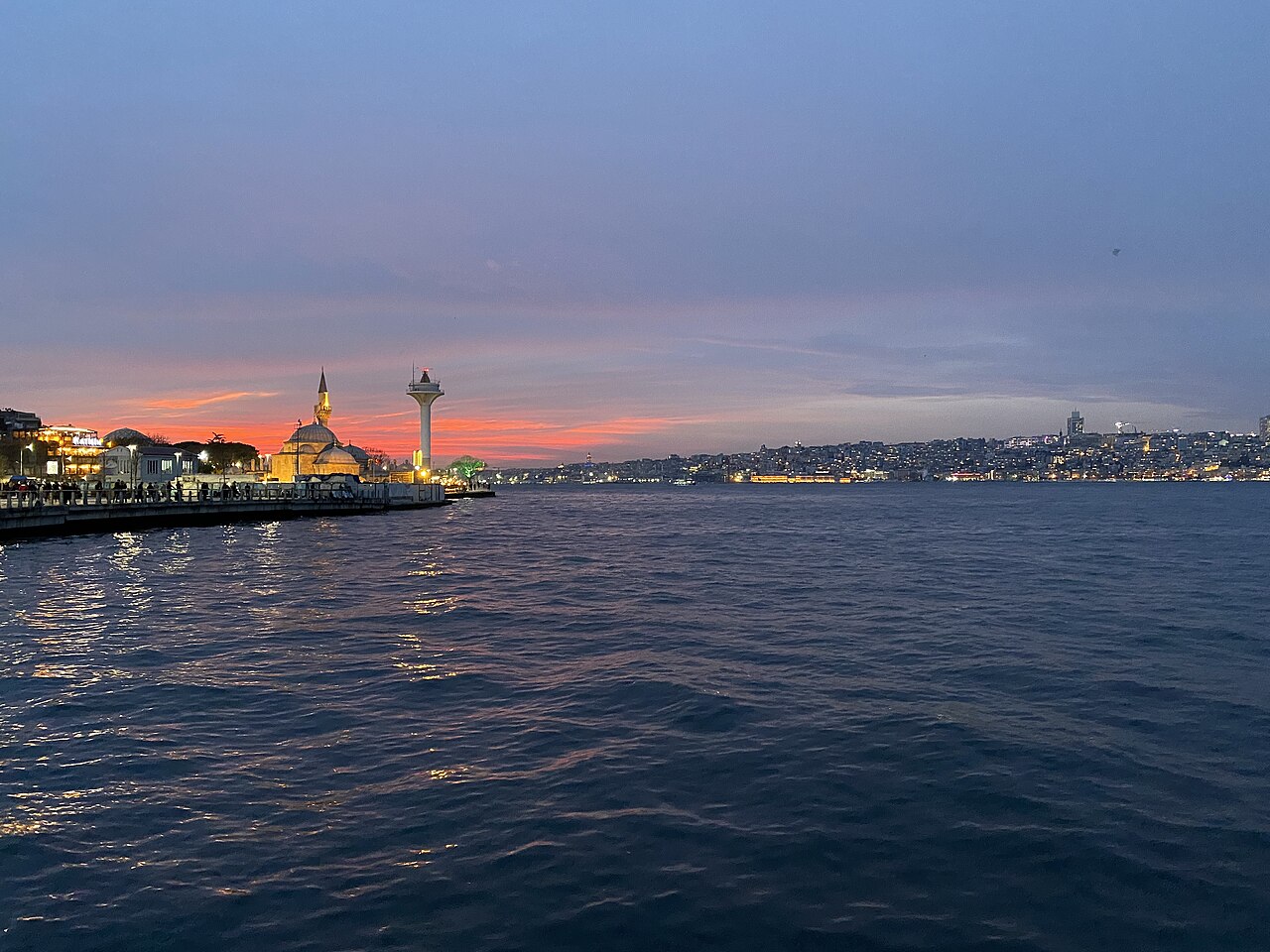
The practical guidance is about light rather than hours. Üsküdar faces west across the Bosphorus, so the mosque takes the afternoon sun full on its face and the last two hours before sunset are when the courtyard is at its best — the stone goes warm and the water behind it turns. Morning puts the building in its own shade.
The quay is busiest at commuter hours in both directions. Mid-afternoon on a weekday is the quiet window.
2026-08-24 を確認しました · ソース
チケット
No admission charge is published for Şemsi Pasha Mosque, and no operator states that entry is free. Neither value was found when the Diyanet and provincial culture directorate pages were checked, so neither is asserted here.
In practice this is a neighbourhood mosque on a public quay rather than a monument with a gate, and the courtyard is simply part of the waterfront. There is no ticket desk, nothing to reserve and no pass that covers it. A donation box sits inside, as in any mosque, and giving is entirely voluntary.
The madrasa alongside is a different matter — it has functioned as a library since 1953 and has its own arrangements, which are not the mosque's.
2026-08-24 を確認しました

.jpg)
行き方
This is the easiest arrival of any building in this group. Cross to Üsküdar by ferry, walk out of the terminal onto the quay and turn along the water to the south; the complex is a few minutes on foot, low and pale against the Bosphorus with its minaret giving it away from a distance.
Coming by the cross-Bosphorus rail line, surface at Üsküdar and walk to the water — a couple of hundred metres downhill through the square — then the same turn along the quay.
The whole approach is flat, paved and pushchair-friendly, which is rare in this collection of hillside Byzantine conversions. The ferry is worth taking even if another route is quicker, because the building's whole point is its relationship to the water and you see that best from out on it.
2026-08-24 を確認しました

気をつけるべきこと
The madrasa is not an exhibition. It was extensively restored in 1940 by the foundations directorate under the architect Süreyya Yücel, and refurnished as a library in 1953, with the old classroom serving as the reading room. People do read in there. Walking through it with a camera to see the domed cells is not what it is for.
The seawall is the other thing. It is low, the quay is public, and anglers line it at most hours with lines out over the water — walk behind them rather than between rod and rail, and keep small children on the courtyard side. Wind funnels down the Bosphorus here and can be genuinely strong even on a mild day, which catches out anyone who dressed for Sultanahmet.
And it is a working mosque: shoes off, shoulders and knees covered, hair covered for women, and step outside if a prayer begins.
2026-08-24 を確認しました · ソース

.jpg)
写真
The picture everyone comes for is the complex from the water side, dome and minaret with the strait behind — and the honest way to get it is from the deck of a passing ferry rather than from the quay, because from land you are always slightly too close and slightly too low.
From the quay itself, the strongest composition is along the seawall, using the grille windows as a repeating foreground and letting the dome sit at the end of the line. Late afternoon light comes in from across the water and hits the building frontally without being flat, because the sun is low.
Inside, the coloured glass in the nine casements is the subject — expose for the glass and let the room go dark rather than the reverse. No flash, and check the prayer hall is empty first.
2026-08-24 を確認しました
よくある質問
Is this really a Mimar Sinan building?
Yes. Sinan designed the complex for Şemsi Ahmed Pasha; ground was broken in 1580 and the work completed in 1581, and the inscription over the mosque portal records completion in 1580. The patron did not live to see it — he died on 5 March 1580. It is among the smallest of Sinan's complexes, which is precisely what makes it interesting beside the great imperial mosques.
Who was Şemsi Ahmed Pasha?
A provincial governor of unusually grand descent. He came of the Candaroğulları dynasty and, through his mother Şahnisa Sultan, was a great-grandson of Mehmed the Conqueror. He served as beylerbey of Damascus from 1552 to 1555, of Anatolia from 1562 to 1564 and of Rumelia from 1564 to 1569, was at the siege of Szigetvár with Suleiman the Magnificent in 1566, and ended as hunting companion to Murad III.
Where is the founder's tomb?
Joined to the mosque itself rather than standing separately in the courtyard. The mausoleum is divided from the prayer hall only by a grille: it is reached from outside, but opens into the interior through a grilled archway, so the founder lies in effect inside his own mosque. It is the detail most visitors miss and the one worth going in for.
Can I go into the madrasa?
It is a library, not an exhibition. The L-shaped madrasa — twelve domed cells and a classroom behind an arcade of nineteen columns — was extensively restored in 1940 under the architect Süreyya Yücel and refurnished as a library in 1953, the old classroom serving as the reading room. People are reading in there, so it is not a space to wander through with a camera.
What are the opening hours and is there a charge?
Neither is published. The Diyanet's directory entry for the mosque is a historical description with no hours field, and the Üsküdar mufti's office publishes which mosques hold Friday prayer rather than visiting hours; no operator states a fee or states that entry is free. In practice it is a neighbourhood mosque on a public quay with no ticket desk and nothing to reserve.
What time of day is best?
The last couple of hours before sunset. Üsküdar faces west across the Bosphorus, so the mosque takes the afternoon sun full on its face and the courtyard stone goes warm while the water behind it turns; morning leaves the building in its own shade. Mid-afternoon on a weekday is also the quiet window on the quay, between the commuter peaks at either end of the day.
どこにありますか
インタラクティブマップを読み込んでいます…
インタラクティブマップを読み込めませんでした。
近くの
計画に組み込む
外部リンク
最終更新日:
情報源: OpenStreetMap コントリビューター, Wikidata ·