宗教施設 · Beyoğlu, イスタンブール
Nusretiye Mosque
Nusretiye Camii
写真
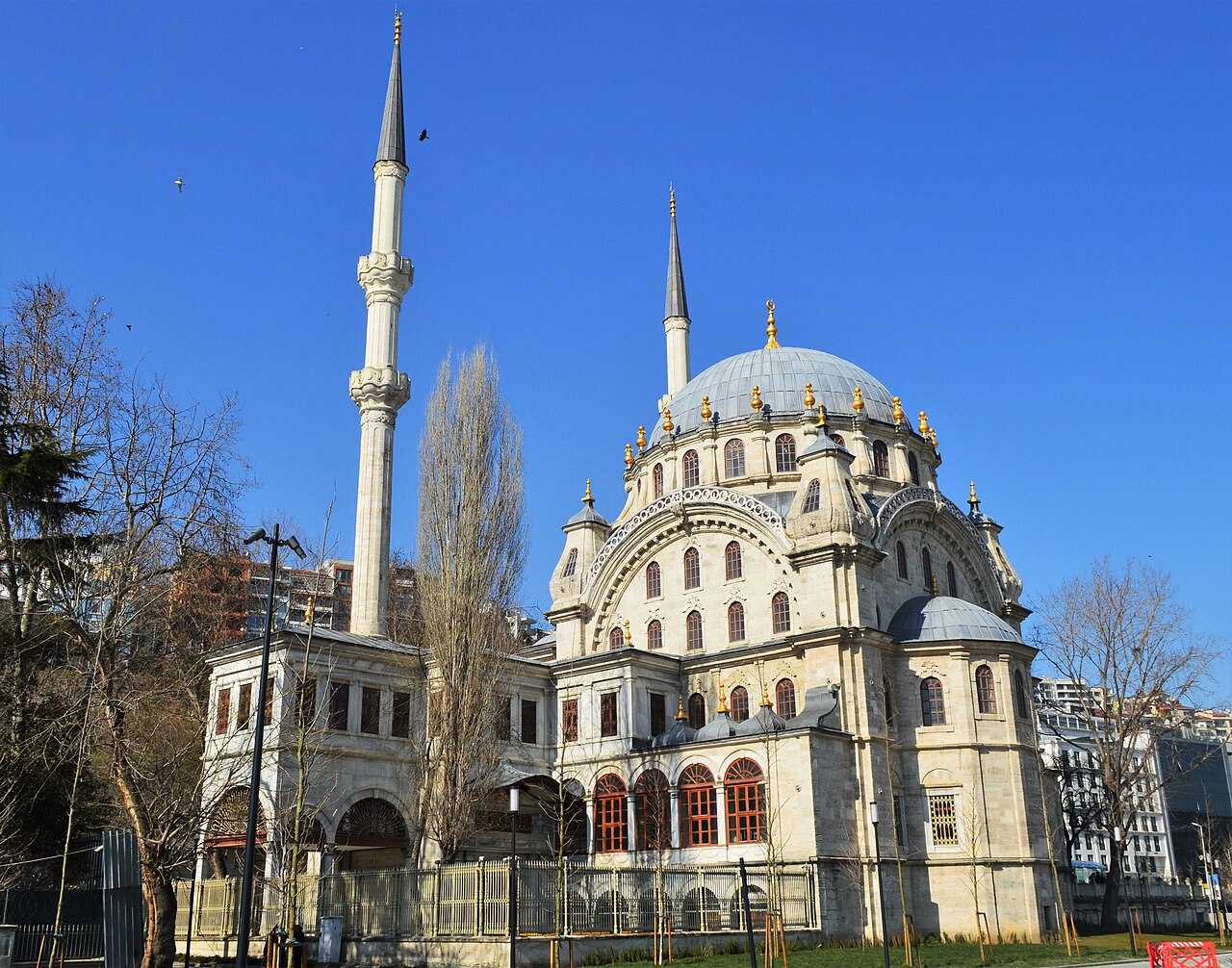

- 今日
- 営業時間の記録なし
- 訪問期間
- 30分
- アクセシビリティ
- 未登録
- 価格
- 未登録
- 評価
- 必見
- ランク
- 8,133 の 108 をランク付け
Nusretiye Mosqueについて
Nusretiye is the mosque Mahmud II built to celebrate a massacre. Constructed between 1822 and 1826 at Tophane by Krikor Balyan, of the Armenian-Ottoman dynasty of court architects who would shape imperial building for the rest of the century, its name commemorates the victory the sultan won by destroying the Janissary corps in 1826 — the year the mosque was finished.
That is not incidental decoration on the history; it is the point of the building. Tophane was the artillery quarter, the counterweight to the Janissaries, and Mahmud raised new artillery barracks and parade grounds beside the mosque, replacing the ones his predecessor Selim III had built and that the Janissaries had helped destroy along with Selim himself. The mosque is a statement in stone about who now held the guns.
Architecturally it sits at a hinge. Scholars have called it Empire style and have called it one of the last Ottoman baroque mosques; Ünver Rüstem reads it as moving away from the baroque towards an Ottoman interpretation of neoclassicism. All three descriptions are pointing at the same thing — an imperial mosque that has stopped speaking classical Ottoman and has not yet settled on what replaces it.
It stands in Beyoğlu, on the shore at Tophane, between İstanbul Modern and the Kılıç Ali Paşa mosque.
2026-08-24 を確認しました · ソース
中には何が入っているのか
A single dome over a square hall, and beneath it a decorative programme that would have been unthinkable a century earlier. The dome is painted with vegetal motifs in place of the Arabic inscriptions that traditionally filled that surface — a substitution that tells you more about the direction of Ottoman taste in the 1820s than any label could.
The building is full of technical show-off: an inventive use of vaults, and wooden stairways handled as display rather than as circulation. A double-winged imperial pavilion fronts the mosque, the raised private apartment from which the sultan entered and watched, and it is a substantial piece of architecture in its own right rather than an appendage.
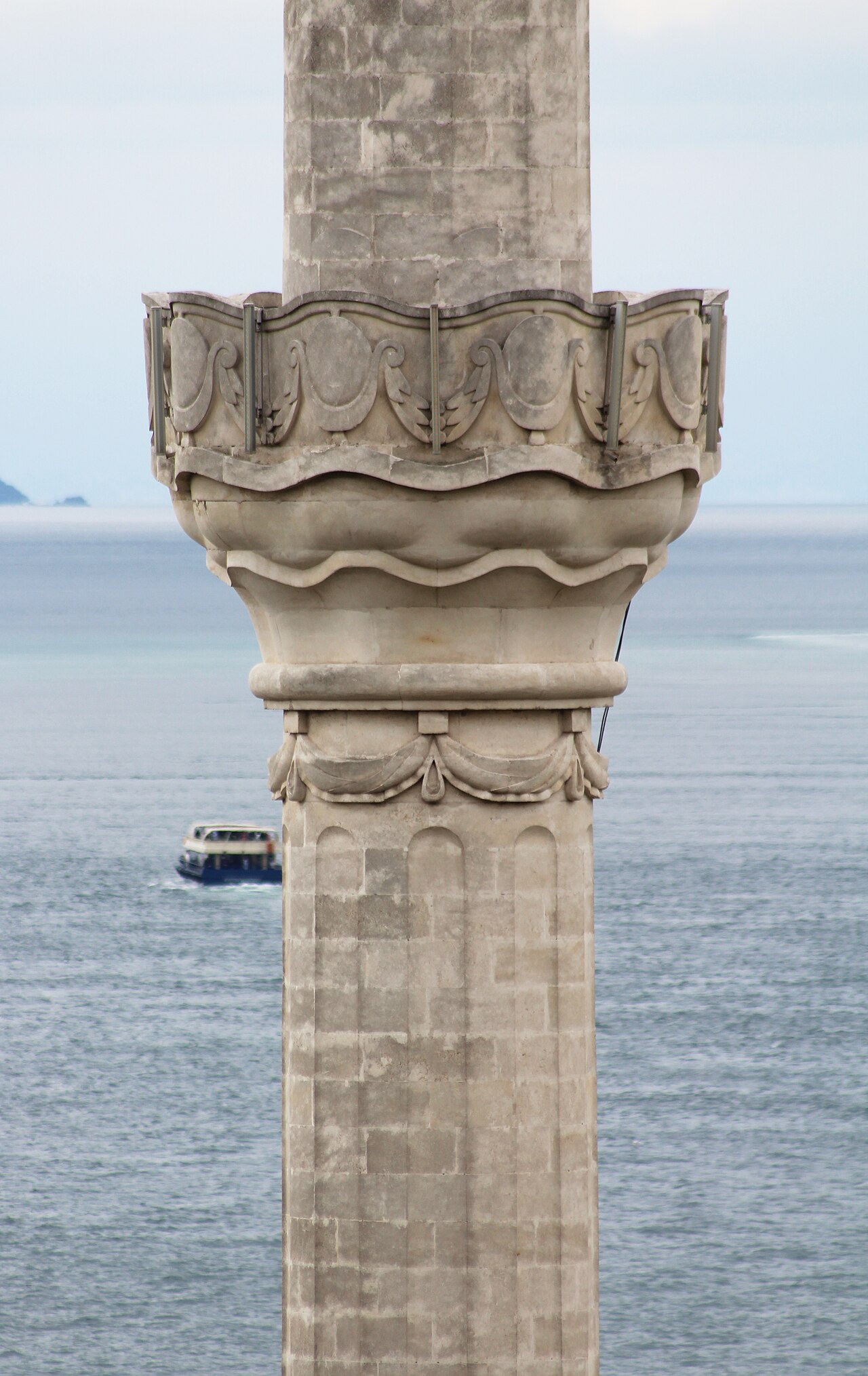
Outside, two minarets rise with what commentators have consistently singled out as extreme slenderness — they are the silhouette by which the mosque is recognised from the water. Two sebils, the domed public fountains from which water was distributed, stand in the precinct in a full rococo idiom, their surfaces flamboyantly undulating in a way that has almost nothing to do with the sober masonry of classical Ottoman fountain design.
Nearby stands a clock tower raised between 1835 and 1839, now the oldest clock tower in Istanbul, rebuilt in grander form by Abdülmecid in 1848–1849.
2026-08-24 を確認しました · ソース

見学時間の目安
Half an hour, which is what this guide records, and it is a deliberately larger allowance than the twenty minutes a small converted Byzantine church earns. Nusretiye is bigger and very much more decorated: there is an actual programme to look at, and the precinct outside — the imperial pavilion, the two rococo sebils, the clock tower — is a second act rather than a courtyard.
Ten to fifteen minutes in the prayer hall covers the painted dome, the marble fittings and the sultan's pavilion from below. The rest goes on the walk round the exterior, which is where the minarets and the fountains are, and which most visitors underuse because the shore road makes it feel like a place to pass rather than to circle.
It is a natural half-hour stop on a Tophane sequence rather than a destination in itself.
2026-08-24 を確認しました


季節と混雑状況
No visiting timetable is published for this mosque and none is recorded here. It is a working mosque under the Diyanet: the directorate's mosque directory is an internal system that is not publicly readable, and the Beyoğlu mufti's office page could not be retrieved. It is worth adding that the National Palaces administration, which does publish timetables for several imperial structures on the Bosphorus, holds no record of Nusretiye — so it is not their building and their published hours do not apply here.
In practice the mosque is open around the five daily prayers and closed to visitors during them. Prayer times move through the year with sunrise and sunset, so look up the day's timetable for Istanbul before planning around it rather than trusting a fixed hour.
The Friday midday congregation is the one time to stay away outright. Otherwise mid-morning and mid-afternoon on weekdays are the reliable windows, and they also happen to be when Tophane's shore road is least clogged. As a large and prominent mosque on a well-used route, Nusretiye is more consistently accessible than the small neighbourhood mosques inland.
2026-08-24 を確認しました
チケット
No operator publishes an admission charge or a statement of free entry for Nusretiye, and nothing is recorded here. The Diyanet, which administers it, publishes no fee; the General Directorate of Foundations publishes restoration news for individual mosques but no visiting or pricing information for this one; and the National Palaces, whose sites are ticketed, do not hold this building at all.
The practical position is that of any working mosque in Turkey: there is no counter, no barrier and no ticket, and worshippers and visitors come in through the same door. This guide states the sourcing rather than the assumption, because the difference matters when a reader is budgeting a day.
Do not plan on a guidebook combination ticket or a museum pass covering it — there is nothing here for such a pass to cover. A donation box inside is common and entirely voluntary.
2026-08-24 を確認しました


行き方
Nusretiye stands directly on the Tophane stretch of the shore road between Karaköy and Kabataş, which makes it one of the easiest historic mosques in the city to reach.
The T1 tram stops at Tophane, a matter of a minute or two away on foot — the mosque is on the inland side of the line and its minarets are visible from the platform. From Kabataş, where the funicular from Taksim comes down and the ferries call, it is a level walk along the water. From Karaköy it is the same walk in the other direction, past the Galataport frontage.
On foot from Beyoğlu the approach is a descent: down from İstiklal through Boğazkesen or the lanes below Tophane, steep and cobbled, coming out on the shore road right beside the mosque.
The obvious pairing is with the two neighbours it sits between — İstanbul Modern on the water and Sinan's Kılıç Ali Paşa mosque a short way along — which makes Tophane a compact three-stop afternoon and Nusretiye the one of the three most people walk past without going in.
2026-08-24 を確認しました


気をつけるべきこと
The tram is the immediate hazard. The T1 runs along the shore road immediately outside the precinct, at street level, quietly and frequently, and the approach involves crossing it. Visitors looking up at the minarets while stepping off a kerb is a real and repeated scene here. Cross at the marked points.
Prayer times are the second consideration and they are more consequential at Nusretiye than at a small locked-up neighbourhood mosque, precisely because this one is usually open — arriving mid-prayer means either waiting outside or intruding on a full hall. Check the day's timetable and plan around the Friday midday congregation absolutely.
The surroundings are a construction and redevelopment zone in slow motion. The Tophane waterfront has been rebuilt around the mosque over recent years, so hoardings, diversions and changed pavements are normal, and a route that worked last year may not this year. Give yourself the extra five minutes.
Ordinary mosque courtesies apply and are enforced more visibly here than inland because of the tourist volume: shoes off at the door, shoulders and knees covered, hair covered for women, no walking in front of anyone at prayer, phones silent.
2026-08-24 を確認しました


写真
Shoot the minarets. They are the reason this building is recognisable, unusually slender even by late-Ottoman standards, and they photograph best from a distance and slightly to the side rather than from the base — get far enough back along the shore road that both are in frame and the dome sits between them, and let the sky do the rest.
The painted dome is the interior shot and it is a straight-up-from-the-centre composition. The vegetal motifs replacing the usual inscriptions are the thing to record, so a wide lens directly beneath the apex gives a symmetrical frame that actually shows the decorative scheme rather than a corner of it.
The two sebils repay close work. Their undulating rococo marble is all about the play of light across a curved surface, so a raking side light — morning or late afternoon, not midday — brings the carving out; shot flat-on at noon they read as white blocks.
The clock tower gives a clean vertical subject on the way past. Sunset from the water side puts the whole silhouette against the Bosphorus sky, which is the postcard and is worth taking anyway.
2026-08-24 を確認しました
よくある質問
What are Nusretiye Mosque's opening hours?
None are published. It is a working mosque under the Diyanet, whose mosque directory is not publicly readable, and it is not administered by the National Palaces, so their published timetables do not apply. In practice it is open around the five daily prayers and closed to visitors during them.
Is there an entry fee?
No operator publishes a fee or a statement of free entry, so nothing is recorded here. In practice it is a working mosque with no ticket counter and no barrier; a voluntary donation box is common.
Why is the mosque called Nusretiye?
The name commemorates the victory Mahmud II won by destroying the Janissary corps in 1826, which was the year the mosque was completed. It stands in the artillery quarter at Tophane, beside the new artillery barracks and parade grounds Mahmud built at the same time.
Who designed it and when was it built?
Krikor Balyan, of the Armenian-Ottoman family of court architects, built it between 1822 and 1826 for Sultan Mahmud II.
What should I look for that other Istanbul mosques do not have?
The dome is painted with vegetal motifs instead of the Arabic inscriptions that normally fill that surface, the two minarets are exceptionally slender, and the precinct holds two rococo sebils with flamboyantly undulating marble surfaces and a double-winged imperial pavilion fronting the mosque.
How long does a visit take?
About thirty minutes: ten to fifteen inside for the painted dome and the fittings, and the rest walking the precinct for the minarets, the two sebils and the nearby clock tower of 1835–1839, the oldest in Istanbul.
どこにありますか
インタラクティブマップを読み込んでいます…
インタラクティブマップを読み込めませんでした。
近くの
計画に組み込む
外部リンク
最終更新日:
情報源: OpenStreetMap コントリビューター, Wikidata ·