宗教施設 · Fatih, イスタンブール
Gül Mosque
Gül Cami
写真

アクセスと設備
- 段差なくアクセス可能 · 利用できません
OpenStreetMap アクセス タグから読み取ります。記載されていないものにはタグが記録されていません。
プランナーでグループ タイプをファミリーに設定し、1 日の枠を 1 人の 1 日の約 4 分の 3 に設定します。
- 今日
- 営業時間の記録なし
- 訪問期間
- 25分
- アクセシビリティ
- ステップフリーではない
- 価格
- 未登録
- 評価
- 必見
- ランク
- 8,133 の 102 をランク付け
Gül Mosqueについて
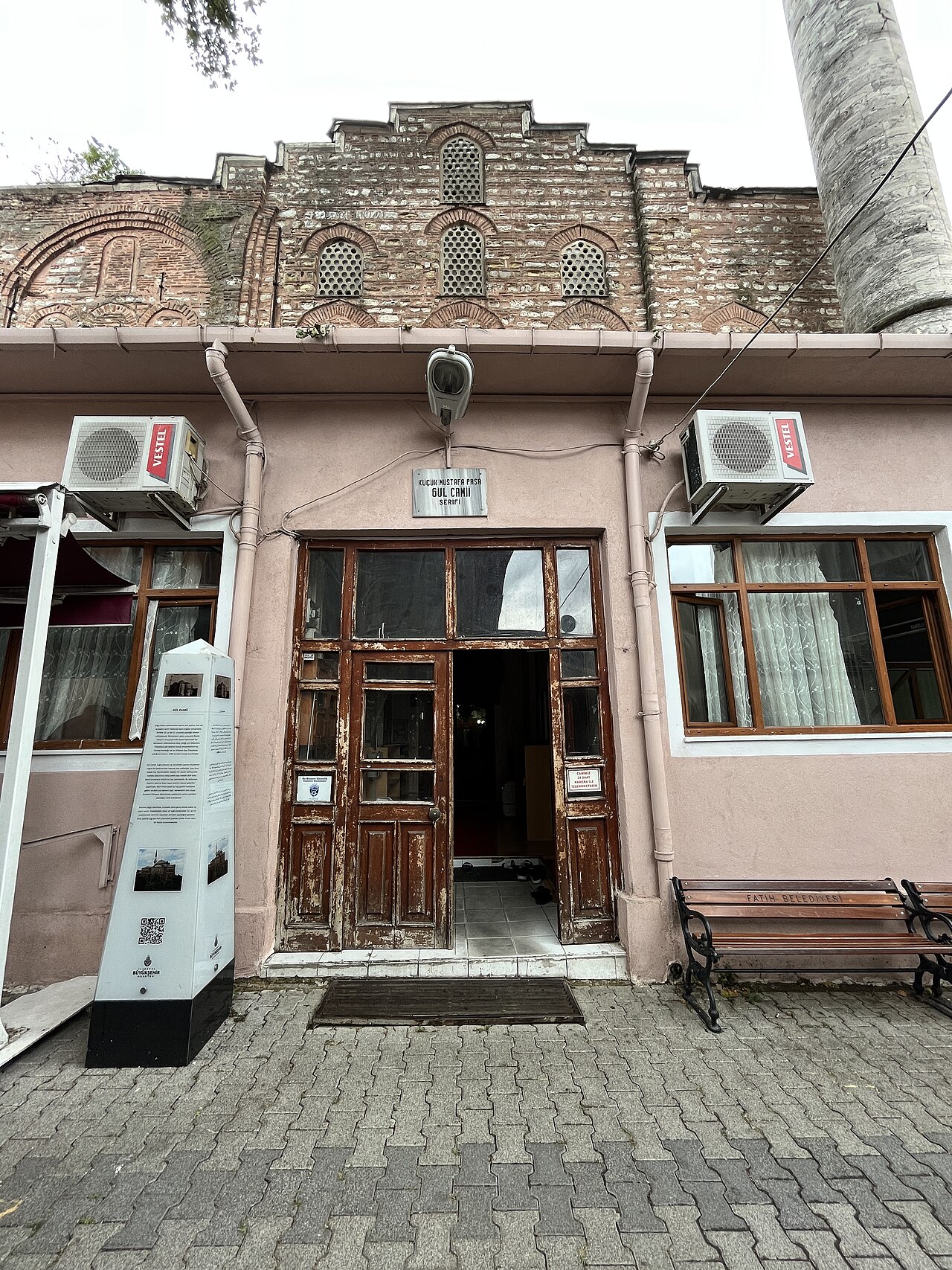
Gül Camii is a large Byzantine church standing above the Golden Horn in Fatih, and scholarship has never settled what it was called. Three identifications compete: the church of the nunnery of Saint Theodosia, the church of the monastery of Christ the Benefactor, and Jules Pargoire's proposal that it is the Hagia Euphēmia en tō Petriō built under Basil I (867–886).
The German archaeologist Hartmut Schäfer dated the surviving fabric to between the end of the eleventh century and the first half of the twelfth, placing the building in the Komnenian period. In 1490 the ruined church was repaired and converted into a mosque, and it has functioned as one ever since — which is the reason a Byzantine structure of this scale still has a roof.
2026-08-24 を確認しました · ソース
中には何が入っているのか
The plan is a Greek cross oriented northwest to southeast, 26 metres long and 20 metres wide, surmounted by five domes, with galleries forming the side arms of the cross. The scale registers immediately from inside: this is not a converted chapel but a substantial monastic church, and the Ottoman fittings sit inside a Byzantine envelope rather than replacing it.
A minaret was raised during the reign of Selim II (1566–1574) by Hassam Pasha, a supplier to the Ottoman navy. Carved inside each of the two eastern dome piers is a small chamber; the south-eastern one contains the alleged tomb of the Ottoman holy man Gül Baba. The name, "rose mosque", is traditionally explained by the church still being decked with flowers when Ottoman troops reached it after 28 May 1453.
2026-08-24 を確認しました · ソース


見学時間の目安
Twenty-five minutes is right. There is one domed core to read, no separate treasury, no courtyard complex and no museum route, so the visit is the sequence of arriving, removing shoes, standing under the central dome long enough to trace where Byzantine fabric ends and Ottoman work begins, and leaving.
The galleries are structural rather than a visitor circuit and are not walked. What extends a visit here is not more rooms but slower looking: the joins in the masonry, the reused Byzantine elements, and the pier chambers. Anyone with an eye for the conversion of churches into mosques will want the full twenty-five; anyone else will be out in ten.
2026-08-24 を確認しました

_(14776319105).jpg)
季節と混雑状況
This is a working Diyanet mosque and no operator publishes visiting hours for it. The Diyanet's mosque directory carries no hours field at all, and the Fatih müftülük publishes nothing per mosque. In practice access follows the five daily prayers and the building may simply be locked between them, but no published schedule exists to plan against, so none is recorded here.
Friday midday prayer closes a working mosque to visitors regardless. The workable approach is to arrive shortly after a prayer time when the door is most likely still open, avoid Friday around noon entirely, and be willing to come back. A locked door here is normal rather than exceptional.
2026-08-24 を確認しました · ソース
チケット
No admission figure is published by the Diyanet for any individual mosque, and none is published for this one, so nothing is recorded. There is no ticket office, no counter and no queue at Gül Camii — it is a neighbourhood mosque that happens to be nine centuries old, not a monument with an entry system.
What may exist is a donation box near the door, as at most working mosques, and a caretaker who opens the building outside prayer times and appreciates a courtesy. Neither is documented by an operator, so neither should be treated as a fixed cost. Bring small change and no expectations.
2026-08-24 を確認しました


行き方
The mosque stands on the slope above the Golden Horn shore between Ayakapı and Cibali, and the position that makes it so visible from the water is what makes it awkward on foot. From the shore road the climb is short in distance and sharp in gradient, up narrow residential lanes on uneven setts with parked cars taking most of the width.
There is no approach that avoids the slope; the alternative from the ridge above is a descent on the same surfaces. Wear soles with grip, and expect the last hundred metres to be steeper than the map suggests. In wet weather the setts are genuinely slippery, and the lanes have no pavement to retreat onto.
2026-08-24 を確認しました


気をつけるべきこと
The likeliest problem is a locked door between prayers, with no published schedule to blame. Beyond that, the ordinary courtesies of a working mosque apply and are not optional: shoes off at the threshold, shoulders and knees covered, a head covering for women, silence during prayer, and no photography of anyone praying.
The galleries are not open and should not be attempted. The pier chamber holding the Gül Baba tomb may be shut without explanation. And because the mosque sits in a residential quarter rather than a tourist one, arriving as a group and treating the courtyard as a viewpoint reads badly to the people who use it daily. Go quietly.
2026-08-24 を確認しました


写真
The five domes are the exterior subject and the slope conspires against them. From the lanes immediately around the mosque there is no vantage far enough back to see the roofline; the picture that works is from below, on the Golden Horn side, where the drop opens up the elevation and the building sits against the water.
Inside is dim, lit from dome windows, and high in contrast between the lit drum and the shaded floor — expose for the drum and let the floor go dark rather than the reverse. The point of interest is the masonry joins and the reused Byzantine fabric, which need raking light rather than a wide angle. Ask before photographing anything at all if anyone is present.
2026-08-24 を確認しました
よくある質問
What was Gül Mosque before it was a mosque?
A Byzantine church, though which one is disputed. It has been identified with the church of the nunnery of Saint Theodosia, with the monastery church of Christ the Benefactor, and by Jules Pargoire with the Hagia Euphēmia en tō Petriō built under Basil I (867–886).
How old is the building?
Hartmut Schäfer dated the surviving fabric to between the end of the eleventh century and the first half of the twelfth, placing it in the Komnenian period. The ruined church was repaired and converted into a mosque in 1490.
Where does the name “rose mosque” come from?
From a tradition attached to 28 May 1453, the day before the city fell: Ottoman troops entering afterwards are said to have found the church still adorned with flowers, and the name Gül Camii is thought to derive from that.
What are the visiting hours?
None are published. This is a working Diyanet mosque, and neither the Diyanet's mosque directory — which carries no hours field at all — nor the Fatih müftülük publishes per-mosque hours. Access in practice follows the five daily prayers, and the building may be locked between them.
Is there an admission charge?
No admission figure is published by the Diyanet for any individual mosque, and none is published for this one, so nothing is recorded. There is no ticket office and no counter. A donation box near the door is common at working mosques but is a custom rather than a documented charge.
What is inside?
A Greek cross plan 26 metres long and 20 metres wide under five domes, with galleries forming the side arms. A minaret was added under Selim II (1566–1574) by Hassam Pasha. A small chamber is carved inside each eastern dome pier; the south-eastern one holds the alleged tomb of the holy man Gül Baba.
どこにありますか
インタラクティブマップを読み込んでいます…
インタラクティブマップを読み込めませんでした。
近くの
計画に組み込む
外部リンク
最終更新日:
情報源: OpenStreetMap コントリビューター, Wikidata ·