宗教施設 · Beyoğlu, イスタンブール
Dolmabahçe Mosque
Bezmialem Valide Sultan Camii
写真

- 今日
- 営業時間の記録なし
- 訪問期間
- 20分
- アクセシビリティ
- 未登録
- 価格
- 入場無料
- 評価
- 必見
- ランク
- 8,133 の 58 をランク付け
Dolmabahçe Mosqueについて
Dolmabahçe Mosque is properly the Bezmiâlem Valide Sultan Mosque, and the longer name is the more useful one: it was commissioned in 1853 by Bezmiâlem Valide Sultan, the mother of Sultan Abdülmecid, and she did not live to see it finished. Her son carried the work through, and the mosque was completed on 23 March 1855. The architect was Garabet Balyan, of the Armenian dynasty that built most of the late Ottoman waterfront.
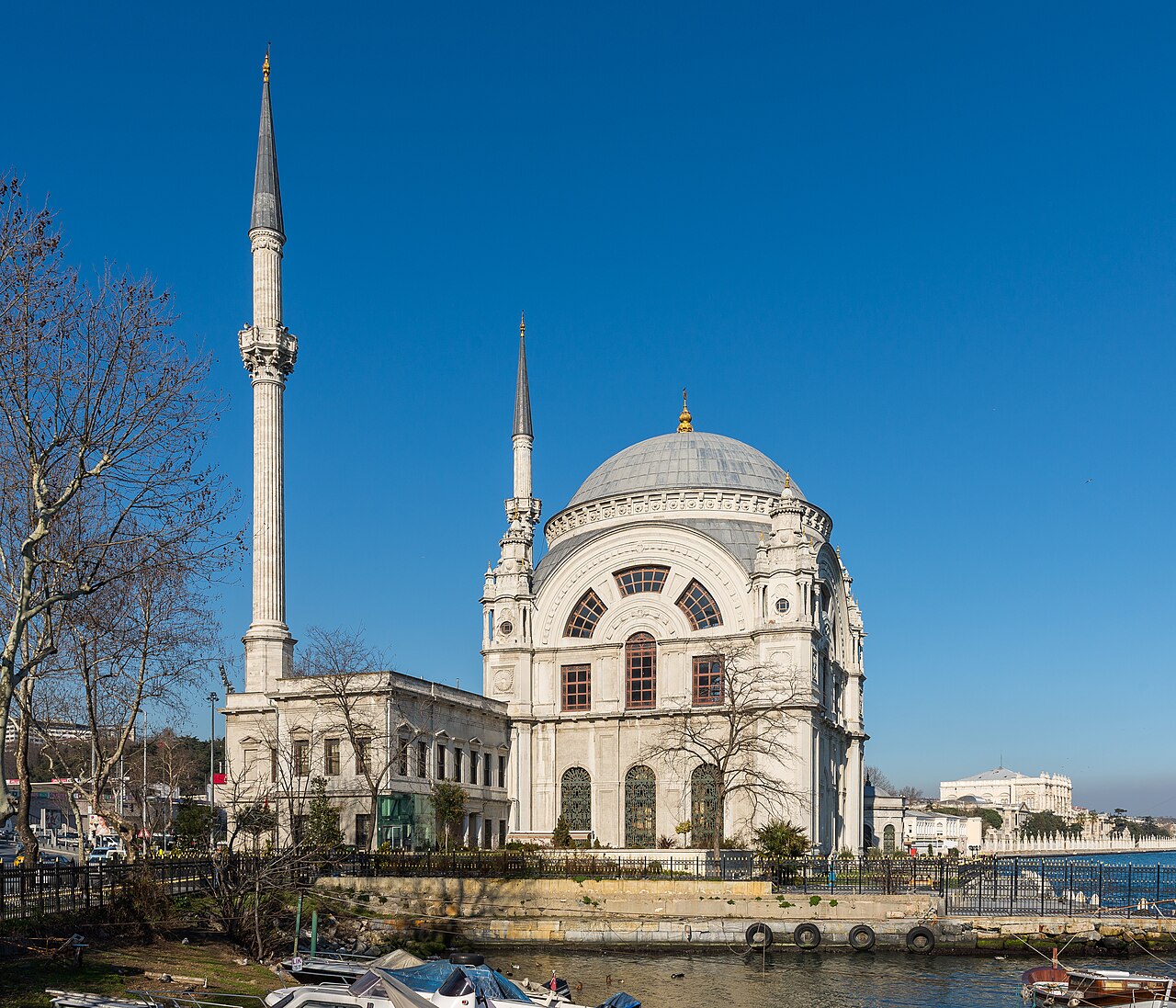
What stands here is a mid-nineteenth-century imperial mosque that has stopped pretending to be classical. Baroque, rococo and Empire elements are worked together into a single square domed block raised on a plinth, with a lower rectangular pavilion attached to its landward side. It is small, it is very tall for its footprint, and it was designed to be read from the water rather than from the street.
2026-08-24 を確認しました · ソース
中には何が入っているのか
The interior is one room. There is no forest of piers and no side aisles: a single dome covers the whole prayer hall, and the walls beneath it are opened up by rank upon rank of clear glass windows, so the space is flooded with daylight off the Bosphorus in a way older Istanbul mosques never are. Gold Arabic calligraphy and symmetrical gilt ornament run across the walls, floral painting covers the vault, and a single large chandelier hangs on the axis of the dome over a marble floor laid with carpets.
The twin minarets are the detail people remember. Rather than the usual fluted shafts they read as slender engaged columns set against the corners of the mass. Attached at the back is the hünkâr kasrı, the imperial pavilion where the sultan arrived and waited — a lower, blockier, more secular-looking wing that is why the building has a slightly palatial silhouette from the road.
2026-08-24 を確認しました · ソース
_(34038332002).jpg)
見学時間の目安
Twenty minutes is a full visit and not a rushed one. There is a single prayer hall with nothing partitioned off, no museum rooms, no crypt and no climbable minaret, so the sequence is short: walk the seaward face, go in, stand under the dome for a few minutes reading the calligraphy and the window rhythm, and come back out. Visitors who allow half a day for it are confusing this mosque with Dolmabahçe Palace next door, which is a different building, a different operator and a different scale of visit entirely.
2026-08-24 を確認しました

.jpg)
季節と混雑状況
This is a working Diyanet mosque with a congregation, not a monument on a timetable, and no visiting schedule is published for it anywhere. In practice the door is open outside prayer and closed to sightseers around each of the five daily prayers, with the longest and firmest closure at the Friday midday prayer, when the mosque fills and casual visitors are not admitted at all.
Because prayer times track the sun, the closed windows drift through the year rather than sitting at fixed clock hours — a midsummer afternoon prayer falls hours later than a midwinter one. Mid-morning on a weekday, well clear of noon, is the safest arrival, and it is also the emptiest.
2026-08-24 を確認しました
チケット
Entry is free. There is no ticket office, no turnstile and no queue, because there is nothing to sell: the mosque is a place of worship funded and run as one.
The point worth stating plainly is that this is not part of the ticketed Dolmabahçe Palace complex. Milli Saraylar, which runs the palace, sells no ticket covering the mosque, and a palace ticket neither includes it nor is required for it. Visitors regularly join the palace queue believing it leads here; it does not. Walk past the queue and go in.
2026-08-24 を確認しました · ソース


行き方
The mosque stands at Kabataş, on the Beyoğlu side of the water where the shoreline road meets the ferry piers, roughly a hundred metres from the palace's outer wall. The T1 tram ends at Kabataş and the stop is a two-minute walk; the F1 funicular drops from Taksim to the same interchange in under two minutes; Bosphorus and cross-strait ferries land at the piers alongside.
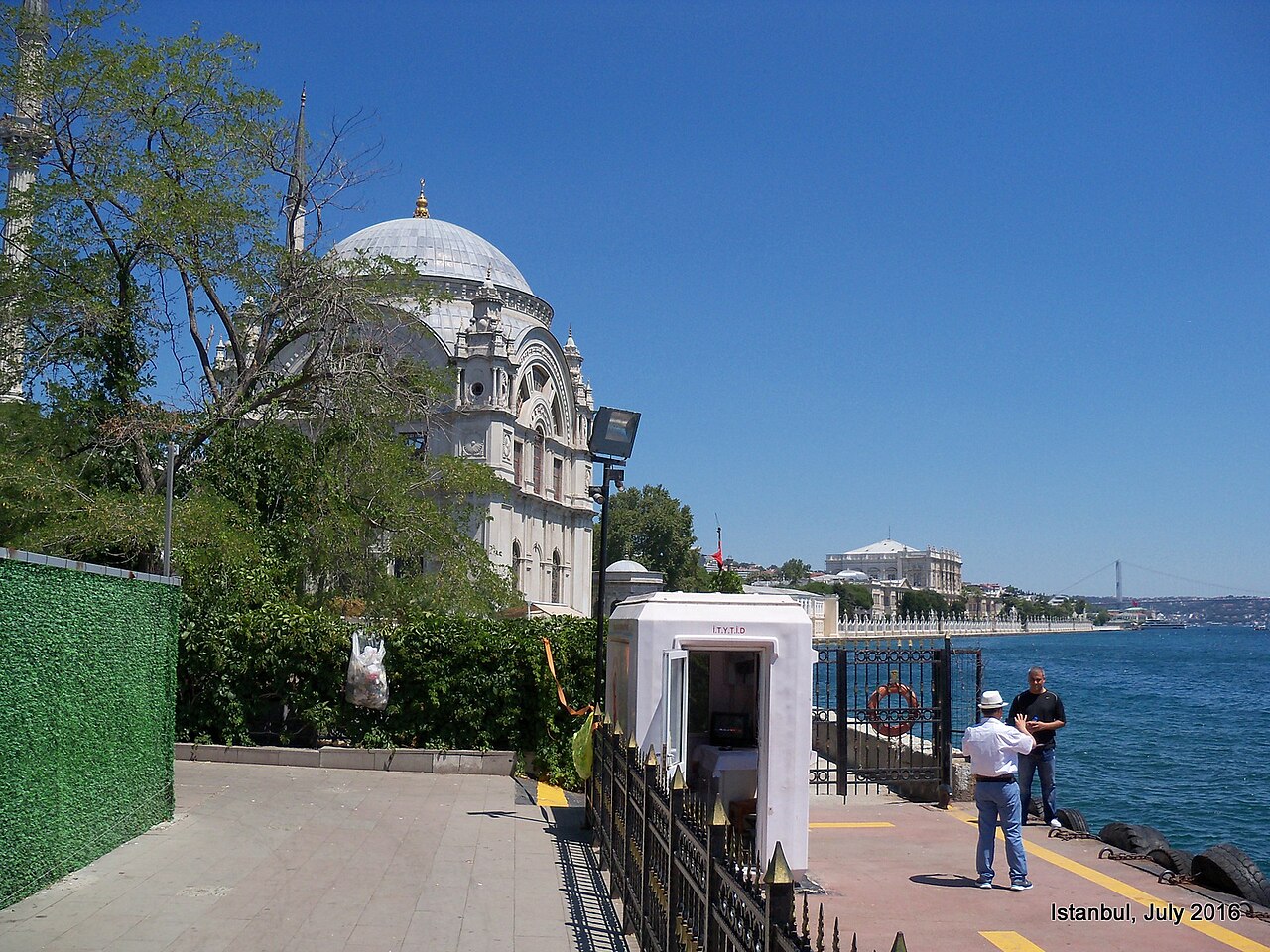
One thing to expect on arrival: the mosque no longer has a forecourt. Road widening took away the courtyard and the sebil that were part of the original design, so instead of stepping through a walled precinct you step more or less straight off a wide, loud, fast coastal road onto the mosque's own platform.
2026-08-24 を確認しました · ソース


気をつけるべきこと
The dress rules are the usual ones and they are enforced by the people at the door rather than by signage: shoulders and knees covered for everyone, hair covered for women, shoes off and carried or shelved. Scarves are sometimes available at the entrance but should not be counted on at a mosque this small.
The second thing is timing. With no published hours, a visitor who arrives during prayer waits outside or comes back, and there is no shaded courtyard to wait in — the missing forecourt means the waiting space is a traffic-side pavement. Build a fallback into the walk. The third is simply noise and traffic: crossing to the mosque from the tram side means crossing a genuinely busy road, and drivers here do not slow down for pedestrians.
2026-08-24 を確認しました
.jpg)
写真
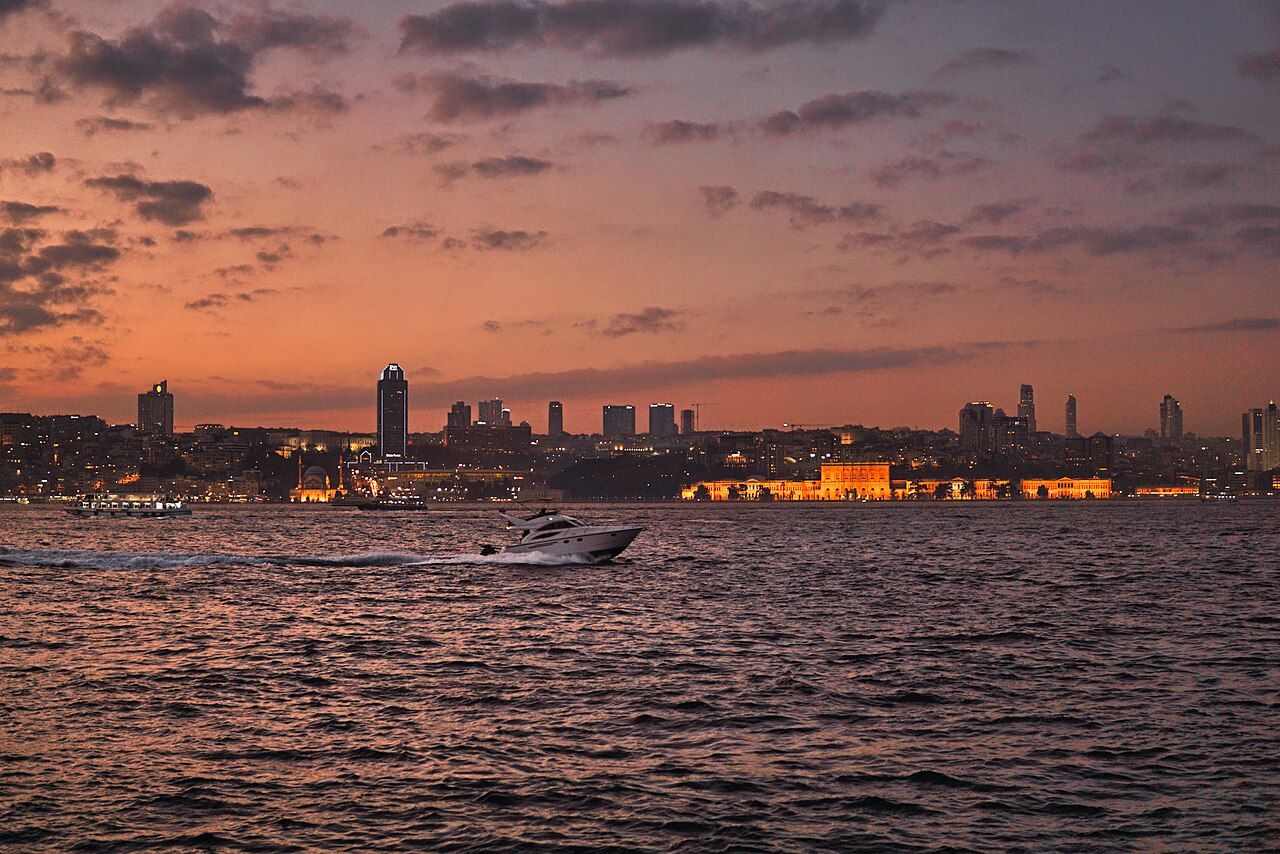
The building was composed for the water, so the honest picture is the seaward facade — the raised block, the dome, and the two column-like minarets stacked in a tight vertical group with ferries crossing behind. Morning light comes from over the Bosphorus and lands directly on that face; by late afternoon the same wall is flat and grey.
From ground level the coastal road clutters every wide shot, so either get close and shoot steeply upward to lose the traffic, or back off to the ferry pier and let the water fill the foreground. Inside, the whole subject is the window wall: expose for the bright glass and the gilt goes rich rather than blown. No flash, and do not point a lens at people praying — wait until the hall is empty of worshippers.
2026-08-24 を確認しました
よくある質問
Is Dolmabahçe Mosque included in the Dolmabahçe Palace ticket?
No. The mosque is a separate building with a separate operator. Milli Saraylar sells no ticket for it, entry is free, and a palace ticket is neither needed nor valid here. Visitors who join the palace queue expecting it to lead to the mosque have queued for the wrong building.
What are Dolmabahçe Mosque's opening hours?
No opening hours are published. It is a working Diyanet mosque with no ticket office and no posted timetable; it is open to visitors outside prayer and closed to them around each prayer, most firmly at the Friday midday prayer. Because prayer times follow the sun, those closed windows move through the year.
Who built the mosque and when?
It was commissioned in 1853 by Bezmiâlem Valide Sultan, mother of Sultan Abdülmecid, and completed on 23 March 1855 after her death, with Abdülmecid seeing the work through. The architect was Garabet Balyan, and the design mixes baroque, rococo and Empire elements.
How long does a visit take?
About twenty minutes. There is a single domed prayer hall and nothing else to walk through, so a thorough look at the exterior, the interior and the calligraphy fills that time without hurrying.
Was the mosque ever used for something other than worship?
Yes. From 1956 to 1960 it housed the Naval Museum, and prayer services only resumed in 1967. That period is one reason the building's pavilion wing reads as more civic than religious from the road.
Why is there no courtyard in front of the mosque?
Road widening removed it. The original design included a courtyard and a sebil on the landward side; both were lost when the shoreline road was enlarged, which is why visitors now step almost straight from a busy carriageway onto the mosque platform.
どこにありますか
インタラクティブマップを読み込んでいます…
インタラクティブマップを読み込めませんでした。
近くの
計画に組み込む
外部リンク
最終更新日:
情報源: OpenStreetMap コントリビューター, Wikidata ·