宗教施設 · Fatih, イスタンブール
Bayezid II Mosque
Beyazıt Camii
写真

- 今日
- 営業時間の記録なし
- 訪問期間
- 30分
- アクセシビリティ
- 未登録
- 価格
- 入場無料
- 評価
- 必見
- ランク
- 8,133 の 40 をランク付け
Bayezid II Mosqueについて
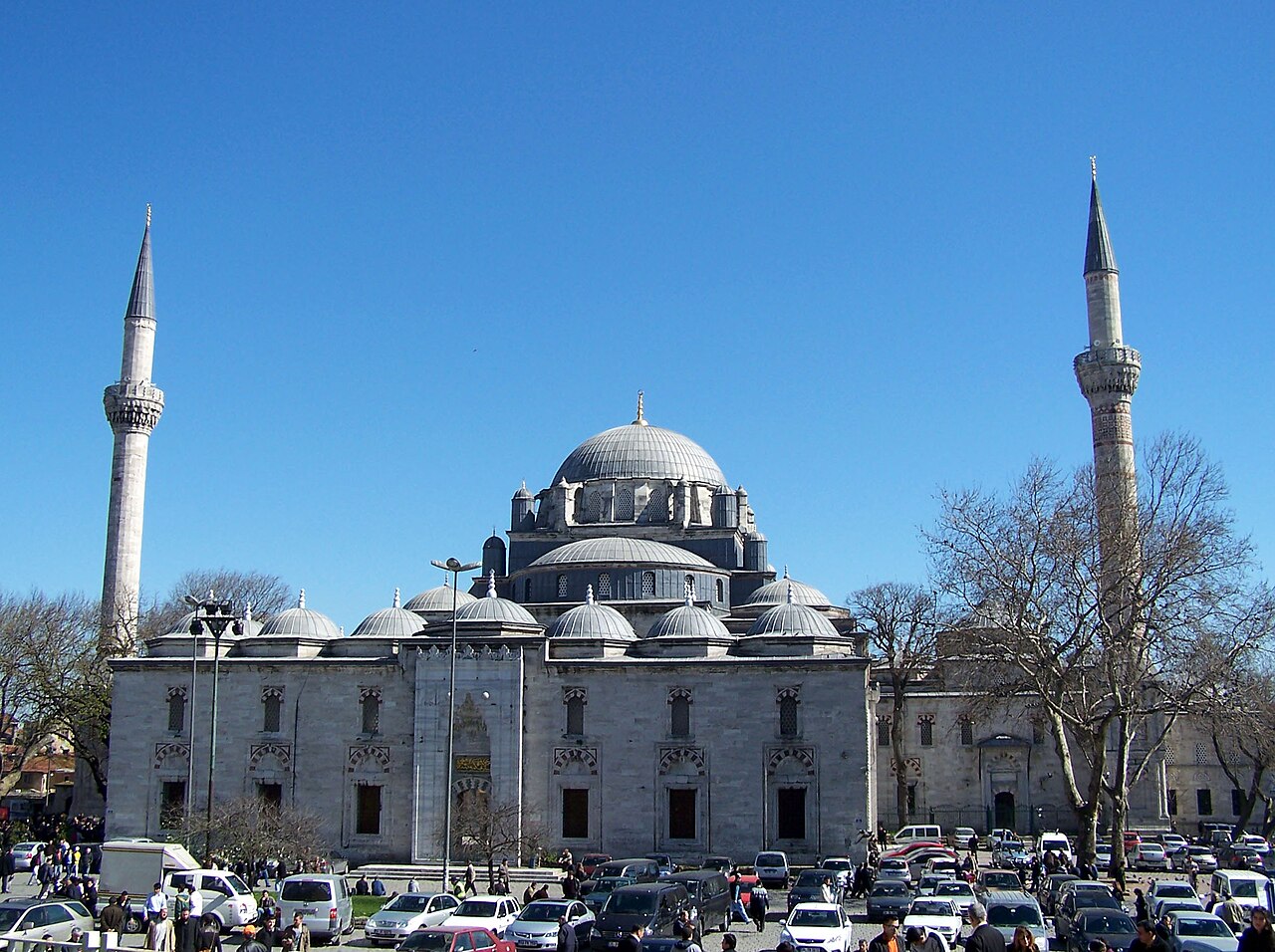
Bayezid II's mosque is the second great imperial complex built in Istanbul after the conquest, and the oldest one still standing in more or less its original shape. It went up between 1500 and 1505 and was finished in 1506, with the surrounding külliye added immediately afterwards.
No chief architect is documented with certainty. The scholar Rıfkı Melül Meriç identified Yakubşah ibn İslamşah as the most likely candidate, assisted by Yusuf ibn Papas, who completed work on the medrese.
Its importance is structural rather than sentimental. The plan — a central dome carried forward and back onto two semi-domes over a nearly square hall — is the experiment that the classical Ottoman mosque was built out of, half a century before Sinan brought it to its final form. Standing under it, you are looking at the working draft of Süleymaniye.
2026-08-24 を確認しました · ソース
中には何が入っているのか
The prayer hall is a square of roughly 40 metres a side. The central dome is about 17 metres across — 16.78 metres measured inside — and rises 44 metres on the outside, with two semi-domes on the main axis and arches on the cross axis. Light comes from twenty windows around the base of the dome and seven in each semi-dome, which is why the interior is bright rather than solemn. Side aisles run out on either side, each roofed with four small domes.
The courtyard is almost as large as the mosque itself, covered by twenty-four small domes and ringed by a peristyle of twenty columns: two of porphyry, ten of verd antique and six of pink granite, standing over a polychrome marble pavement with a şadırvan at the centre. The sultan's loge inside rests on ten small marble columns lifted from earlier Byzantine churches.
Bayezid II lies in the garden behind, alongside his daughter Selçuk Hatun and the nineteenth-century grand vizier Koca Mustafa Reşid Pasha.
2026-08-24 を確認しました · ソース
見学時間の目安
Thirty minutes covers it properly. A selâtin mosque of this kind gives you three things: the courtyard, the prayer hall, and the külliye buildings seen from outside as you leave.
Budget roughly ten minutes in the courtyard, which deserves more attention than most visitors give it, ten inside — shoes off, quiet, look up at the dome and along the light from the drum windows — and ten walking the outside of the medrese, hamam and imaret on your way through to Beyazıt Square.
Add time if a prayer starts while you are there, because you will be waiting outside rather than looking around.
2026-08-24 を確認しました
季節と混雑状況
This is a working mosque, so the timing question is about prayer rather than opening hours. No canonical source publishes a weekday visiting schedule, and none is recorded here; in practice the building is open every day between the dawn and the evening prayer and closed to visitors while a prayer is being performed.
Friday around noon is the time to avoid outright — the congregational prayer fills the hall and the courtyard both. Mid-morning on a weekday is the quietest and best-lit hour, before the Grand Bazaar crowd spills up the hill.
The visiting window narrows through winter, since the whole cycle of prayers compresses with the shorter day.
2026-08-24 を確認しました
チケット
Entry is free. No fee is charged, there is no ticket desk and there is nothing to book. That is normal for a working Istanbul mosque and it is true here.
What is expected instead is dress and behaviour. Shoes come off at the door and go in the racks or a bag; shoulders and knees covered for everyone; a headscarf for women, and scarves are usually available in a basket by the entrance if you have not brought one. Photography of people at prayer is not welcome. A donation box sits near the exit and is entirely optional.
2026-08-24 を確認しました · ソース
行き方
Take the T1 tram to Beyazıt-Kapalıçarşı. The mosque is directly on the square as you come out, with Istanbul University's monumental gate facing it and the Grand Bazaar's Beyazıt gate a short walk downhill on the other side.
This is one of the easiest arrivals in the old city, and also one of the busiest — the square is a crossing point for students, bazaar traffic and booksellers all day. Come in from the tram side and you enter through the courtyard, which is the right way round: the transition from the noise of the square through the arcade into the covered court is most of the architectural argument.
Walking from Sultanahmet takes about fifteen minutes straight along Divanyolu.
2026-08-24 を確認しました
気をつけるべきこと
The building has been knocked about repeatedly, and knowing that changes what you look at. The dome was partially rebuilt after the earthquake of 1509, Mimar Sinan carried out repairs in 1573–74, another earthquake in 1766 brought repairs the following year, and both minarets burned — in 1683 and again in 1754 — with a lightning strike in between in 1743. The most recent restoration began in August 2012 and took eight years, costing 49 million Turkish lira and involving around 150 people.
Practically: the courtyard flagstones are worn smooth and become slippery in rain, and you will be crossing them in socks on the way in. The square outside is dense with pigeons — the mosque was nicknamed the Pigeon Mosque in the nineteenth century for exactly this reason — and with people selling feed for them. Keep bags closed.
2026-08-24 を確認しました
写真
The courtyard is the picture here, not the exterior silhouette, which is hemmed in on every side and hard to see whole. Stand in a corner of the peristyle and shoot diagonally across the şadırvan so the twenty columns compress into a run of arches; the colour contrast between the porphyry, the verd antique and the pink granite is the reason to shoot in colour rather than mono.
Inside, the light source is the ring of twenty windows at the base of the dome. Expose for the wall and let the windows blow out, or you will get a grey dome and nothing else. A wide lens pointed straight up from beneath the centre gives the cleanest dome frame.
For an exterior, cross to the Istanbul University gate side of the square in late afternoon, when the sun is behind you and the cascade of domes reads against the sky.
2026-08-24 を確認しました
よくある質問
When was Bayezid II Mosque built?
The mosque was built between 1500 and 1505 and completed in 1506, with its külliye added immediately afterwards. The medrese was completed in 1507. It is the second large imperial mosque complex built in Istanbul after the 1453 conquest and the oldest one preserved in more or less its original form.
Is there an entrance fee?
No. Bayezid II Mosque is a working mosque and entry is free — no ticket is sold and nothing needs to be booked. A donation box near the exit is optional.
What are the opening hours?
No canonical source publishes a weekday schedule for this mosque, so none is recorded here. As a working mosque it is generally open between the dawn and evening prayers and closed to visitors during prayer itself, especially the Friday noon prayer.
How big is the dome?
The central dome measures about 17 metres in diameter — 16.78 metres on the inside — and the outer height reaches 44 metres. It is flanked by two semi-domes on the main axis, over a prayer hall roughly 40 metres square.
How long does a visit take?
About thirty minutes. That covers the courtyard, the prayer hall and a look at the surrounding külliye buildings from outside. Allow extra if a prayer time falls during your visit, since the hall closes to visitors then.
Who is buried at the mosque?
Sultan Bayezid II is buried in the türbe in the garden behind the mosque, together with his daughter Selçuk Hatun. The nineteenth-century grand vizier Koca Mustafa Reşid Pasha is also buried in the same garden.
どこにありますか
インタラクティブマップを読み込んでいます…
インタラクティブマップを読み込めませんでした。
近くの
計画に組み込む
外部リンク
最終更新日:
情報源: OpenStreetMap コントリビューター, Wikidata ·