宗教施設 · Üsküdar, イスタンブール
Atik Valide Mosque
Atik Valide Camii
写真


- 今日
- 営業時間の記録なし
- 訪問期間
- 35分
- アクセシビリティ
- 未登録
- 価格
- 未登録
- 評価
- 必見
- ランク
- 8,133 の 131 をランク付け
Atik Valide Mosqueについて
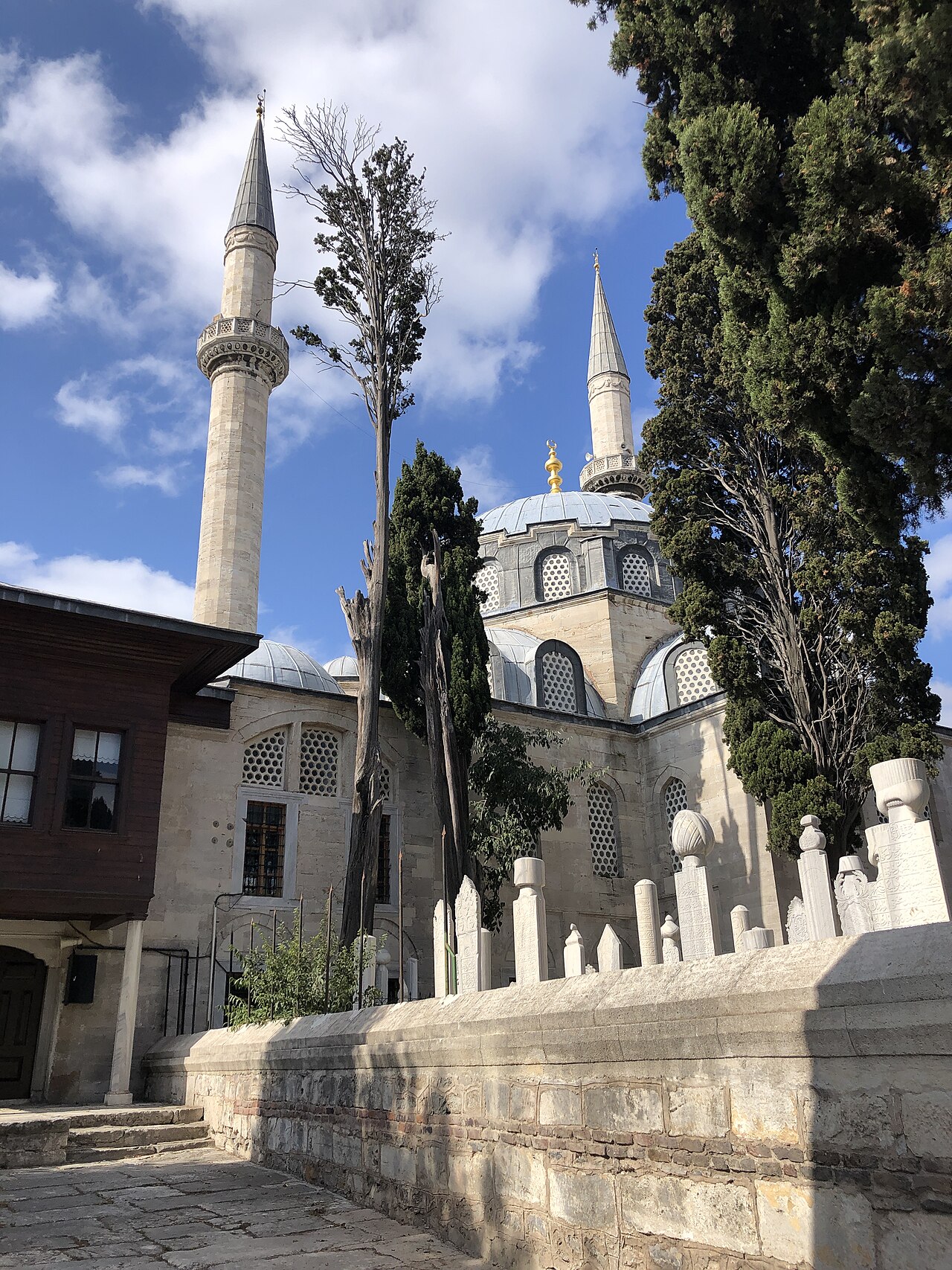
On the hill above Üsküdar, in the Toptaşı quarter, stands the largest and last complete külliye Mimar Sinan built, and almost nobody crosses the Bosphorus to see it. Planning began in 1571 and the work was not finished until 1586, three years after the death of the woman who paid for it.
That woman was Nurbanu Sultan, wife of Selim II and mother of Murad III, the same patron who endowed the bath at Çemberlitaş on the other shore. Sinan designed the mosque while supervising much of the early work from Edirne, where he was occupied with the Selimiye.
It is a working neighbourhood mosque, not a ticketed monument. There is no desk, no barrier and no circuit, which is exactly why it feels different from the Süleymaniye, and why a visitor here is a guest rather than a customer.
2026-08-24 を確認しました · ソース
中には何が入っているのか
The prayer hall is covered by a central dome 12.7 metres in diameter, carried on six arches arranged in a hexagon with two free-standing columns, and surrounded by five exedral semi-domes, one of which contains the mihrab. Galleries run along three sides, and the north arch is filled by a flat wall holding the entrance portal.
The colour is in the tilework. The qibla wall and the recess of the mihrab are faced with İznik tiles, and this is what the visit is for: not scale, which the imperial mosques of the peninsula beat, but the concentration of tile on the wall you face when you sit down.
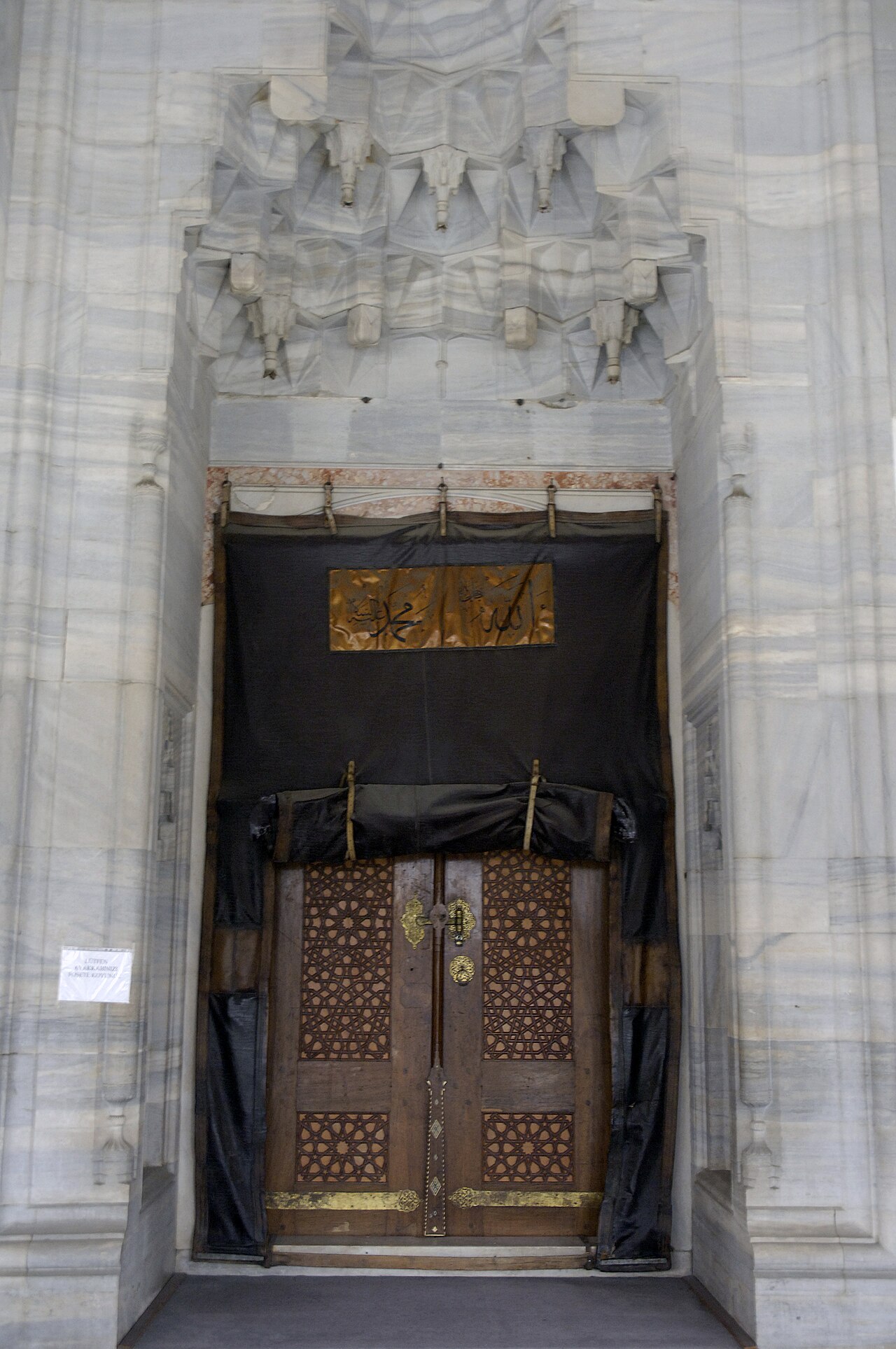
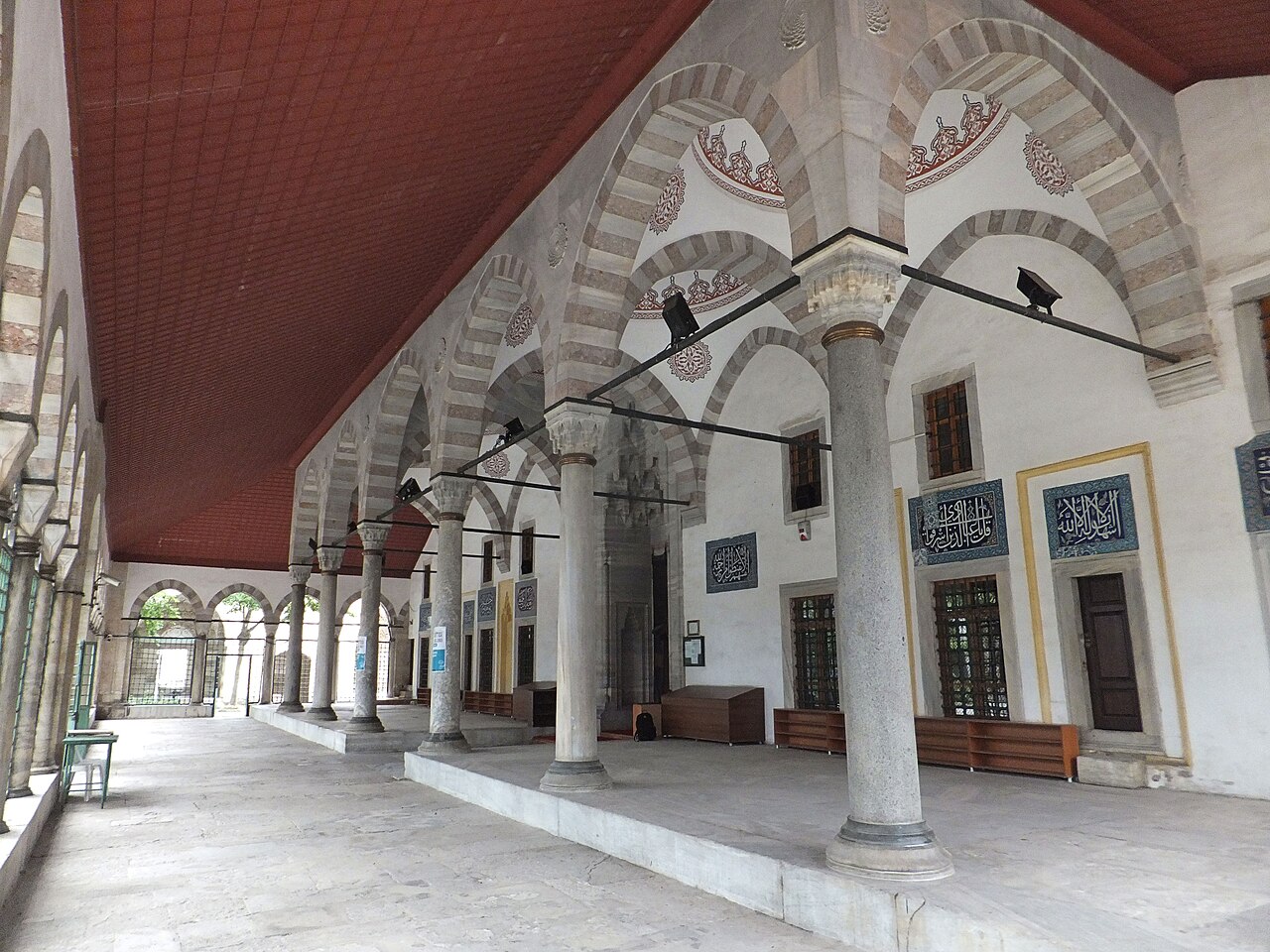
The north façade carries ten rectangular calligraphic lunette panels, four quoting the Qur'an at surah 48:3-4 and six at surah 39:53.
The building grew in three stages: groundbreaking to 1574, a second minaret and portico in 1577-78, and a lateral expansion with further domes in 1584-86. Around it Nurbanu's foundation raised a madrasa, a hadith college, a school for Qur'an recitation, an elementary school, a dervish convent, a hospital, a hospice with a guest-house and a double caravanserai, and a bath.
2026-08-24 を確認しました · ソース

見学時間の目安
Thirty-five minutes. There is no queue, no ticket, no audio guide and no route marked on the floor, so the time is simply what it takes to walk the courtyard, sit in the hall long enough for your eyes to adjust, and look properly at the tile on the qibla wall.
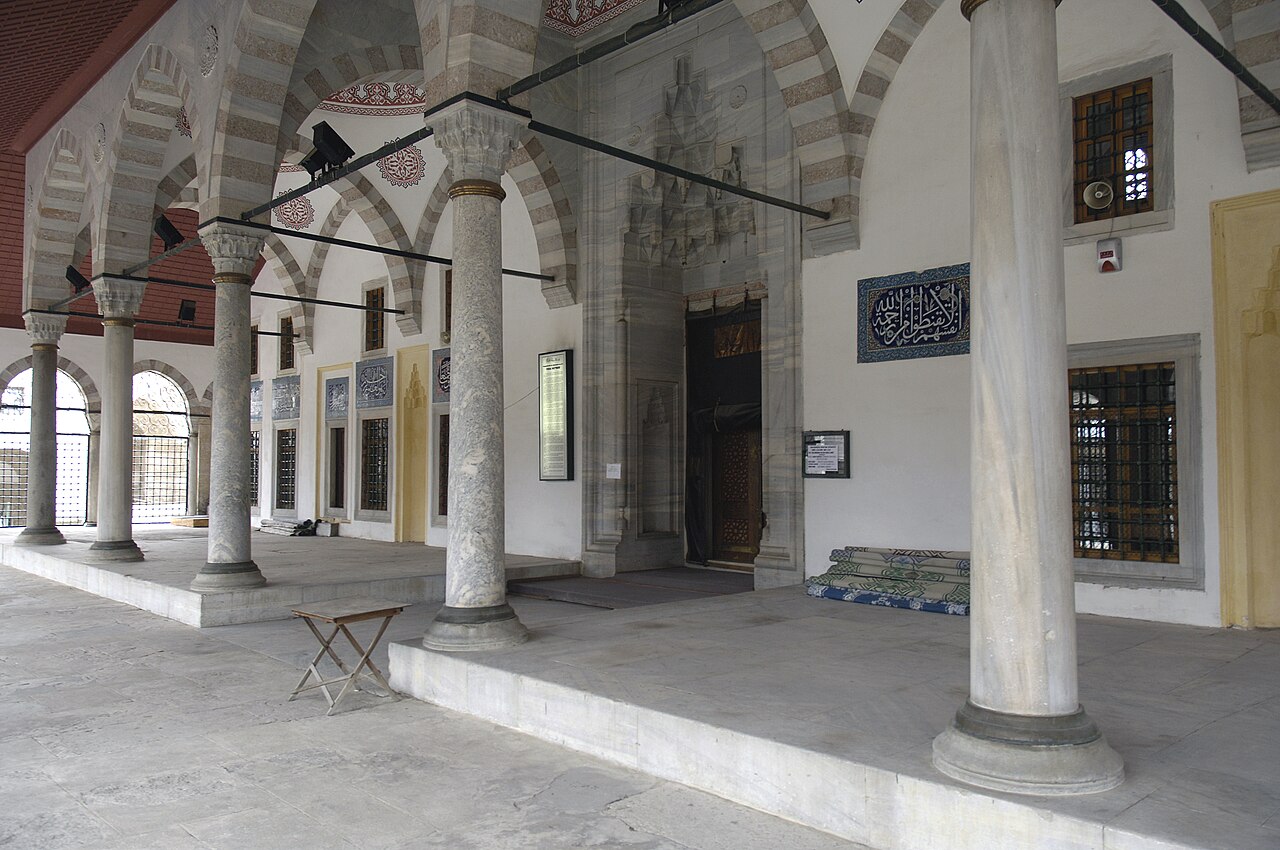
Give the courtyard its share. Sinan's porticos and the two minarets are best understood from inside the enclosure rather than from the street, and the courtyard is also where you take your shoes off and slow down.
If you intend to walk the külliye buildings as well, and their scatter across the surrounding streets is the reason this complex matters, add time on top. Most of them are in other institutional uses today and are not open as exhibits, so what you get is an exterior circuit of a sixteenth-century neighbourhood, not a museum.
2026-08-24 を確認しました

季節と混雑状況
No operator publishes visiting hours for this mosque, and that is a finding rather than an omission. The Diyanet's Istanbul and Üsküdar pages, its national mosque directory and the Üsküdar municipality's own directory entry were all checked, and none carries a visiting schedule. This guide therefore records no hours rather than inventing plausible ones.
What that means in practice is that the building's rhythm is the prayer timetable, not an opening time. Mid-morning and mid-afternoon, between the five daily prayers, are the periods when a visitor can look around without being in anyone's way. The Friday midday prayer fills the hall and the courtyard and is the worst moment to arrive as a sightseer.
Reports of restoration work on the külliye exist, but no operator statement of a current closure was found. If you are crossing the Bosphorus specifically for this, it is worth confirming locally before you commit the morning.
2026-08-24 を確認しました
チケット
No admission policy is published for this mosque by any operator. Turkish working mosques do not charge, but no Diyanet page stating that for Atik Valide was found, so this guide records neither a price nor a free-entry claim. The honest answer is that nothing is published.
What can be said plainly is that there is no ticket office here, because there is no ticketing operator. This is a mosque under the Diyanet serving the Toptaşı neighbourhood, not a museum under the Ministry of Culture, and the distinction shapes the entire visit: you are not buying access, you are being allowed in.
That also means there is nothing to book, nothing to skip the queue for, and no combined pass that covers it. Turn up, behave as a guest, and the building is yours to look at.
2026-08-24 を確認しました

行き方
Üsküdar, on the Asian shore, is one of the best-connected points in Istanbul: ferries from Eminönü, Beşiktaş and Kabataş, the Marmaray line under the Bosphorus, and the M5 metro all meet at the square. The ferry is the crossing worth taking, since it hands you the skyline of the old city on the way over.
From the square the mosque is uphill, inland, in the Toptaşı area, roughly a quarter of an hour of climbing through residential streets and longer if you stop. The gradient is real and the surfaces are a mix of pavement and cobble, so this is not a walk for smooth soles.
The minarets are your landmark once you are above the first block of buildings. Coming down again is quick, and the descent puts you back at the ferry piers and the fish restaurants along the shore.
2026-08-24 を確認しました

気をつけるべきこと
This is a functioning place of worship and the etiquette is not decorative. Shoes come off at the threshold and are carried or shelved. Women cover their hair; shoulders and knees are covered by everyone. Phones go silent. Nobody walks in front of a person praying, and nobody crosses the carpet in front of the mihrab while the hall is in use.
Time your arrival away from the five daily prayers, and away from the Friday midday prayer entirely unless you have come to pray.
The külliye buildings around the mosque are not a museum campus. They are in other uses, some institutional and some private, and several are not enterable at all, so treat them as an exterior walk rather than as rooms you will get into.
Lastly, the hill. The climb from Üsküdar square is steep enough to matter in August heat, and there is little shade on the way up.
2026-08-24 を確認しました

写真
The hall is dim, as sixteenth-century mosque interiors are, and its geometry is the subject: six arches in a hexagon, two free-standing columns, five semi-domes. The picture that explains the building is taken lying back and looking up from beneath the central dome, and it needs a steady hand rather than a flash.
The tiles on the qibla wall want the opposite treatment: close, square-on, no flash, and no lens pointed past them at anyone praying. If there are worshippers in the hall, the tiles can wait.
Outside, the courtyard portico frames the prayer hall better than any street view does, and the two minarets read cleanly against the sky from inside the enclosure. Late afternoon light comes across the hill and warms the stone.
Be discreet throughout. A camera raised carelessly in a neighbourhood mosque is the fastest way to be asked to leave.
2026-08-24 を確認しました
よくある質問
What are Atik Valide Mosque's visiting hours?
None are published. The Diyanet's Istanbul and Üsküdar pages, its national mosque directory and the Üsküdar municipality's directory entry were all checked and none states a visiting schedule. It is a working mosque, so its rhythm follows the five daily prayers rather than an opening time.
Is there an admission charge?
No admission policy is published by any operator, so neither a price nor free entry is recorded here. There is no ticket office, because the mosque is under the Diyanet and serves its neighbourhood rather than operating as a museum.
Who built it, and when?
Nurbanu Sultan, wife of Selim II and mother of Murad III, commissioned it; Mimar Sinan designed it. Planning began in 1571 and it was completed in 1586, three years after Nurbanu's death, in three construction stages.
What should I see inside?
The central dome of 12.7 metres on six arches in a hexagon with two free-standing columns, the five exedral semi-domes, the galleries on three sides, and above all the İznik tilework facing the qibla wall and the mihrab recess.
How long does a visit take?
About thirty-five minutes for the courtyard, the prayer hall and the tile panels at a walking pace, outside prayer times. Add more if you want to walk the surrounding külliye buildings, which are in other uses and mostly seen from outside.
How do I get there from the European side?
Take a ferry to Üsküdar from Eminönü, Beşiktaş or Kabataş, or the Marmaray line under the Bosphorus. From Üsküdar square the mosque is an uphill walk of roughly a quarter of an hour inland, into the Toptaşı quarter; the minarets are the landmark.
どこにありますか
インタラクティブマップを読み込んでいます…
インタラクティブマップを読み込めませんでした。
近くの
計画に組み込む
外部リンク
最終更新日:
情報源: OpenStreetMap コントリビューター, Wikidata ·