史跡 · Innere Stadt, ウィーン
Palais Ferstel
写真

アクセスと設備
- 段差なくアクセス可能 · 利用可能
OpenStreetMap アクセス タグから読み取ります。記載されていないものにはタグが記録されていません。
プランナーでグループ タイプをファミリーに設定し、1 日の枠を 1 人の 1 日の約 4 分の 3 に設定します。
- 今日
- 営業時間の記録なし
- 訪問期間
- 1時間 30分
- アクセシビリティ
- ステップフリー
- 価格
- 未登録
- 評価
- 必見 · 遺産
- ランク
- 5,640 の 63 をランク付け
Palais Ferstelについて
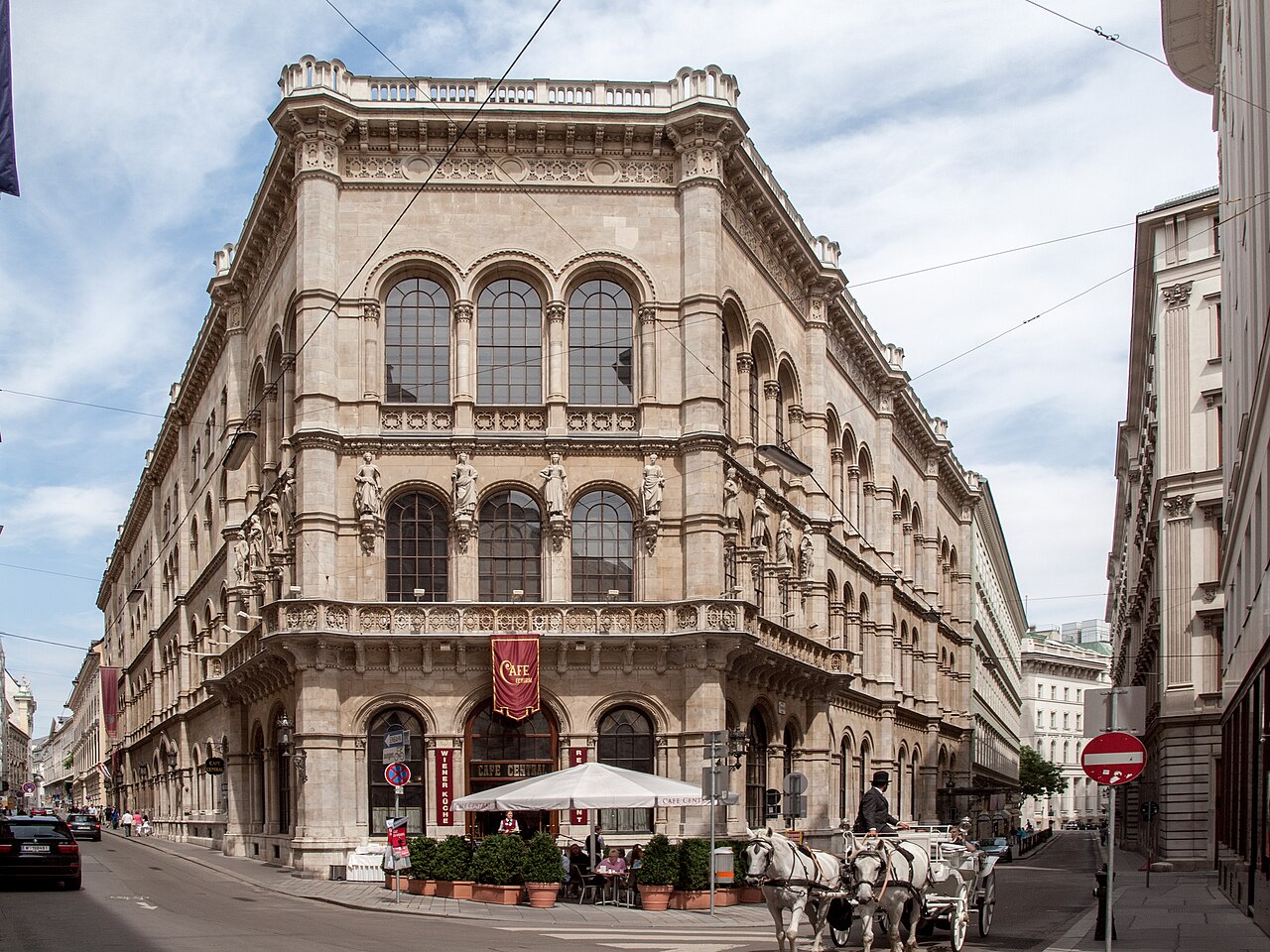
Palais Ferstel is a mid-nineteenth-century palace between Freyung and Herrengasse in Vienna's Innere Stadt, built between 1856 and 1860 to a design by architect Heinrich von Ferstel, after whom it is named. It was built to house two institutions at once: the Austrian National Bank's predecessor and the Vienna Stock Exchange, which operated from the building until it moved to its own dedicated exchange building in 1877.
Today the palace's public identity rests less on its original banking function than on what runs inside it: the Ferstel Passage, a glazed shopping arcade connecting Freyung and Herrengasse, and Café Central, one of Vienna's most storied historic coffeehouses, both open to anyone walking in off the street.
Ferstel also designed the Votivkirche near the university around the same period, and Palais Ferstel is generally read as his major secular commission from that decade — an Italian Renaissance Revival style with round-arched windows and a rusticated stone ground floor, distinct from the Gothic Revival he used for the church.
2026-08-20 を確認しました · ソース
中には何が入っているのか
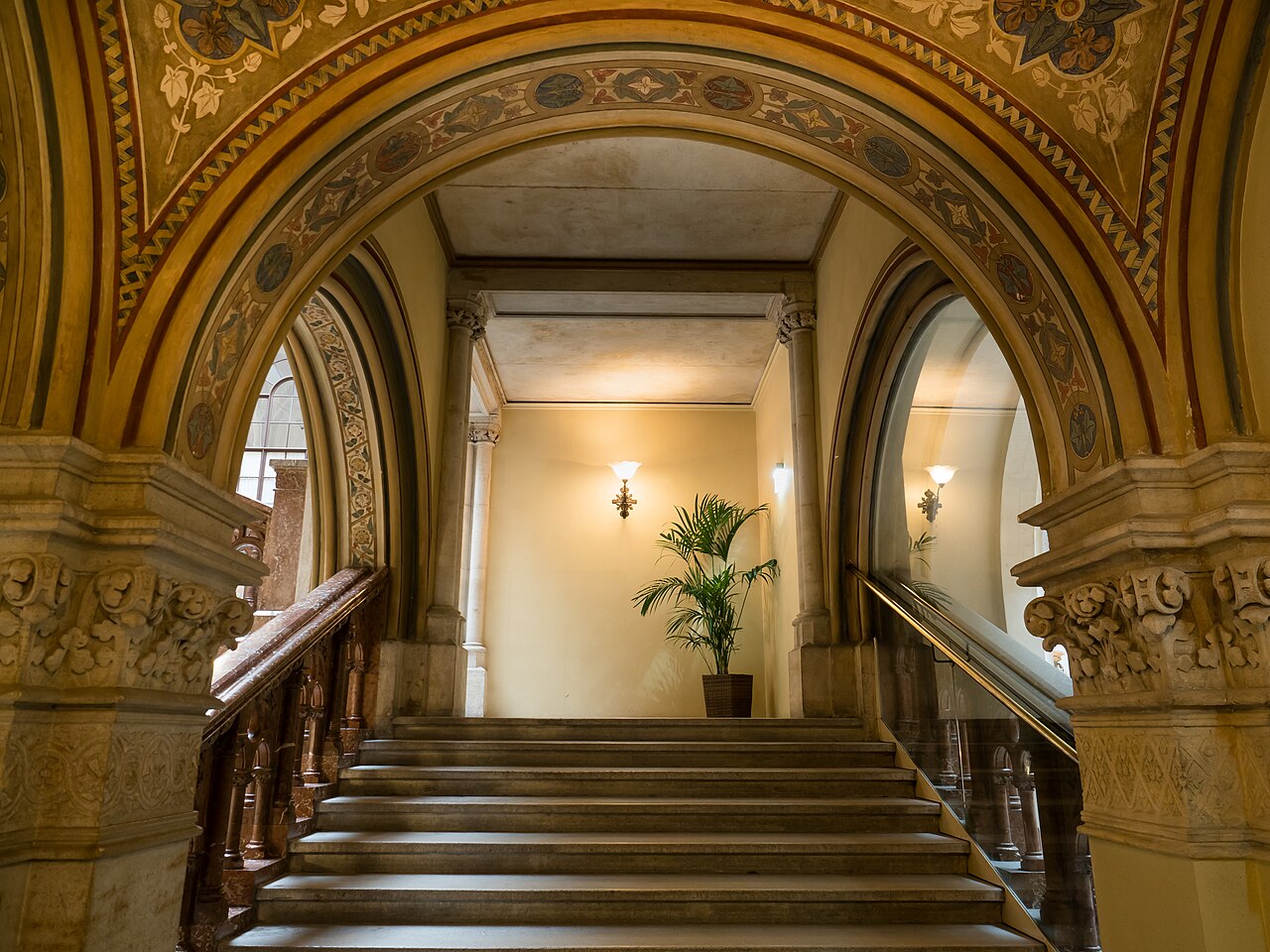
The Ferstel Passage runs straight through the building's ground floor, lined with shops under a glass roof, with the Donaubrunnen — a fountain with sculpted figures personifying the Danube and its tributaries — at its centre. Café Central occupies a grand arcaded hall off the passage, with high vaulted ceilings and marble columns; it is famous for the writers and revolutionaries said to have used it as a regular haunt in the early twentieth century, Leon Trotsky among the names most repeated, alongside Peter Altenberg, whose life-size seated statue sits by the entrance today.
The upper floors of the palace, which held the bank and exchange halls, are used today for private events and are not part of the public route through the building. The Freyung side of the palace fronts one of Vienna's oldest squares, itself a former market place with its own fountain, the Austria-Brunnen, standing separately just outside the building rather than inside it.
2026-08-20 を確認しました · ソース

_Palais_Ferstel-2a(1).jpg)
見学時間の目安
Fifteen minutes to walk the passage and see the fountain; an hour or more for a proper coffee and cake at Café Central, which is the reason most visitors come. Add time on top of that for the queue at busy hours, which can outlast the coffee itself, particularly for a table rather than a stand at the counter.
2026-08-20 を確認しました · ソース

_Palais_Ferstel-3(1).jpg)
季節と混雑状況
Café Central draws a queue most of the day, worse around midday and early afternoon; going soon after opening reduces the wait. The passage itself is quiet at any hour and open whenever its shops are. Evenings tend to be calmer at the café once the daytime tour-group traffic through the passage has thinned out.
2026-08-20 を確認しました · ソース
チケット
The passage is free to walk through at any time it is open. Café Central is a working café, not a museum, so entry has no fee — a table costs whatever is ordered from the menu, and current prices are not reproduced here. Café Central traditionally runs live piano music at certain hours, and whether a cover charge applies alongside the menu prices on a given visit is not reproduced here; check with staff on arrival.
2026-08-20 を確認しました · ソース

_Palais_Ferstel-4(1).jpg)
行き方
On Freyung and Strauchgasse, a short walk from Herrengasse U-Bahn station (U3) or from the Schottentor tram stop on the Ringstrasse. The passage has entrances on both Freyung and Herrengasse, so it can be walked as a shortcut between the two streets rather than as a there-and-back detour.
2026-08-20 を確認しました · ソース
_Palais_Ferstel-5(1).jpg)
気をつけるべきこと
Café Central's queue is the main friction point and can run well past the door at peak hours; there is no reservation system for walk-in seating. The palace's grand upper rooms, sometimes seen in event photography, are not open to a casual visitor — the passage and the café are the whole of the publicly accessible building. The passage's shops keep separate hours from the café, so an evening visit may find the arcade largely closed even while the café stays open. Freyung also hosts occasional markets and events that spill into the square directly outside the palace's main entrance, which can make the approach busier than the passage itself on those dates.
2026-08-20 を確認しました · ソース

_Palais_Ferstel-6(1).jpg)
写真
The Ferstel Passage's glass roof and the Donaubrunnen fountain, shot straight down the arcade's length, is the building's most repeatable image regardless of the time of day, since the glass roof diffuses the light evenly whatever the weather outside. Café Central's arcaded interior, with the writer Peter Altenberg's seated statue by the door, is a second, permitted subject inside — check with staff before photographing other guests at their tables, and expect the pace of service to slow noticeably around a table where a camera comes out.
2026-08-20 を確認しました · ソース
よくある質問
Is Palais Ferstel a museum?
No, it is a working building; the publicly accessible parts are the Ferstel Passage and Café Central.
Can I go inside for free?
The passage is free to walk through; Café Central charges only for what is ordered, like any café.
Why is Trotsky associated with Café Central?
He is one of several early-twentieth-century political and literary figures said to have been regulars there, a story the café's own décor and reputation lean on.
What is the Donaubrunnen?
A fountain in the centre of the Ferstel Passage, sculpted with figures representing the Danube and its tributaries.
Can I visit the upper floors?
No, they are used for private events and are not part of the public route.
Is there a queue for Café Central?
Yes, typically worse around midday; going soon after opening reduces the wait.
どこにありますか
インタラクティブマップを読み込んでいます…
インタラクティブマップを読み込めませんでした。
近くの
計画に組み込む
外部リンク
最終更新日:
情報源: OpenStreetMap コントリビューター, Wikidata ·