史跡 · London Borough of Southwark, ロンドン
Thames Tunnel
写真

- 今日
- 営業時間の記録なし
- 訪問期間
- 45分
- アクセシビリティ
- 未登録
- 価格
- 未登録
- 評価
- 必見 · 遺産
- ランク
- 18,188 の 95 をランク付け
Thames Tunnelについて
The Thames Tunnel is a historic underwater tunnel beneath the River Thames in London, connecting Rotherhithe and Wapping. Engineered by Marc Isambard Brunel and his son Isambard Kingdom Brunel, it was the first tunnel successfully constructed under a navigable river using a tunnelling shield. Construction began in 1825 and the tunnel opened in 1843. It was originally designed for horse-drawn vehicles but became a pedestrian thoroughfare. Today it forms part of the London Overground railway network between Rotherhithe and Wapping stations, carrying passenger trains rather than road traffic.
2026-08-28 を確認しました
中には何が入っているのか
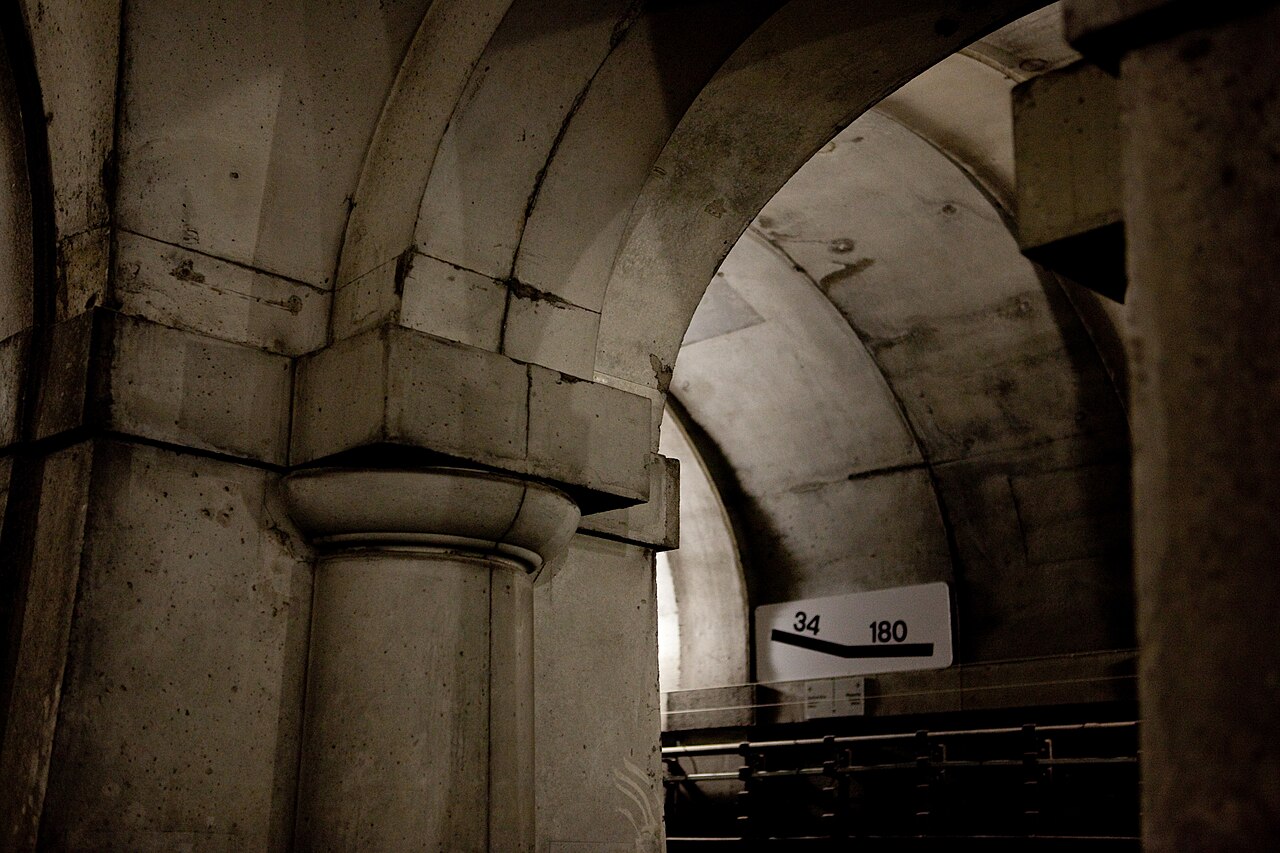
The tunnel interior features twin brick-lined arched passageways with characteristic horizontal and vertical white banding on the walls, a distinctive decorative element from its pedestrian era. The original pedestrian cross-passages connecting the two tunnels at intervals remain visible. The tunnel is now fitted with railway infrastructure including tracks, signalling equipment, and lighting necessary for modern train operations. The original ornate entrance shafts with their grand staircases have been modified for railway use. Visitors cannot access the tunnel on foot; it is exclusively for rail passengers.
2026-08-28 を確認しました
見学時間の目安
The Thames Tunnel extends approximately 396 metres beneath the River Thames. Its construction represented an extraordinary engineering achievement for the early nineteenth century, taking eighteen years to complete due to flooding incidents, financial difficulties, and the technical challenges of working in water-bearing strata. The tunnel diameter is approximately 11.6 metres. The railway journey through the tunnel takes roughly one to two minutes depending on train speed. The shallow depth beneath the riverbed was deliberately chosen to follow the geological layer of London Clay, which provided relative stability during construction.
2026-08-28 を確認しました
季節と混雑状況
The Thames Tunnel can be experienced by travelling on London Overground services between Rotherhithe and Wapping stations. Train services operate throughout the week, though specific frequencies vary by time of day and day of week. Operator-confirmed hours are Not recorded pending review. The tunnel itself has no independent visiting hours as it functions solely as a railway tunnel. Passengers wishing to experience the tunnel should consult current Transport for London timetables. The journey offers limited views due to speed and lighting, but remains historically significant.
2026-08-28 を確認しました
チケット
Travel through the Thames Tunnel requires a valid ticket for London Overground services between Rotherhithe and Wapping. Fares follow standard Transport for London zonal pricing, with the stations located in Travelcard Zone 2. Operator-confirmed prices are Not recorded pending review. Passengers may use Oyster cards, contactless payment, or paper tickets. No separate admission exists specifically for the tunnel. Visitors interested solely in the tunnel's history may find the fare disproportionate to the brief transit experience, though the broader London Overground network offers extensive connectivity.
2026-08-28 を確認しました
行き方
Access the Thames Tunnel via London Overground trains calling at Rotherhithe or Wapping stations. Rotherhithe station lies in the London Borough of Southwark, served by northbound trains toward Dalston Junction and southbound toward Clapham Junction, Crystal Palace, and West Croydon. Wapping station sits in the London Borough of Tower Hamlets. Both stations offer step-free access from street to platform. Alternative transport includes London Bus services to surrounding areas. The tunnel has no pedestrian, cycle, or vehicle access. River services on the Thames operate nearby but do not enter the tunnel.
2026-08-28 を確認しました
気をつけるべきこと
The tunnel offers minimal visibility from moving trains due to speed and interior lighting optimised for operations rather than sightseeing. Passengers should not expect to clearly observe architectural details during transit. Photography may attract attention from staff or fellow passengers in the confined carriage environment. The stations at either end have limited facilities. Visitors with historical interest should temper expectations: the tunnel's significance is engineering rather than aesthetic spectacle. Train doors open automatically; passengers must be prepared to alight promptly at these small stations. Crowding occurs during peak commuting periods.
2026-08-28 を確認しました
写真
Photographing the tunnel interior from moving trains presents considerable difficulty. Window reflections, motion blur, low lighting, and brief transit time combine to frustrate image capture. Flash photography is impractical and potentially disruptive. The most successful approach involves video recording with image stabilisation, accepting substantial grain. Station platforms at Rotherhithe and Wapping offer superior opportunities to photograph tunnel portals and architectural elements of the original entrance structures. The Brunel Museum at Rotherhithe provides additional photographic subjects related to tunnel history. No photography restrictions are prominently posted, but standard railway regulations apply.
2026-08-28 を確認しました
よくある質問
Can I walk through the Thames Tunnel?
No. The Thames Tunnel is not accessible to pedestrians. It functions exclusively as a railway tunnel for London Overground services.
Is there a museum about the Thames Tunnel?
The Brunel Museum at Rotherhithe, located near the original southern entrance shaft, covers the history of the tunnel and the Brunel family engineering legacy.
How long does the train take through the tunnel?
The journey through the Thames Tunnel takes approximately one to two minutes depending on train speed and service pattern.
Are there guided tours of the tunnel interior?
Not recorded. The tunnel operates as an active railway and has no provision for public access beyond regular passenger services.
What makes the Thames Tunnel historically significant?
It was the first tunnel successfully built beneath a navigable river using a tunnelling shield, establishing techniques that influenced subsequent tunnel engineering worldwide.
Can I see the original tunnel decoration?
The distinctive white banding on the brickwork remains visible from trains, though brief transit time and viewing conditions limit detailed observation.
どこにありますか
インタラクティブマップを読み込んでいます…
インタラクティブマップを読み込めませんでした。
近くの
計画に組み込む
外部リンク
最終更新日:
情報源: OpenStreetMap コントリビューター, Wikidata ·