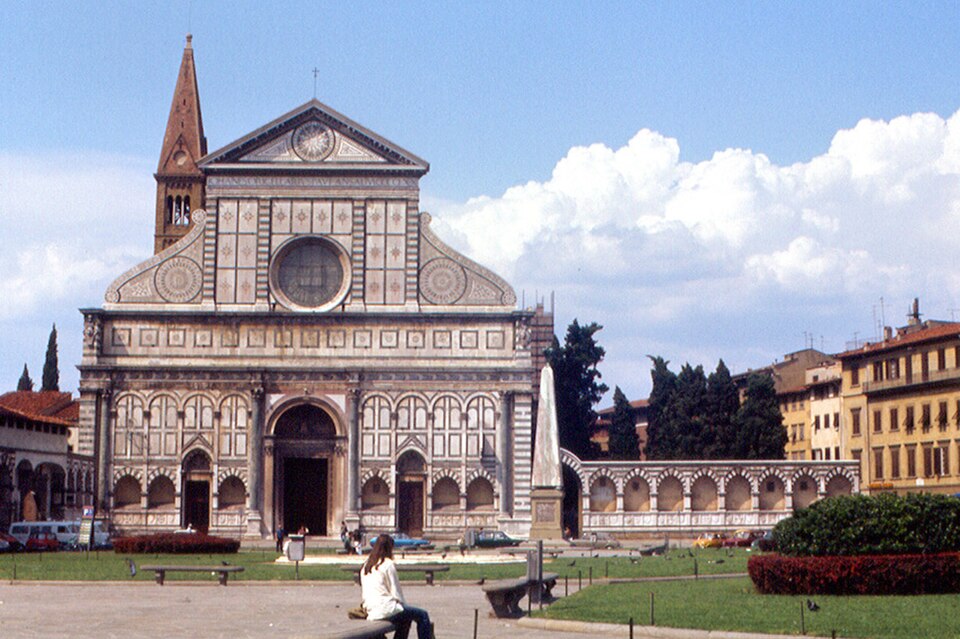
Museo di Santa Maria Novella is a museum and former Dominican convent complex attached to the Basilica of Santa Maria Novella in central Florence. The site encompasses historic cloisters, chapter houses, and religious spaces that formed part of one of the city's most important mendicant orders. The complex holds significant artistic and architectural heritage spanning several centuries. Visitors access spaces that were historically reserved for the monastic community, now opened for public understanding of Florentine religious and cultural history. The location stands near Florence's main railway station, which shares the church's name.
The museum contains notable fresco cycles and architectural elements from the Dominican convent. Key spaces include the Green Cloister, named for its verdant fresco borders, and the Spanish Chapel, decorated with fourteenth-century frescoes illustrating Dominican themes. The Chapter House and other monastic rooms preserve period features. Artworks by significant Florentine painters are present within the complex. The spaces demonstrate the integration of religious function and artistic patronage characteristic of medieval and Renaissance Florence. The museum presents these elements within their original architectural contexts rather than as isolated displays.
A thorough visit to Museo di Santa Maria Novella typically requires between sixty and ninety minutes. This duration allows adequate time to traverse the cloisters, examine the Spanish Chapel frescoes in detail, and appreciate the architectural transitions between spaces. Visitors with strong interest in fourteenth-century Florentine painting or Dominican history may prefer extended stays. The compact layout of the museum complex prevents the fatigue associated with larger institutions. Combined visits with the adjacent basilica church, which has separate access arrangements, would extend the total time commitment accordingly.
Operator-confirmed opening hours are Not recorded pending review. Visitors should consult official sources before planning attendance. The museum's interior spaces offer shelter from seasonal weather variations in Florence. Morning visits may provide quieter conditions for contemplation of the frescoes. The museum likely experiences increased visitor presence during peak tourist months from April through October. Religious observances or special events at the active church complex may occasionally affect museum accessibility. Advance verification remains essential for all planning purposes. Museo di Santa Maria Novella also earns time in a florence itinerary because A ranked visitor place retained from the city fact pack and matched exactly to the production city pool. Its value becomes clearer when the stop is compared with the surrounding streets and the other ranked places nearby.
Operator-confirmed admission prices are Not recorded pending review. Visitors should consult official sources for current fee structures. The museum may participate in combined ticketing arrangements with other city heritage sites, though specific programs are not documented here. Potential free admission categories for certain visitor demographics, common at Italian state museums, are not verified for this institution. Payment methods and advance booking requirements remain unconfirmed. Visitors should prepare for possible cash-only transactions typical of smaller Italian museum operations.
The museum occupies a central Florence location immediately adjacent to the Santa Maria Novella railway station, the city's primary train terminal. This proximity ensures straightforward access via regional and national rail services. Multiple urban bus routes serve the station vicinity. The historic city center location permits approach on foot from numerous central accommodations and landmarks. Motor vehicle access in the surrounding streets faces restrictions common to Florence's centro storico. Bicycle and pedestrian approaches follow standard patterns for the northern section of the historic core.
The museum complex contains historic floors and staircases that may present challenges for mobility-impaired visitors. Interior lighting levels vary across spaces to protect sensitive fresco surfaces. The integration of museum functions with active religious premises requires respectful conduct and appropriate dress. Some areas may be inaccessible due to conservation work or religious observance without advance notice. The proximity to the railway station necessitates awareness of urban pedestrian traffic and potential congestion at plaza entrances. Visitors should secure personal belongings in this high-footfall zone.
Photography policies within Museo di Santa Maria Novella are not specified in available sources. Visitors should observe posted regulations upon entry and seek staff guidance where notices are absent. Flash photography typically faces restriction in spaces containing light-sensitive frescoes. Tripod and professional equipment use generally requires advance authorization at Italian heritage sites. Respect for other visitors and the contemplative character of religious spaces should inform all photographic behavior. Reproduction of artworks for commercial purposes falls under separate legal frameworks not addressed here.
Checked 2026-08-26
Common questions
Is the museum the same as the basilica church for Museo di Santa Maria Novella in Florence?
No. The museum occupies former convent spaces adjacent to but distinct from the active Basilica of Santa Maria Novella. Separate access arrangements apply.
Can I visit the museum and church in one session for Museo di Santa Maria Novella in Florence?
Combined visits are physically convenient given proximity, but ticketing and access arrangements remain separate. Verify current procedures with official sources.
Are the famous frescoes inside the church or the museum for Museo di Santa Maria Novella in Florence?
The Spanish Chapel and Green Cloister fresco cycles are within the museum complex. The church contains its own significant artworks under separate administration.
Is advance booking required for Museo di Santa Maria Novella in Florence?
Advance booking requirements are not confirmed. Given central location and visitor interest, checking official sources for current protocols is prudent.
Does the museum have facilities for visitors with limited mobility for Museo di Santa Maria Novella in Florence?
Historic architecture including stairs and uneven surfaces may present difficulties. Specific accessibility provisions are not documented; direct inquiry recommended.
Are guided tours available for Museo di Santa Maria Novella in Florence?
Guided tour availability is not recorded. Visitors may find that the compact, interpretable spaces permit meaningful self-directed exploration.
Nothing non-essential is set before you choose, in regions where consent is required. If you decline, ads still appear but they are non-personalised, and analytics is switched off entirely.
.jpg)
.jpg)
_(3867483087).jpg)