Monumento storico · Rome
Ponte Fabricio
Fotografia

- Oggi
- Orari non registrati
- Durata della visita
- 45 min
- Accessibilità
- Non registrato
- Prezzo
- Non registrato
- Posizione
- Da non perdere · Sito del patrimonio
- Rango
- Classifica 68 di 6,547
Informazioni su Ponte Fabricio
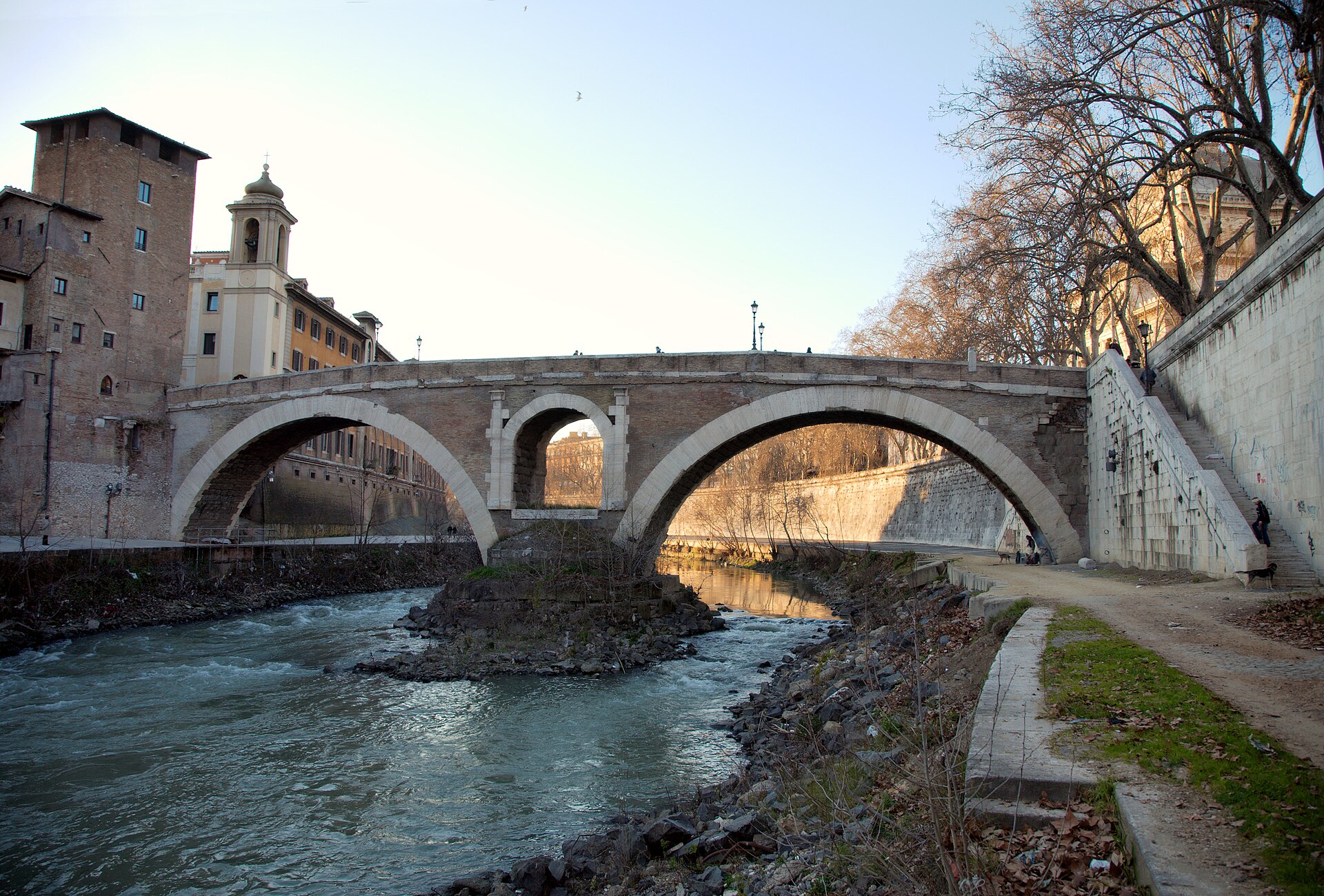
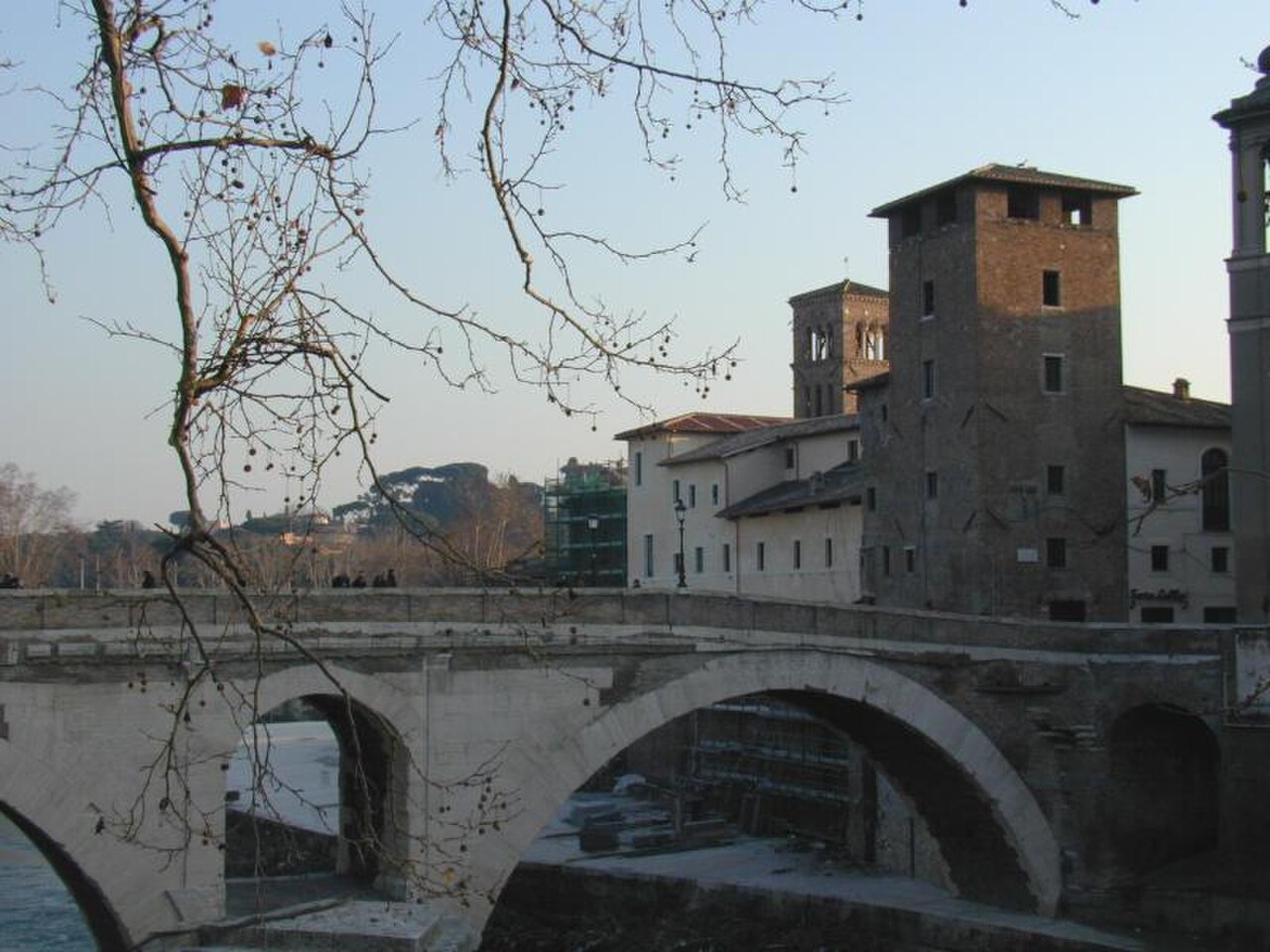
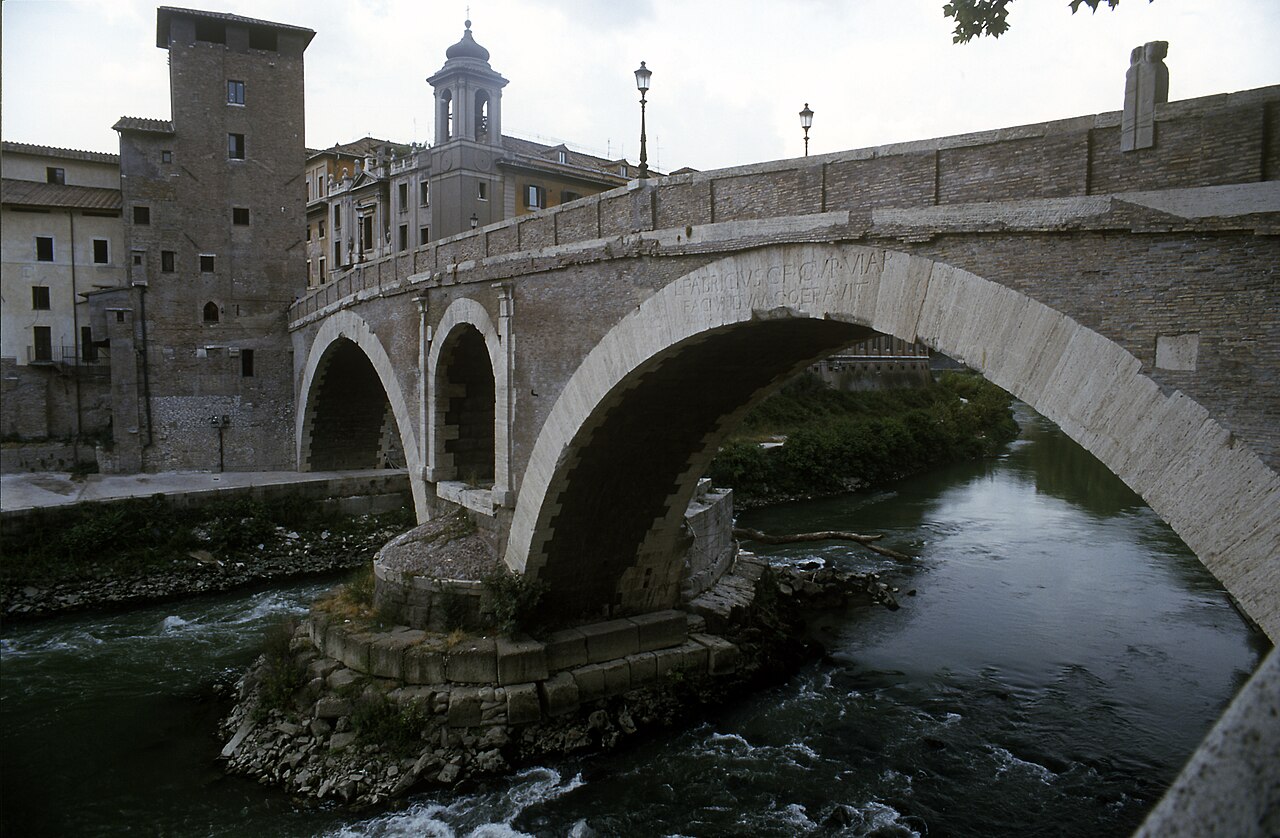
Pons Fabricius, known locally as Ponte Fabricio, is an ancient Roman bridge in Rome, Italy. It connects the east bank of the Tiber River to Tiber Island. Built in 62 BCE, it is the oldest surviving bridge in Rome that remains in its original state. The bridge was commissioned by Lucius Fabricius, a curator of roads, and has served pedestrians for over two millennia. Its enduring stone construction features two main arches and a smaller central relieving arch. The bridge stands as remarkable evidence of Roman engineering durability.
Controllato 2026-08-28
Cosa c'è dentro
The bridge itself contains no interior spaces or enclosed attractions. Visitors experience an open-air pedestrian crossing with original Roman stone fabric underfoot. Two prominent herms with four-faced herm pillars stand at the bridge entrance, though their specific historical attribution remains subject to scholarly discussion. The structure offers direct passage to Tiber Island, where the Basilica of St. Bartholomew and the church of San Giovanni Calibita are located. The bridge surface provides unobstructed views of the Tiber River and surrounding historic embankments.
Controllato 2026-08-28

Quanto tempo dedicare
A crossing of Pons Fabricius requires minimal time, typically five to ten minutes at a leisurely pace. Most visitors incorporate the bridge into broader explorations of Tiber Island or riverside walks rather than treating it as a standalone destination. Those interested in examining the stonework, inscriptions, and architectural details may pause for fifteen to twenty minutes. The bridge serves effectively as a brief but meaningful waypoint between Trastevere, the Jewish Ghetto, and Tiber Island attractions, rewarding attentive observation of its ancient construction.
Controllato 2026-08-28


Stagione e folla
Pons Fabricius functions as a public thoroughfare without controlled access. Operator-confirmed hours are Not recorded pending review. The bridge remains open continuously as a pedestrian route, though individual travelers should exercise standard urban caution during late-night hours. Seasonal considerations apply to Rome generally, with summer bringing intense heat and crowds, winter offering cooler temperatures and reduced foot traffic. Early morning and evening crossings provide atmospheric lighting conditions. Visitors should verify current circumstances through official municipal sources before planning specific visits. A flexible visit to Pons Fabricius leaves room to adjust for access conditions without relying on unverified schedules, prices or closure assumptions. Confirm practical details with the operator when available.
Controllato 2026-08-28
Biglietti
Pons Fabricius imposes no admission charge as a public pedestrian bridge. Operator-confirmed prices are Not recorded pending review. No ticketing infrastructure exists at this site. Visitors should anticipate no direct costs for crossing, though nearby attractions on Tiber Island or in surrounding districts may operate separate fee structures. Standard travel expenses for reaching the location apply. The bridge represents an accessible heritage element within Rome's urban fabric, freely available to pedestrians as part of the city's historic infrastructure network. Pons Fabricius is best treated as a distinct stop rather than a generic example of its category. Focus on the setting, surviving features and visitor route visible on arrival.
Controllato 2026-08-28

Come arrivare
The bridge sits centrally in Rome, accessible from multiple directions. From the east bank, approaches lead through the Jewish Ghetto district near the Theatre of Marcellus. From Tiber Island, the bridge forms the primary eastern connection. From Trastevere, the adjacent Ponte Cestio provides an alternative crossing. Walking remains the most practical approach through Rome's historic center. Public transport options serve the general area, though specific route details and stops require verification with current transit authorities. River-level paths along the Tiber embankment also permit approach.
Controllato 2026-08-28


A cosa prestare attenzione
Pedestrian congestion occurs regularly given the bridge's narrow width and popularity as a route to Tiber Island. Cyclists occasionally share the limited space, requiring awareness. The ancient stone surface may prove uneven or slippery in wet conditions; appropriate footwear supports secure footing. No protective barriers separate walkers from the river at all points. Visitors with mobility limitations should assess the approach gradients and surface conditions independently. General urban vigilance applies regarding personal belongings in this well-frequented tourist corridor. Night lighting is functional but not extensive.
Controllato 2026-08-28


Fotografia
Photography rules specific to Pons Fabricius are Not recorded pending review. The open public structure presents no obvious technical restrictions on personal photography. The bridge offers compelling subjects including ancient stonework, river views, Tiber Island approaches, and contextual cityscape compositions. Optimal natural light occurs during morning and late afternoon hours. Tripod use in the narrow passage may obstruct other pedestrians and should be exercised with consideration. Drone operation would fall under Italian national aviation regulations and Rome municipal restrictions, requiring appropriate authorization beyond any site-specific considerations.
Controllato 2026-08-28
Domande comuni
How old is Pons Fabricius for Pons Fabricius in Rome?
The bridge dates to 62 BCE, making it over two thousand years old. It stands as Rome's oldest surviving bridge in its original condition.
Can vehicles cross Pons Fabricius for Pons Fabricius in Rome?
No, the bridge serves pedestrians only. Its narrow ancient structure accommodates foot traffic exclusively.
Is there a fee to walk across for Pons Fabricius in Rome?
No admission charge applies. The bridge functions as free public infrastructure.
What does the inscription on the bridge say for Pons Fabricius in Rome?
Specific inscription content is Not recorded pending review from authoritative epigraphic sources.
Is the bridge accessible for wheelchairs for Pons Fabricius in Rome?
Specific accessibility assessments are Not recorded pending review. The ancient stone surface and approach conditions require individual evaluation.
Has the bridge ever collapsed or been rebuilt for Pons Fabricius in Rome?
The structure has remained in continuous service since antiquity without major reconstruction, though specific maintenance history is Not recorded pending review.
Dov'è
Caricamento della mappa interattiva…
Impossibile caricare la mappa interattiva.
Nelle vicinanze
Inseriscilo in un piano
Collegamenti esterni
Ultimo aggiornamento:
Fonte: Contributori di OpenStreetMap, Wikidata ·