St Patrick's Cathedral
Saint Patrick's Cathedral is the local name for St Patrick's Cathedral in Dublin, Ireland. It stands as a significant ecclesiastical building in the capital, associated with Ireland's patron saint.
- Must see
- Place of worship
Language · 1 published
City guide · Ireland
Dublin is a compact capital divided by the River Liffey, with most central sights within a practical walking area. The medieval and Georgian cores sit south of the river, while O’Connell Street and several cultural districts lie north. DART rail opens the coast in both directions, and Luas trams and buses cover trips beyond the centre. Keep the central day on foot and use rail for a dedicated coastal outing.
Ranked by importance — sitelinks, pageviews and heritage status, not editor preference.
50 places match
Category
Typical visit duration
Saint Patrick's Cathedral is the local name for St Patrick's Cathedral in Dublin, Ireland. It stands as a significant ecclesiastical building in the capital, associated with Ireland's patron saint.
Christ Church Cathedral is a historic cathedral in Dublin, serving as both a place of worship and a landmark of architectural significance. Founded in the medieval period, it stands as one of the city's two medieval cathedrals.
The Book of Kells is an illuminated manuscript Gospel book in Latin, containing the four Gospels of the New Testament. It is housed at Trinity College Dublin.
Phoenix Park is a large public park located west of Dublin city centre. It is one of the largest enclosed recreational spaces within any European capital city.
The National Gallery of Ireland is a major public art museum located in Dublin. It occupies a prominent position in the city centre, near Merrion Square.
The General Post Office stands on O'Connell Street in Dublin as one of Ireland's most recognisable civic buildings. Designed by Francis Johnston and completed in 1818, it serves as the headquarters of An Post, the Irish postal service.
Ha'penny Bridge is a historic pedestrian bridge spanning the River Liffey in Dublin city centre. Its local name and common name are identical: Ha'penny Bridge.
The National Botanic Gardens in Dublin is a botanical garden and scientific institution located in Glasnevin. Established in 1795, it serves as a centre for botanical research and conservation in Ireland.
Glasnevin Cemetery is a historic burial ground located in Dublin, Ireland. Established in 1832, it serves as the final resting place for many prominent Irish historical figures.
Molly Malone is a bronze statue located on Suffolk Street in Dublin city centre.
Merrion Square is a Georgian garden square in Dublin, Ireland, with a public park at its centre known as Merrion Square Park.
Iveagh Gardens is a public park located in Dublin, Ireland. The gardens were originally designed in the 19th century and are known for their Victorian landscape design.
The Hugh Lane Gallery is a municipal art gallery in Dublin, Ireland. Established through a bequest from Sir Hugh Lane, who perished aboard the RMS Lusitania in 1915, the institution occupies a purpose-built structure on Parnell Square North.
Farmleigh is a historic estate and official Irish State guest house located in the Phoenix Park area of Dublin. The property serves as a venue for state functions and is also open to public visitors.
The Casino at Marino is a small pleasure house located in the northern suburbs of Dublin, Ireland.
The National Library of Ireland is a cultural institution on Kildare Street in Dublin. It serves as the country's principal repository for Irish documentary heritage, holding extensive collections of books, manuscripts, newspapers, and visual materials.
Marsh's Library is a historic library in Dublin, Ireland, founded by Archbishop Narcissus Marsh in 1707. It was the first public library in Ireland and remains an independent institution.
Dublin City Hall is a civic building on Dame Street in Dublin, Ireland. Built in the late 18th century, it originally served as the Royal Exchange before becoming the seat of Dublin Corporation.
The Garden of Remembrance is a memorial garden in Dublin dedicated to those who gave their lives in the cause of Irish freedom.
The Irish National War Memorial Gardens are a commemorative landscape in Dublin, Ireland. Dedicated to the memory of Irish soldiers who died in the First World War, the gardens serve as a national monument.
The Gaiety Theatre is a historic theatre located on South King Street in Dublin, Ireland. Established in the 19th century, it stands as one of the city's prominent Victorian-era theatrical venues.
The National Concert Hall is Ireland's principal national venue for classical music and other live performances. Located in Dublin, it occupies a building that was formerly part of University College Dublin.
Saint Patrick's Park is a public park situated adjacent to St. Patrick's Cathedral in Dublin, Ireland. The green space provides a setting for the historic cathedral and serves as a recreational area for visitors and residents.
The National Leprechaun Museum is a visitor attraction in Dublin dedicated to Irish folklore and mythology, with particular emphasis on leprechaun legends.
Ashtown Castle is a tower house located within the grounds of the Phoenix Park in Dublin, Ireland. The structure represents a surviving example of medieval defensive architecture, characteristic of Irish tower houses built during the fifteenth and sixteenth centuries.
Castleknock Castle is a historic structure located in the Castleknock area of Dublin, Ireland. The castle stands as a remnant of medieval fortification within the broader Dublin region.
Drimnagh Castle is a Norman castle located in the Drimnagh suburb of Dublin, Ireland. It is the only remaining castle in Ireland still surrounded by a flooded moat.
The Abbey Theatre is a theatre located in Dublin, Ireland. It is the national theatre of Ireland and one of the country's most prominent cultural institutions.
Grange Abbey is a historic religious site located in Dublin, Ireland. The structure represents part of the country's extensive ecclesiastical heritage, with origins tied to medieval monastic settlement patterns in the region.
Magazine Fort is a historic fortification located in Dublin's Phoenix Park. Constructed in the eighteenth century, it served as a military storage facility for gunpowder and ammunition, giving the structure its distinctive name.
Dunsink Observatory is an astronomical observatory situated in the northern suburbs of Dublin, Ireland. Established in the eighteenth century, it holds historical significance as one of the oldest scientific institutions in the country.
Teeling Distillery, operating under the local name Teeling Whiskey Company, is a whiskey production facility and visitor attraction in Dublin. It represents a notable point of interest within the city's industrial and cultural heritage landscape.
Belcamp Park is a public park located in the northern suburbs of Dublin, Ireland. The park forms part of the green infrastructure serving the local residential communities in the area.
Bram Stoker Park is a public park in Dublin, Ireland, named after the celebrated Irish author Abraham Bram Stoker, best known for his 1897 Gothic novel Dracula.
Bushy Park is a public park located in the Terenure area of Dublin, Ireland. The park occupies a notable green space within the suburban landscape of Ireland's capital city.
Dubh Linn Garden is a public garden located in Dublin, Ireland. The name derives from the Irish Dubh Linn, meaning black pool, which is the historical origin of the city's name.
Ellenfield Park is a public park situated in Dublin, Ireland. The open space serves as a recreational amenity for local residents and visitors seeking outdoor leisure in the city.
Fairview Park is a public park located in the Fairview area of Dublin, Ireland. The park serves as a green space for the local community and visitors to the city.
Father Collins Park is a public park located in Dublin, Ireland. The park serves as a recreational green space for the local community and visitors to the area.
Griffith Park is a public park located in Dublin, Ireland. The park serves as a green space within the urban environment of the city. It is identified in OpenStreetMap data with the production identity way/132370759.
Herbert Park is a public park located in Dublin, Ireland. The park occupies land in the Ballsbridge area of the city. It was named after Sidney Herbert, 1st Baron Herbert of Lea.
Irishtown Nature Park is a public green space located in the Ringsend and Irishtown area of Dublin, Ireland. The park occupies land on the south side of Dublin's inner city, near the River Liffey estuary.
Source: OpenStreetMap contributors, Wikidata ·
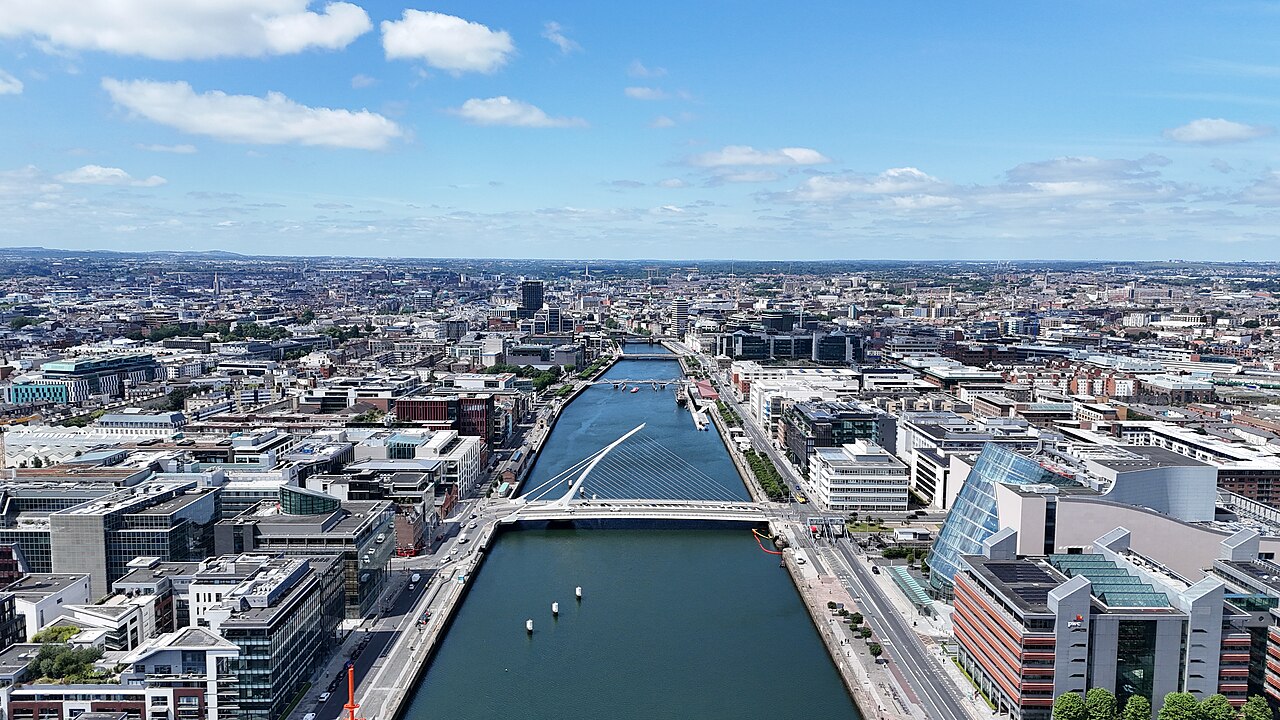
The River Liffey is Dublin’s clearest organising line. South of it, Trinity College, Temple Bar, Dublin Castle, the cathedrals and the Georgian squares form overlapping walking zones. North of it, O’Connell Street, the Custom House and the Docklands lead toward the coast. Phoenix Park lies west of the centre and needs its own transport connection. DART stations extend the visitor map to coastal places such as Howth and Dún Laoghaire without turning them into central stops.
Checked 2026-08-26
Walk through the central core, then use Dublin Bus, Luas, DART and commuter rail for longer journeys. Transport for Ireland presents these as the main visitor network and provides a combined journey planner. A Leap product can simplify payment across supported services, but route choice still matters because the two Luas lines, coastal DART and city buses serve different corridors. Give coastal destinations a separate half-day rather than combining opposite ends of the DART line.
Checked 2026-08-26
Two to three days cover the principal central sights at a comfortable pace. Add the third day for a DART trip along the coast, Phoenix Park or a less compressed museum route.
May through September offers longer daylight for walking and coastal trips. Dublin can be wet in any season, so a flexible indoor alternative matters more than choosing a supposedly rain-free month.
Yes. Most central sights on both sides of the Liffey fit into connected walking routes. Use public transport for Phoenix Park, farther neighbourhoods and coastal destinations rather than stretching one central itinerary.
Dublin Bus, Luas trams, DART and commuter rail form the main network. Transport for Ireland provides visitor guidance and a journey planner covering these services.
Treat the coast as a separate half-day or day. DART makes places north and south of the city accessible, but combining opposite coastal branches with a full central route creates unnecessary backtracking.
Set your days, your pace and the hours you actually want to be out. The planner works around closing days and travel time, and leaves room to eat.