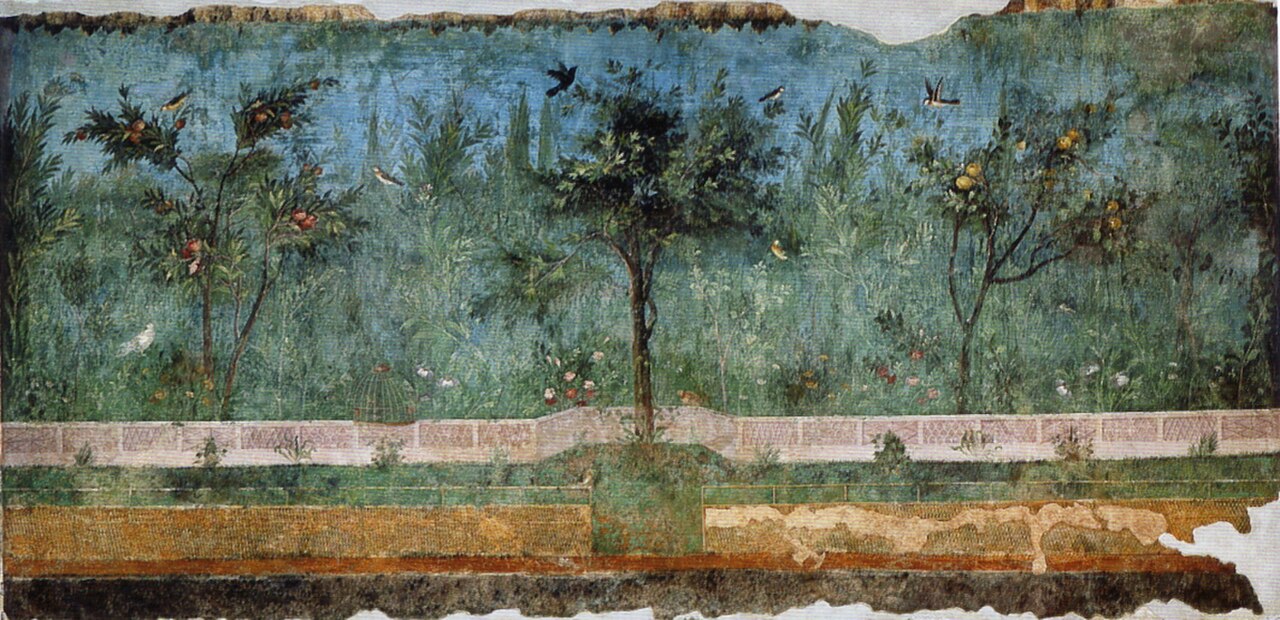
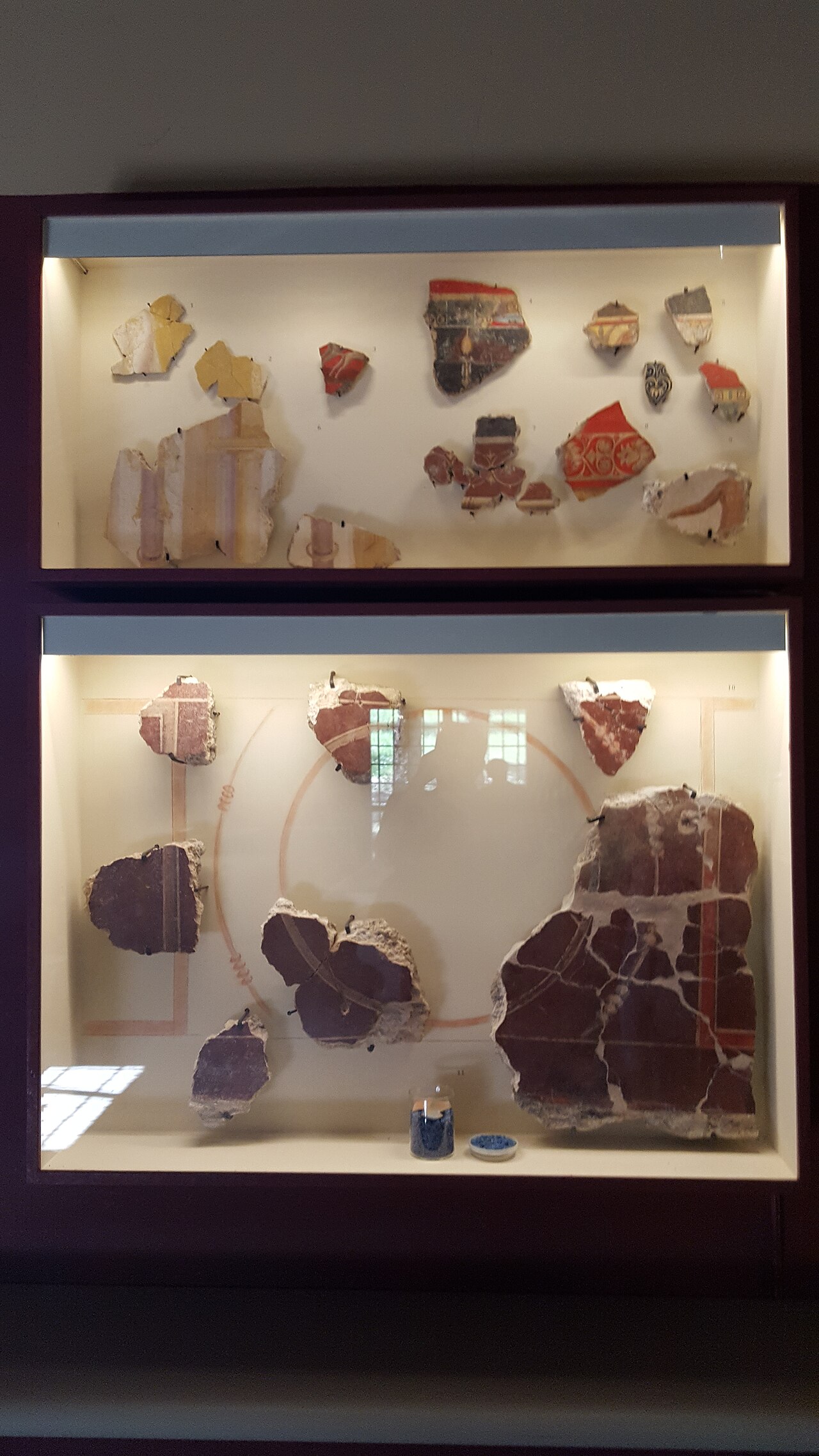
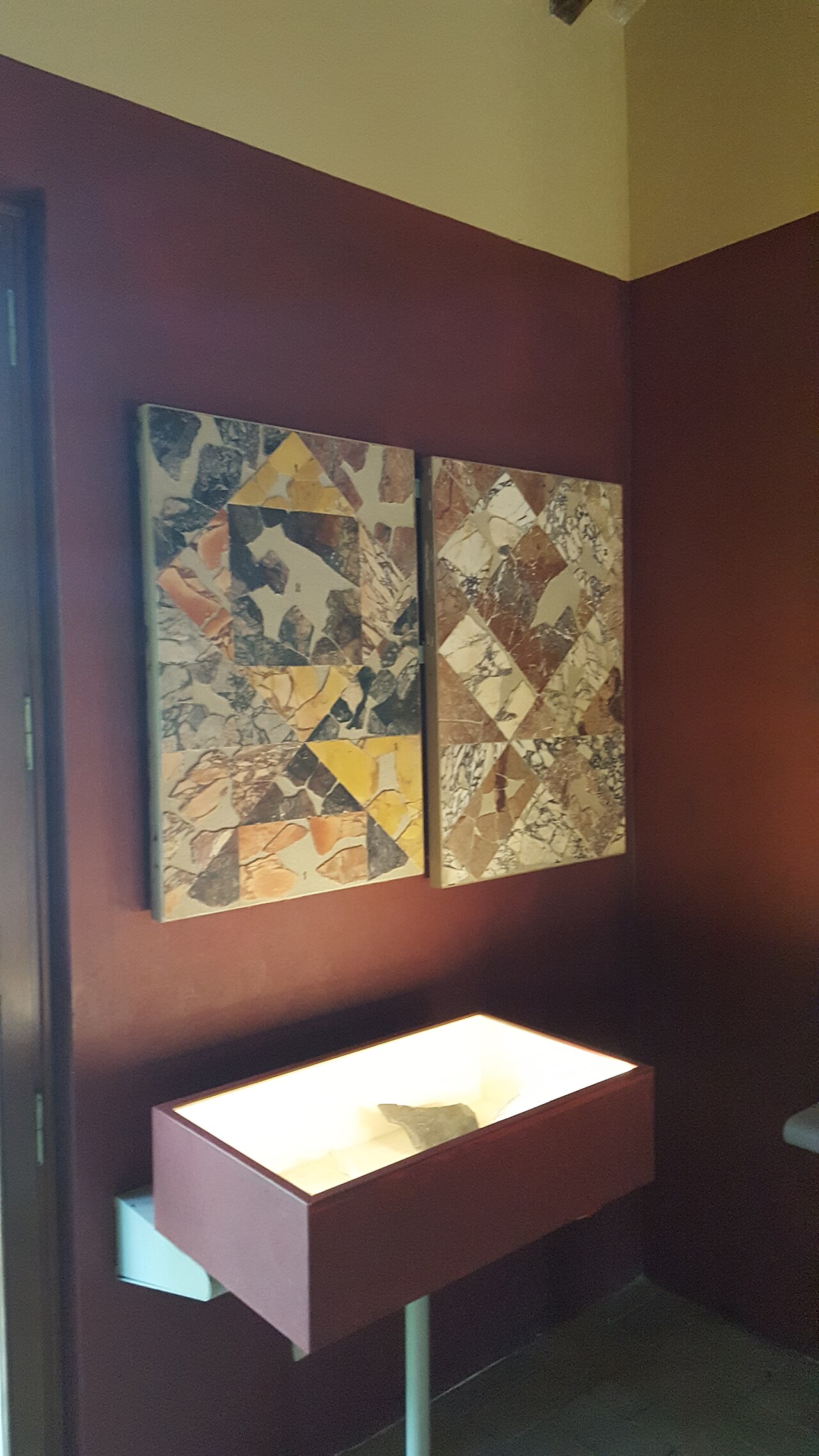
The Villa of Livia, known locally as Villa di Livia, is an ancient Roman villa associated with Livia Drusilla, wife of Emperor Augustus. Located in Rome, this archaeological site preserves significant remains of an imperial suburban residence dating to the late first century BCE and early first century CE. The villa is particularly celebrated for its underground garden room, the so-called Underground Garden Room or Sala Sotterranea, featuring remarkably preserved frescoes of a lush garden scene. The site represents an important example of Roman domestic architecture and decorative painting from the Augustan period.
The most notable feature is the Underground Garden Room, a subterranean dining chamber adorned with continuous frescoes depicting an idealized garden with trees, flowers, birds, and foliage. These paintings create an illusion of open air and natural abundance within the enclosed space. Archaeological remains of the villa's structures include portions of the residential complex and associated buildings. The frescoes demonstrate sophisticated Roman wall painting techniques and reflect the cultural emphasis on nature, otium, and the integration of landscape into domestic settings characteristic of elite Roman villas.
Visitor duration depends on individual interest in Roman art and archaeology. The compact nature of the accessible remains means the primary experience centers on viewing the Underground Garden Room and its frescoes. Most visitors spend time examining the painted details and contemplating the architectural context. Those with particular interest in Roman fresco techniques, Augustan-era art, or the history of Roman domestic life may wish to allocate additional time for careful observation. The site rewards attentive viewing of the garden frescoes' botanical and ornithological details.
Visitors should verify current opening schedules through official channels before planning their visit. The underground location of the principal fresco room means interior conditions remain relatively stable regardless of external weather. Rome experiences peak tourist visitation during summer months, particularly June through August, which may affect crowd levels at major archaeological sites. Considerations of personal comfort with Mediterranean climate conditions and preferences for quieter visiting periods may inform timing decisions independently of seasonal operational factors. Villa of Livia is best treated as a distinct stop rather than a generic example of its category. Focus on the setting, surviving features and visitor route visible on arrival. Check the operator's own site for the travel date before relying on a schedule or fare.
Visitors should consult official sources for current admission fees, any applicable concession categories, and reservation requirements. Some Roman archaeological sites require advance booking, particularly for small-group access to fragile environments like frescoed chambers. Payment methods and online ticketing availability should be confirmed directly with site administrators. Combination tickets or archaeological passes covering multiple Rome sites may or may not include this location; verification with issuing authorities is necessary before assuming access privileges based on other purchased credentials. Check the operator's own site for the travel date before relying on a schedule or fare.
The Villa of Livia is situated in the Prima Porta area of northern Rome. Public transport options serving this district include regional rail services and urban bus routes, though specific line numbers and schedules require verification with current transit authority information. The site is not in Rome's historic center, necessitating dedicated travel time from central accommodation. Visitors using private vehicles should investigate parking availability and any traffic restrictions in the area. The precise location and access point should be confirmed through official sources before departure, as archaeological sites may have non-obvious entrances.
The underground environment presents considerations regarding humidity, temperature variation, and limited ventilation compared to surface spaces. Visitors with respiratory sensitivities or mobility concerns should assess suitability beforehand. Low lighting conditions in the fresco room, necessary for preservation, may affect visibility and photography attempts. Respect for conservation requirements is essential; barriers and staff instructions protect fragile ancient surfaces. The site's archaeological nature means uneven surfaces, changes in level, and absence of modern amenities may characterize the visitor route. Appropriate footwear and attention to physical surroundings are advisable throughout.
Photography rules are Not recorded pending review. Many sites with ancient frescoes restrict or prohibit flash photography, tripods, and selfie sticks to prevent damage from light exposure, physical contact, and congestion. Visitors should seek explicit guidance from on-site staff regarding permitted equipment and techniques. The low-light conditions of the Underground Garden Room present technical challenges regardless of policy. Non-flash photography may still contribute to cumulative light exposure affecting pigment stability. Commercial or publication use of any images obtained requires separate authorization from cultural heritage authorities beyond standard visitor photography permissions.
Vérifié le 2026-08-28
Questions courantes
Is the Villa of Livia the same as Livia's villa at Prima Porta for Villa of Livia in Rome?
The site known as Villa di Livia or Villa of Livia is located in the Prima Porta area, and these designations refer to the same archaeological complex associated with Livia Drusilla.
Can I visit the Underground Garden Room freely for Villa of Livia in Rome?
Access conditions, including whether independent or guided entry is required, are Not recorded pending review. Visitors should confirm current access protocols with official sources.
Are the garden frescoes original for Villa of Livia in Rome?
The frescoes in the Underground Garden Room are ancient paintings from the Augustan period, though conservation interventions over time are typical for archaeological wall paintings of this age.
How does this site relate to the Ara Pacis museum for Villa of Livia in Rome?
Both date to the Augustan period, but they are distinct locations with separate administrative arrangements. The Ara Pacis is in central Rome; the Villa of Livia is in Prima Porta.
Is there a gift shop or café on site for Villa of Livia in Rome?
On-site visitor amenities are Not recorded pending review. Archaeological sites of this scale often have limited commercial facilities.
Can children visit the Villa of Livia for Villa of Livia in Rome?
Children may visit, though parents should consider whether the underground environment, conservation restrictions, and archaeological nature of the site suit their family's interests and capabilities.
Rien de non-essentiel n'est défini avant que vous ne choisissiez, dans les régions où le consentement est requis. Si vous refusez, les publicités apparaissent toujours mais elles ne sont pas personnalisées, et l'analyse est complètement désactivée.