
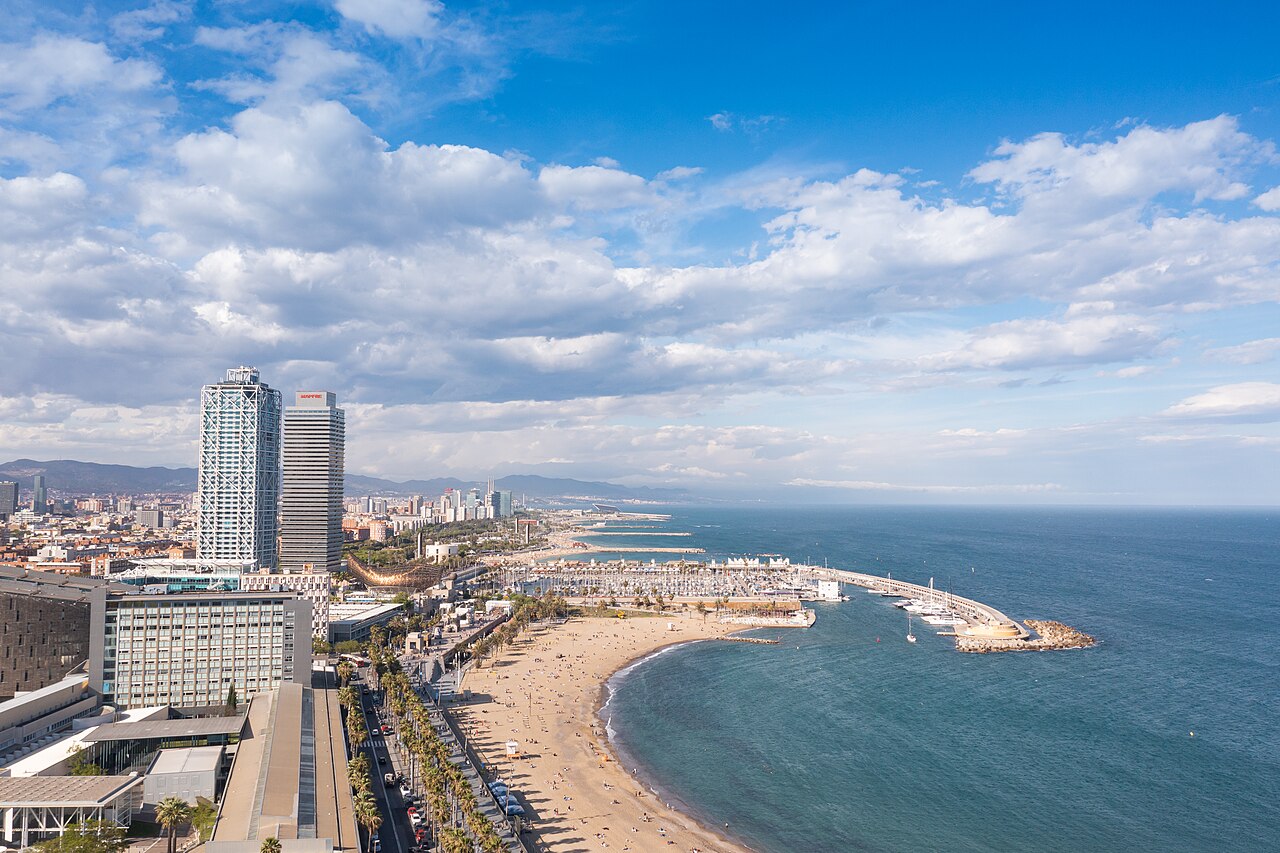
20 minutes à pied
plage du Somorrostro
- Élevé
- Site naturel
Langue · 11 publié
Lieu d'art et de culture · Barcelone
El bes de la mort

Ce lieu est un Œuvre d'art. Il a été fondé en 1930. Il est construit en marbre.
The Kiss of Death is a marble funerary sculpture located in Barcelona's Poblenou Cemetery. Created by Catalan sculptor Jaume Barba, though sometimes attributed to Joan Fontbernat, the monument dates to 1930. It depicts a winged skeleton kissing a young man, symbolizing death's embrace. The work belongs to the cemetery's remarkable collection of modernist and neoclassical funerary art. It serves as the grave marker for the Llaudet family and has become one of Barcelona's most visited cemetery monuments due to its striking emotional power and artistic craftsmanship.
Vérifié le 2026-08-28
The sculpture occupies a family mausoleum plot within Poblenou Cemetery, not an enclosed building visitors enter. The marble group shows a standing skeleton with widespread wings leaning forward to kiss the forehead of a reclining or seated male figure. The skeleton's bony fingers cradle the young man's head. The work exemplifies Catalan funerary art's dramatic symbolism. The surrounding cemetery contains numerous other notable sculptures and mausoleums from the nineteenth and early twentieth centuries, making the broader site significant for those interested than just this single monument.
Vérifié le 2026-08-28
A visit to The Kiss of Death itself requires only a few minutes of observation and contemplation. Most visitors combine this with exploration of Poblenou Cemetery's other artistic monuments, extending their stay to between thirty minutes and one hour. Cemetery enthusiasts and those studying funerary art may spend longer examining multiple tombs. The monument's compact size means there is no interior to explore. Weather conditions and personal interest in photographic documentation will influence total time spent at this specific location within the larger cemetery grounds.
Vérifié le 2026-08-28
Poblenou Cemetery generally operates as a public burial ground with daytime access, though specific opening and closing times should be verified before visiting. Early morning and late afternoon light may offer favorable conditions for viewing the marble's texture and details. Barcelona's climate permits year-round outdoor cemetery visits, though summer midday heat can be intense. Visitors should consider that this remains an active cemetery where funeral services occur, requiring respectful behavior regardless of when access is attempted. Check the operator's own site for the travel date before relying on a schedule or fare.
Vérifié le 2026-08-28
Public cemeteries in Barcelona typically do not charge admission fees for general visitation, though this should not be assumed without verification. No advance booking system for this specific monument is documented in available sources. Donation-based or guided tour options for Poblenou Cemetery may exist through third parties, but these are not confirmed here. Visitors should not expect ticketed entry infrastructure at the sculpture itself, which stands in open cemetery grounds accessible by walking paths. The Kiss of Death is best treated as a distinct stop rather than a generic example of its category. Focus on the setting, surviving features and visitor route visible on arrival. Check the operator's own site for the travel date before relying on a schedule or fare.
Vérifié le 2026-08-28
Poblenou Cemetery lies in the Poblenou district of Barcelona, in the city's eastern coastal area. The location is accessible via Barcelona's public transportation network, though specific bus, metro, or tram stops and walking distances are Not recorded pending review. The cemetery's main entrance provides pedestrian access to the grounds. Visitors should consult current local transit resources for routing from their departure points. Taxis and rideshare services can reach the cemetery perimeter. Bicycle and walking approaches from nearby neighborhoods are feasible depending on visitor location and physical capability.
Vérifié le 2026-08-28
This is an active cemetery requiring dignified conduct at all times. Visitors may encounter funeral processions, grieving families, or maintenance activities. The monument stands exposed to weather; marble surfaces may be slippery when wet. Path conditions throughout the cemetery vary. There is no shelter at the sculpture itself. Visitors should carry water and sun protection during warm periods. The emotional intensity of the artwork's subject matter may disturb sensitive viewers. Photography of people mourning or of specific graves beyond the Llaudet monument without clear permission would violate respectful cemetery etiquette.
Vérifié le 2026-08-28
Photography rules are Not recorded pending review. Visitors should assume that respectful, non-commercial photography of the monument itself is permitted while exercising discretion regarding other graves and any people present. Tripods and elaborate equipment may attract scrutiny or restrictions. Flash photography is generally unnecessary outdoors and potentially disruptive. The sculpture's detailed marble surfaces and dramatic composition reward careful attention to lighting angles. Drone use would require explicit authorization and is unlikely to be permitted over cemetery grounds. Commercial or published photography may require separate permissions from cemetery administrators or cultural heritage authorities.
Vérifié le 2026-08-28
The sculpture is attributed to Jaume Barba, though some sources mention Joan Fontbernat. Attribution details are not fully resolved in available records.
Specific operating hours and closure days are Not recorded pending review. Visitors should verify current access times before traveling.
The monument is an exterior sculpture on a family plot, not a building with interior access. There is no enclosed space to enter.
Public cemeteries in Barcelona typically do not charge general admission, but this should be verified. Check the operator's own site for the travel date before relying on a schedule or fare.
The monument is documented at OpenStreetMap node 4442236076. Cemetery maps or staff assistance may help locate it among numerous tombs.
The skeleton imagery and death theme may disturb young or sensitive viewers. Parental discretion is advised based on individual child temperament.
Chargement de la carte interactive…
La carte interactive n'a pas pu être chargée.

Dernière mise à jour:
Source: Contributeurs OpenStreetMap, Wikidata ·