City guide · Denmark
Copenhagen
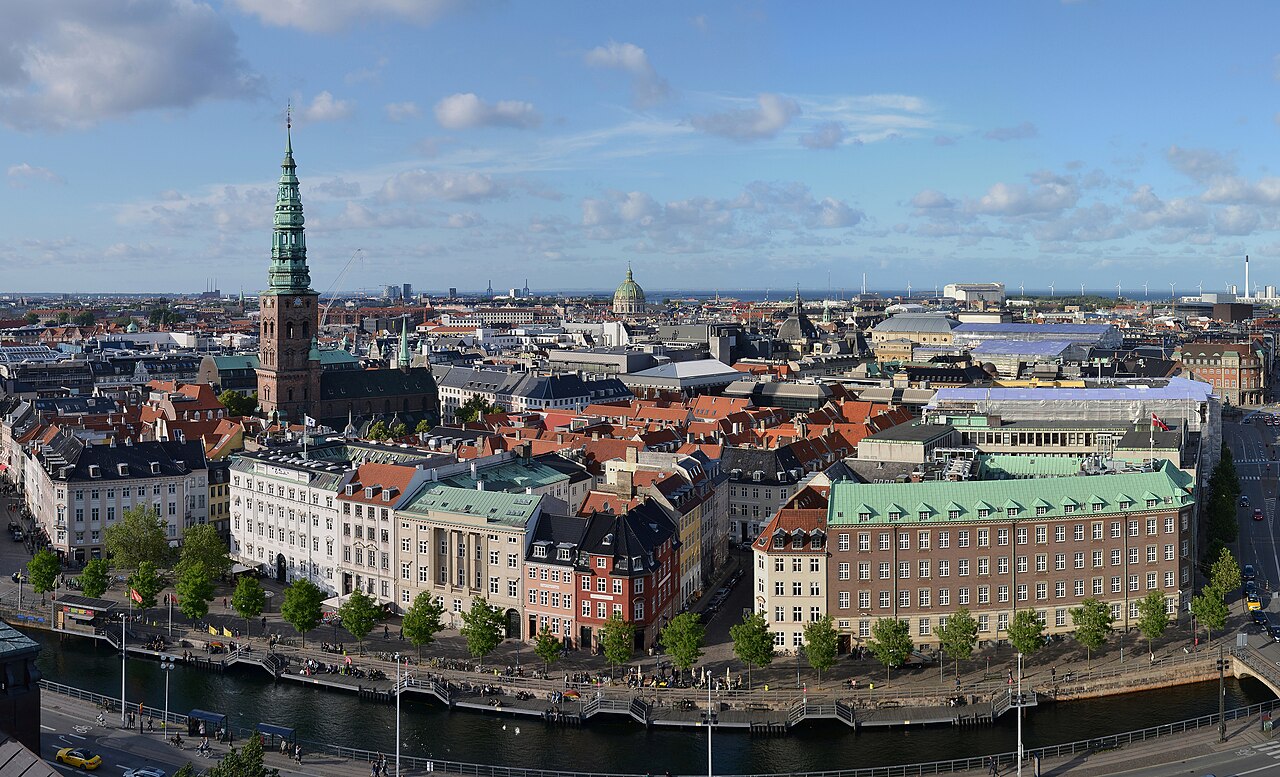

Copenhagen's compact centre sits around Indre By, with the harbour separating it from Christianshavn and Amager. Frederiksberg lies west as a separate municipality inside the urban fabric, while Norrebro and Osterbro extend north of the centre. Major visitor areas are connected by metro, trains, buses and cycle routes, and most central clusters remain practical to explore on foot.
Practical information
Practical information
- Language spoken
- Danish
- National practical orientation; regional and minority languages may also be used
- Dialling code
- +45
- International calling code; local area and mobile prefixes still apply
- Currency
- Danish krone (DKK)
- Use the official local currency; card acceptance varies by place
- Emergency number
- 112
- Use only for an emergency; tourist assistance may use a separate number
- Plug type
- Type C, E, F and K · 230 V
- Check that chargers support the recorded voltage before using an adapter
- Tap water
- Safe from the mains
- Public drinking water is monitored by Danish authorities
Planning a visit
- Seasonal closure recorded
- No data recorded for this month
- The current month
- Suggested stay
- Not recorded
- Getting around
- Walking, cycling, metro, train and bus
- January: seasonal closure recorded
- February: seasonal closure recorded
- March: seasonal closure recorded
- April: seasonal closure recorded
- May: seasonal closure recorded
- June: seasonal closure recorded
- July: seasonal closure recorded
- August: seasonal closure recorded — this month
- September: seasonal closure recorded
- October: no seasonality data recorded
- November: no seasonality data recorded
- December: seasonal closure recorded
Top things to see
Ranked by importance — sitelinks, pageviews and heritage status, not editor preference.
Filter the list
0 places match
0 places match
Nothing in Copenhagen matches all of those filters
The list is built from real place data, so an empty result means the combination genuinely has no match — not that the page failed. Loosen one filter and the ranking returns.
Clear all filtersSource: OpenStreetMap contributors, Wikidata ·
How the city is laid out
Indre By contains the historic centre, main shopping streets, palace district and inner harbour. Christianshavn sits across the water, Vesterbro lies west of Central Station, and Norrebro and Osterbro extend north. Frederiksberg forms a green western district with its own centre. The harbour is both a boundary and a transport corridor, so combine waterfront sights by side before crossing repeatedly.
Checked 2026-08-26
Getting around
Walk or cycle for short central journeys and use metro, trains and buses for longer trips. Visit Copenhagen states that the metro operates throughout the day and night and connects the centre with major neighbourhoods and the airport. Harbour buses are part of public transport and serve waterfront journeys. Buy the correct ticket before boarding and use the journey planner for zone-dependent trips.
Checked 2026-08-26
Common questions
How many days should I spend in Copenhagen?
A fixed duration is not recorded. Plan by cluster: Indre By, Christianshavn and the harbour, then Vesterbro, Norrebro, Osterbro or Frederiksberg according to interest.
Can I walk around central Copenhagen?
Yes. Indre By and the inner harbour are compact enough for walking. Cycling and public transport are useful when moving between outer neighbourhoods or across the wider city.
Does Copenhagen have an all-night metro?
Yes. Visit Copenhagen states that the metro operates throughout the day and night, connecting the centre with major neighbourhoods and Copenhagen Airport.
Are harbour buses part of public transport?
Yes. Harbour buses use the public transport system and provide a practical waterfront connection as well as a view of the city from the water.
How do I reach central Copenhagen from the airport?
Metro and regional trains both connect the airport with the city. The better choice depends on the destination neighbourhood, so check the official journey planner before departure.
Turn this list into a plan
Set your days, your pace and the hours you actually want to be out. The planner works around closing days and travel time, and leaves room to eat.