

.jpg)
.jpg)


2 min walk · Mariahilf
Naschmarktkapelle
- Notable
- Place of worship
Language · 1 published
Art and culture venue · Mariahilf, Vienna

The Theater an der Wien is where Fidelio, the Fifth Symphony and The Merry Widow were first heard, and it is still working.
Emanuel Schikaneder opened it on 13 June 1801. He had written the libretto of The Magic Flute and played Papageno in it, and he built this house on the profits.
It was the most lavishly equipped and one of the largest theatres of its age.
After the State Opera was bombed it served as the opera's temporary home from 1945 to 1955. Since 2006 it has been an opera house again with its own company.
Checked 2026-08-23 · Source
A programme of first performances that no other building in Europe can match.
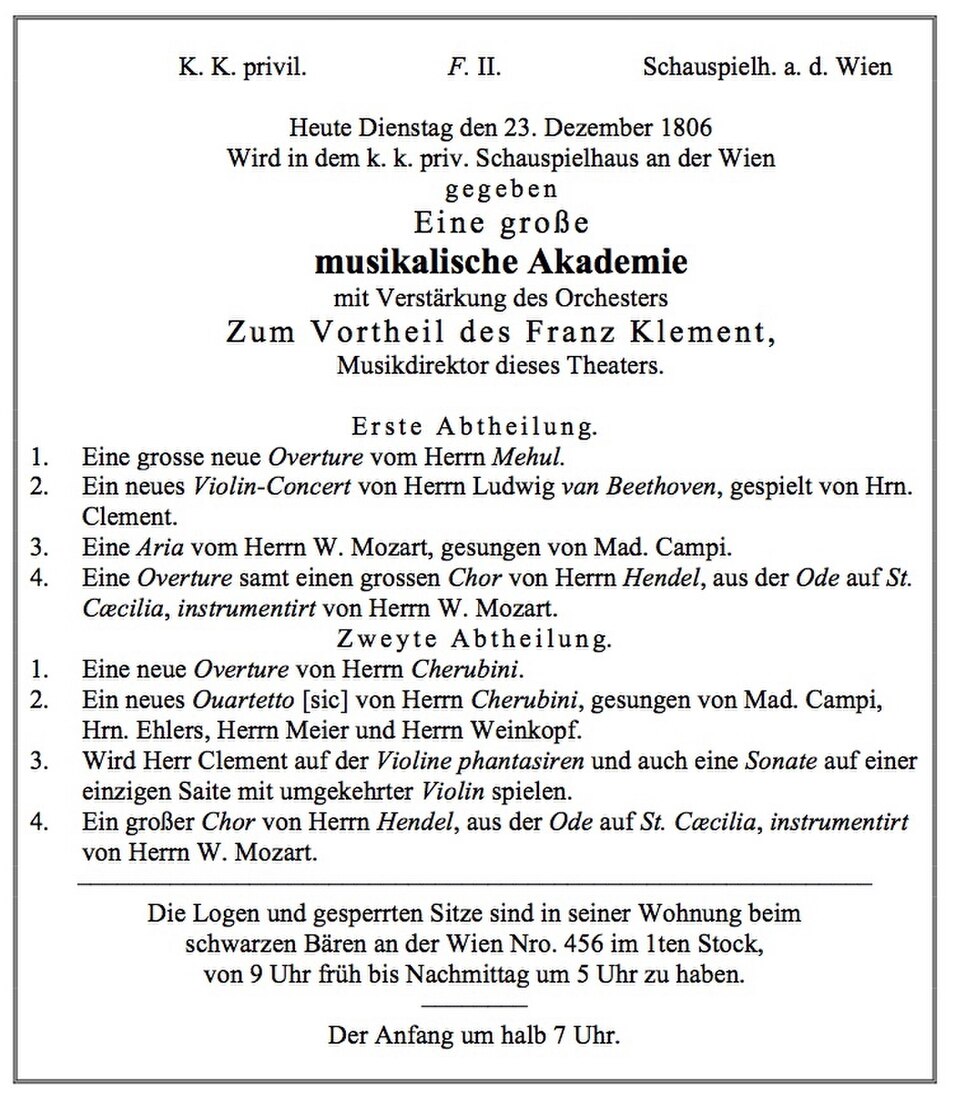
Beethoven's Fidelio was premiered here on 20 November 1805. On 22 December 1808 the Fifth and Sixth Symphonies and the Violin Concerto were all given their first performances in a single concert in this room.
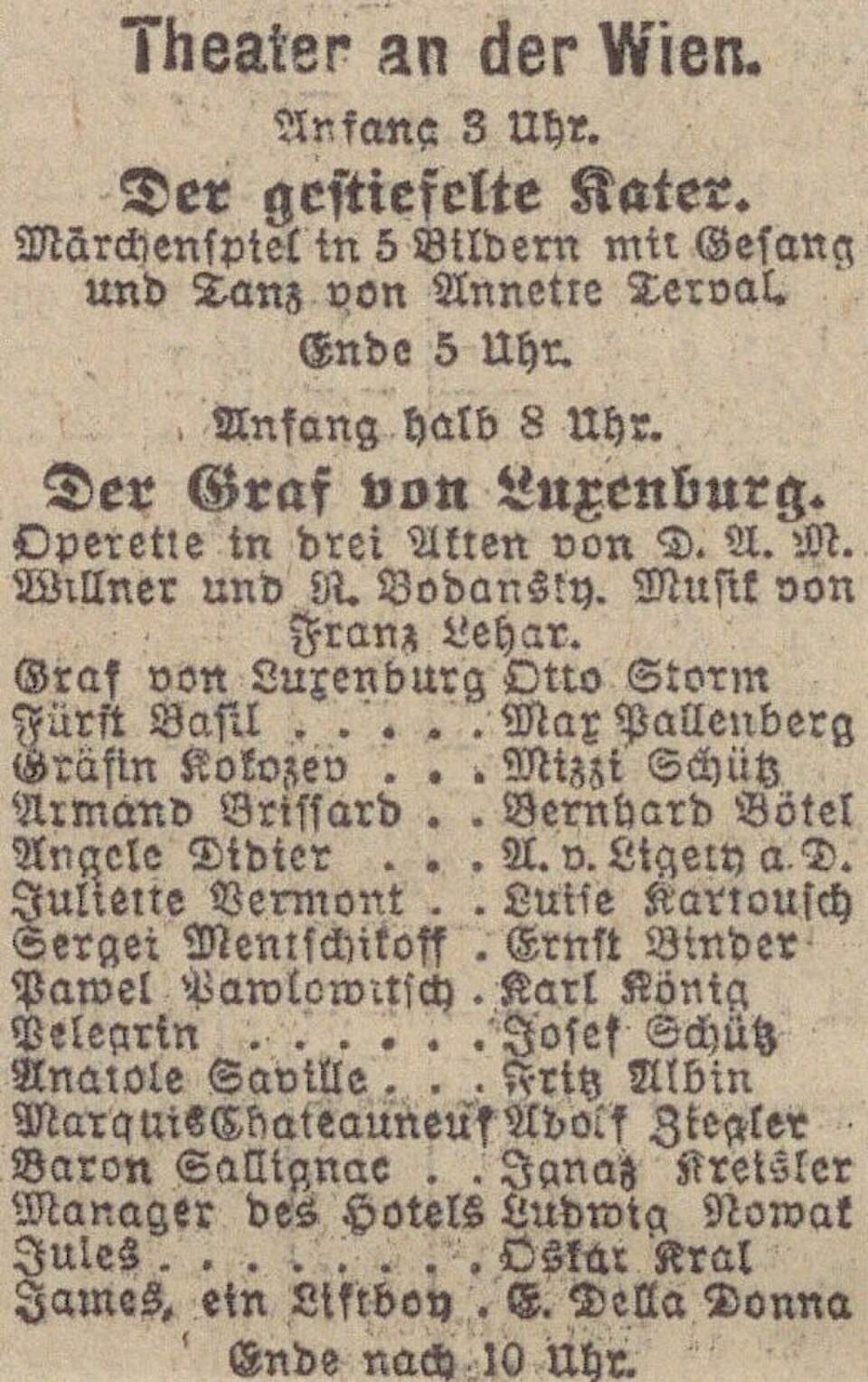
Johann Strauss II's Die Fledermaus followed on 5 April 1874 and Franz Lehár's The Merry Widow on 30 December 1905.
Little of the original Empire building survives. The Papagenotor — the Papageno Gate, with Schikaneder himself shown as Papageno from The Magic Flute — does, and it is the piece worth walking round the block for.
The company now programmes Baroque opera, contemporary work and Mozart.
Checked 2026-08-23 · Source
An evening. There is no daytime visit worth making.
The building is a working opera house and what it offers is performances; the historic interest is in what happened in the room rather than in anything on display.
The Papagenotor on the Millöckergasse takes two minutes and can be seen at any hour.
The Naschmarkt runs along the front of the theatre and is an hour in itself — the city's main market, open six days a week.
Arriving thirty minutes before curtain is worth doing; the house is small and the foyers fill quickly once the bell goes.
Checked 2026-08-23 · Source

During the season, for a performance.
The company specialises in Baroque opera, contemporary work and Mozart, which is a different repertoire from the State Opera's and a smaller house to hear it in.
The theatre was closed for renovation from 2022 and reopened in 2024, so information published before that is unreliable.
The Naschmarkt outside is closed on Sundays, which changes the character of the whole street.
The company plays through the winter and into early summer, which is also when the Wienzeile is at its least pleasant to walk — arriving by U-Bahn rather than on foot is the sensible choice in bad weather.
Checked 2026-08-23 · Source
Tickets are sold by performance through the theatre. Current rates are not published on the sources this page uses and are not reproduced here.
The house is smaller than the State Opera, which makes even the cheaper seats close to the stage.
The costumed touts working the Kärntner Straße are not selling tickets to this theatre either; they sell tourist concerts in other venues.
Checked 2026-08-23 · Source

The 6th district, Mariahilf, on the Linke Wienzeile beside the Naschmarkt.
Kettenbrückengasse on U-Bahn line U4 is three minutes away, at the far end of the market. Karlsplatz on the U1, U2 and U4 is a ten-minute walk along the market from the other end.
The U-Bahn has five lines and 109 stations over 83.9 km, running from about 05:00 to 01:00 and all night at weekends.
Checked 2026-08-23 · Source
There is no museum here and no daytime tour on ordinary days. Visitors arriving to see where Fidelio was premiered find a closed stage door.
The theatre closed for renovation in 2022 and reopened in 2024; older visiting information is out of date.
The main entrance is on the Linke Wienzeile and the Papagenotor is round the corner on the Millöckergasse, which catches people out.
Latecomers are not admitted until an interval.
Photography during performances is prohibited.
Checked 2026-08-23 · Source

The Papagenotor is the photograph: Schikaneder as Papageno above the door, in the street round the side. It is in shadow for most of the day and is best in flat light.
The main front on the Linke Wienzeile is a plain nineteenth-century façade on a busy road and gives nothing.
The Otto Wagner Majolikahaus and the golden Medallion House, two doors along the same street, are the photographs most people actually come to this stretch for.
Photography during performances is prohibited.
Checked 2026-08-23
Beethoven's Fidelio on 20 November 1805, and his Fifth and Sixth Symphonies and Violin Concerto in one concert on 22 December 1808. Die Fledermaus followed in 1874 and The Merry Widow in 1905.
Emanuel Schikaneder, who wrote the libretto of The Magic Flute and played Papageno. It opened on 13 June 1801.
The Papageno Gate, on the Millöckergasse round the side of the building, showing Schikaneder himself as Papageno. It is one of the few original parts left.
Yes. It housed the State Opera from 1945 to 1955 after the bombing, and since 2006 it has had its own company, programming Baroque opera, contemporary work and Mozart.
There is no museum and no ordinary daytime tour. The way in is a performance ticket.
Yes — for renovation from 2022, reopening in 2024. Information published before that is unreliable.
Loading the interactive map…
The interactive map could not be loaded.
Last updated:
Source: OpenStreetMap contributors, Wikidata ·