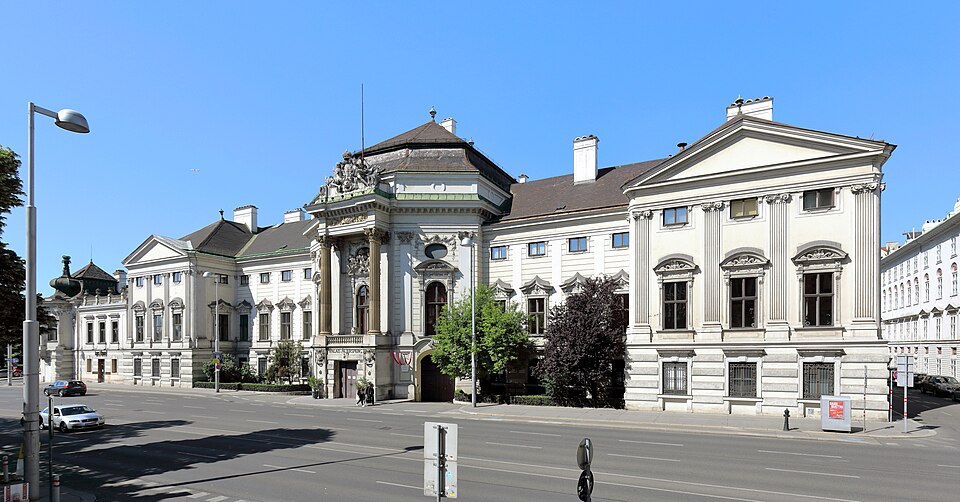
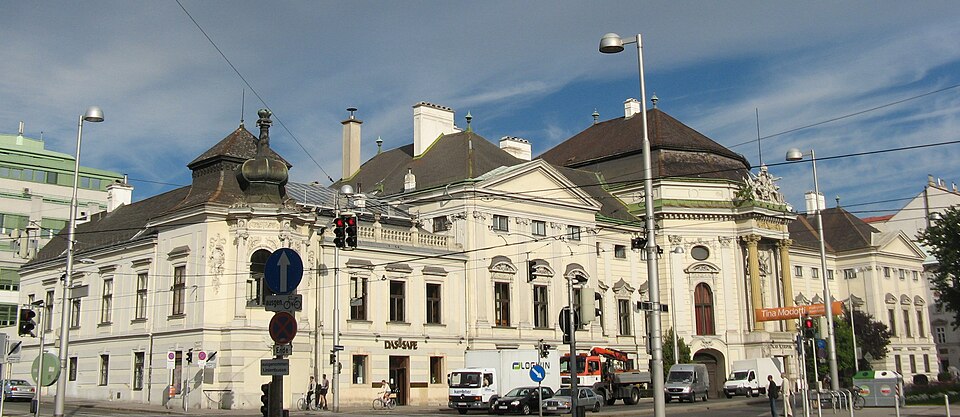
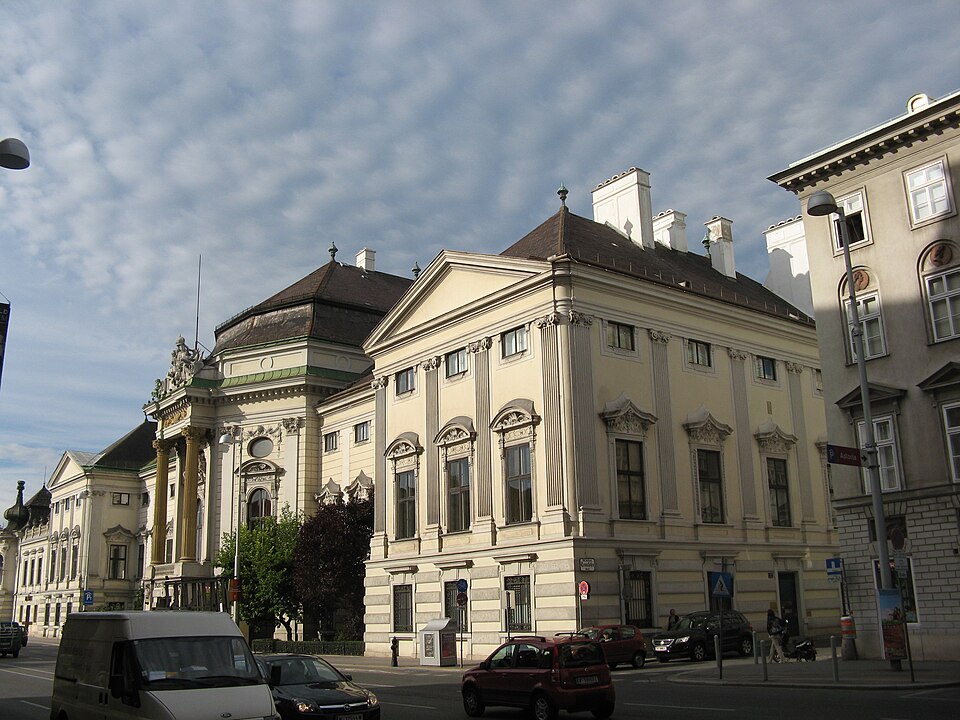
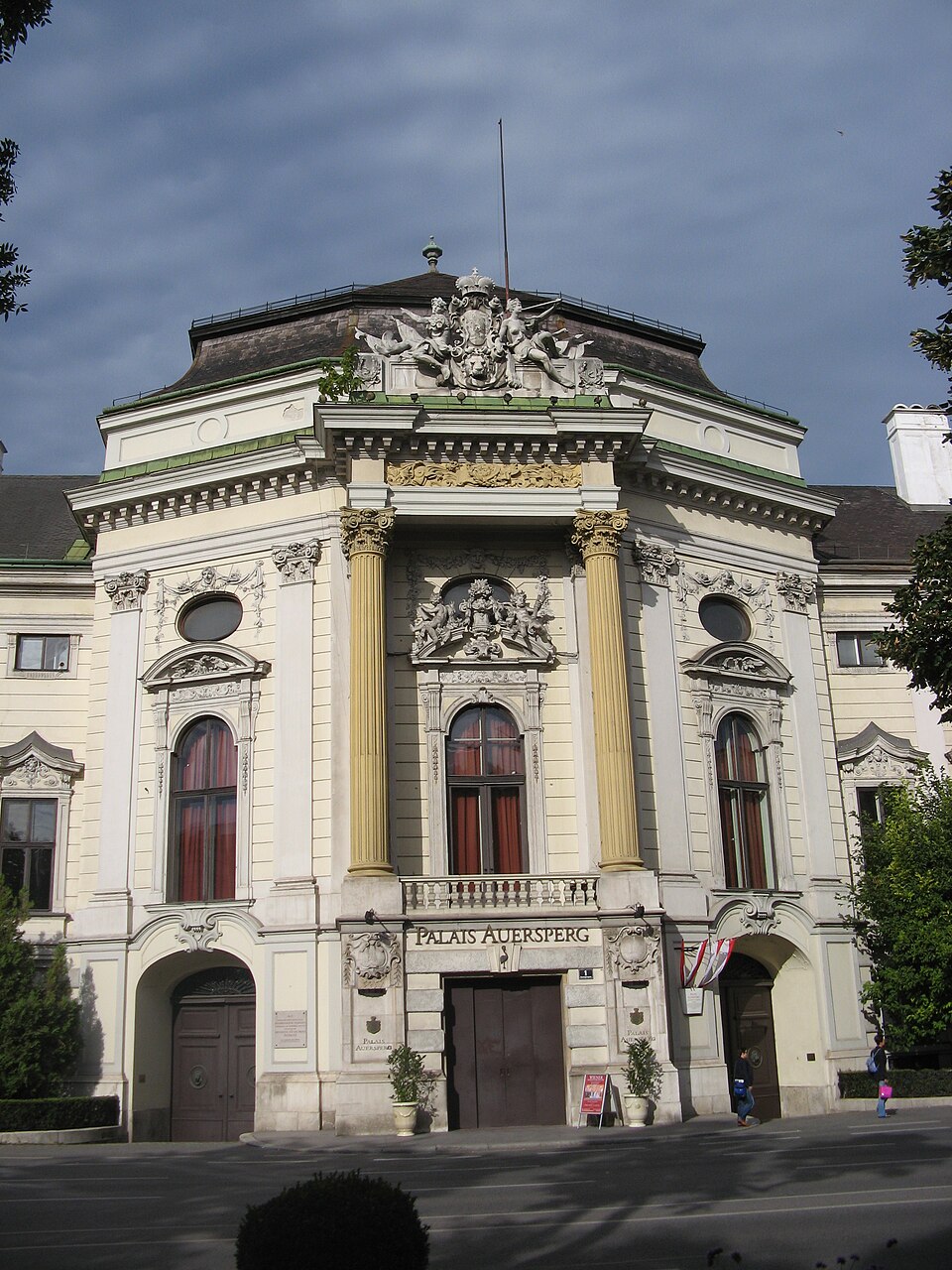
Palais Auersperg is a Baroque town palace near the Volkstheater in Vienna's Josefstadt district, built in the early eighteenth century for the Auersperg family, one of the old Austrian aristocratic houses, and remaining in family hands to this day. Unlike many of the Innere Stadt's town palaces, which were subdivided into offices or apartments over the twentieth century, Auersperg has kept an intact suite of ceremonial rooms, including a mirrored ballroom, that still function as they were built to, rather than as a converted or reconstructed event space. Its survival as a single-family holding through two world wars and the interwar break-up of much of Vienna's aristocratic property is itself part of what makes the interior unusually complete for a Baroque town palace of its size. The palace stands close to the Volkstheater and to the Rathaus district, a stretch of the Ring built up in the later nineteenth century, and Auersperg's own eighteenth-century origin predates most of its immediate neighbours by well over a hundred years.
The palace remains a private residence for most of the year, and its rooms are not on public display outside performances. Its mirrored ballroom and adjoining salons are used for regularly staged classical concerts performed by a resident chamber orchestra, and it is this concert programme, not a museum tour, that gives an ordinary visitor their only route inside. Adjoining rooms beyond the ballroom, including smaller salons used historically for receptions before or after a formal evening, remain part of the family's private quarters and are not included in the concert circuit at all. The mirrored hall itself is original to the eighteenth-century build rather than a later restoration copy, which the orchestra's own promotional material for the venue makes a point of noting.
A ticketed evening concert runs about ninety minutes to two hours including an interval, on the promoter's own schedule; there is no shorter walk-through option, since the palace has no separate public tour distinct from the concert programme itself, and no arrangement exists for a brief look at the ballroom outside a full concert booking, and a visitor with limited time should treat the full concert length as the only realistic way to see the room at all.
Concerts run on a seasonal calendar set by the resident orchestra, typically several evenings a week through most of the year with a reduced schedule at the height of summer; Not recorded: a fixed weekly night, since the calendar is published concert by concert rather than as a standing weekly slot.
Entry is by concert ticket only, bought from the orchestra's own box office or site; there is no walk-in admission to see the rooms without a concert ticket, and no separate lower-priced viewing-only ticket exists for the ballroom on its own.
The palace sits a short walk from the Volkstheater U-Bahn station on lines U2 and U3, and from the Rathaus tram stop on the Ring lines. It is within easy walking distance of the Parliament and the Rathaus for a visitor combining a Ring-district evening, and the Museumsquartier is a further ten-minute walk beyond that for anyone extending an afternoon into the same evening out.
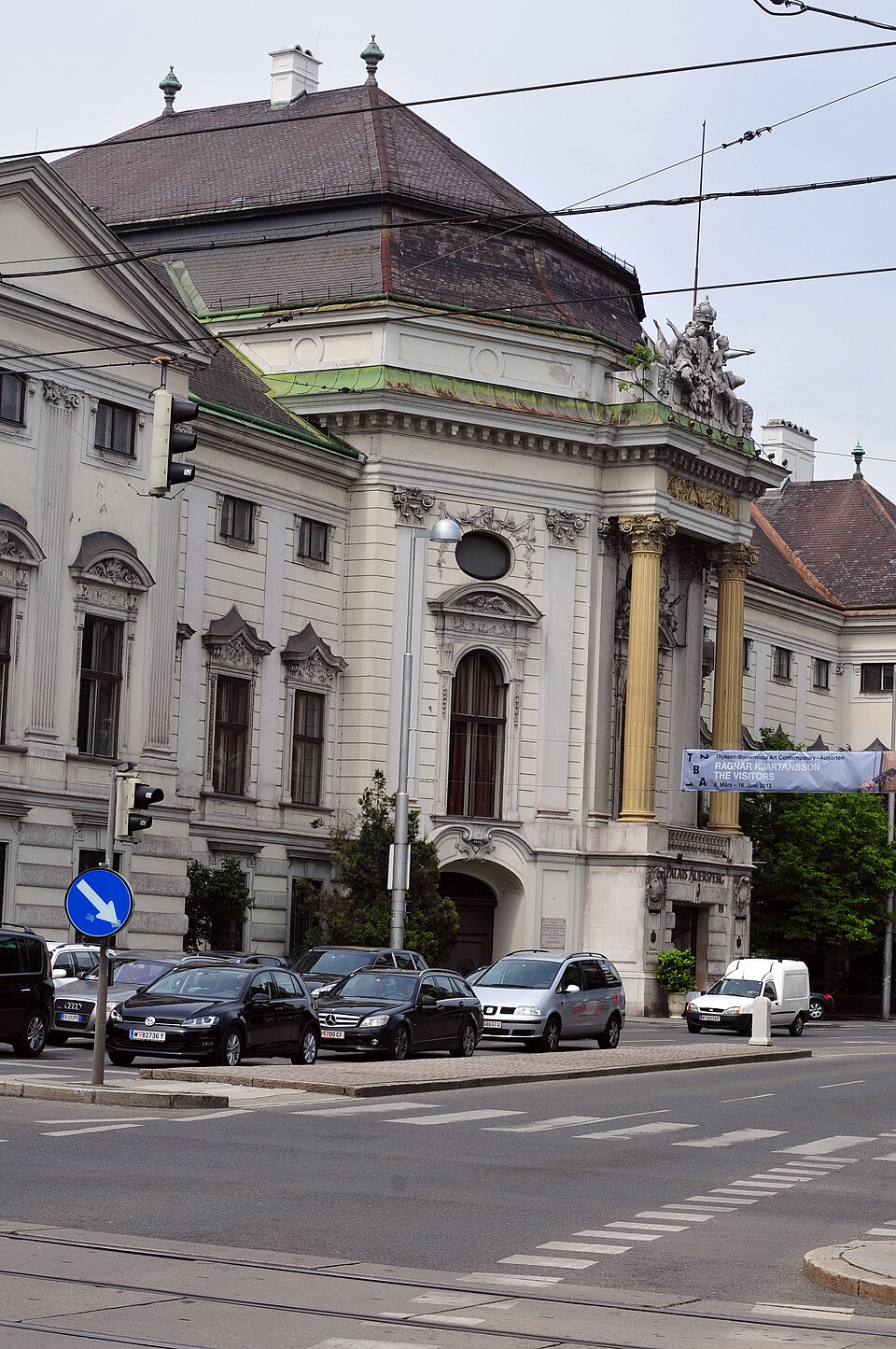
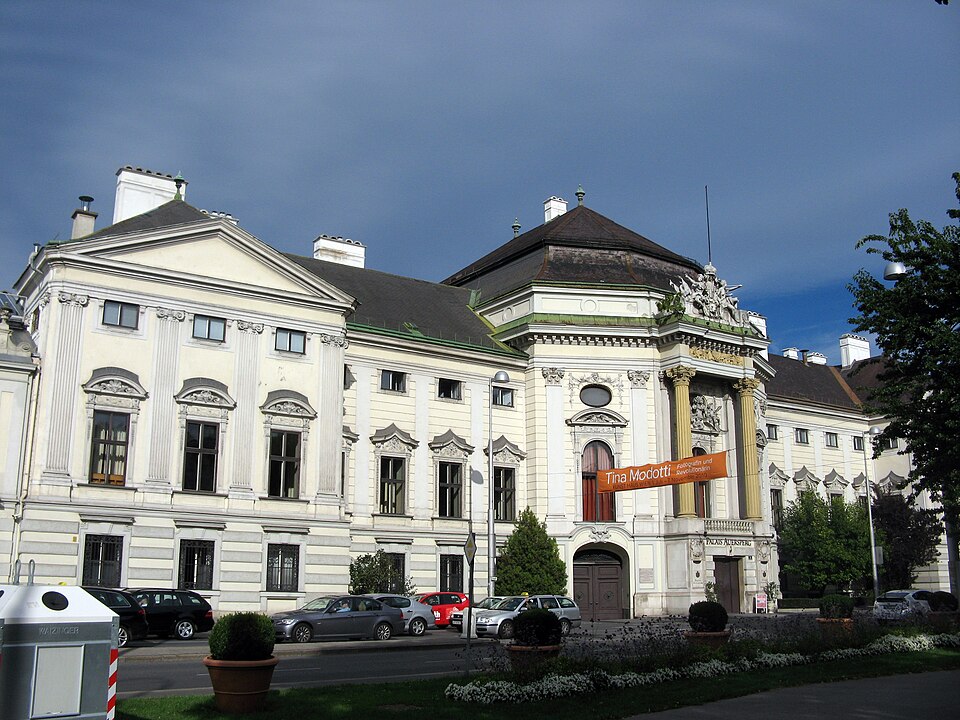
Buying a concert ticket through a street seller or a hotel concierge rather than the orchestra's own box office commonly costs more for the same seat; the palace itself has no ticket desk and cannot resolve a dispute over a third-party booking. The building looks, from the street, like a private residence rather than a concert venue, and has no illuminated signage marking a public entrance outside concert evenings, so arriving on a non-concert night finds a closed door with nothing to see. Latecomers to a concert are commonly held at the door until the interval, since the ballroom seating does not allow discreet mid-performance entry, which is worth building slack into an evening around beforehand.
Photography inside the ballroom during a concert is generally restricted or discouraged so as not to disturb the performance; the exterior facade, set back from the street behind a forecourt, photographs best from the gate looking in rather than from directly outside the door, which flattens out the depth the forecourt otherwise gives to a shot of the facade.
Nothing non-essential is set before you choose, in regions where consent is required. If you decline, ads still appear but they are non-personalised, and analytics is switched off entirely.
.JPG)


