.jpg)
_-_1718.jpg)


.jpg)
2 min walk
Copps Hill
- Notable
- Viewpoint
Language · 1 published
Historic monument · Boston
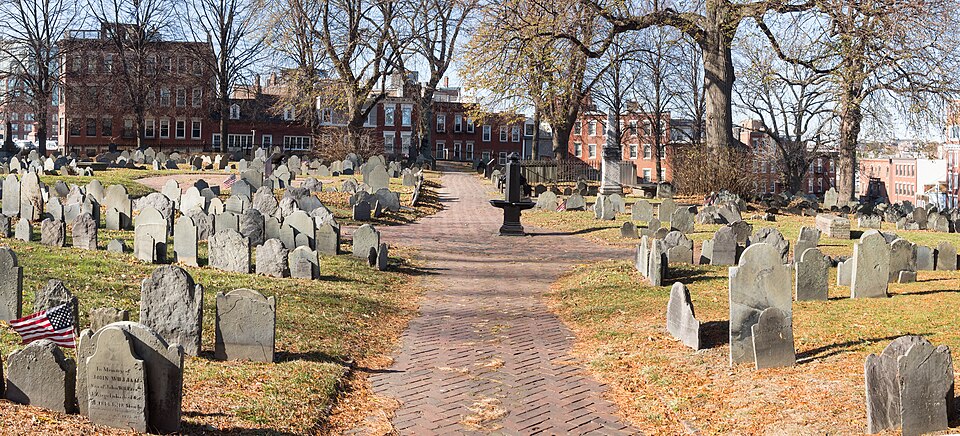
Copp's Hill Burying Ground is a historic colonial cemetery in Boston's North End. Established in 1659, it is the city's second-oldest burying ground. The site sits on a prominent hill overlooking the Charles River and served as an important location during the American Revolutionary War. British forces reportedly used the elevation to position artillery during the Battle of Bunker Hill. The cemetery is a designated stop on Boston's Freedom Trail, the red-brick walking path connecting significant Revolutionary-era sites across the city. The grounds contain approximately 1,200 marked graves and many more unmarked interments from three centuries of Boston history.
Checked 2026-08-26
The burying ground contains historic grave markers and monuments dating from the colonial period through the nineteenth century. Notable burials include Cotton Mather, the influential Puritan minister, and his family members. The site features distinctive slate gravestones with characteristic Puritan imagery including skulls, winged cherubs, and hourglasses. Many markers show the craftsmanship of local stone carvers. The grounds preserve the irregular layout typical of early American cemeteries, with winding paths and densely packed stones. The elevated location provides views toward the harbor and Charlestown, where the Bunker Hill Monument stands. Weathered inscriptions and carved symbols offer tangible connections to Boston's early religious and social history.
Checked 2026-08-26

Visitors typically spend between twenty and forty minutes exploring Copp's Hill Burying Ground. The compact site allows for a brief but meaningful visit as part of a longer Freedom Trail walking itinerary. Those with particular interest in colonial gravestone art, Puritan history, or genealogical research may wish to allocate additional time for careful examination of individual markers and their inscriptions. The cemetery connects easily to adjacent North End attractions, permitting flexible scheduling within a broader exploration of this historic neighborhood. Many travelers combine this stop with nearby Old North Church, Paul Revere's house, and the waterfront area in a single walking circuit.
Checked 2026-08-26
Operator-confirmed hours are Not recorded pending review. Visitors should consult official Boston city resources or on-site signage for current accessibility before planning a visit. The outdoor cemetery setting suggests daytime visits would be most practical for reading gravestone inscriptions and navigating the uneven historic grounds. Seasonal weather conditions in Boston vary considerably, with cold winters and warm summers affecting walking comfort along the Freedom Trail. The exposed hilltop location may experience stronger winds than surrounding streets. Morning or afternoon light may enhance visibility of weathered stone carvings. Checking current conditions before travel is advisable.
Checked 2026-08-26

Operator-confirmed prices are Not recorded pending review. As a municipal burying ground and Freedom Trail site, Copp's Hill Burying Ground may not charge admission fees, though visitors should verify current policies through official channels. The Freedom Trail itself is a free walking route, though individual sites maintain separate access arrangements. No advance ticketing information is confirmed. Visitors carrying Freedom Trail guided tour passes or Boston attraction packages should confirm whether this site participates in any such programs. Budget planning should assume potential costs for transportation, food, and adjacent paid attractions rather than cemetery admission specifically.
Checked 2026-08-26
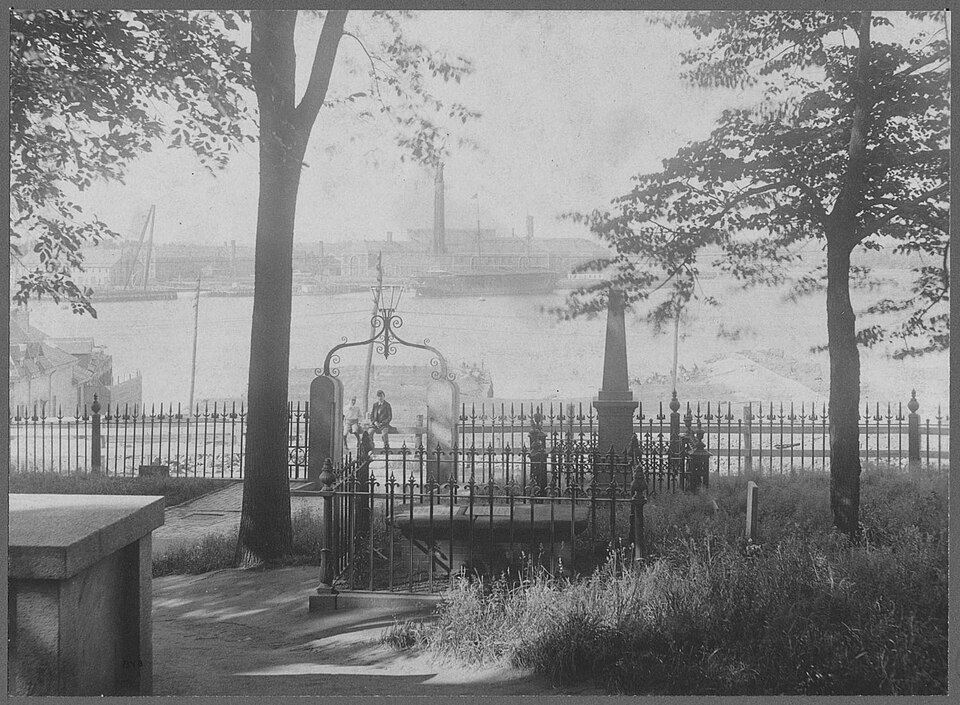
Copp's Hill Burying Ground occupies a hillside location in Boston's North End, accessible via the Freedom Trail's red-brick path. The site lies near the intersection of Hull Street and Snow Hill Street. Public transportation options include the MBTA subway system, with nearby stations serving the Green and Orange lines requiring additional walking through the North End's narrow streets. The cemetery's compact urban setting means no dedicated parking is available; visitors arriving by vehicle should expect to find street parking in surrounding residential areas or utilize commercial garages at greater distance. Walking remains the most authentic approach for Freedom Trail pilgrims.
Checked 2026-08-26
The historic grounds present uneven walking surfaces with irregular pathways, sloping terrain, and aged gravestones that may be unstable or fragile. Visitors should exercise caution to avoid tripping hazards and respect the solemn nature of the active cemetery by remaining on designated paths. Weather conditions can make stone surfaces slippery. The hillside location offers limited shade, suggesting sun protection and hydration during warm periods. Some gravestone inscriptions may be difficult to decipher due to centuries of weathering. Respectful behavior is expected; climbing on markers or disturbing the grounds is inappropriate. The site may occasionally close for maintenance or ceremonies without advance public notice.
Checked 2026-08-26

Photography for personal use appears generally permissible in this municipal historic site, though no specific policies are confirmed. Visitors should avoid touching or leaning on fragile gravestones to capture images. The compact cemetery offers limited compositional variety, with best results likely from detailed shots of individual stone carvings and broader contextual views incorporating the harbor or cityscape. Morning and late afternoon light may enhance the three-dimensional quality of carved surfaces. Tripod use may attract attention in this confined space. Commercial or professional photography may require permits; visitors with such intentions should contact Boston city authorities in advance. Respect for ongoing memorial activities takes priority.
Checked 2026-08-26
The burying ground contains historic graves from past centuries. Whether active interments continue is Not recorded.
Whether formal guided tours operate at this specific location is Not recorded. Many visitors follow the self-guided Freedom Trail.
The historic grounds have uneven surfaces and slopes. Specific accessibility accommodations are Not recorded.
On-site restroom availability is Not recorded. Visitors should plan accordingly for this compact urban cemetery.
Pet policies for this municipal burying ground are Not recorded. Respectful behavior would suggest leashed animals if permitted.
The specific oldest marked grave is Not recorded. The cemetery opened in 1659, suggesting very early interments exist.
Loading the interactive map…
The interactive map could not be loaded.
Last updated:
Source: OpenStreetMap contributors, Wikidata ·