

1 dk yürüyüş · Fatih
Hacı İsa Camii
- Yüksek · Miras alanı
- İbadet yeri
Dil · 11 yayınlandı
İbadet yeri · Fatih, İstanbul
| Pazartesi | 10:00 – 14:00 |
|---|---|
| Salı | 10:00 – 14:00 |
| Çarşamba | 10:00 – 14:00 |
| Perşembe | 10:00 – 14:00 |
| Cuma | 10:00 – 12:00 |
| Cumartesi | Kapalı |
| Pazar | Kapalı |
2026-08-24 kontrol edildi · Kaynak
The Ahrida is the oldest synagogue in Istanbul, built around 1430 — before the conquest — by Romaniote Jews, Greek-speaking and long settled in the Byzantine world, who had come from Ohrid in what is now North Macedonia. The building carries their home city's name in Ladino form and has never stopped being a synagogue.
Its congregation then changed language and rite around it. After the Sephardic arrivals of 1492 the community adopted Sephardic liturgy and Judeo-Spanish, and the synagogue today follows Nusach Sefard. It is also, by the account attributed to it, the only synagogue in Istanbul at which Sabbatai Zevi prayed. The fabric mixes Ottoman and Byzantine architectural habits and has been repaired repeatedly across six centuries: in 1694, 1732, 1840, 1893, 1926 and 1955, and then comprehensively in 1992 by the Quincentennial Foundation, marking five hundred years of Sephardic settlement in the Ottoman lands.
2026-08-24 kontrol edildi · Kaynak
One prayer hall, and in the middle of it the thing everyone comes to see: the boat-shaped tevah, the raised reading platform from which the Torah is read, built as a curving prow rather than the usual square or octagonal table. Readings of what the shape means differ — the ark, the ships that carried the Sephardim from Spain — and the community has not settled the question, so neither will this guide.
Around the teva the room is domestic in scale and richly worked, with the woodwork and the fittings largely the product of the 1992 restoration working over much older bones. There is no exhibition, no display case, no interpretive panel and no shop. What you get is the hall itself and the explanation of it from the person who lets you in, which is why arranging the visit properly matters more here than at any other place in this district.
2026-08-24 kontrol edildi · Kaynak
Thirty minutes. There is one room and nothing to work through, so the visit is standing in the hall, walking around the teva, and listening to whoever has admitted your group; half an hour covers that without hurry.
The number to plan around is not this one. The binding constraint is the reservation lead time, described below, and the narrow daily window — a thirty-minute visit that has to land inside a four-hour slot on a weekday, with a booking made days earlier, is a scheduling problem rather than a duration problem. Build the day around the appointment you are given, not around the half hour it occupies.
2026-08-24 kontrol edildi
The Turkish Jewish Community publishes weekday visiting for the Balat synagogues from 10:00 to 14:00, closed on Saturdays and on holidays, and closed after Friday noon — so Friday runs 10:00 to 12:00 only. Saturday is Shabbat and Sunday is not offered on that surface either.
The decisive detail is that this is not a walk-in place. A reservation is required at least three days in advance, an identity document or passport must be carried and produced, and a security screening is passed at the door. Arriving on spec during the published window will not get you inside. The synagogue foundation's own site publishes no hours at all and routes every visit through a named contact.
Closures also fall on Jewish religious holidays, whose dates move each year against the Gregorian calendar. Confirm when you book rather than assuming a published weekday window holds.
2026-08-24 kontrol edildi · Kaynak
There is no admission fee. The Turkish Jewish Community's visiting page names no charge for the Balat synagogues, and this is recorded as free entry on the strength of that page — worth saying plainly that the claim rests on the community's silence about a fee rather than on an explicit statement that entry costs nothing.
What is required instead of money is process. Book at least three days ahead through the community's visiting arrangements, bring the identity document you booked under, and expect the door to be a security point rather than a reception desk. Donations are described as accepted rather than required.
The neighbouring Yanbol Synagogue is covered by the same visiting arrangement and the same window, so if you are going to the trouble of a booking, ask about both.
2026-08-24 kontrol edildi · Kaynak
Balat lies on the European shore of the Golden Horn inside Fatih, and the synagogue sits a short way up from the water in the old Jewish quarter, on one of the narrow residential streets behind the shore road. It is a district of steep lanes and painted houses, and the last few minutes are on foot whatever you arrive by.
The Golden Horn ferry is the pleasant way in: the Haliç line calls at Balat and Ayvansaray, and from either pier the walk inland is under ten minutes. Buses run the shore road from Eminönü along the Golden Horn and stop close to both piers. There is no metro or tram station in Balat, and taxis will drop you on the shore road rather than negotiate the lanes.
Because you will be arriving at a booked time and passing a security check, allow more margin than the map distance suggests. Fifteen minutes early is the right amount.
2026-08-24 kontrol edildi
The single failure mode here is turning up without a reservation. Three days' notice is the published minimum and the door does not make exceptions for people who have travelled a long way; the published 10:00 to 14:00 window describes when booked visits happen, not an open door. Book first, plan the day second.
Bring the passport or identity document. It is checked, and a photograph of one on a phone is not what is being asked for.
Dress as you would for any active house of prayer — covered shoulders and knees — and men should expect to cover their heads inside, with a kippah usually provided. Friday closes at noon rather than at two, so a Friday visit has half the window and no slack in it.
Balat itself has become a photography destination, and the coloured houses draw crowds down the same lanes at weekends. That is an atmosphere problem rather than a safety one, but it slows the walk from the ferry more than you expect.
2026-08-24 kontrol edildi
Ask before photographing anything inside. No photography policy is published for the interior, and the visit happens in the company of a person from the community who is the right and only authority on it; treating the question as settled because a camera is in your hand is how a group loses the privilege for the next one. Never photograph anyone at prayer.
If permission is given, the subject is the teva and its curve. The hall is small and the boat shape resolves best from slightly above and to one side, which usually means standing on the step at the edge of the room rather than square in front of it. The light is warm, low and mostly artificial, so brace and shoot wide open instead of using flash.
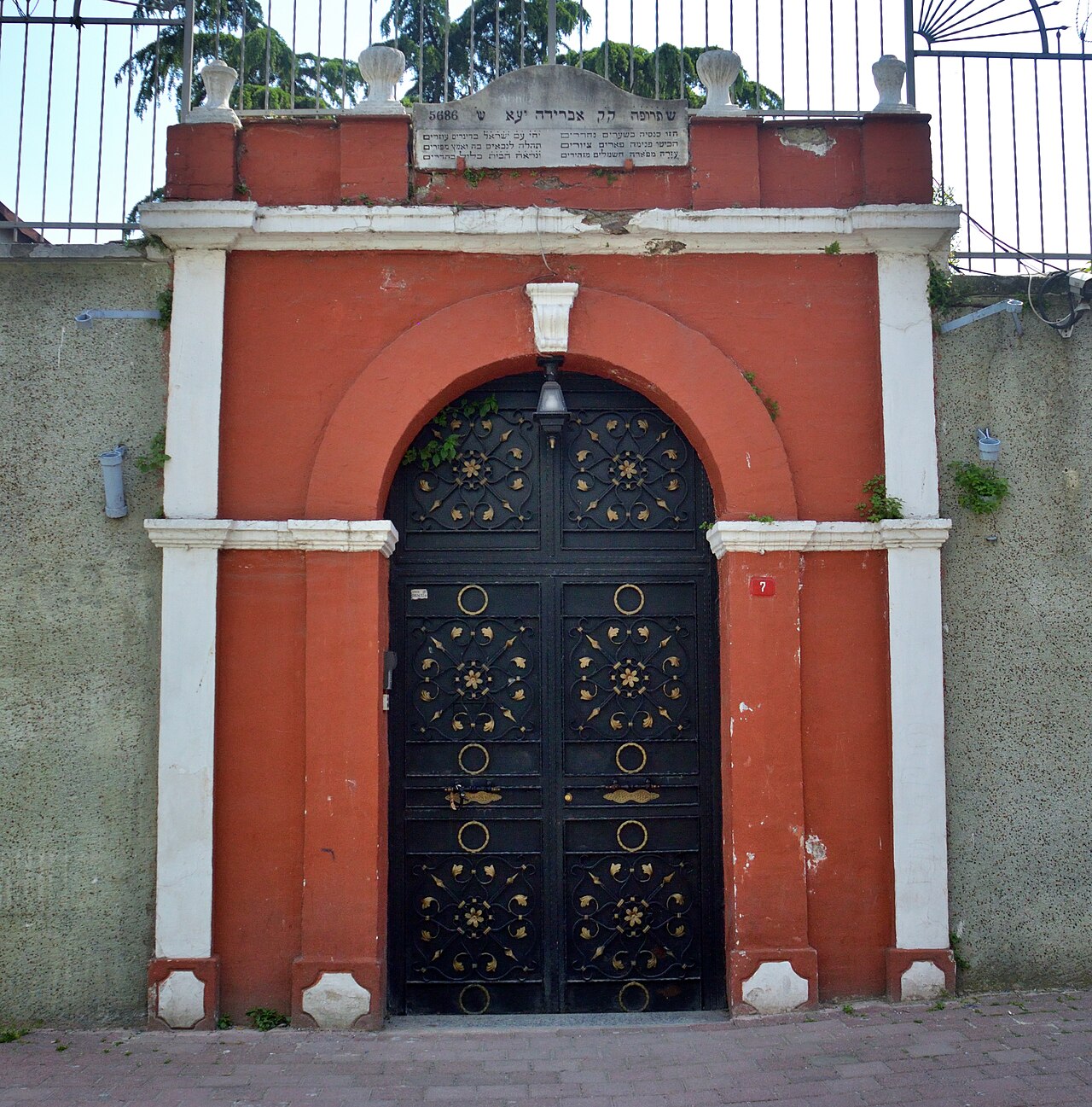
Outside, the exterior is deliberately unassuming — Ottoman-era synagogues did not announce themselves on the street — and the more honest photograph of Balat's Jewish quarter is the street itself: the lane, the door, the scale of the houses around it.
2026-08-24 kontrol edildi
No. A reservation is required at least three days in advance, you must carry an identity document or passport, and there is a security screening at the door. The published 10:00 to 14:00 weekday window describes when booked visits take place, not an open door.
The Turkish Jewish Community publishes weekday visiting from 10:00 to 14:00 for the Balat synagogues, with Friday ending at 12:00 because visits stop after Friday noon. Saturday is closed for Shabbat, and Sunday is not offered on that surface.
No fee is charged. The community's visiting page names no admission charge for the Balat synagogues, and donations are described as accepted rather than required. What the visit costs is the booking process rather than money.
It is the raised reading platform at the centre of the prayer hall, built as a curving prow instead of the usual square table, and it is the feature the synagogue is known for. Interpretations of the shape differ — the ark, or the ships that carried the Sephardim from Spain — and the community has not settled the question.
It was built around 1430, before the Ottoman conquest of the city, by Romaniote Jews from Ohrid in what is now North Macedonia, which makes it the oldest synagogue in Istanbul. It has been repaired in 1694, 1732, 1840, 1893, 1926, 1955 and comprehensively in 1992.
About thirty minutes, since there is one prayer hall and no exhibition. Dress as for any active house of worship, with shoulders and knees covered; men should expect to cover their heads inside, and a kippah is usually provided.
Etkileşimli harita yükleniyor…
Etkileşimli harita yüklenemedi.


Son güncelleme:
Kaynak: OpenStreetMap katkıda bulunanları, Wikidata ·