_-_South_side,_from_Via_triumphalis.jpg)


2 dk yürüyüş
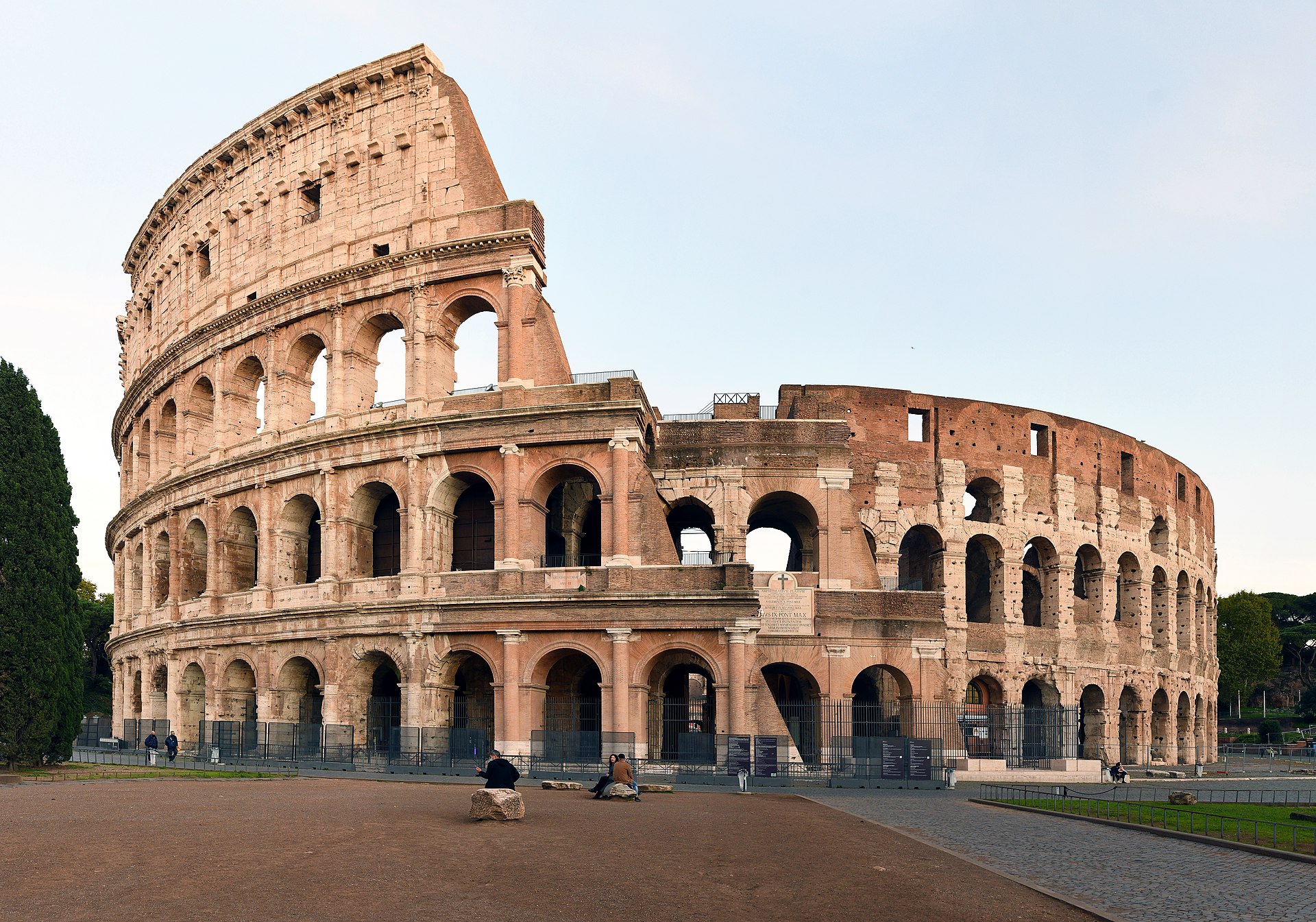
Kolezyum
- Mutlaka görülmeli · Miras alanı
- Tarihi anıt
Dil · 11 yayınlandı
Tarihi anıt · Roma
Arco di Costantino

The Arch of Constantine, known locally as Arco di Costantino, stands beside the Colosseum in Rome. This triumphal arch commemorates Emperor Constantine's victory at the Battle of Milvian Bridge in 312 CE. Erected between 312 and 315 CE, it incorporates spolia from earlier monuments dedicated to Trajan, Hadrian, and Marcus Aurelius. The structure measures approximately 21 metres in height and 25.7 metres in width, making it the largest surviving Roman triumphal arch. It sits along the traditional route of triumphal processions, the Via Triumphalis.
2026-08-28 kontrol edildi
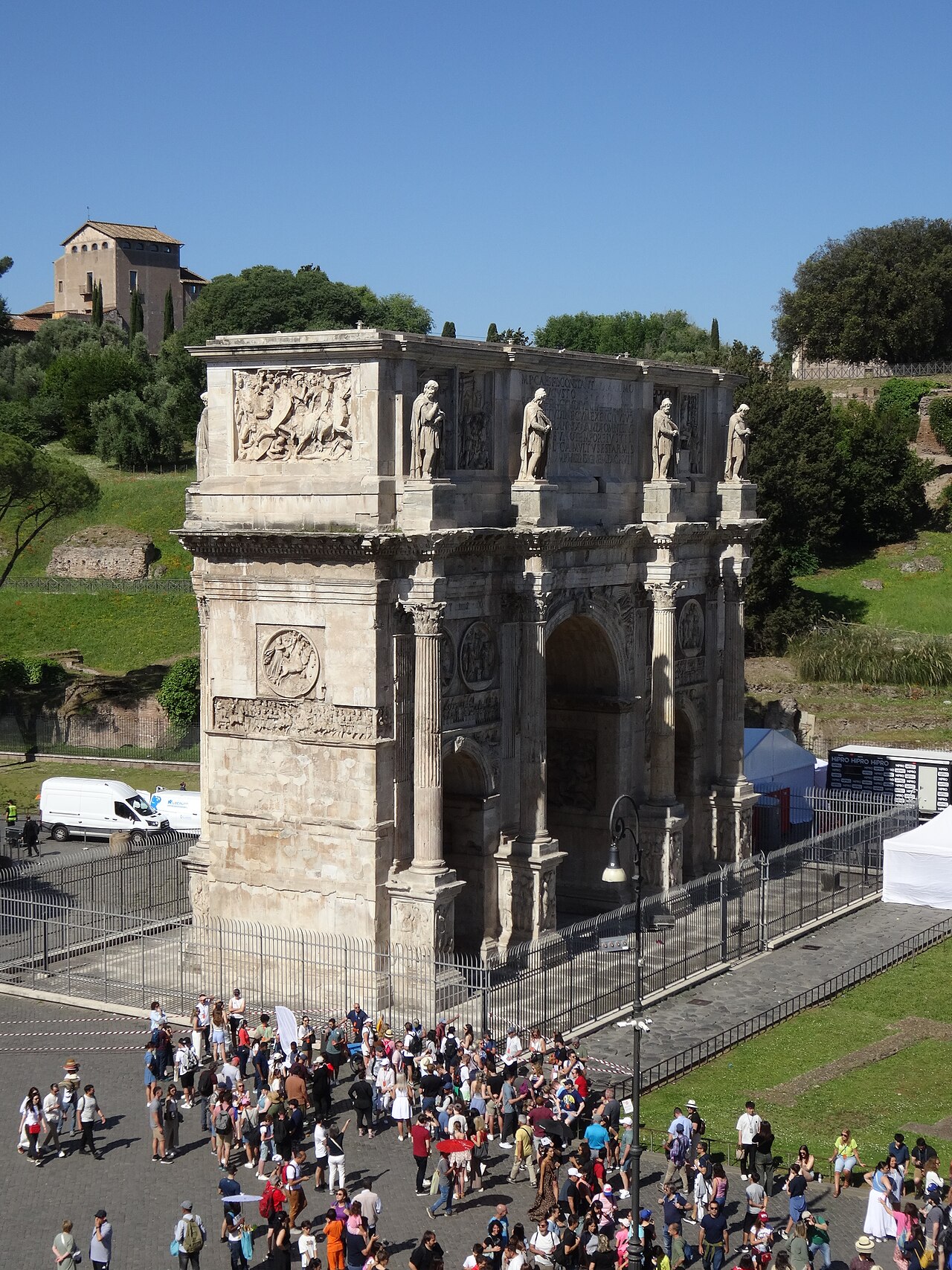
The arch is an exterior monument without interior spaces accessible to visitors. Its decorative programme comprises three distinct architectural orders with sculpted reliefs, roundels, and attic inscriptions. The central passageway features vault mosaics. Eight rectangular reliefs from an earlier monument depict hunting scenes and sacrifices. Eight roundels portray imperial activities. The attic bears the dedicatory inscription. Four columns of yellow Numidian marble frame the central archway. Visitors examine these elements from the surrounding pavement and roadside. A flexible visit to Arch of Constantine leaves room to adjust for access conditions without relying on unverified schedules, prices or closure assumptions. Confirm practical details with the operator when available.
2026-08-28 kontrol edildi
A visit to the Arch of Constantine requires approximately fifteen to thirty minutes for observation and photography. Most visitors combine this stop with adjacent monuments, particularly the Colosseum and Roman Forum. The arch stands in a public thoroughfare without controlled entry, so duration depends entirely on individual interest in examining sculptural details. Those studying the spolia and comparing reused elements with original Constantinian work may spend longer. No queues or entry procedures affect timing. Arch of Constantine is best treated as a distinct stop rather than a generic example of its category. Focus on the setting, surviving features and visitor route visible on arrival.
2026-08-28 kontrol edildi
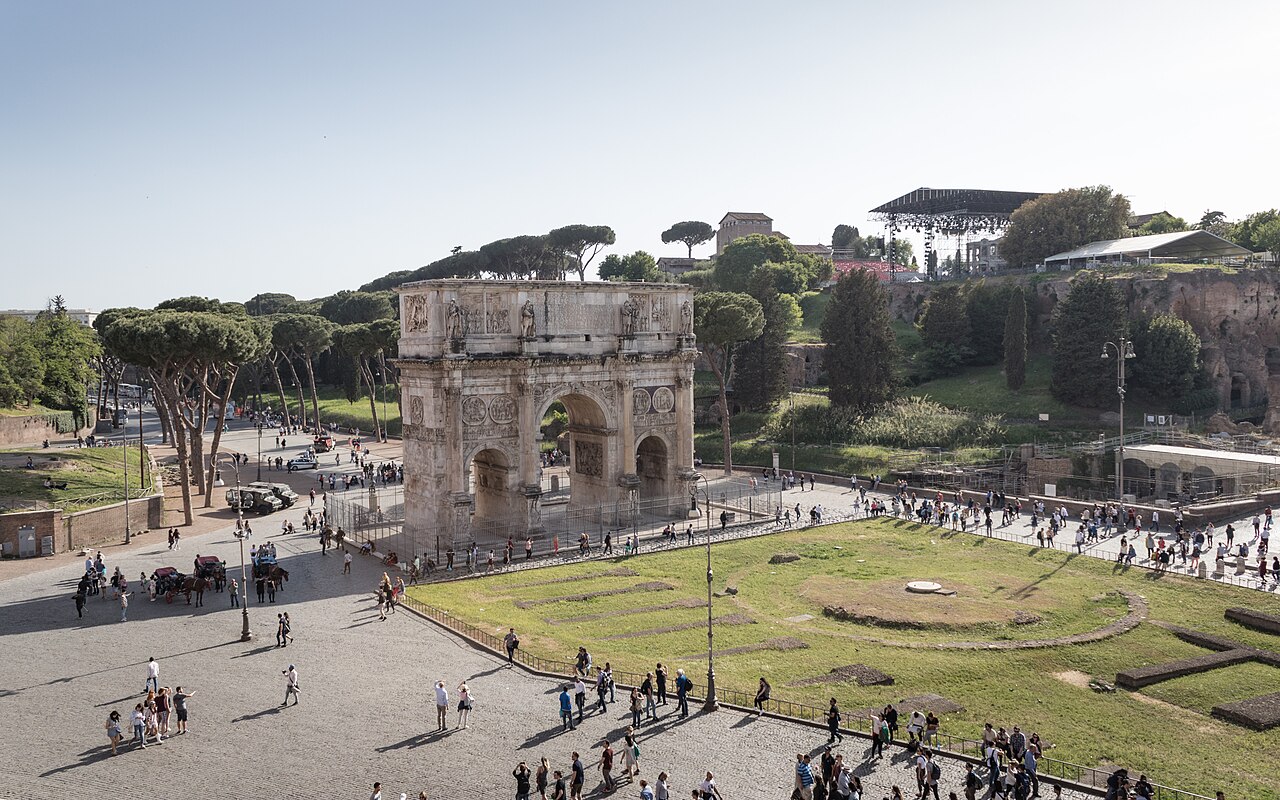
The arch stands in an open public space accessible at all hours without entry control. Early morning and late afternoon offer favourable lighting for examining sculptural details and photography. Midday crowds peak due to proximity to the Colosseum. Summer brings intense heat with limited shade. Winter visits may prove more comfortable for extended examination. Night illumination highlights the monument's silhouette against the Colosseum. Seasonal weather conditions should inform visitor preparation. Check the operator's own site for the travel date before relying on a schedule or fare.
2026-08-28 kontrol edildi
No admission fee applies to viewing the Arch of Constantine from the surrounding public space. The monument requires no ticket for external observation. Visitors should note that nearby attractions including the Colosseum and Roman Forum operate separate ticketing arrangements. Combination tickets for the archaeological park may include these adjacent sites. Current pricing for associated attractions should be verified through official channels before visiting. No advance booking exists for the arch itself. Check the operator's own site for the travel date before relying on a schedule or fare.
2026-08-28 kontrol edildi
The arch stands between the Colosseum and the Palatine Hill in central Rome. The Colosseo metro station on Line B serves the immediate area. Multiple bus routes terminate nearby. Walking from the Roman Forum, Circus Maximus, or Via dei Fori Imperiali presents straightforward approaches. The monument occupies a traffic island at the western end of the Via di San Gregorio. Pedestrian crossings permit close approach. Central location within the archaeological zone facilitates combination with surrounding sites. The useful pace at Arch of Constantine depends on personal interest and conditions on the day. Keep the surrounding part of the itinerary flexible if access or visitor flow differs from expectations.
2026-08-28 kontrol edildi
Traffic circulation around the arch requires vigilance when crossing roads for photography angles. The surrounding pavement becomes extremely crowded during peak tourism periods. Pickpockets operate in dense visitor concentrations nearby. Summer heat radiates from stone surfaces with minimal shelter. Scaffolding occasionally obscures portions during conservation work. Street vendors and costumed gladiators populate the immediate vicinity, potentially intrusive. Night illumination may vary. Uneven ancient paving stones surround the monument. Visitors should remain aware of bicycles and electric scooters on adjacent paths.
2026-08-28 kontrol edildi

Photography rules for the Arch of Constantine are Not recorded pending review. The monument stands in unrestricted public space, permitting exterior photography from multiple angles. Optimal views require positioning across the surrounding streets. The Colosseum provides a dramatic backdrop from the south. Morning light illuminates the western face; afternoon light favours the eastern reliefs. Tripod use may attract attention in crowded conditions. Drone operation over central Rome falls under strict regulatory control requiring appropriate authorisation. Night photography benefits from artificial illumination.
2026-08-28 kontrol edildi
No fee applies for viewing the Arch of Constantine from the surrounding public space. The monument stands in an open traffic island with unrestricted access.
The arch contains no accessible interior spaces. Visitors observe the monument from the exterior pavement and surrounding streets.
Early morning and late afternoon provide favourable natural lighting. The western face receives morning illumination; the eastern face benefits from afternoon light.
The arch stands immediately adjacent to the Colosseum, forming part of the same archaeological zone. Visitors typically see both monuments in sequence.
The monument reuses spolia from earlier imperial monuments, a common late antique practice. These incorporated elements honour Trajan, Hadrian, and Marcus Aurelius.
The surrounding area contains uneven ancient paving. The monument itself requires no stairs for viewing from the accessible surrounding pavement level.
Etkileşimli harita yükleniyor…
Etkileşimli harita yüklenemedi.
Son güncelleme:
Kaynak: OpenStreetMap katkıda bulunanları, Wikidata ·