

1 dk yürüyüş
Nikolaikirche
- Mutlaka görülmeli · Miras alanı
- Müze
Dil · 11 yayınlandı
Tarihi anıt · Berlin
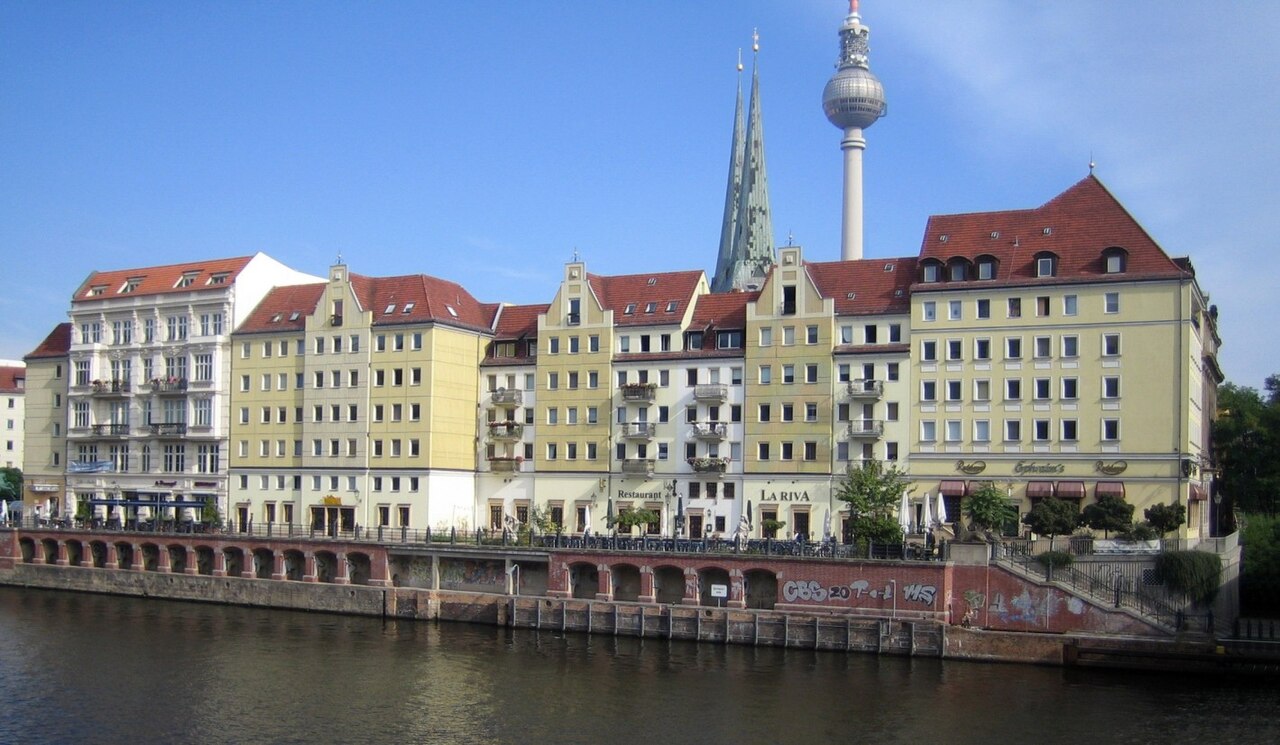
Nikolaiviertel is a historic quarter in Berlin's Mitte district, centered around the reconstructed Nikolaikirche, the city's oldest church. The area was heavily damaged during World War II and subsequently rebuilt in the 1980s with a mix of historic and modern structures. It occupies a small island between the Spree River and the Nikolaigraben canal. The neighborhood presents itself as Berlin's birthplace, though the current buildings largely date from postwar reconstruction efforts rather than original medieval fabric.
2026-08-28 kontrol edildi
The quarter contains the Nikolaikirche, now a museum and concert venue rather than an active parish church. Narrow cobblestone streets wind past reconstructed historicist buildings housing restaurants, souvenir shops, and small businesses. A handful of older structures survived or were carefully rebuilt. Bronze sculptures and commemorative plaques mark significant locations. The riverside promenade offers views of the Spree. The area functions primarily as a tourist destination and dining quarter rather than a residential neighborhood. The useful approach is to connect Nikolaiviertel with the rest of the area while leaving enough time for the next stop. This works for both a focused first visit and a slower return.
2026-08-28 kontrol edildi
Visitors typically spend between one and three hours exploring Nikolaiviertel, depending on interest in dining or detailed examination of the architecture. A casual walking circuit through the streets and along the waterfront takes approximately forty-five minutes. Those entering the Nikolaikirche museum or lingering at riverside cafes should allocate additional time. The compact dimensions of the quarter prevent extensive wandering. Evening dining extends typical stays considerably. Most visitors combine this stop with nearby Museum Island or Alexanderplatz.
2026-08-28 kontrol edildi
Operator-confirmed hours are Not recorded pending review. The quarter itself comprises public streets accessible at all times without restriction. The Nikolaikirche museum maintains specific opening hours that visitors should verify independently. Summer evenings bring dense tourist crowds and active restaurant terraces. Winter reduces foot traffic substantially, though Christmas market activities may occur in surrounding areas. Early mornings offer the most tranquil atmosphere for photography and unhurried exploration before tour groups arrive. Nikolaiviertel also earns time in a berlin itinerary because its setting and role differ from the surrounding ranked stops. Compare the place with the nearby streets before deciding how it fits the day.
2026-08-28 kontrol edildi
Operator-confirmed prices are Not recorded pending review. The Nikolaikirche museum likely charges admission, though current rates require direct verification. Walking through the quarter itself costs nothing. Restaurant and cafe prices vary widely and exceed averages in less touristic Berlin neighborhoods. No combined ticketing arrangement with nearby attractions is known. Visitors should budget cautiously for dining. Any special exhibition fees within the church museum remain unconfirmed without direct inquiry to the operating institution. A flexible visit keeps attention on what is distinctive at Nikolaiviertel without treating one room, viewpoint or photograph as the whole experience. Conditions on arrival should decide the final pace.
2026-08-28 kontrol edildi
Nikolaiviertel sits within walking distance of Alexanderplatz, served by multiple U-Bahn and S-Bahn lines, regional trains, and trams. The nearest U-Bahn stations are Klosterstrasse and Alexanderplatz itself. Bus lines serve adjacent streets. The Spree riverside location means some boat tours pass nearby or dock in proximity. Cyclists find dedicated paths along the river. The area's compactness renders private vehicles unnecessary and inadvisable given limited parking and pedestrian-priority street design. Walking from central Mitte locations remains most practical.
2026-08-28 kontrol edildi
The quarter's reconstructed nature may disappoint visitors seeking authentic medieval atmosphere. Restaurant prices trend high relative to quality; careful selection benefits the budget-conscious. Cobblestone surfaces challenge mobility-impaired visitors and wheeled luggage. Dense crowds concentrate during midday and early evening, particularly in summer. Some buildings' historic appearance masks 1980s construction. Souvenir merchandise quality varies. The small scale surprises those expecting expansive old-town exploration. Evening lighting on certain facades proves dim; attention to footing after dark prevents mishaps on uneven surfaces.
2026-08-28 kontrol edildi
The Nikolaikirche tower provides the quarter's most recognizable vertical element, best captured from across the Spree or from adjacent bridge crossings. Early morning yields empty streets and soft directional light on east-facing facades. The riverside promenade offers reflection possibilities in calm conditions. Night photography benefits from building illumination, though tripod use in crowded passages draws attention. The reconstructed historicist architecture produces uniform rather than genuinely aged textures. Overhead wires and modern signage intrude in certain compositions. Drone operation requires awareness of urban flight restrictions.
2026-08-28 kontrol edildi
The area is presented as Berlin's birthplace, though most current structures date from 1980s reconstruction following wartime destruction. The Nikolaikirche itself was rebuilt.
The church functions as a museum and concert venue rather than an active parish church. Its current programming should be verified directly.
Most buildings were reconstructed in the 1980s. A handful of older structures survived or were carefully rebuilt. The overall effect is historicist rather than authentically medieval.
No. The streets and public spaces of Nikolaiviertel are freely accessible at all times. The Nikolaikirche museum likely charges separate admission.
It is smaller, more compact, and more explicitly tourist-oriented than neighborhoods like Prenzlauer Berg or Kreuzberg, with higher restaurant prices and denser souvenir commerce.
Cobblestone surfaces throughout present challenges for wheelchairs, walkers, and those with balance difficulties. The compact area reduces overall walking distance required.
Etkileşimli harita yükleniyor…
Etkileşimli harita yüklenemedi.


Son güncelleme:
Kaynak: OpenStreetMap katkıda bulunanları, Wikidata ·