
_Berger,_Fonst_(8_mai_1904,_Palais_Royal)_-_btv1b53217249x.jpg)


1 dk yürüyüş · Paris 1er Arrondissement
Comédie-Française
- Mutlaka görülmeli
- Tarihi anıt
Dil · 11 yayınlandı
Tarihi anıt · Paris 1er Arrondissement, Paris
Palais Royal

| Pazartesi | 08:00 – 22:30 |
|---|---|
| Salı | 08:00 – 22:30 |
| Çarşamba | 08:00 – 22:30 |
| Perşembe | 08:00 – 22:30 |
| Cuma | 08:00 – 22:30 |
| Cumartesi | 08:00 – 22:30 |
| Pazar | 08:00 – 22:30 |
2026-08-24 kontrol edildi · Kaynak
The Palais-Royal was a cardinal's house that became Europe's first shopping centre and then the place the Revolution started.
Jacques Lemercier built it for Cardinal Richelieu between 1633 and 1639 as the Palais-Cardinal. It passed to the crown on Richelieu's death in 1642 and was renamed.
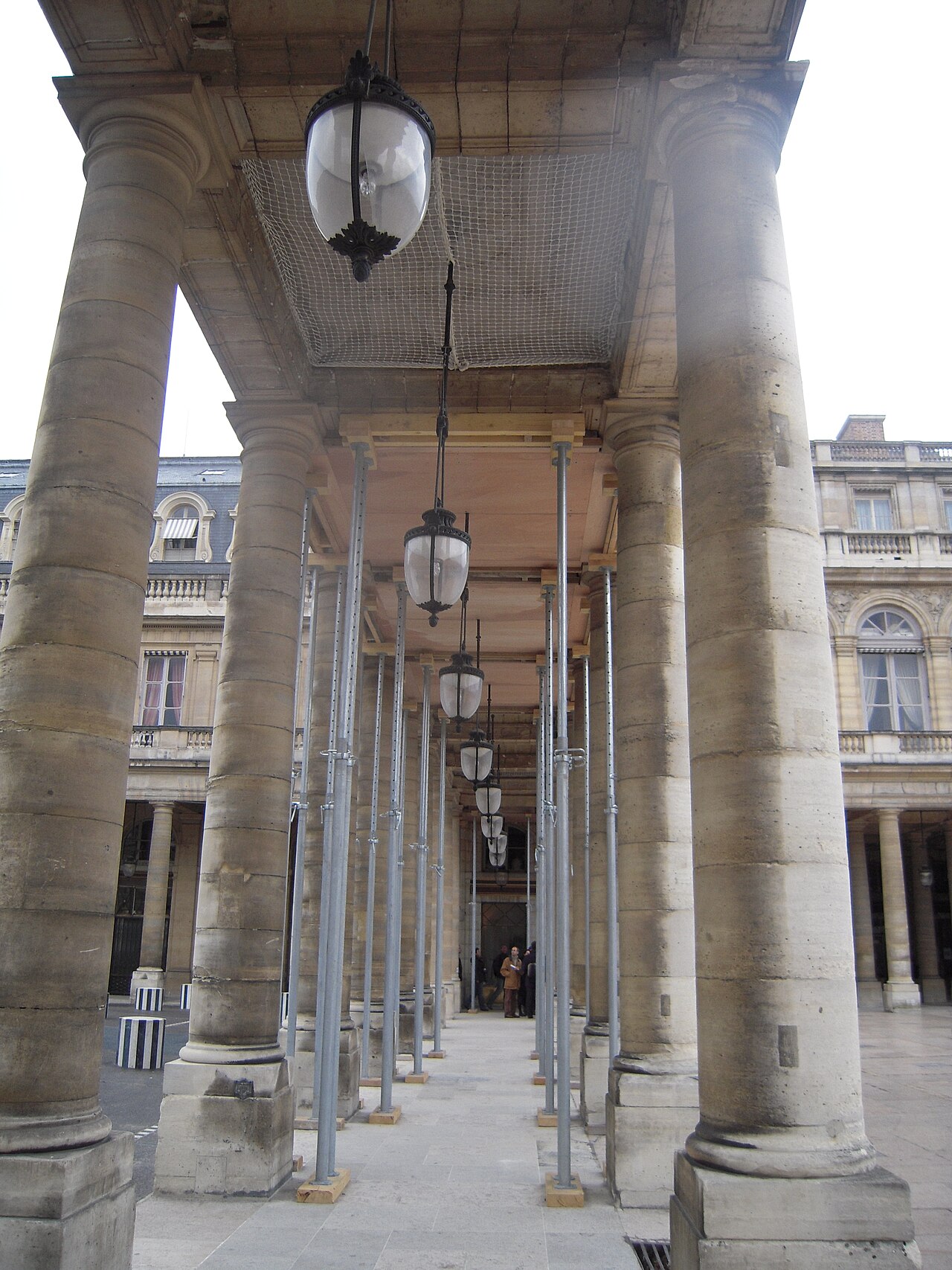
In 1781–84 Louis Philippe II, Duke of Orléans, had Victor Louis wrap the garden in colonnaded galleries and let the ground floors as commerce: 145 boutiques, cafés, salons, bookshops and museums, in a private enclosure the royal police could not enter. Pamphlets were written and sold here, and in 1789 that mattered.
The garden is 170 m by 400 m, the third largest in Paris.
2026-08-23 kontrol edildi · Kaynak
A quiet formal garden, an arcade of specialist shops, and 260 striped columns.
Daniel Buren's Les Deux Plateaux, installed in 1985–86 in the Cour d'Honneur, is a field of black-and-white striped columns of different heights standing in the courtyard. It was hated on installation and is now the most photographed object on the site.
The Comédie-Française occupies the Salle Richelieu, completed in 1786 and seating 2,000. The Théâtre du Palais-Royal, of 750 seats, is in the Galerie de Montpensier. Le Grand Véfour, the restaurant under the northern arcade, opened in 1784.
The palace itself holds the Conseil d'État, the Constitutional Council and the Ministry of Culture, none of which is open.
2026-08-23 kontrol edildi · Kaynak

An hour, and it is the best hour in the 1st arrondissement for the money, which is none.
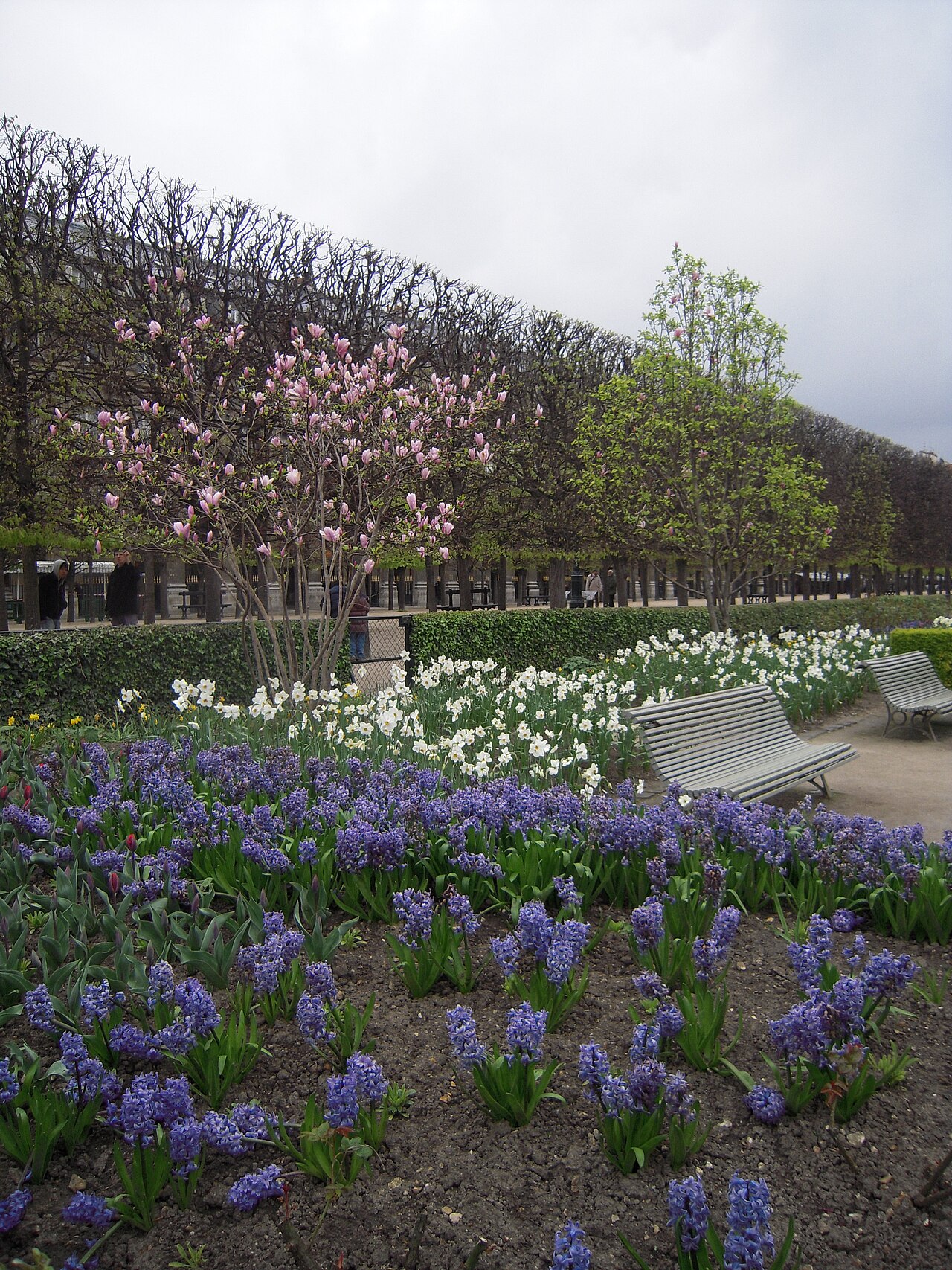
The courtyard with the Buren columns takes fifteen minutes. The garden beyond, with its double avenues of clipped limes and its central fountain, is where Parisians eat lunch.
The arcades take another twenty minutes if you look into the windows: the shops here are antiquarian, one of them sells nothing but military decorations, and none of them is a chain.
It is a hundred metres from the Louvre's north side and almost nobody walking between the Louvre and the Opéra goes in.
2026-08-23 kontrol edildi · Kaynak
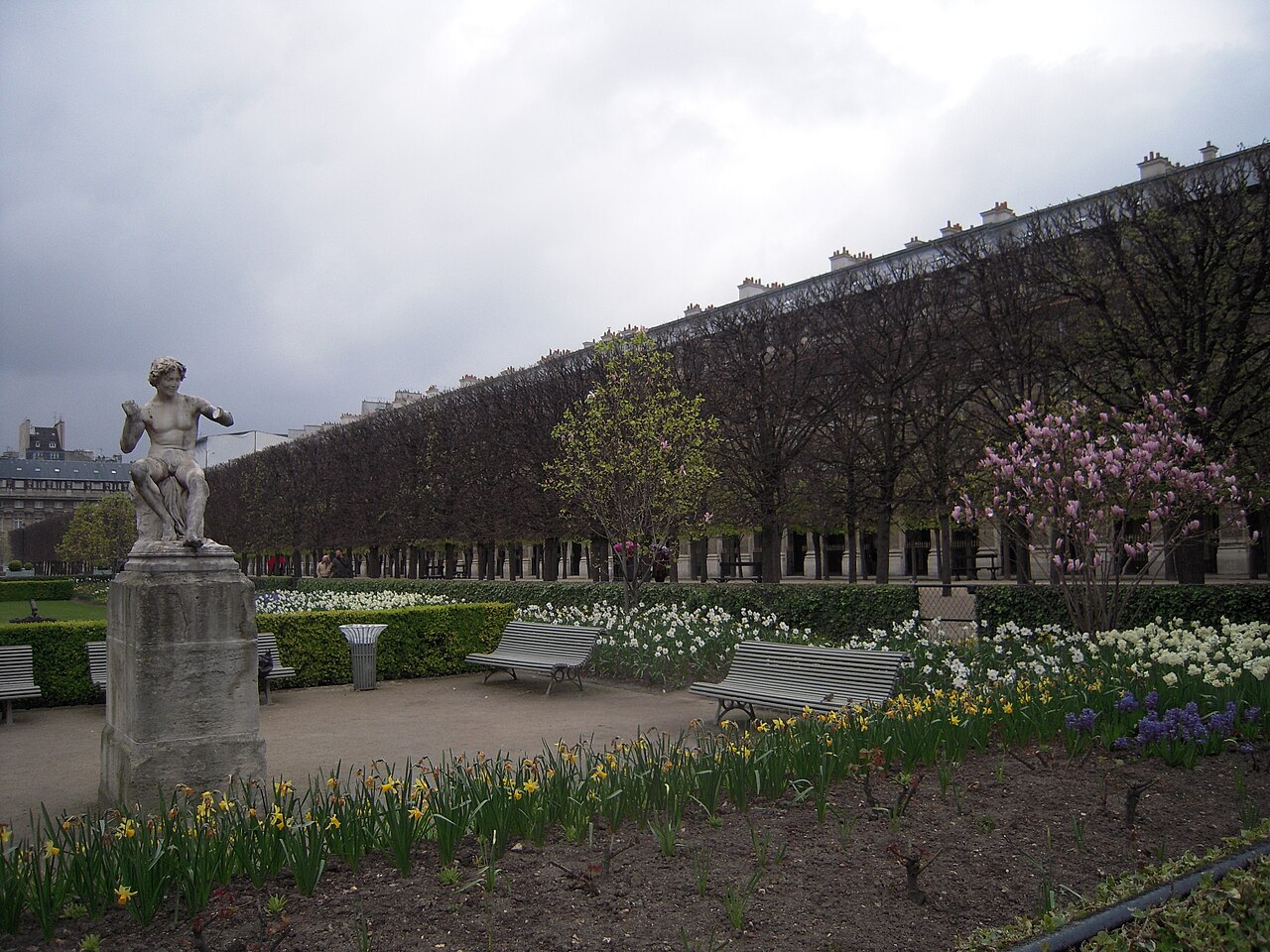
Weekday lunchtime, when the garden is full of people from the ministries, or early morning when it is empty.
The Buren columns photograph best in raking light — early or late — because the stripes need a shadow to read as three-dimensional.
The garden is enclosed on all four sides, which makes it warmer than the street in spring and sheltered in wind.
It closes at night; the gates are locked and the hours change with the season.
2026-08-23 kontrol edildi · Kaynak
The garden, the courtyard and the arcades are free.
The palace buildings house three state institutions and are not open to visitors, except on European Heritage Days.
The Comédie-Française and the Théâtre du Palais-Royal sell their own tickets, priced by the production and by the seat. The Comédie-Française is the oldest continuously active theatre company in the world, and a cheap seat in it is one of the better nights in Paris.
2026-08-23 kontrol edildi · Kaynak
The 1st arrondissement, immediately north of the Louvre.
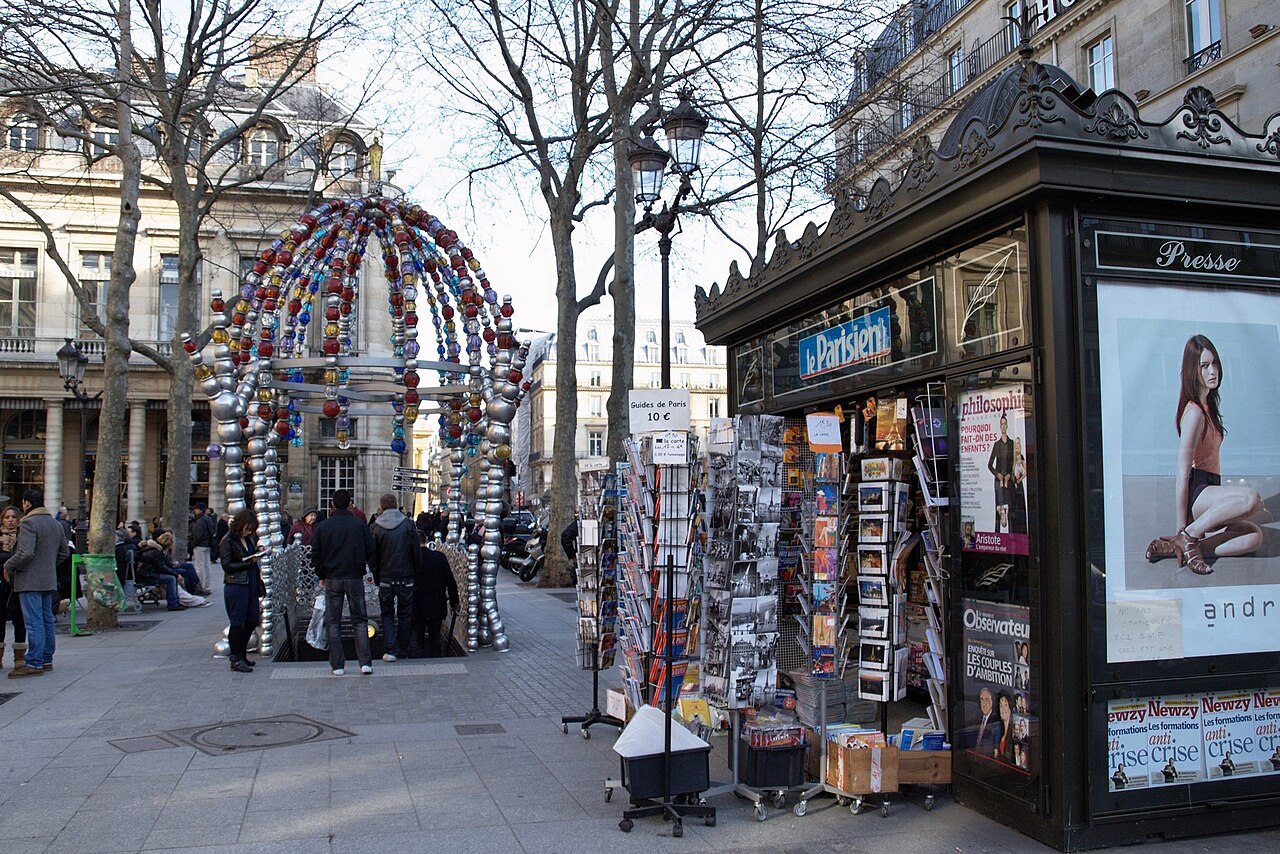
Palais Royal–Musée du Louvre serves Métro lines 1 and 7 and comes up at the south-west corner beside the Comédie-Française. Pyramides on lines 7 and 14 and Bourse on line 3 are both five minutes away.
The Métro runs 16 lines across 321 stations, with stations 548 m apart on average — a two-stop journey is usually faster walked.
2026-08-23 kontrol edildi · Kaynak
The palace is not open. Three state institutions work in it, and the visit is the garden, the courtyard and the arcades.
The gates close at night and the closing time moves with the season; the garden is enclosed and staff clear it.
Climbing and sitting on the Buren columns is tolerated in practice but is not encouraged, and the taller ones are genuinely high enough to hurt.
The arcade shops are specialist and expensive, and several open on restricted hours.
There is no ticket office, no visitor centre and no signage explaining the site.
2026-08-23 kontrol edildi · Kaynak

The Buren columns are the photograph and the way to make it well is from ground level between them, so the stripes stack — not from the arcade above, which is where everyone shoots and where the pattern flattens.
Early or late light gives the columns their shadows; midday erases them.
The garden's double lime avenues frame the palace at the north end and take morning sun.
The arcades themselves are dim, symmetrical and the strongest architectural subject on the site — a long colonnade receding, with the garden bright at the end of it.
2026-08-23 kontrol edildi
Not the palace. It houses the Conseil d'État, the Constitutional Council and the Ministry of Culture. The garden, courtyard and arcades are free and open.
Daniel Buren's Les Deux Plateaux, installed in the Cour d'Honneur in 1985–86. They were widely hated at the time and are now the site's most photographed object.
Jacques Lemercier, for Cardinal Richelieu, between 1633 and 1639. It was called the Palais-Cardinal until Richelieu died in 1642 and it passed to the crown.
Commerce. In 1781–84 the Duke of Orléans had Victor Louis build colonnaded galleries let as 145 boutiques, cafés, salons and bookshops, in an enclosure the royal police could not enter.
The theatre company in the Salle Richelieu, completed in 1786 and seating 2,000, on the south-west corner of the site.
170 m by 400 m, which makes it the third largest garden in Paris after the Tuileries and the Luxembourg.
Etkileşimli harita yükleniyor…
Etkileşimli harita yüklenemedi.

Son güncelleme:
Kaynak: OpenStreetMap katkıda bulunanları, Wikidata ·