
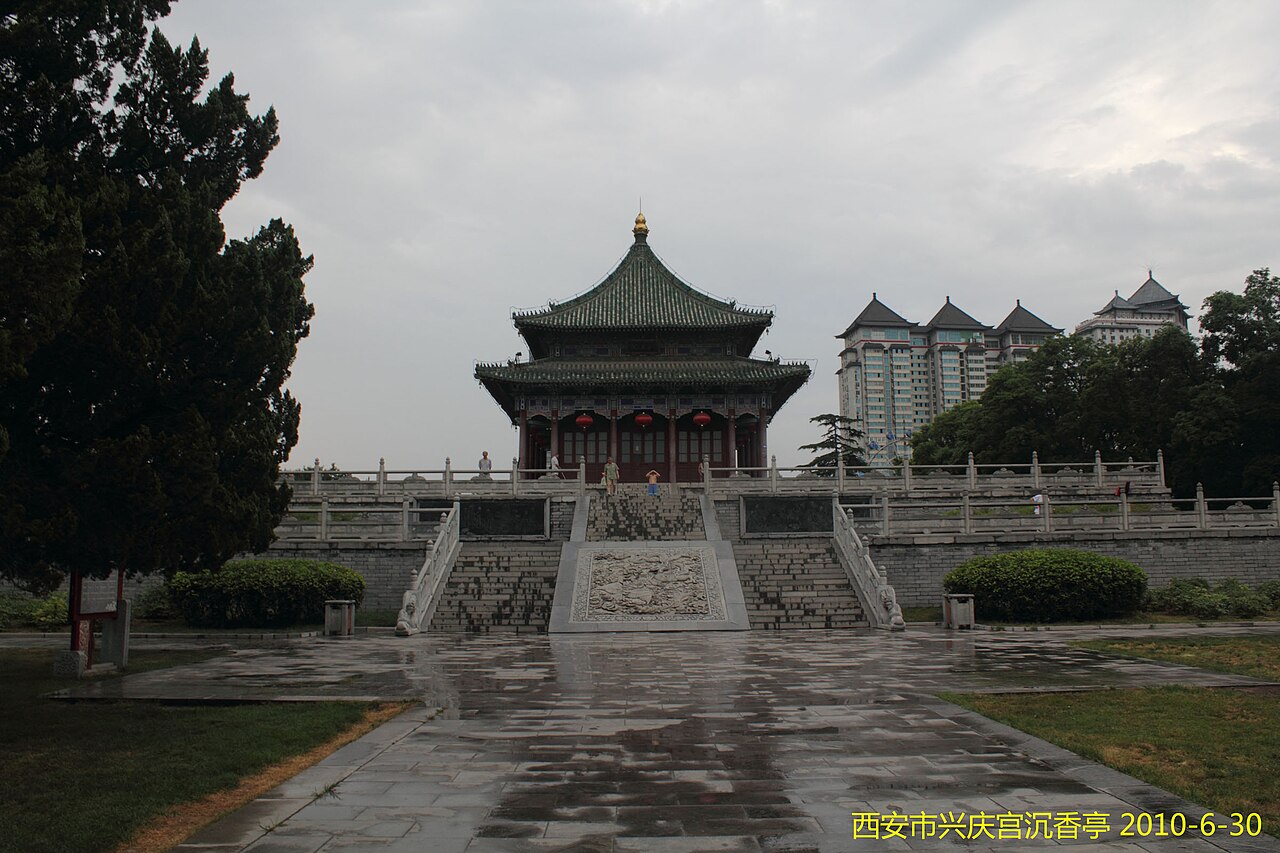
84 dk yürüyüş
兴庆宫公园
- Mutlaka görülmeli
- Doğal alan
Dil · 11 yayınlandı
Müze · Xi'an

The Banpo Museum is an archaeological site museum in eastern Xi'an preserving the remains of a Neolithic Yangshao culture settlement. The site was excavated beginning in 1953 and opened to the public as one of China's first site museums. It displays the foundations of dwellings, storage pits, pottery kilns, and burial grounds from a matrilineal clan community that existed approximately six thousand years ago. The museum structure encloses the excavated village site to protect it while allowing visitor viewing. Banpo Museum also earns time in a xian itinerary because Frozen visitor rank established independently of local database availability; current visitor relevance was verified on 2026-08-28 and the exact identity was reconciled without a proxy or lower-value filler. Its value becomes clearer when the stop is compared with the surrounding streets and the other ranked places nearby.
2026-08-26 kontrol edildi
The museum contains the excavated residential area with semisubterranean house foundations arranged around a central square. Visitors can observe the remains of kilns, defensive moat traces, and adult burial sites. A separate children's burial jar display is present. Exhibited artifacts include painted pottery with human-face and fish designs, stone tools, bone implements, and spindle whorls. The collection illustrates early agricultural practices, hunting, and textile production. Reconstructed dwellings and dioramas supplement the archaeological remains to interpret daily life of the Banpo people.
2026-08-26 kontrol edildi
Most visitors spend between ninety minutes and two hours exploring the museum. The interior excavation hall requires approximately forty-five minutes to observe the house foundations, kilns, and burial areas at a measured pace. An additional thirty to forty-five minutes accommodates the artifact exhibition halls and any reconstructed displays. Visitors with strong interest in Neolithic archaeology or Chinese prehistory may extend their visit. The compact site layout permits efficient circulation without extensive walking distances between the main components of the museum complex.
2026-08-26 kontrol edildi
Operator-confirmed hours are Not recorded pending review. Visitors should verify current opening times through official channels before planning their trip. The museum operates as an indoor-outdoor attraction, so weather conditions may affect comfort during the exterior portions of the site. Xi'an experiences hot humid summers and cold dry winters. Spring and autumn generally offer moderate temperatures favorable for the outdoor components. Morning visits may provide quieter conditions. Holiday periods in China typically generate substantially increased domestic visitor numbers at cultural attractions throughout Xi'an.
2026-08-26 kontrol edildi
Operator-confirmed prices are Not recorded pending review. The museum has historically charged admission fees as a state-operated cultural institution in China. Visitors should consult official sources or authorized ticketing platforms for current rates, any category discounts, and accepted payment methods. Some Chinese museums have implemented free admission policies for certain public museums, though special exhibitions may retain separate charges. Identification requirements for ticket purchase or entry should be confirmed in advance. Group rates and advance booking policies vary by institution and season.
2026-08-26 kontrol edildi
The museum occupies a location in the eastern suburbs of Xi'an, situated north of the Ba River. Public bus routes serve the vicinity from central Xi'an, though specific line numbers require current verification. Taxi and ride-hailing services provide direct access. The site lies at moderate distance from Xi'an's central railway station and the metro network. Visitors should allocate sufficient transit time from central districts. Signage in Chinese assists navigation. The location is distinct from Xi'an's more centrally concentrated Tang dynasty attractions, requiring dedicated transportation planning.
2026-08-26 kontrol edildi
The excavation hall contains open pits and uneven walking surfaces around archaeological remains. Visitors should watch their footing on platforms and near display edges. The museum predates modern accessibility standards, so mobility-impaired visitors may encounter challenges with stairs and narrow passages. Interior humidity control protects the earthen remains but may feel cool. Crowding concentrates around reconstructed houses and famous pottery displays. English interpretation is limited compared to major national museums. Photography restrictions may apply in certain areas without clear posted guidance. Personal belongings require attention in crowded exhibition spaces.
2026-08-26 kontrol edildi
Photography policies at Chinese archaeological museums vary by institution and exhibition zone. The open excavation pit may permit photography without flash to protect light-sensitive materials. Specific artifact cases or loan exhibitions sometimes prohibit photography entirely. Visitors should observe posted signs and staff instructions. Tripods and professional equipment typically require advance permission. The dim lighting conditions in the excavation hall challenge casual photography without adjusted camera settings. Flash photography risks damage to organic remains and painted surfaces. Respectful behavior near burial areas is expected regardless of photographic activity. Video recording may face additional restrictions.
2026-08-26 kontrol edildi
Yes. The museum encloses and protects the excavated archaeological site of the Banpo settlement, so the names refer to the same location.
The settlement dates to the Neolithic Yangshao culture, approximately six thousand years ago.
The museum displays original excavated house foundations. Some reconstructed dwellings may be present for interpretive purposes.
English interpretation is more limited than at major national museums. Visitors should not expect comprehensive English signage or audio guides.
No. The archaeological remains are enclosed within the purpose-built museum structure for protection and climate control.
No. The Banpo site is a Neolithic settlement predating the Terracotta Army by over four thousand years. They represent entirely separate archaeological periods.
Etkileşimli harita yükleniyor…
Etkileşimli harita yüklenemedi.
Son güncelleme:
Kaynak: OpenStreetMap katkıda bulunanları ·