
01
2 hours
01bar
- Notable
- Nightlife venue
Language · 1 published
City guide · Switzerland
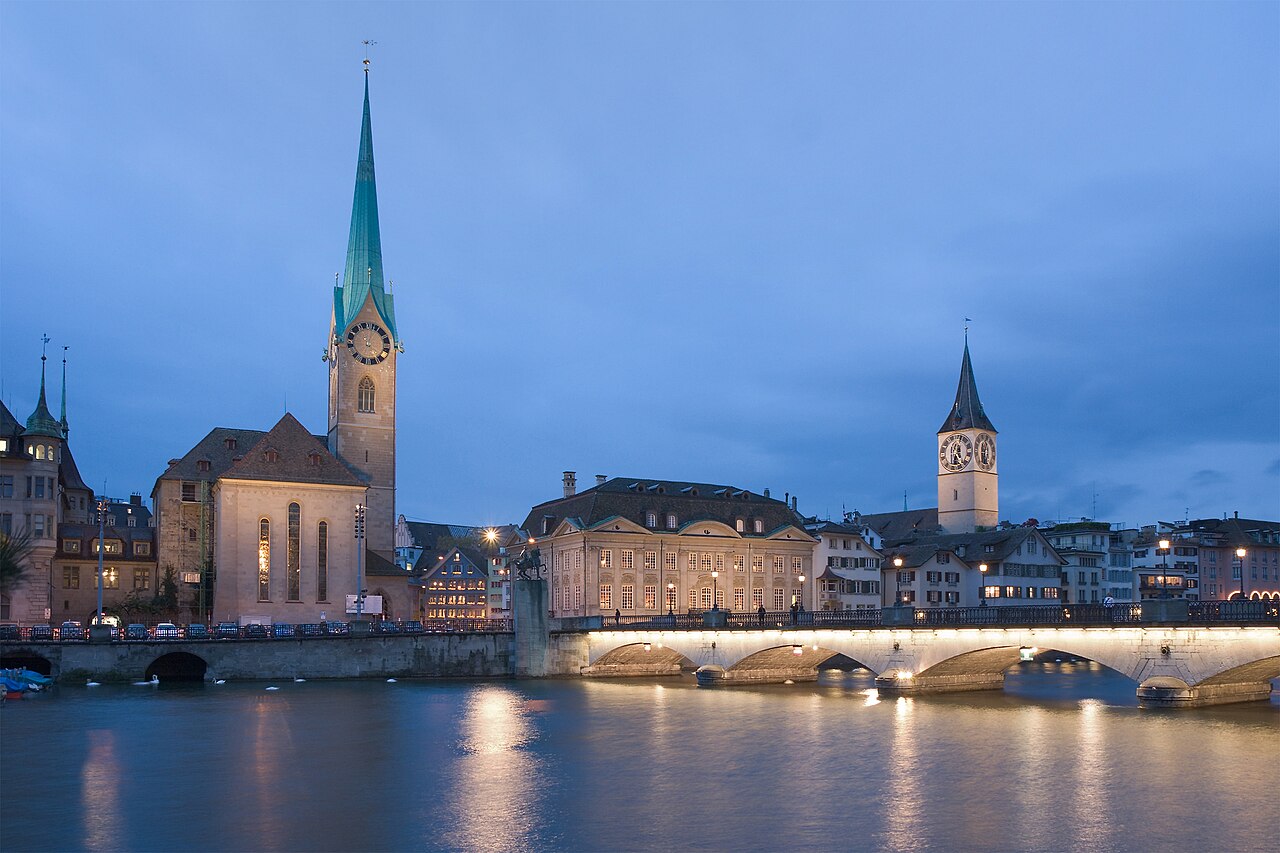
Zurich holds 436,551 people, which makes it the largest city in Switzerland and a small one by any other standard — the figure only reaches 2.1 million when the whole metropolitan region is counted. It sits at 408 m at the northwestern tip of its lake, where the Limmat runs out of it, and the twelve numbered districts turn outward from that point, with the old town on both banks as District 1. Bahnhofstrasse, laid out in 1867, covers the kilometre from the main station down to the water, and that kilometre absorbs most of a short visit.
Ranked by importance — sitelinks, pageviews and heritage status, not editor preference.
25 places match
Category
Typical visit duration
Interests
Source: OpenStreetMap contributors, Wikidata ·
Zurich is organised by water first. The old town sits where the Limmat leaves Lake Zurich, with Niederdorf on the east bank and Lindenhof, Bahnhofstrasse and the main station on the west. The lakefront opens south from there, and the hills rise quickly behind both sides, which is why viewpoints such as Uetliberg and the university terraces feel close even when they are not in the same walking loop. The city is divided into twelve Stadtkreise, or numbered districts. For a first visit, Kreis 1 is the old centre, Kreis 2 and 8 hold much of the lakefront, Kreis 4 and 5 are the nightlife and post-industrial quarters, and Kreis 6 and 7 climb toward the quieter residential hills.
Checked 2026-08-26
Zurich is a public-transport city before it is a taxi city. Zurich Tourism notes that tickets are valid within the chosen zones across tram, bus, S-Bahn, boat, cogwheel and funicular services, which is exactly why the network feels so easy once the zone is right. Trams handle the city centre and the lake approaches; S-Bahn trains handle the airport, the suburbs and longer cross-city jumps; boats and funiculars are useful enough to be transport and scenic enough to feel like part of the visit. Walk inside Kreis 1, ride for anything that crosses the station, the lake head or the hills.
Checked 2026-08-26
Two to three. One full day covers the old town, Bahnhofstrasse, the lake head and one museum if the pace is tight. A second day makes room for Kunsthaus, the National Museum and the lakefront; a third lets Uetliberg, Zurich Zoo or a slower boat-and-neighbourhood day fit without crowding the centre.
At the point where the Limmat leaves Lake Zurich. Niederdorf is the east-bank side, while Lindenhof and Bahnhofstrasse are on the west bank. The main station sits just north of that old centre, which is why Zurich is unusually easy to begin on foot.
By zones rather than by vehicle type. Zurich Tourism says tickets are valid in the chosen zones across bus, tram, S-Bahn train, boat, cogwheel and funicular services, so the same ticket can cover a tram ride, a lake boat and a hill railway if the zones are right.
Kreis 1. It holds the old town, the Limmat banks, the churches, Lindenhof, Bahnhofstrasse and the museum cluster around the main station. Kreis 4 and 5 matter after dark; Kreis 2 and 8 matter for the lakefront.
May, June and September are the cleanest choices. Zurich is a lake-and-viewpoint city, so clear mild days matter more than festival calendars. Winter works for museums and Christmas lights, but not for the outdoor half of the visit.
Set your days, your pace and the hours you actually want to be out. The planner works around closing days and travel time, and leaves room to eat.