Monumento histórico · Innere Stadt, Vienna
Ankeruhr
Fotografia


Acesso e instalações
- Acesso sem etapas · Disponível
Leia as tags de acesso do OpenStreetMap; qualquer coisa não listada não tem tag registrada.
Defina o tipo de grupo como família no planejador e os contratos da janela diária para cerca de três quartos de um dia individual.
- Hoje
- Horário não registado
- Duração da visita
- 20 min
- Acessibilidade
- Sem degraus
- Preço
- Não registrado
- Posição
- Imperdível · Património
- Classificação
- Classificação 41 de 5,640
Sobre Ankeruhr
The Ankeruhr, the Anker Clock, is an Art Nouveau clock built as a bridge between two buildings owned by the Anker Insurance company on Hoher Markt in Vienna's Innere Stadt. Painter and sculptor Franz von Matsch designed it between 1911 and 1917 as advertising for the insurer, whose name it still carries, and it remains privately owned rather than a civic monument even though it functions today as one of the city's best-known free attractions. The clock's construction spanned the First World War years, and its completion in 1917 came at a point when the insurer's own advertising ambitions for it had already outlasted the pre-war period that produced the commission. Franz von Matsch, its designer, was also one of the artists who worked alongside Gustav Klimt on the ceiling paintings of the Burgtheater, and the clock is his best-known solo public commission in the city.
Verificado em 2026-08-23 · Fonte
O que há dentro
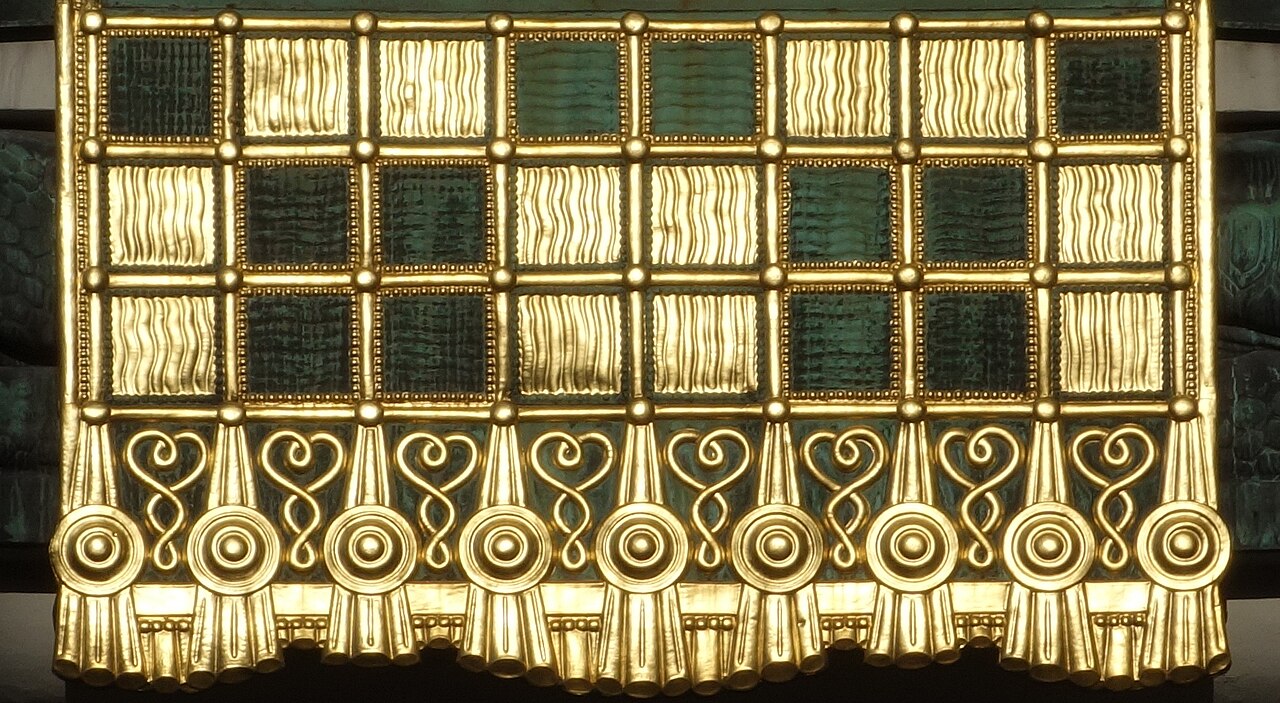
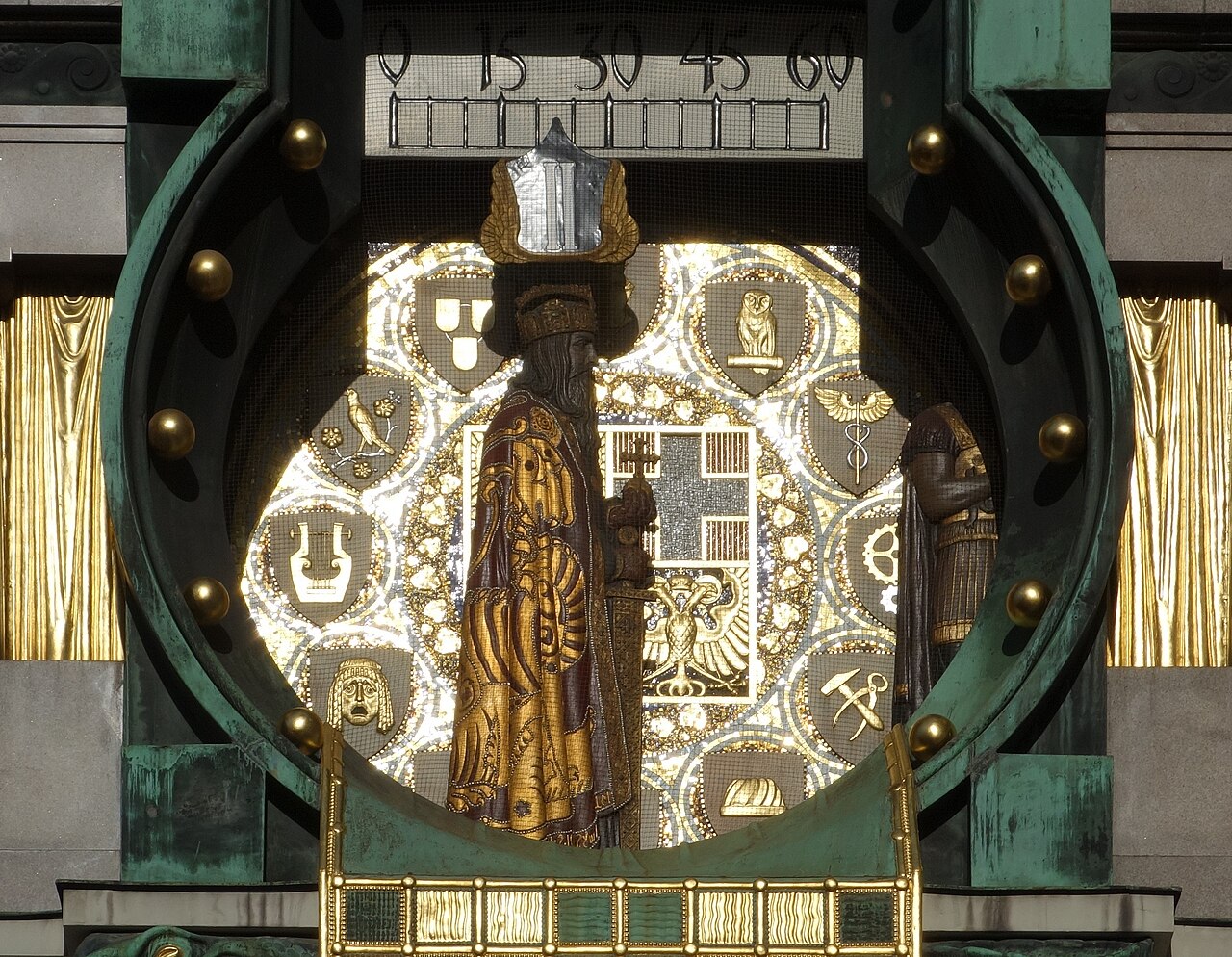
There is no interior; the clock is an exterior installation spanning the street-facing gap between the two Anker buildings, decorated with mosaic, ornament and twelve metal figures representing historical Viennese and imperial figures from Marcus Aurelius to Joseph Haydn, each mounted on a track that carries it slowly across the clock face. On an ordinary hour, a single figure makes its transit across the dial to a short burst of period music matched to its era; the full set of twelve crosses only once, at noon, in the order the historical figures are meant to have lived. The mosaic and metalwork surrounding the figures were restored after damage in the Second World War, and the clock mechanism itself has been serviced and adjusted several times since its original installation to keep the figures moving on schedule.
Verificado em 2026-08-23 · Fonte

.jpg)
Quanto tempo dedicar
The single-figure hourly transit takes under a minute to watch and is easy to miss if a visitor is not already standing there watching the clock face at the top of the hour. The noon parade, when all twelve figures cross in sequence with a longer musical accompaniment, runs about twelve minutes and is the version worth planning around; outside that window there is little reason to linger.
Verificado em 2026-08-23 · Fonte

.jpg)
Temporada e multidões
Noon is the only time that rewards a planned visit; the hourly single-figure transits on other hours are brief and, outside the tourist season, thinly attended even by locals who pass the square daily. Hoher Markt is otherwise an ordinary square with a Roman ruins display and a Baroque fountain, worth combining with the clock stop rather than the destination on its own, and the Roman ruins beneath the square can be visited separately on their own ticket at other times of day.
Verificado em 2026-08-23 · Fonte
Ingressos
Free. The clock is a street-level fixture with no admission and no set viewing area beyond the open square in front of it, and no seating or paid vantage point is sold for the noon parade itself, unlike some other Vienna landmarks that charge for a reserved viewing spot at a busy event.
Verificado em 2026-08-23 · Fonte

Chegando lá
Hoher Markt is a five-minute walk from Stephansplatz, served by the U1 and U3 lines, and a similar distance from Schwedenplatz on U1 and U4. Bus route 2A stops on the square itself, and several central tram lines pass within a short walk of the clock. Ankeruhr also earns time in a vienna itinerary because Exact production identity way/129241327 is assigned through pois.city_place_id; stored production name and coordinates were copied without approximation. Its value becomes clearer when the stop is compared with the surrounding streets and the other ranked places nearby.
Verificado em 2026-08-23 · Fonte

O que observar
Operator-confirmed hours and prices for Ankeruhr are Not recorded pending review. Treat the what to watch out for details as provisional when arranging this stop in Vienna. Check the operator's own site for the travel date before relying on a schedule, fare or closure notice. Keep enough flexibility to move the visit within the same area if current conditions differ from the plan. This guide does not infer practical facts from the venue category, nearby attractions or an aggregator.
Verificado em 2026-08-26


Fotografia
A wide shot from the square's far side takes in the whole clock bridge and both flanking buildings; a closer shot during the noon parade catches individual figures against the gilded backdrop, but the crowd at that hour makes a tripod impractical and a handheld shot the only realistic option. A telephoto lens used from further back across the square avoids the crush at the front while still isolating individual figures as they cross the dial one by one during the noon parade itself.
Verificado em 2026-08-23 · Fonte
Perguntas comuns
What time does the full Ankeruhr parade happen?
Noon, when all twelve figures cross the clock face in sequence with accompanying music; on other hours only a single figure makes the crossing.
How long does the noon parade last?
About twelve minutes.
Is there a charge to watch the clock?
No, it is free and viewable from the open square at any time.
Who built the Ankeruhr and when?
Franz von Matsch, between 1911 and 1917, commissioned by the Anker Insurance company as advertising.
Is the Ankeruhr worth visiting outside noon?
Not especially. The hourly single-figure transit is brief and easy to miss; the noon parade is the version worth planning a stop around.
Who are the twelve figures on the clock?
Historical and imperial figures connected to Vienna, spanning from Marcus Aurelius to the composer Joseph Haydn.
Onde está
A carregar o mapa interativo…
Não foi possível carregar o mapa interativo.
Perto
Encaixe isso em um plano
Links externos
Última atualização:
Fonte: Colaboradores do OpenStreetMap, Wikidata ·