
도보 13분
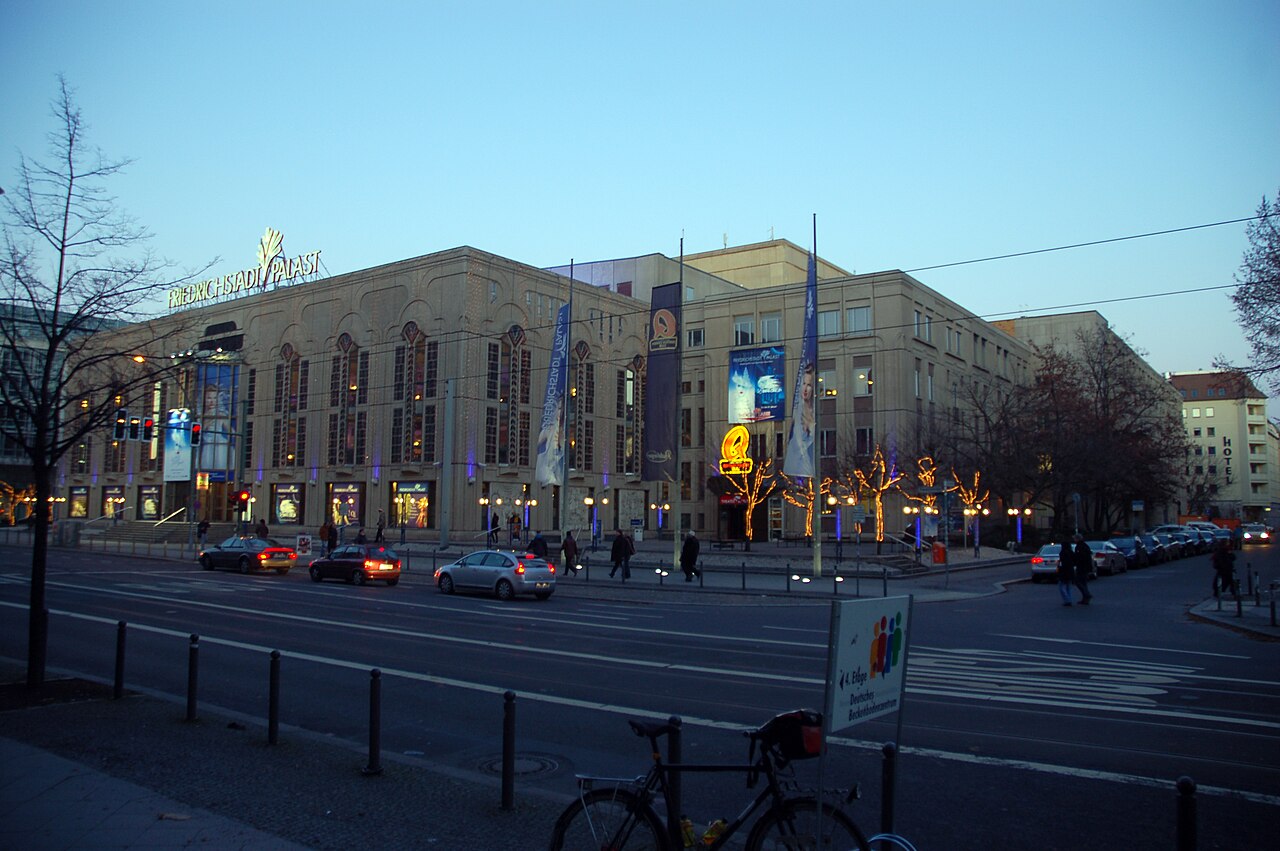
프리드리히슈타트 팔라스트
- 꼭 봐야 함 · 문화유산
- 예술 및 문화 시설
언어 · 11 게시됨
박물관 · 베를린
Museum für Naturkunde

| 월요일 | 휴무 |
|---|---|
| 화요일 | 09:30 – 18:00 |
| 수요일 | 09:30 – 18:00 |
| 목요일 | 09:30 – 18:00 |
| 금요일 | 09:30 – 18:00 |
| 토요일 | 10:00 – 18:00 |
| 일요일 | 10:00 – 18:00 |
2026-09-09의 OpenStreetMap 영업 시간에서 구문 분석되었습니다.
이곳은 박물관입니다. 1889년에 개장했습니다.
The Museum für Naturkunde, formally the Museum für Naturkunde - Leibniz Institute for Evolution and Biodiversity Science, is a natural history museum in Berlin. It operates as part of the Humboldt University and serves as a research institution alongside its public exhibition role. The museum houses extensive scientific collections and presents specimens to visitors. Its local name is Museum für Naturkunde. The institution ranks 44 of 100 in its displayed category, suggesting moderate visitor interest relative to other Berlin attractions. A flexible visit keeps attention on what is distinctive at Museum für Naturkunde - Leibniz Institute for Evolution and Biodiversity Science without treating one room, viewpoint or photograph as the whole experience. Conditions on arrival should decide the final pace.
2026-08-28를 확인했습니다.
The museum contains natural history collections including fossil specimens, skeletal displays, and preserved biological materials. Notable exhibits include dinosaur skeletons and other paleontological finds. The institution functions as both public museum and active research center for evolution and biodiversity science. Specific current exhibitions, temporary displays, and the full scope of collection items are not recorded in available sources. Visitors should consult official channels for current exhibition details. The dual purpose as research facility means some collections may be inaccessible to the public.
2026-08-28를 확인했습니다.
Visit duration varies by individual interest in natural history subjects. Casual visitors typically spend two to three hours viewing main exhibits. Enthusiasts of paleontology, evolutionary biology, or biodiversity may require additional time. The museum's combination of public displays and research functions suggests focused exhibition areas rather than sprawling galleries. Without specific information on current exhibition scale or audio guide availability, visitors should allocate flexible time. School groups and families with children may move through at different paces depending on engagement levels with scientific content.
2026-08-28를 확인했습니다.
Visitors must verify current opening times through official museum channels before planning visits. Seasonal variations, holiday schedules, and special event closures are common for Berlin museums but not specified in available sources. Weekday mornings potentially offer quieter experiences if standard museum patterns apply. Weekend and holiday periods typically draw larger crowds at major attractions. Research institute functions may affect public access on certain days. Advance verification remains essential for reliable planning. Museum für Naturkunde - Leibniz Institute for Evolution and Biodiversity Science also earns time in a berlin itinerary because its setting and role differ from the surrounding ranked stops. Compare the place with the nearby streets before deciding how it fits the day. Check the operator's own site for the travel date before relying on a schedule or fare.
2026-08-28를 확인했습니다.
Admission costs, concession categories, and free-entry conditions are not available in cited sources. Many Berlin museums participate in city-wide discount schemes or museum passes, though specific affiliation is unconfirmed here. Family tickets, group rates, and educational program fees require direct inquiry. Research institutions sometimes maintain separate funding models affecting public admission structures. Visitors should consult the museum's official website or contact staff directly for current pricing. Free entry days, if offered, are not documented in available references. Check the operator's own site for the travel date before relying on a schedule or fare.
2026-08-28를 확인했습니다.
The museum occupies a specific node location in Berlin's urban fabric. Public transportation access is probable given Berlin's extensive transit network, though exact routes are not recorded. The museum's association with Humboldt University suggests proximity to academic district infrastructure. Visitors should use standard Berlin navigation tools and transit apps for precise directions. Bicycle and pedestrian access follow typical central Berlin patterns. Parking availability, accessibility features, and nearest transit stops require verification through official sources or mapping services beyond the provided pointers.
2026-08-28를 확인했습니다.
The museum's active research status means certain areas may be restricted from public access. Visitors should respect boundary markings and staff instructions. Natural history specimens require controlled environmental conditions; rapid temperature changes or humidity from wet clothing may affect displays. Photography policies, if any, should be confirmed on-site. Crowding around popular dinosaur exhibits is probable during peak periods. The institution's dual function as research center may result in unexpected closures or modified access for academic activities. Children's engagement with delicate exhibits requires supervision.
2026-08-28를 확인했습니다.
Photography policies at the Museum für Naturkunde are not recorded in available sources. Visitors should observe posted signage or inquire with staff upon entry. Flash photography may be restricted to protect light-sensitive specimens, following standard museum practice. Tripod and professional equipment use typically requires advance permission at research institutions. Social media sharing of images is generally permitted where photography is allowed, though commercial use may face restrictions. Specific rules for temporary exhibitions may differ from permanent collection policies. Verification on arrival is advisable.
2026-08-28를 확인했습니다.
Yes, it operates as part of Humboldt University Berlin while also functioning as the Leibniz Institute for Evolution and Biodiversity Science.
The actual displayed rank is 44 of 100, indicating moderate relative visitor interest.
No. As an active research institution, some collections and areas may be restricted for scientific use.
No. Check official sources before visiting.
Contact the museum directly for current rates. Check the operator's own site for the travel date before relying on a schedule or fare.
Wikidata entry Q233098 and OpenStreetMap node 538692583.
인터랙티브 지도를 불러오는 중…
인터랙티브 지도를 불러올 수 없습니다.
마지막 업데이트:
출처: OpenStreetMap 기여자, Wikidata ·