史跡 · Simmering, Vienna
Wiener Gasometer
写真
_-_Gasometer_(2).JPG)
アクセスと設備
- 段差なくアクセス可能 · 利用可能
OpenStreetMap アクセス タグから読み取ります。記載されていないものにはタグが記録されていません。
プランナーでグループ タイプをファミリーに設定し、1 日の枠を 1 人の 1 日の約 4 分の 3 に設定します。
- 今日
- 営業時間の記録なし
- 訪問期間
- 1時間
- アクセシビリティ
- ステップフリー
- 価格
- 未登録
- 評価
- 高 · 遺産
- ランク
- 5,640 の 916 をランク付け
Wiener Gasometerについて
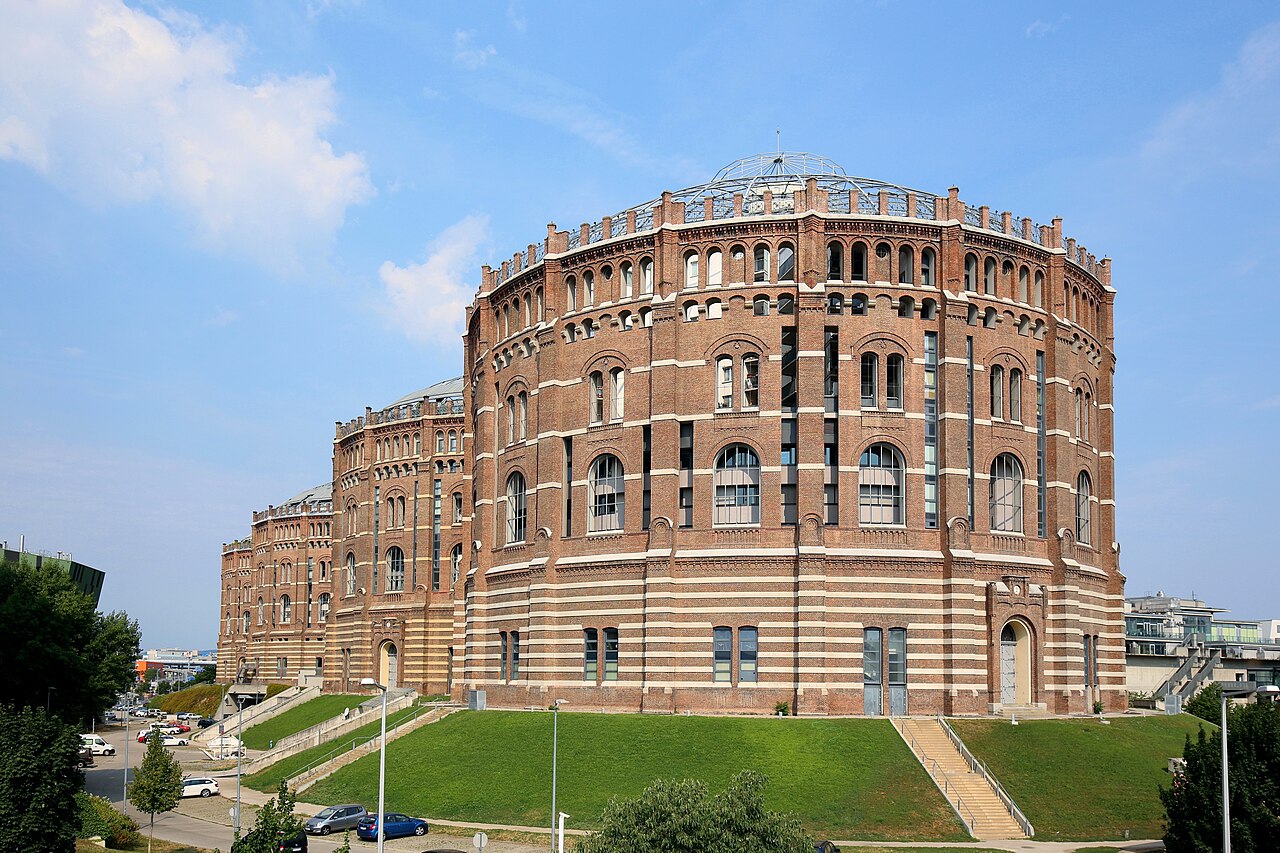
The Gasometers are four Victorian gas holders with flats inside them.
They were built between 1896 and 1899 to store town gas for Vienna's network. Each is 70 m tall and 60 m across, in red brick, and each held about 90,000 m³ of gas in a telescopic holder sitting in a water basin.
Vienna changed from town gas to natural gas between 1969 and 1978 and the holders were decommissioned in the mid-1980s. The brick shells were listed and left standing empty for over a decade.
Between 1999 and 2001 four architects converted one each: Jean Nouvel took A, Coop Himmelb(l)au B, Manfred Wehdorn C and Wilhelm Holzbauer D.
2026-08-23 を確認しました · ソース
中には何が入っているのか
About eight hundred flats, a concert hall, a cinema and a shopping mall, inside brick cylinders that used to hold gas.
The historic exterior walls were kept and the new buildings were dropped inside them, so from outside almost nothing has changed since 1899 and from inside nothing is the same.
The music venue holds 4,200. There is also a student hall of residence, a cinema and the municipal archive.
The four are linked at mall level, which means walking between all of them without going outside — the fastest way to see what four different architects made of the same brief.
The empty holders appeared in The Living Daylights in 1987, before the conversion.
2026-08-23 を確認しました · ソース


見学時間の目安
An hour, and it is an architecture visit rather than a sightseeing one.
The mall level takes twenty minutes to walk end to end. Looking up inside each cylinder — which is what there is to see — takes the rest.
Nouvel's and Coop Himmelb(l)au's are the two that reward the walk; the differences between them are the whole point of the site.
This is not central Vienna and there is nothing else nearby, so it is a trip out rather than a stop on a walk.
Twenty minutes on the U3 each way makes it a two-hour outing at minimum, which is the number to plan against rather than the hour spent on site.
2026-08-23 を確認しました · ソース


季節と混雑状況
Shopping hours, since the interiors are reached through the mall.
The residential parts are private and the public route is the retail level and the atria above it.
Daylight matters: the conversions all bring light down into the cylinders from the glazed roofs, and that is what there is to see.
Concert nights are the other time the site is worth crossing the city for, and then the reason is the 4,200-capacity hall rather than the architecture.
Winter is no worse than summer here, since nearly all of the visit is under a roof.
2026-08-23 を確認しました · ソース
チケット
Free. The mall and the public atria can be walked into during shopping hours.
The apartments and the student residence are private.
The concert hall sells tickets per event; those rates are not published on the sources this page uses and are not reproduced here.
2026-08-23 を確認しました · ソース


行き方
The 11th district, Simmering, in the south-east of the city.
Gasometer on U-Bahn line U3 is directly beneath the complex and connects into the mall.
The U-Bahn has five lines and 109 stations over 83.9 km, running from about 05:00 to 01:00 and all night at weekends.
2026-08-23 を確認しました · ソース


気をつけるべきこと
It is a shopping centre with flats above it. Visitors expecting an industrial monument find a mall, and the historic fabric is the outside wall rather than anything inside.
The residential floors are private and are not open.
The mall keeps ordinary retail hours and the site is dead outside them.
It is a long way from the centre with nothing else around it; going out and back is most of the time the visit takes.
The best views up into the cylinders are from the atria, not from the shop floors.
2026-08-23 を確認しました · ソース


写真
The exterior is the easier photograph: four identical brick drums in a row, best from the elevated approach or from a train on the line beside them.
Inside, the atria looking straight up to the glazed roofs are the pictures that explain the building, and they need a very wide lens and a steady hand at low shutter speeds.
Nouvel's cylinder, with its mirrored surfaces, is the hardest and most rewarding of the four.
The residential galleries are private and photographing into flats is not acceptable.
2026-08-23 を確認しました
よくある質問
What were the Gasometers?
Four gas holders built between 1896 and 1899 to store town gas, each 70 m tall, 60 m across and holding about 90,000 m³.
Why are there flats inside them?
They were decommissioned in the mid-1980s when Vienna changed to natural gas, and the listed brick shells were converted between 1999 and 2001 with new buildings dropped inside them.
Who designed the conversions?
One architect each: Jean Nouvel took A, Coop Himmelb(l)au B, Manfred Wehdorn C and Wilhelm Holzbauer D.
What is inside now?
About 800 apartments, a 4,200-capacity music venue, a cinema, a student hall of residence, a shopping mall and the municipal archive.
Can I go in?
Into the mall and the public atria, free, during shopping hours. The apartments and student residence are private.
Is it worth the trip?
As architecture, yes — it is the clearest comparison of four contemporary architects on one brief anywhere in Vienna. As sightseeing it is a shopping centre a long way from the centre.
どこにありますか
インタラクティブマップを読み込んでいます…
インタラクティブマップを読み込めませんでした。
近くの
計画に組み込む
外部リンク
最終更新日:
情報源: OpenStreetMap コントリビューター, Wikidata ·