


12 min walk
Centrale Montemartini
- Must see · Heritage site
- Museum
Language · 1 published
Place of worship · Rome
Basilica di San Paolo fuori le mura
| Monday | 07:00 – 18:30 |
|---|---|
| Tuesday | 07:00 – 18:30 |
| Wednesday | 07:00 – 18:30 |
| Thursday | 07:00 – 18:30 |
| Friday | 07:00 – 18:30 |
| Saturday | 07:00 – 18:30 |
| Sunday | 07:00 – 18:30 |
Parsed from OpenStreetMap opening hours on 2026-08-25.
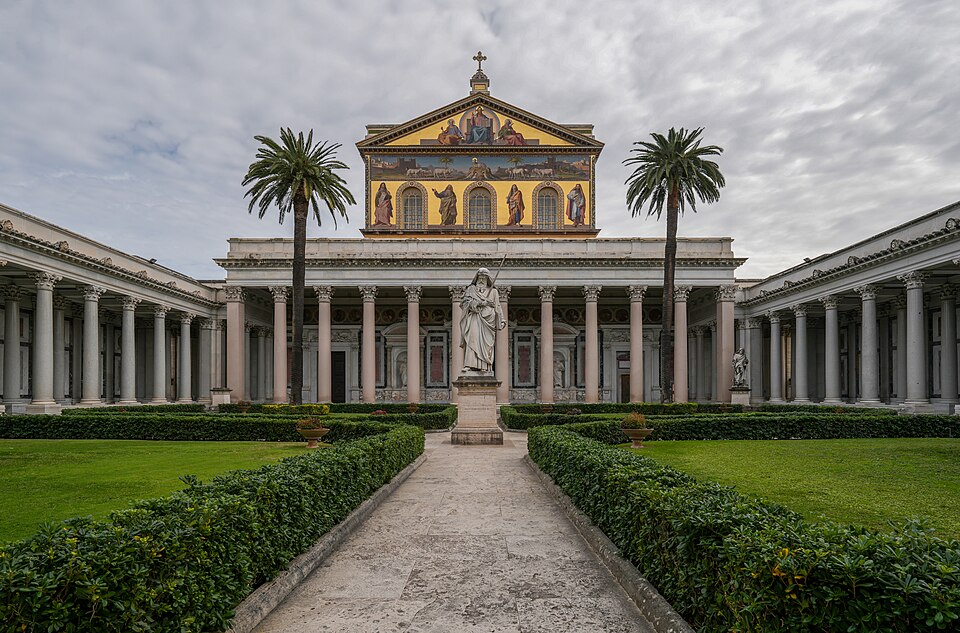
The Basilica of Saint Paul outside the Walls is one of Rome's four major papal basilicas. Located in the Ostiense district, it stands on the traditional site where Saint Paul was buried after his martyrdom. The current structure largely dates from reconstruction after an 1823 fire. The basilica retains its status as a site of significant religious and historical importance, attracting pilgrims and visitors interested in early Christian heritage and monumental ecclesiastical architecture. Basilica of Saint Paul outside the Walls also earns time in a rome itinerary because Exact unique production name match within the declared city scope. Its value becomes clearer when the stop is compared with the surrounding streets and the other ranked places nearby.
Checked 2026-08-26
The interior features a vast nave with eighty columns dividing five aisles. Notable elements include the triumphal arch with mosaic work, the cloister with Cosmatesque decoration, and the presumed tomb of Saint Paul visible beneath the main altar. The basilica houses papal portraits in mosaic form lining the upper nave walls. The adjacent Benedictine monastery and its quadrangle represent significant monastic architectural heritage. The overall spatial experience conveys the monumental scale characteristic of major Roman basilicas. A flexible visit lets travellers connect Basilica of Saint Paul outside the Walls with the rest of the day without treating one room, viewpoint or photograph as the whole experience. The useful pace depends on personal interest and conditions on arrival.
Checked 2026-08-26
A thorough visit to the basilica interior, including the cloister and papal portrait gallery, typically requires between sixty and ninety minutes. Visitors with specific devotional interests or those wishing to examine architectural details at length may extend their stay. The site encompasses both the main church and exterior grounds, which merit additional consideration. The relative distance from Rome's central tourist concentration often means fewer crowds, allowing for unhurried exploration without the pressure of dense visitor numbers common elsewhere.
Checked 2026-08-26

Operator-confirmed hours are Not recorded pending review. Visitors should consult official sources before planning their visit. The Ostiense location means the basilica experiences different crowd patterns than central Roman attractions. Morning visits generally offer calmer conditions for contemplation. The interior illumination varies throughout the day, affecting visibility of mosaic details and architectural features. Seasonal considerations apply to Rome generally, with summer bringing heat that the stone interior partially moderates. Religious observances may restrict access during services.
Checked 2026-08-26
Operator-confirmed prices are Not recorded pending review. As a functioning papal basilica, entry policies may differ from standard museum or monument arrangements. Some papal basilicas maintain free admission for the main church, though donations are customary. Special exhibitions or access to particular areas may involve separate arrangements. Visitors should verify current policies through official channels. Group visits and guided tours may operate under distinct conditions. Any required reservations should be confirmed directly with basilica administration rather than assumed.
Checked 2026-08-26

The basilica sits outside Rome's ancient walls in the Ostiense district, accessible via Metro Line B to San Paolo station. This location defines its historical designation. Bus services connect to surrounding areas. The distance from central Rome necessitates dedicated travel time. Walking from the metro station involves a brief approach. The site occupies substantial grounds with clear exterior identification. Signage directs visitors from transit points. The non-central position means fewer incidental passersby and more purposeful visitation patterns.
Checked 2026-08-26
Appropriate dress is required for entry to this functioning religious site, with shoulders and knees typically expected to be covered. The basilica remains an active place of worship, requiring respectful conduct during services. The expansive interior can disorient visitors; noting exit positions is prudent. The surrounding Ostiense district has industrial heritage elements that differ from central Rome's character. Evening approaches should account for neighborhood patterns. Photography restrictions may apply in specific areas. The tomb area beneath the altar may have access limitations.
Checked 2026-08-26
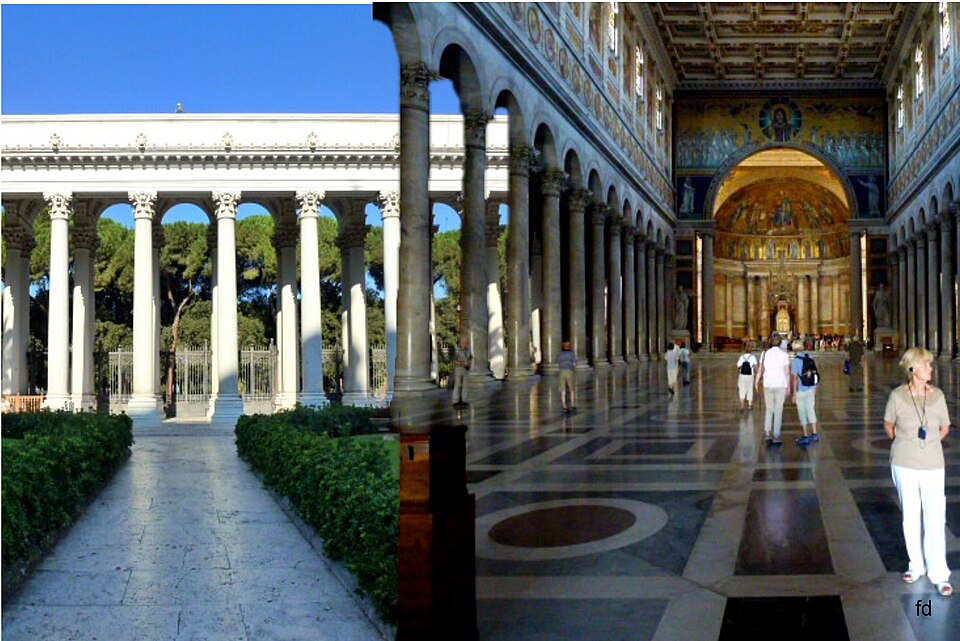
Photography policies within the basilica are not specified in available sources and should be confirmed on arrival. Flash photography is commonly restricted in historic religious sites to protect sensitive materials. The interior's scale and lighting conditions present technical challenges for documentation. The cloister offers distinct photographic opportunities with its geometric precision. Tripod use typically requires advance permission in major basilicas. Natural light varies significantly by time and season, affecting interior photography possibilities. Respect for worshippers and services must guide all photographic activity.
Checked 2026-08-26
No. The basilica lies in the Ostiense district, well beyond the ancient walls. Metro connection via Line B is the practical transit method.
The main altar incorporates the traditional site of Saint Paul's burial. Archaeological and documentary evidence supports this tradition, though individual interpretation varies.
This is not recorded in available sources. Visitors should verify current requirements through official basilica channels before visiting.
Specific tour arrangements are not recorded. The site's scale and significance suggest guided options may exist, but confirmation from official sources is necessary.
Saint Paul's lies outside the ancient walls, serves a different apostolic tradition, and typically receives fewer visitors. Its reconstruction history and monastic connections create distinct character.
The cloister forms part of the visitable complex, though specific access conditions are not recorded and should be confirmed on arrival.
Loading the interactive map…
The interactive map could not be loaded.
Last updated:
Source: OpenStreetMap contributors, Wikidata ·