

.jpg)
.jpg)
1 min walk
Salvatore Romano Foundation
- High
- Museum
Language · 1 published
Historic monument · Florence
Basilica di Santa Maria del Santo Spirito
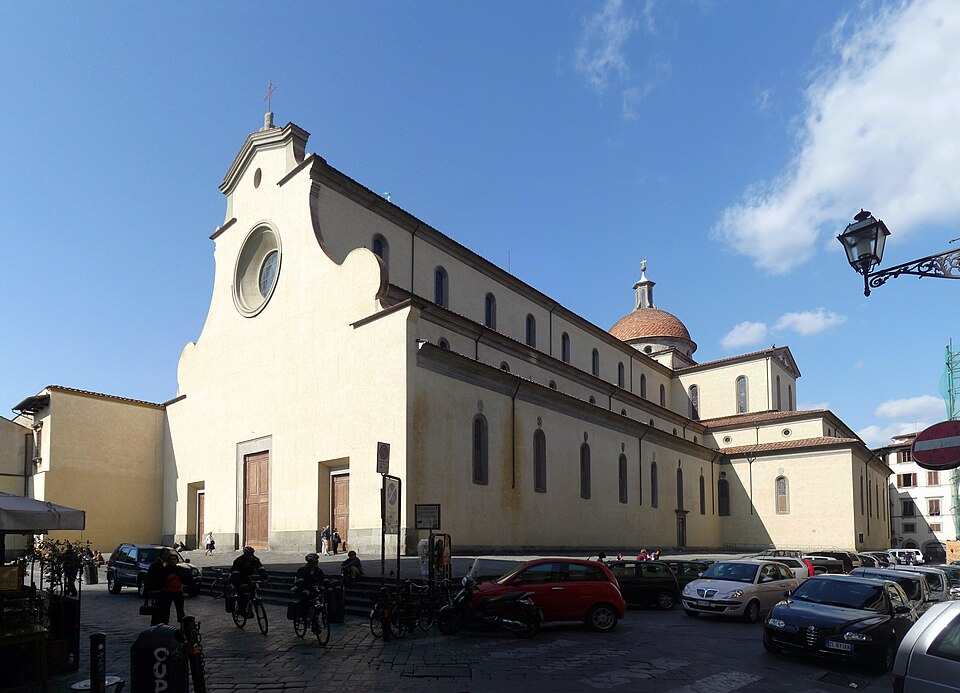
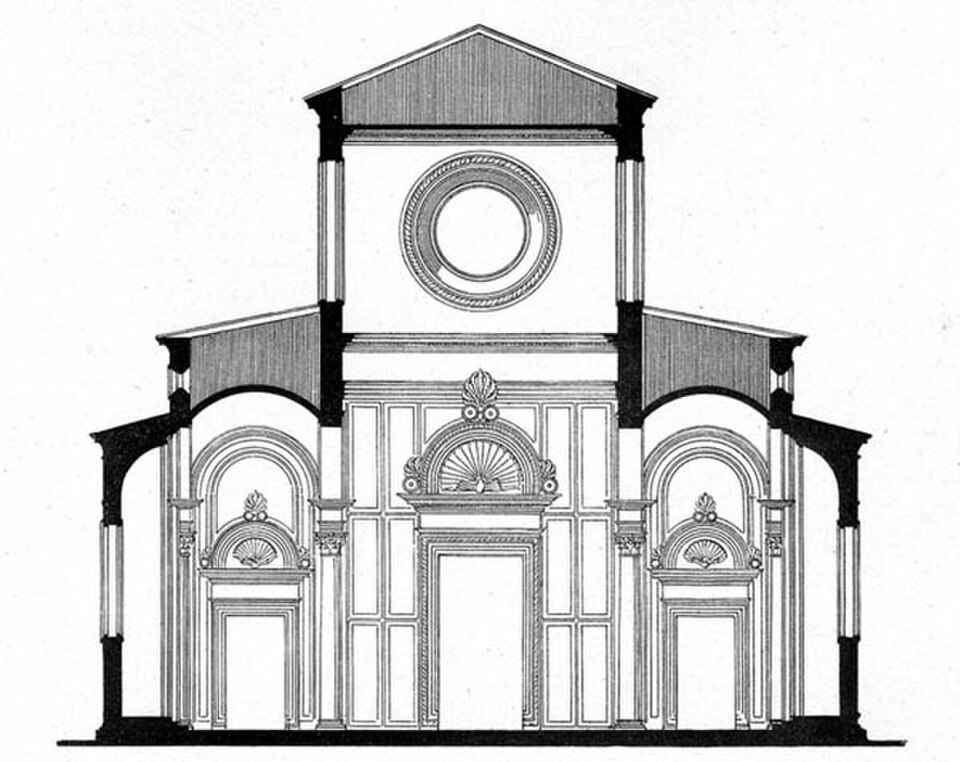
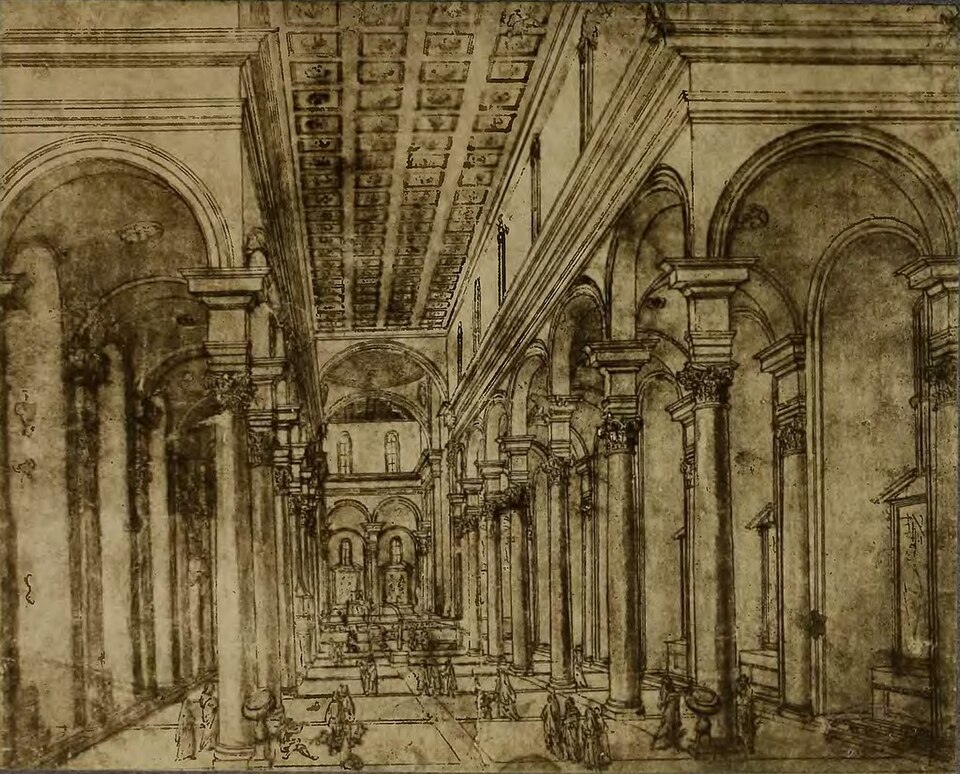
Santo Spirito is a major basilica in Florence's Oltrarno district, formally named Basilica di Santa Maria del Santo Spirito. The church stands as one of the most significant Renaissance religious structures in the city, designed by Filippo Brunelleschi. Construction began in the mid-15th century and continued after the architect's death. The basilica features a distinctive Latin cross plan with a spacious interior that exemplifies Brunelleschi's architectural principles of proportion and mathematical harmony. The unfinished facade preserves the building's austere character.
Checked 2026-08-26
The interior contains important artistic works including a crucifix attributed to Michelangelo, created when the sculptor was young. The sacristy holds additional significant pieces. Thirty-eight side chapels line the nave and transepts, many decorated with altarpieces and sculptures from prominent Renaissance and Baroque artists. The architectural space itself constitutes the primary experience, with Brunelleschi's rigorous geometric design creating a contemplative atmosphere. The coffered dome and harmonious proportions demonstrate the architect's mastery of classical forms adapted for Christian worship. Santo Spirito also earns time in a florence itinerary because Selected as a distinct visitor-facing POI and matched exactly to the production city pool. Its value becomes clearer when the stop is compared with the surrounding streets and the other ranked places nearby.
Checked 2026-08-26
Visitors typically spend forty-five minutes to one hour exploring the main church interior. Those with particular interest in Renaissance architecture or Michelangelo's early work may extend their visit to ninety minutes. The basilica's scale permits efficient viewing while still rewarding attentive observation of structural details and chapel artworks. Morning visits tend to proceed at a more measured pace. No guided tours are mentioned in available sources, so self-directed exploration forms the standard experience. Combine with nearby Oltrarno attractions for a half-day itinerary.
Checked 2026-08-26
Operator-confirmed hours are Not recorded pending review. Visitors should consult official sources before planning their trip. The Oltrarno location means the basilica experiences different crowd patterns than central Duomo-area monuments. Morning hours generally offer quieter conditions for appreciating the architectural space. The district's authentic character makes any season viable, though summer brings more tourists to Florence overall. Religious services may restrict visitor access at certain times. Sunday mornings and major feast days require particular caution regarding potential closures or limited entry.
Checked 2026-08-26
Operator-confirmed prices are Not recorded pending review. Many Florentine churches operate with variable admission policies, sometimes requiring separate fees for specific chapels or the sacristy. The Michelangelo crucifix may incur additional charges if displayed in a restricted area. Visitors should carry small denomination cash as some religious sites in Italy remain cash-preferred. Combination tickets with other Oltrarno attractions are not documented in available sources. Verify current policies at the entrance or through official channels rather than relying on secondary information.
Checked 2026-08-26
Santo Spirito sits in the Oltrarno district, south of the Arno River. Walk across the Ponte Santa Trinita or Ponte Vecchio from the historic center. The basilica gives its name to Piazza Santo Spirito, a lively square with local character. Public buses serve the general area, though walking from central Florence remains most common. The surrounding streets are narrow and pedestrian-priority. Allow extra navigation time as the Oltrarno's street pattern confuses some visitors accustomed to the more regular grid north of the river.
Checked 2026-08-26
The unfinished rough stone facade may surprise visitors expecting ornate church exteriors; this is intentional, not deterioration. Pickpockets operate in crowded Florence tourist areas including bridge crossings to Oltrarno. Dress modestly as this remains an active place of worship; shoulders and knees should be covered. Photography restrictions may apply without clear signage. The piazza outside attracts evening social gatherings that differ from daytime tranquility. Some chapel artworks may be temporarily removed for restoration. Wheelchair access may be limited by historic building constraints.
Checked 2026-08-26

Interior photography policies are not explicitly documented in available sources. Many Florentine churches prohibit flash photography to protect artworks and preserve atmosphere. Natural light through Brunelleschi's carefully positioned windows creates distinctive photographic conditions inside. The uniform interior whiteness challenges exposure settings. The exterior facade's unfinished state offers textural interest uncommon among Italian church photographs. The piazza provides contextual shots showing the basilica's relationship to neighborhood life. Respect worshippers and any service in progress. Tripods likely restricted without special permission. A flexible visit lets travellers connect Santo Spirito with the rest of the day without treating one room, viewpoint or photograph as the whole experience. The useful pace depends on personal interest and conditions on arrival.
Checked 2026-08-26
Not recorded. Artworks in active religious buildings may be moved for conservation, loan, or during liturgical periods. Verify current display status before visiting.
The basilica functions as an active parish church. Visitors should observe appropriate decorum and check posted schedules for service times that may affect tourist access.
Standard practice for Italian churches applies. Shoulders and knees should be covered as a sign of respect in this religious building.
Not recorded in available sources. The standard visitor experience appears to be self-directed exploration of the interior.
Santo Spirito represents the architect's mature vision for a large congregational space, developed from earlier experiments at San Lorenzo. The unified interior achieves remarkable spatial coherence.
Yes. The Oltrarno retains authentic artisan workshops and local dining. Piazza Santo Spirito hosts a morning market and evening social life distinct from more touristed areas.
Loading the interactive map…
The interactive map could not be loaded.
Last updated:
Source: OpenStreetMap contributors, Wikidata ·