.jpg)


2 min walk
Csarnok tér
- Historic monument
Language · 1 published
Market · Budapest
Központi Vásárcsarnok
| Monday | 06:00 – 18:00 |
|---|---|
| Tuesday | 06:00 – 18:00 |
| Wednesday | 06:00 – 18:00 |
| Thursday | 06:00 – 18:00 |
| Friday | 06:00 – 18:00 |
| Saturday | 06:00 – 16:00 |
| Sunday | 10:00 – 16:00 |
Checked 2026-08-26 · Source
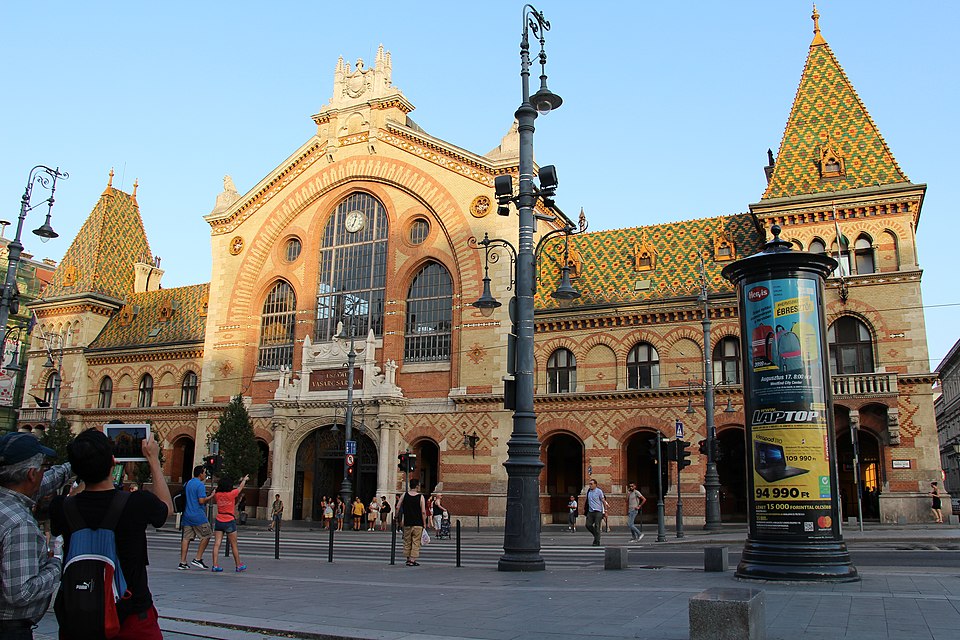
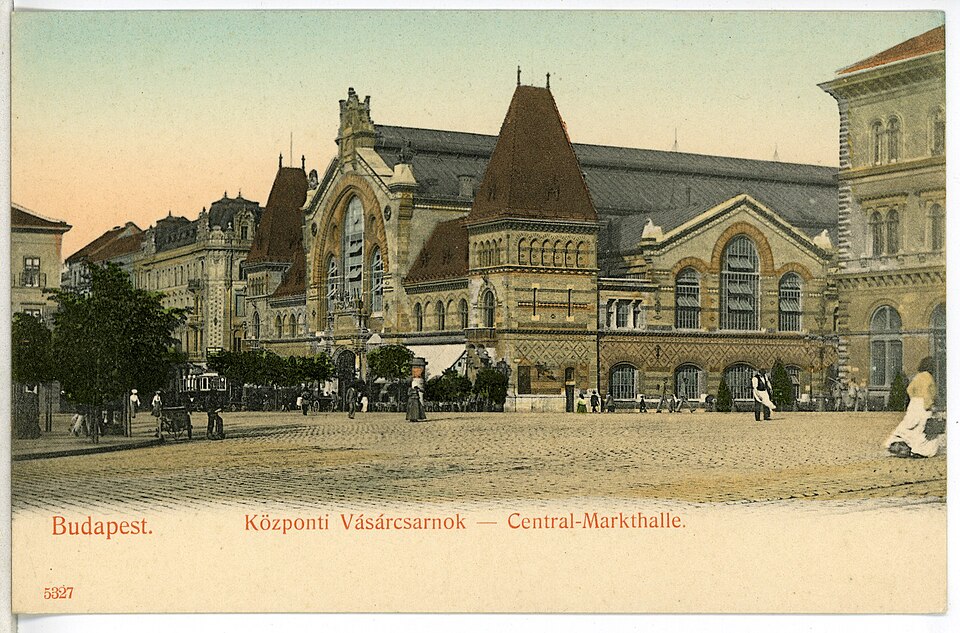
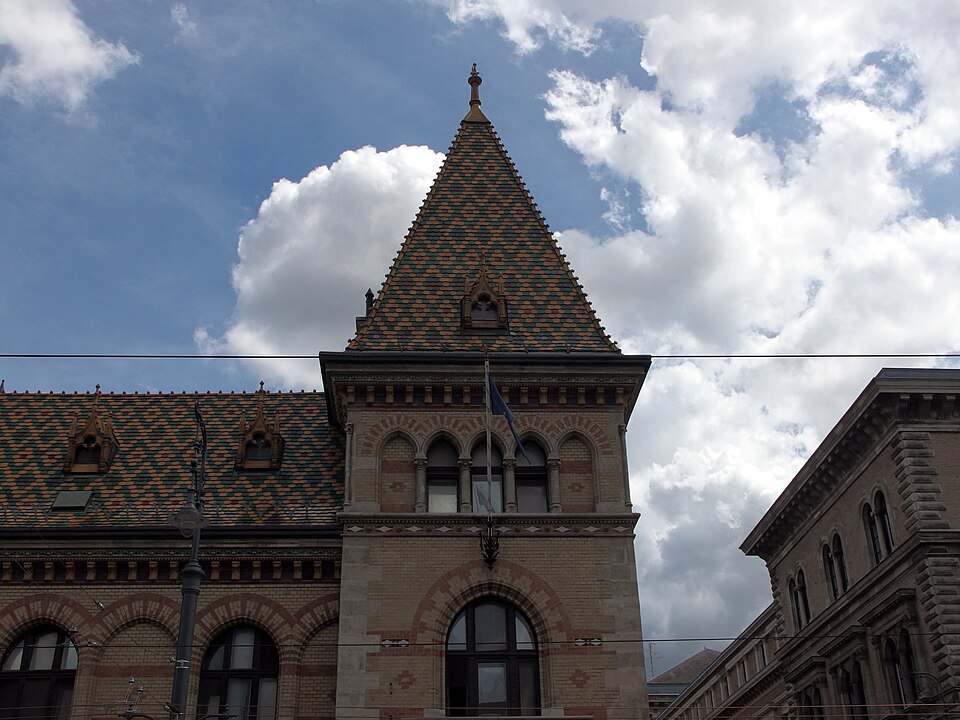
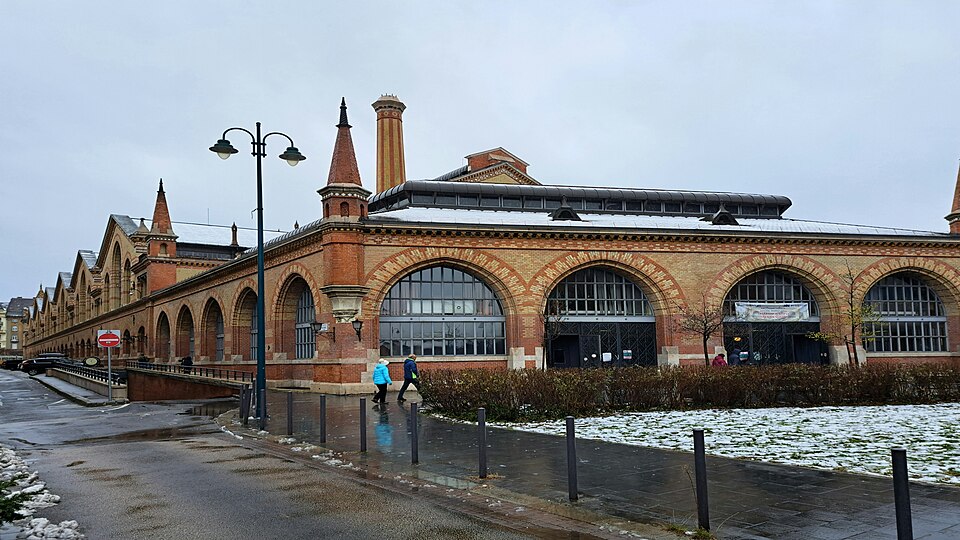
The Nagyvásárcsarnok, signposted in English as the Central Market Hall and known to most visitors as the Great Market Hall, stands at Vámház körút 1-3 at the Pest foot of Liberty Bridge. It is a municipal food market, not a museum: it is run by Budapest Vásárcsarnokai Kft., the city company that operates thirteen market halls and shopping halls across Budapest, and this is the largest and oldest of them. The building was designed by Samu Pecz, whose plan the city assembly settled on in its session of 21 February 1894 with the aim of opening in time for the millennium exhibition of 1896. A fire on 30 July 1896 gutted the nearly finished hall when ten days of work remained, and the opening slipped: traders were selling inside from 1 February 1897, rent-free until the formal ceremony that followed. Schlick's iron foundry made the steelwork and the Zsolnay factory of Pécs made the coloured roof ceramics. The hall was badly damaged in the Second World War and was renovated between 1991 and 1994, a job constrained by its status as a protected monument. What that history produces today is a hall that opens at six in the morning for people buying their dinner, and fills with visitors several hours later.
Checked 2026-08-26 · Source
The operator's own stall directory lists 208 units in the hall, and the split across three levels is the thing to hold in your head before you walk in: 123 on the ground floor, 59 on the upper floor, 26 in the basement. The categories are counted too. Fruit and vegetables is the largest trade at 49 stalls, followed by 33 general shops, 30 gift and souvenir stalls, 30 butchers and cured-meat counters, and 28 mixed grocers. Then the smaller trades: nine restaurants and food counters, eight health-food shops, seven fishmongers and game dealers, five pickle stalls, four household-goods shops, two dairies, one bakery, one service unit and the market supervisor's office. Read those numbers as a floor plan. The ground-floor nave is where the food shopping happens, under the long steel roof. The upper gallery is where the cooked-food counters and the great majority of the souvenir stalls sit, which is why it is the busiest level at lunchtime and the one photographed most. The basement holds fishmongers, pickles and a full supermarket, an Aldi that the operator lists among its tenants. Two permanent displays run alongside the trade: Hungarikum utca, a fixed presentation of Hungarian products sold in the hall, and Édes élet, an exhibition about bees open every day during the hall's own hours.
Checked 2026-08-26 · Source
Allow one hour. Budapest Vásárcsarnokai publishes no suggested visit length for the hall, so sixty minutes is this guide's judgement rather than a figure read off the operator's site, and it is built from the layout the operator does publish. One unhurried circuit of the ground-floor nave, where 123 of the 208 units sit, takes about half of it. The upper gallery, with its nine food counters and thirty gift stalls, takes fifteen to twenty minutes if you are only looking. The basement, where the fishmongers and the supermarket are, takes ten. That is a look, not a meal and not a shop. Add thirty to forty-five minutes if you intend to eat at one of the upper-floor counters, because the queues there are at their longest between noon and two and the seating is limited to a few standing counters. Add another twenty if you are buying paprika, sausage or wine to take home and you want to compare more than one stall before you commit. A visitor arriving at six in the morning to watch the hall work rather than to shop can be finished in thirty minutes; the same visitor at one in the afternoon will need ninety.
Checked 2026-08-26
The hall is open seven days a week and has no weekly closing day. The operator publishes the hours as Monday to Friday 06.00 to 18.00, Saturday 06.00 to 16.00, and Sunday 10.00 to 16.00, with no midday break at any point in the week. It is closed on Hungarian public holidays and official rest days, and that closure is total rather than a shortened day, so a visit planned around 15 March, 20 August or 23 October needs checking against the Hungarian calendar first. The Sunday opening is worth a second look, because it is unusual within the operator's own network: of the other market halls it runs, most list Sunday as closed, and the Great Market Hall is one of only two that trade at all. The hours that matter to your morning are the early ones. From 06.00 the hall is doing its actual job, restaurant buyers and neighbourhood shoppers moving through half-empty aisles, and the light coming through the end windows is at its best. Coach groups and the lunch queues on the upper gallery build from mid-morning onward, and the middle of the day in high season is the hardest time to see anything but other visitors.
Checked 2026-08-26 · Source
There is no ticket. The operator states it twice and in both languages: the English page for the hall says "Free entry!" and the network-wide opening-hours page says entry to every one of its facilities is free. Nothing is booked in advance, there is no timed entry, there is no queue to get in and there is no separate charge for the upper gallery, the basement or either of the two permanent displays inside. What you spend, you spend at the stalls, and the operator publishes no price list for goods sold by its tenants, so this guide records none: prices are set by 208 independent traders and vary between them, which is the argument for walking past three paprika stalls before buying from one. One practical caution that carries no source because the operator publishes nothing about it: there is no statement anywhere on the operator's site about which stalls accept cards. Treat cash in forints as the safe assumption for the smaller counters, keep small notes for a single portion of food, and do not count on a card being taken at a pickle stall or a single-till fruit seller. Cash machines are a short walk away on Vámház körút rather than inside the hall.
Checked 2026-08-26 · Source
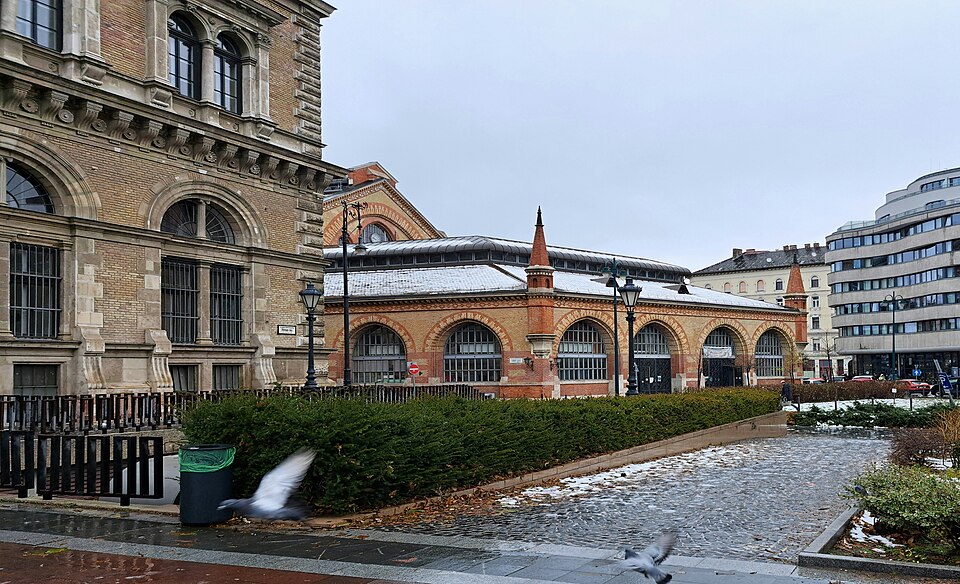
The address is 1093 Budapest, Vámház körút 1-3, at Fővám tér where Liberty Bridge meets the Pest embankment. No car is needed and this guide would advise against one. The operator lists the public transport at the door: metro line M4, which stops at Fővám tér directly outside; trams 2, 47, 47B, 48 and 49, the 2 running along the Danube embankment and the 47 to 49 group crossing from Buda over Liberty Bridge; trolleybus 83; and buses 15 and 115. Tram 2 is the useful one for a visitor, because it links the hall to the Parliament end of the embankment in a few minutes and does it above ground. On foot the hall is roughly fifteen minutes from Vörösmarty tér down Váci utca, which ends at the hall's front door, and about ten minutes from the Kálvin tér interchange. If you do drive, the operator names the surrounding streets as the parking option, listing Sóház utca, Pipa utca, Csarnok tér and the Meininger Hotel; it does not publish a car park of its own, and street parking in District IX is paid and metered on weekdays.
Checked 2026-08-26 · Source
The stalls do not keep the hall's hours, and this catches people at both ends of the week. The building is open on Sunday from 10.00 to 16.00, but the operator's own tenant directory tells a blunter story: of the roughly 118 stalls that publish hours, 42 state plainly that they are closed on Sunday and only a handful list any Sunday trading at all. A Sunday visit means an open building with a thin market inside it. Saturday has a smaller version of the same problem. The hall closes at 16.00, but a large block of stalls publish 15.00 as their Saturday closing time, so the last hour is a shutting-up hour. The public holiday rule is the one with no workaround: on official holidays and rest days the hall is shut entirely. Beyond the clock, remember what this place is. Before nine in the morning the aisles carry hand trolleys and delivery crates and you are the obstacle, not the customer. The souvenir trade is concentrated upstairs, thirty stalls of it, while the food shopping is downstairs among the butchers and greengrocers, so a visitor who only walks the gallery has seen the gift shop and missed the market.
Checked 2026-08-26 · Source
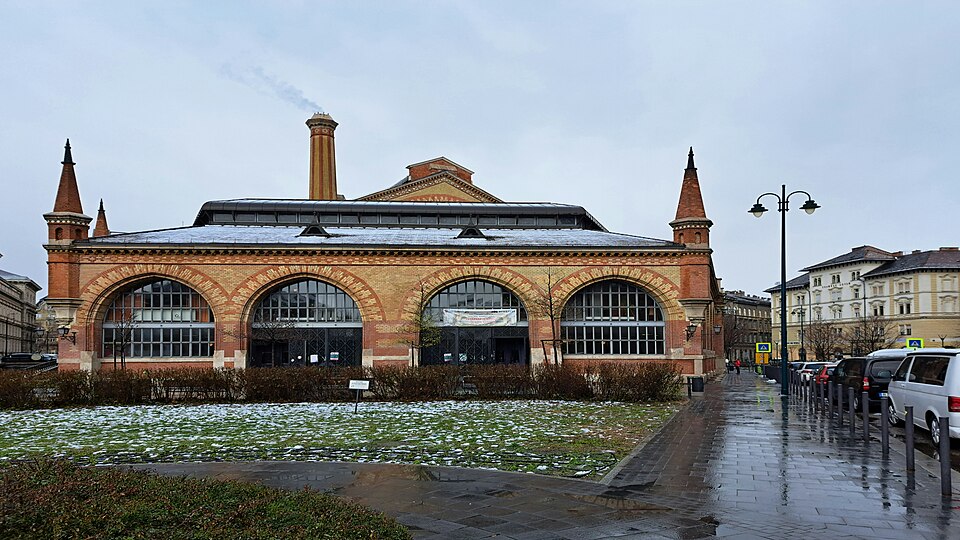
Budapest Vásárcsarnokai publishes no photography rule for the hall, so nothing here is a quoted policy: it is the practical judgement that follows from the building being a working market rather than a monument with wardens. Hand-held photography is unremarkable and nobody will stop you. A tripod in the ground-floor nave will block an aisle that porters are pushing trolleys down, and that is the real reason to leave it behind rather than any published ban. The picture everyone comes for is taken from the upper gallery looking back along the nave, where the steel trusses of Schlick's roof frame the length of the hall and the stall awnings recede in two rows. It works best before nine, when the aisles are readable rather than full of heads. From outside, the Zsolnay roof tiles are the subject, and they are best seen with height and distance: from the Liberty Bridge deck, or from the far side of Fővám tér, in late afternoon light that picks up the colour in the glaze. Inside the hall, ask before you photograph a stallholder or a counter close up. These are people at work and their goods are their livelihood, and a nod first is usually all it takes.
Checked 2026-08-26
Yes. The operator, Budapest Vásárcsarnokai Kft., states "Free entry!" on the hall's own page and says on its network opening-hours page that entry to all of its facilities is free. There is no ticket, no advance booking and no timed entry, and the upper gallery, the basement and the two permanent displays inside carry no separate charge. You pay only for what you buy from the stalls.
Monday to Friday 06.00 to 18.00, Saturday 06.00 to 16.00, and Sunday 10.00 to 16.00, as published by the operator. There is no midday break and no weekly closing day. The hall is closed on Hungarian public holidays and official rest days, and that closure is a full day rather than shortened hours, so check the Hungarian holiday calendar before planning a visit around one.
The building is, from 10.00 to 16.00, which makes it one of only two halls in the operator's network that trade on a Sunday at all. The stalls are a different matter. In the operator's own tenant directory, 42 of the roughly 118 stalls that publish hours list Sunday as closed and only a couple list Sunday trading, so expect an open hall with a thin market inside it.
Allow one hour. The operator publishes no suggested visit length, so this is the guide's judgement: about thirty minutes for the ground-floor nave where 123 of the 208 units sit, fifteen to twenty for the upper gallery, and ten for the basement. Add thirty to forty-five minutes if you plan to eat at the upper-floor counters, where queues are longest between noon and two.
No. The hall is at Vámház körút 1-3 at Fővám tér, and the operator lists metro line M4 at the door, trams 2, 47, 47B, 48 and 49, trolleybus 83, and buses 15 and 115. It is about fifteen minutes on foot from Vörösmarty tér along Váci utca. The operator names only the surrounding streets for parking, including Sóház utca, Pipa utca and Csarnok tér, and publishes no car park of its own.
The operator publishes no photography rule, so there is no policy to quote either way. In practice hand-held photography passes without comment, because this is a working market rather than a supervised monument. Leave the tripod behind: the ground-floor aisles carry hand trolleys and deliveries, particularly before nine in the morning. Ask a stallholder before photographing them or their counter close up.
Loading the interactive map…
The interactive map could not be loaded.
Last updated:
Source: OpenStreetMap contributors, Wikidata ·