City guide · Austria
Vienna
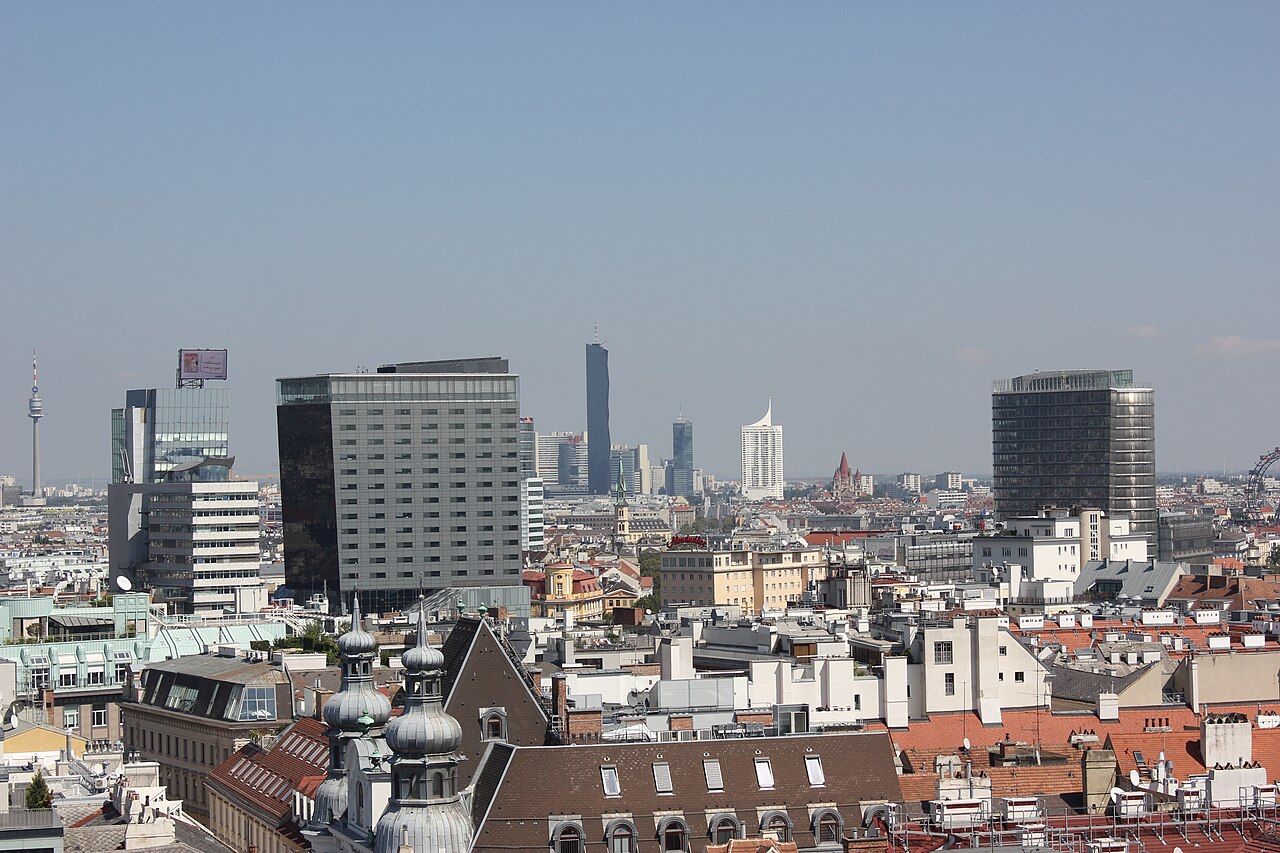

Vienna is 414.78 km² holding 2,028,499 people, and almost everything a visitor comes for sits inside a single ring road less than a kilometre across. The Innere Stadt — the 1st district — is the medieval core, and the Ringstrasse that surrounds it was built in the second half of the nineteenth century on the line of the demolished bastions. The 371-hectare historic centre has been a UNESCO World Heritage Site since 2001; it was on the endangered list from 2017 to 2026. The wider urban area holds 2,223,236 people and the metropolitan area 2,890,577, which makes Vienna the tenth largest city in Europe and by a long way the largest in Austria.
Practical information
Practical information
- Language spoken
- German
- English is understood in tourist districts and rarely outside them
- Dialling code
- +43 1
- Vienna landlines; drop the leading 0 of 01 when calling from abroad
- Currency
- Euro (€, EUR)
- Cards accepted almost everywhere; markets prefer cash
- Emergency number
- 112
- One number across the country; 144 reaches an ambulance directly
- Plug type
- Type C and F · 230 V
- Standard European two-pin
- Tap water
- Safe to drink
- Vienna's supply is piped from Alpine springs
Planning a visit
- Recorded as a best month to visit
- Seasonal closure recorded
- The current month
- Suggested stay
- 3–4 days
- Getting around
- U-Bahn and tram
- January: seasonal closure recorded
- February: seasonal closure recorded
- March: seasonal closure recorded
- April: seasonal closure recorded
- May: recorded as a best month to visit
- June: recorded as a best month to visit
- July: seasonal closure recorded
- August: seasonal closure recorded — this month
- September: recorded as a best month to visit
- October: seasonal closure recorded
- November: seasonal closure recorded
- December: seasonal closure recorded
Top things to see
Ranked by importance — sitelinks, pageviews and heritage status, not editor preference.
Filter the list
0 places match
0 places match
Nothing in Vienna matches all of those filters
The list is built from real place data, so an empty result means the combination genuinely has no match — not that the page failed. Loosen one filter and the ranking returns.
Clear all filtersSource: OpenStreetMap contributors, Wikidata ·
Where to base yourself
District boundaries come from OSM administrative relations, so a district page holds exactly the places inside it — plus, for the islands and the coast, the nearest district by proximity.
-
Innere Stadt
- Places
- 929
- Across the district
- 27 min
-
Leopoldstadt
- Places
- 414
- Across the district
- 2 hr 21 min
-
Alsergrund
- Places
- 330
- Across the district
- 34 min
-
Hietzing
- Places
- 264
- Across the district
- 2 hr 5 min
-
Döbling
- Places
- 282
- Across the district
- 1 hr 20 min
-
Liesing
- Places
- 281
- Across the district
- 2 hr 30 min
-
Donaustadt
- Places
- 304
- Across the district
- 3 hr 29 min
-
Landstraße
- Places
- 251
- Across the district
- 54 min
-
Neubau
- Places
- 282
- Across the district
- 23 min
-
Favoriten
- Places
- 253
- Across the district
- 1 hr 51 min
-
Penzing
- Places
- 162
- Across the district
- 2 hr 9 min
-
Währing
- Places
- 186
- Across the district
- 1 hr 7 min
-
Floridsdorf
- Places
- 187
- Across the district
- 1 hr 47 min
-
Wieden
- Places
- 186
- Across the district
- 23 min
-
Mariahilf
- Places
- 204
- Across the district
- 29 min
-
Simmering
- Places
- 158
- Across the district
- 1 hr 49 min
-
Meidling
- Places
- 181
- Across the district
- 59 min
-
Rudolfsheim-Fünfhaus
- Places
- 176
- Across the district
- 35 min
-
Josefstadt
- Places
- 142
- Across the district
- 18 min
-
Ottakring
- Places
- 142
- Across the district
- 1 hr 18 min
-
Margareten
- Places
- 129
- Across the district
- 25 min
-
Hernals
- Places
- 102
- Across the district
- 1 hr 23 min
-
Brigittenau
- Places
- 93
- Across the district
- 43 min
How the city is laid out
Twenty-three districts, numbered roughly in the order they were absorbed, arranged around the 1st.
The Innere Stadt is the 1st and holds the cathedral, the Hofburg, the opera and most of what a short visit will see. Districts 2 to 9 and 20 were incorporated in 1850 and lie inside the Gürtel, the outer ring road; they are the inner districts and are where most visitors sleep and eat. Districts 10 to 19 and 21 to 23 came in between 1874 and 1938, mostly in 1892.
Districts 21 and 22 are across the Danube on the left bank — Floridsdorf is the northernmost part of the city and Donaustadt the largest by area. Districts 2 and 20 sit on the island between the Danube and the Donaukanal.
The postal code gives the district: 1XXA, where the middle two digits are the district number. An address at 1070 is in the 7th.
Checked 2026-08-23
Getting around
The U-Bahn, the trams, and a ticket that covers both.
The U-Bahn has five lines, 109 stations and 83.9 km of track, and it opened on 25 February 1978. It carried 404.8 million passengers in 2023. Trains run from about 05:00 to 01:00 at intervals of two to fifteen minutes, and run all night at fifteen-minute intervals on Friday and Saturday nights and before public holidays.
A sixth line, the U5, is under construction for completion between 2026 and 2032; the network will then be 90 km with 116 stations.
Tickets are integrated with the trams, the buses and the S-Bahn through the VOR system, so one ticket covers the whole journey. Some airport services are outside it.
Inside the Ring, walking beats all of it.
Checked 2026-08-23
Common questions
How many days does Vienna need?
Three to four. Two days cover the Innere Stadt and the Ring — the cathedral, the Hofburg, the opera, the museums on the Maria-Theresien-Platz. A third takes Schönbrunn and the Belvedere, and a fourth allows a proper concert or an afternoon in the wine villages.
How do the districts work?
Twenty-three of them, numbered roughly in the order they joined the city. The 1st is the medieval centre, districts 2–9 and 20 came in 1850 and lie inside the Gürtel, and the rest arrived between 1874 and 1938. The postal code carries the number: 1070 is the 7th district.
What is the Ringstrasse?
The boulevard built in the second half of the nineteenth century on the line of the demolished city bastions, encircling the Innere Stadt. Most of Vienna's great public buildings face onto it.
Is the U-Bahn the best way around?
For anything beyond the Ring, yes. Five lines, 109 stations, 83.9 km, running from about 05:00 to 01:00 and all night at weekends. Inside the Ring, walking is faster.
When is the best time to come?
April to June and September to October. Summer afternoons reach 27–32°C and the palace gardens have little shade; winter hovers around freezing but brings the concert season and the Christmas markets.
How big is Vienna really?
414.78 km² with 2,028,499 people in the city proper, 2,223,236 in the urban area and 2,890,577 in the metropolitan area — the tenth largest city in Europe.
Turn this list into a plan
Set your days, your pace and the hours you actually want to be out. The planner works around closing days and travel time, and leaves room to eat.